
The Tool Desk
Outbyte Driver Updater FREEFix the driver behind crashes, sound loss and screen glitchesFind Drivers →Outbyte PC Repair FREERepair Windows errors before they cause bigger problemsFix Now →iTechGuides is reader-supported. When you buy through links on our site, we may earn an affiliate commission. As an Amazon Associate I earn from qualifying purchases. Learn more
Biometrics can help national ID systems detect duplicate registrations and verify that someone presenting an identity is the person associated with it. Those are different jobs, with different technical and policy requirements. Biometric collection can also fail for some people, create sensitive data that may be misused, and add substantial operating costs. Whether it is appropriate depends on the specific purpose, the available alternatives, and the safeguards built into the system.
What biometrics do in a national ID system
A biometric system captures a physical characteristic—such as a fingerprint, face image, or iris pattern—and compares a digital representation of it with one or more stored representations. National ID programs may use those comparisons for two distinct purposes:
| Function | What is compared | Typical purpose |
|---|---|---|
| Deduplication (1:N) | A new enrollment is searched against all or a selected group of records. | Identify possible duplicate registrations before or during enrollment. |
| Authentication (1:1) | A newly captured sample is compared with one stored template, such as one on a card, phone, or database. | Check whether a person presenting an identity matches the identity being claimed. |
A case for searching registrations for duplicates does not, by itself, show that people should have to pass a biometric check every time they use a service. Deduplication asks whether a new record may already exist; authentication asks whether a person matches a particular record. Policymakers should justify each function separately.
Recommended Free Tools
Why governments consider biometric ID
Biometrics can help distinguish people in large populations and may support relatively high-assurance authentication. That can be useful where authoritative identity documents or other reliable sources are limited. Their potential value is strongest when a defined problem—such as duplicate registration or a transaction that genuinely needs stronger identity assurance—cannot be addressed as effectively and proportionately another way.
#1 Best Overall
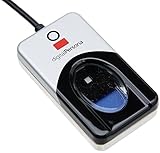
- Target Applications - Desktop PC security, Mobile PCs, Custom applications
- Indoor, home and office use
- Blue LED - soft, cool blue glow fits into any environment; doesn't compete in low light environments
- Small form factor - conserves valuable desk space
- Rugged construction - high-quality metal casing weighted to resist unintentional movement
Biometrics are widespread, but prevalence is not proof that they are necessary or effective in every context. A World Bank document surfaced in 2024 reports that 152 of 159 country observations collected at least one biometric type. It also reports that 116 of 158 observations collected more than one type; 103 countries in that group collected fingerprints and a facial image. The observation counts and denominators differ, and the underlying dataset’s precise release date is not established here. These figures describe adoption, not the benefits or outcomes of a particular system.
The broader identification challenge is also significant: the World Bank estimated in 2023 that approximately 850 million people worldwide lacked any official ID. That figure does not show that biometrics alone can solve the problem; enrollment access, legal recognition, service design, and other parts of an identity system matter too.
Biometric choices vary by system
There is no single required combination of biometric traits. For example, the Unique Identification Authority of India describes Aadhaar enrollment as collecting a face image, all ten fingerprints, and both iris images, with deduplication as a basis of the approach. That is a description of one program’s design, not a template that every national ID system needs to copy. Collecting more traits can also mean more capture requirements, data to protect, and potential points of failure.
Rank #2

- High-Definition Fingerprint Imaging Based on Superior 3D Touch Capacitance Technology
- PASSKEY compatable. Start enjoying PASSKEY login to all available websites
- Windows Hello Certified offers seamless operation with Windows Hello and Windows Hello for Business
- Compatible with all Leading Password Management Software
- Also compatible with additional Microsoft services including Office365 and other Windows HELLO security applications
How biometric requirements can exclude people
A person may be unable to provide a usable sample, may be difficult to capture reliably, or may decline collection for cultural or religious reasons. The World Bank’s Practitioner’s Guide identifies examples including amputees, survivors of leprosy, manual laborers, older people, children, people with visual impairment, and persons with albinism. These examples do not mean that every person in those groups will fail a biometric check; they show why a system cannot assume that everyone can enroll or match in the same way.
A failed enrollment can block someone from obtaining an ID. A failed authentication can prevent access to a service that relies on that ID. The practical consequence depends on how the ID is used: if there is no alternative route, a technical failure can become a barrier to an essential service.
Inclusive design therefore requires more than improving capture equipment. Enrollment should be accessible, and people who cannot provide an acceptable sample—or whose checks fail—need a usable alternative. They should also be able to challenge an error and seek human review rather than being left with an unexplained rejection.
Rank #3

- New replacement old Red Logo Digital persona URU4500, HID , USB reader. Original HID Brand
- Small form factor
- Metal Casing resists unintentional movement.
- SuperiorRed "Flash" indicates that a fingerprint image has been captured, 512 dpi / 8-bit grayscale (256 gray levels) ESD resistance
- Encrypted fingerprint data
Privacy, security, and the risk of secondary use
Biometric records are sensitive because they are linked to identifiable physical characteristics. Their collection, retention, and sharing should be limited to what the stated purpose requires. Data gathered for enrollment or identity checks can create additional privacy risks if it is repurposed, shared too broadly, or retained without adequate justification.
The World Bank recommends legal, technical, and operational controls, including restrictions on unauthorized secondary uses and encryption of data both in storage and in transit. No system is foolproof, so safeguards need to address who can access biometric data, what they may do with it, how transfers are controlled, and what oversight applies when rules are breached.
Costs and performance are not one-number questions
Ongoing costs and operational demands
Biometrics can require specialized enrollment and authentication infrastructure, technical choices, and continuing operational support. The World Bank’s October 2019 Practitioner’s Guide states: “Biometrics can add significant costs to registration as well as the authentication infrastructure.” A decision should account for the cost of running and maintaining the system over time, not just the initial enrollment equipment.
Rank #4
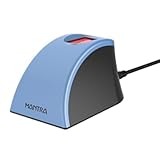
- MFS110 L1 USB Fingerprint Scanner
- Support Window, Android and Lenux
- 1 Year RD Service Registration included from mantra
- USB with Type C connector available for using in Type C supporting devices
- Scratch free Sensor Surface,Auto Finger Detection
What accuracy measures do—and do not—show
Biometric performance figures describe different outcomes. A false accept is an incorrect match; a false reject is a genuine user rejected; a failure-to-enroll rate concerns people for whom enrollment cannot produce an acceptable record; and a false non-match rate concerns genuine comparisons that the system does not match. These measures are not interchangeable, and a single “accuracy” figure cannot establish how well a system will work for every purpose or population.
Results depend on thresholds, image quality, system configuration, the people represented in an evaluation, and—in a 1:N search—the size of the gallery being searched. Test conditions may also differ from real-world operation. Policymakers should ask for evidence relevant to the actual deployment and transaction, rather than treating a figure from one test as a universal guarantee.
Quick wins for a faster PC:
Scan for outdated or missing drivers - takes under a minuteDriver Scan →Clear out junk files and repair common Windows errorsFree Scan →Fix the driver behind crashes, sound loss and screen glitchesFind Drivers →Rights safeguards must fit the specific use
In a particular case, the UN Human Rights Committee found that storing and retaining the author’s fingerprint data on an identity card amounted to arbitrary interference with privacy under article 17 of the International Covenant on Civil and Political Rights. The Committee called for sufficient guarantees against arbitrariness and abuse and for review of the grounds for retention. This was a finding about the circumstances before it, not a general ruling that all biometric identity cards violate the Covenant.
Questions to answer before making biometrics mandatory
A government assessing a biometric requirement should be able to explain the need and the protections in terms specific to the proposed system:
- Define the purpose. Is the requirement intended to detect duplicate enrollment, authenticate a person for a particular transaction, or do both? What level of assurance does that transaction actually require?
- Plan for people who cannot complete a check. Who may have difficulty enrolling or matching? What accessible alternatives are available, and how can a person appeal a failure or obtain human review?
- Set limits on data use. Which traits will be collected, how long will records be kept, who can access them, and what legal, technical, and operational controls prevent unauthorized sharing or secondary use?
- Assess evidence in context. Do evaluations reflect the intended population, thresholds, image quality, configuration, and gallery size? Are the reported error measures relevant to the specific use?
- Calculate the lifecycle burden. What will enrollment, infrastructure, maintenance, and ongoing operations require, and can the system be sustained?
- Test less intrusive alternatives. Could existing identification, demographic deduplication, or another authentication method meet the need with fewer risks or burdens?
Biometrics are a design choice within an identity system, not a substitute for deciding what that system needs to accomplish. The strongest case for using them is tied to a clear purpose and proportionate assurance requirement; a responsible design also accounts for people who cannot complete a check, protects sensitive records, and offers workable alternatives and remedies.
Quick Recap
Product prices and availability are accurate as of the date/time indicated and are subject to change. Any price and availability information displayed on Amazon at the time of purchase will apply.

