
iTechGuides is reader-supported. When you buy through links on our site, we may earn an affiliate commission. As an Amazon Associate I earn from qualifying purchases. Learn more
Diagnosing bacterial growth is a laboratory workflow, not a single test: a suitable specimen is collected, processed under appropriate conditions, and examined for meaningful growth. The laboratory may then identify the organism and, when indicated, test which antimicrobials can inhibit it. The right approach depends on the suspected infection, specimen, and laboratory capacity.
How do doctors test for a bacterial infection?
Testing starts with the suspected site of infection. A clinician selects an appropriate specimen, and the laboratory collects or receives it using procedures designed to preserve the material and reduce contamination. Transport and processing matter: a specimen that is unsuitable, delayed, or handled incorrectly may not give a useful answer.
The World Health Organization’s bacteriology, mycology and antimicrobial susceptibility testing toolkit, published May 20, 2026 as a public-consultation resource, provides example standard operating procedures for laboratory work. WHO notes that procedures may need local adaptation to regulatory requirements, quality systems, laboratory capability, and safety rules.
Recommended Free Tools
- Select and collect: Obtain a specimen appropriate to the suspected infection, following validated collection procedures.
- Transport and process: Handle the specimen according to laboratory procedures and the organism or infection being investigated.
- Culture when appropriate: Place material on or in nutrient media and use conditions suited to the suspected bacteria.
- Assess and identify growth: Determine whether growth is significant and identify the organism using a validated method.
- Test susceptibility when indicated: The laboratory may test the organism’s response to antimicrobials using standardized methods and interpretation criteria.
This is a general overview, not a patient-specific diagnostic protocol. Clinical decisions about which specimen or test to use belong with a clinician and qualified diagnostic laboratory.
#1 Best Overall

- THE ORGINAL DIY BACTERIA TEST KIT that is certified accurate by Good Housekeeping Labs, American Red Cross, Underwriter Labs, and Merck Labs. Designed and developed by our EPA certified scientists. Made in the USA.
- PATENTED TECHNOLOGY: Detects 50 different species of coliform bacteria (including E. coli), as low as 1-organism. Test any freshwater supply.
- 3RD PARTY STERILIZATION: Every Safe Home kit is sterilized by a certified facility (see attached certificate) and guaranteed to be “free from bacteria” before you test. This process assures zero “false positive results” from product contamination, as may be experienced with other kits who skip this sterilization process.
- FAST RESULTS- Get results as quickly as 6 hours. May take up to 72 hours based on incubation conditions, and concentrations of bacteria in the water being tested.
- YOUR PURCHASE MAKES A DIFFERENCE in people’s lives. Safe Home donates a portion of every test kit sale to clean water initiatives around the globe. See attached images with this listing, to learn more.
What does bacterial culture detect?
Culture means growing microorganisms in or on a nutrient medium. If viable bacteria in a specimen multiply under the chosen conditions, the laboratory may be able to detect and identify them. Growing an organism can also provide an isolate for phenotypic antimicrobial susceptibility testing.
Culture depends on having the right specimen and conditions. Not every bacterium grows under the same conditions, and a culture result is only useful when interpreted in light of how the specimen was collected and what infection is suspected. WHO’s Laboratory diagnosis of sexually transmitted infections, including human immunodeficiency virus is a foundational 2003 manual; operational procedures and interpretation should be checked against current local standards.
Rank #2

- BIOTECH QUALITY, FRESH AND READY-TO-USE: Factory-direct fresh 10 100-mm Pre-poured sterile LB-agar plates and 10 sterile 6-inch long swabs (in 5 pouches). Our plates are manufactured in USA using the biotech GMP standards. Each plate has a fresh and thick layer of agar. Fresh plates promote faster and more bacterial growth as compared to aged stored plates. Re-sealable packaging is convenient for re-use.
- The Safest Agar Plates On Amazon: Luria Broth(LB) agar plates are used to detect environmental microorganisms all over the world. They are the safest agar plates to be used by students in the classroom or at home.
- Free Science Fair Project E-Book: Packed with easy-to-do science fair experiments with clear step-by-step instructions to help you win a science fair competition. These experiments are scientifically designed and tested to ensure your success. Tips and advice are provided to avoid common mistakes.
- PEACE OF MIND: Any questions? No worry. Inside the kit you will find a toll-free number that you can call in case you have a question about the product. You will receive immediate live support from PhD scientists with extensive hands-on experience. Before you buy or try, check out the vendor to see whether it has a telephone number or a physical address.
What does a positive bacterial culture mean?
A positive culture means the laboratory detected growth under the conditions used. It does not, by itself, prove that the bacteria caused the patient’s symptoms or infection. Significance depends on the specimen source, the organism, the amount or pattern of growth, collection quality, and the clinical context. A clinician interprets the result alongside symptoms, examination, and other findings.
Do these 3 things before closing this tab:
1Scan for outdated or missing drivers - takes under a minute2Clear out junk files and repair common Windows errors3Fix the driver behind crashes, sound loss and screen glitchesGrowth may reflect infection, contamination during collection, or bacteria present without causing disease. The result should not be used in isolation to diagnose an infection or choose treatment.
Rank #3

- Easy & Fast Water Testing – Coliform bacteria water test kit can quickly test for harmful coliform bacteria in your well, home, tap, pool, lake, or pond water. Get accurate, reliable results in just 48 hours from the comfort of your home.
- Complete 12-Pack Kit – Includes 4 individual bacteria water test kit for multiple testing needs, ensuring the safety of your drinking water from various sources. Ideal for regular testing and peace of mind.
- Versatile Use – Well water bacteria test kit is perfect for testing water from wells, springs, ponds, lakes, swimming pools, and drinking water taps.
- Simple at-Home Process – No need for lab visits or complicated equipment. Our easy-to-use instructions allow you to conduct bacteria testing at home, saving time and ensuring a safe water supply.
- Know Your Water Safety or Not – With our at-home water bacteria test kit, perfect for monitoring water quality for households, campers, travelers, or anyone using untreated water sources.
How are bacteria identified after growth?
Laboratories use validated identification methods suited to the organism and their available equipment. These can include conventional or automated biochemical testing and matrix-assisted laser desorption/ionization time-of-flight mass spectrometry (MALDI-TOF), among other methods. The method and workflow are laboratory-specific; no single approach applies to every specimen or suspected bacterium.
How does antimicrobial susceptibility testing work?
When indicated, susceptibility testing evaluates whether an antimicrobial inhibits the cultured organism under standardized laboratory conditions. Results can help clinicians select treatment, but they must be produced and interpreted using validated methods and recognized standards, such as those from the Clinical and Laboratory Standards Institute (CLSI) or the European Committee on Antimicrobial Susceptibility Testing (EUCAST).
Rank #4
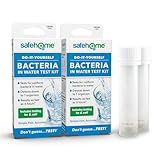
- THE ORGINAL DIY BACTERIA TEST KIT that is certified accurate by Good Housekeeping Labs, American Red Cross Labs, Underwriter Labs, and Merck Labs. Designed and developed by our EPA certified scientists. Made in the USA.
- PATENTED TECHNOLOGY: Detects 50 different species of coliform bacteria (including E. coli), as low as 1-organism. Test any freshwater supply.
- 3RD PARTY STERILIZATION: Every Safe Home kit is sterilized by a certified facility (see attached certificate) and guaranteed to be “free from bacteria” before you test. This process assures zero “false positive results” from product contamination, as may be experienced with other kits who skip this sterilization process.
- FAST RESULTS- Get results as quickly as 6 hours. May take up to 72 hours based on incubation conditions, and concentrations of bacteria in the water being tested.
- YOUR PURCHASE MAKES A DIFFERENCE in people’s lives. Safe Home donates a portion of every test kit sale to clean water initiatives around the globe. See attached images with this listing, to learn more.
A zone diameter or minimum inhibitory concentration (MIC) should not be interpreted without knowing the method and applicable interpretation framework. Breakpoints and procedures can change, so laboratories use the locally applicable current standards rather than relying on an isolated number.
What’s actually slowing this PC down?
Pick the symptom - the matching free tool is one click away.
Can PCR replace a bacterial culture?
No single answer applies to every infection. Molecular tests such as polymerase chain reaction (PCR) detect selected nucleic-acid targets, while culture attempts to recover viable organisms. A molecular result may be available sooner for the target included in a particular assay, but it does not automatically provide a live isolate for phenotypic susceptibility testing. A negative or positive result must be interpreted for the specific assay and disease context.
Best Value

- THE ORGINAL DIY BACTERIA TEST KIT that is certified accurate by Good Housekeeping Labs, American Red Cross Labs, Underwriter Labs, and Merck Labs. Designed and developed by our EPA certified scientists. Made in the USA.
- PATENTED TECHNOLOGY: Detects 50 different species of coliform bacteria (including E. coli), as low as 1-organism. Test any freshwater supply.
- 3RD PARTY STERILIZATION: Every Safe Home kit is sterilized by a certified facility (see attached certificate) and guaranteed to be “free from bacteria” before you test. This process assures zero “false positive results” from product contamination, as may be experienced with other kits who skip this sterilization process.
- FAST RESULTS- Get results as quickly as 6 hours. May take up to 72 hours based on incubation conditions, and concentrations of bacteria in the water being tested.
- YOUR PURCHASE MAKES A DIFFERENCE in people’s lives. Safe Home donates a portion of every test kit sale to clean water initiatives around the globe. See attached images with this listing, to learn more.
| Approach | What it detects | Isolate for susceptibility testing | Coverage and interpretation |
|---|---|---|---|
| Culture | Viable organisms able to grow under the selected conditions | Can provide an isolate for identification and phenotypic susceptibility testing | Depends on suitable specimen, media, and growth conditions; results require clinical interpretation |
| Molecular testing, including PCR | Target nucleic acid specified by the assay | Does not automatically provide a live isolate | Depends on assay targets and validated interpretation for the disease and specimen |
For tuberculosis specifically, the CDC’s guidance on molecular diagnostic testing says nucleic acid amplification testing does not replace smear, culture, growth-based susceptibility testing, or genotyping. That disease-specific guidance illustrates why molecular testing should not be treated as a universal substitute for culture; other infections may use different algorithms.
How long does bacterial culture take?
There is no single reliable turnaround time for all bacterial cultures. The time depends on the suspected organism, specimen, culture conditions, and the laboratory’s identification and susceptibility workflow. A test targeting specific nucleic acid may provide a result sooner in some situations, but that comparison also depends on the organism and assay. Ask the clinician or laboratory handling the specimen for the expected timing for that test.
Can a blood test tell if an infection is bacterial?
A blood test result should not be treated as a standalone answer to whether an infection is bacterial. Diagnosis depends on the suspected site, the patient’s clinical picture, and tests selected for that question. When clinicians suspect bacteria in a particular site or in the bloodstream, they may request appropriate specimens for laboratory testing; a qualified clinician interprets those findings in context.
Why do specimen choice and lab capacity matter?
The specimen must represent the suspected infection, and the laboratory needs procedures, equipment, and expertise suited to process and interpret it safely. WHO’s 2026 toolkit presents example procedures rather than one protocol for every setting: laboratories may need to adapt them to local regulations, quality systems, available capability, and safety requirements.
Because bacteriology involves growing microorganisms, it is not appropriate to attempt diagnostic culture at home. Unknown organisms can pose safety risks, and results from improvised collection or growth conditions cannot establish a clinical diagnosis. For symptoms or questions about a test result, contact a clinician and use a qualified diagnostic laboratory.
Quick Recap
Product prices and availability are accurate as of the date/time indicated and are subject to change. Any price and availability information displayed on Amazon at the time of purchase will apply.

