
Crashes, No Sound, or Screen Glitches?
Random freezes, missing sound and display glitches usually trace back to one bad driver. Find and replace yours safely.Free scan · under a minutePC Slower Than It Used to Be?
A free scan shows the junk files, broken settings and background clutter dragging Windows down - then fixes them in one click.Free scan · Windows 10 & 11iTechGuides is reader-supported. When you buy through links on our site, we may earn an affiliate commission. As an Amazon Associate I earn from qualifying purchases. Learn more
AI is helping telecom operators detect network problems earlier, forecast demand and, where policies allow, adjust network resources or start recovery actions. The shift is from reacting to visible faults toward prediction and bounded adaptation—not to networks that already manage themselves everywhere.
How is AI changing network connectivity?
In telecom, AI is used to help monitor network conditions, find faults, forecast resource needs, plan capacity and optimize performance. It can turn large volumes of network observations into earlier warnings or recommended actions. Whether a recommendation is acted on automatically depends on the operator’s systems, policies and tolerance for risk.
ITU-T Recommendation Y.3177, approved on 13 February 2021 and listed as in force, describes an AI-based framework for resource and fault management in future networks, including IMT-2020. Its purpose is to improve efficiency and performance through continuous monitoring and AI-supported resource adaptation and fault recovery. Read the ITU-T Y.3177 recommendation.
The Tool Desk
Outbyte PC Repair FREEClear out junk files and repair common Windows errorsFree Scan →Outbyte Driver Updater FREEFix the driver behind crashes, sound loss and screen glitchesFind Drivers →Reactive: respond after a problem appears
In a reactive workflow, a team responds after a fault or performance problem becomes visible—for example, when monitoring shows a service degradation or a component failure. This remains necessary: AI does not eliminate incidents, and operators still need ways to diagnose and recover from them.
#1 Best Overall
![[Upgraded] AURSINC NanoVNA-H Vector Network Analyzer 9KHz -1.5GHz Latest HW V3.7 HF VHF UHF Antenna Analyzer, Measuring S Parameters, SWR, Phase, Delay, Smith Chart](https://m.media-amazon.com/images/I/41hseV6xSbL._SL160_.jpg)
- [UPGRADED NanoVNA-H] New HW Version V3.7. It is upgradeable as new firmware is developed. With MicroSD card port now can have the measurement data or the screenshots saved in the it at anytime. Added battery circuit management, more secure. Redesigned PCB, you can connect to mobile phone with Type C-Type C cable (original PCB needs OTG cable), see a clear HD image on your phone. Added a ABS case, which is protective and dust-proof. Disply: 2.8 inch TFT (320 x240).
- [IMPROVED FREQUENCY ALGORITHM] The improved frequency algorithm can use the odd harmonic extension of si5351 to support the measurement frequency up to 1.5GHz. The 9KHz-300MHz frequency range of the si5351 direct output provides better than 70dB dynamic, The extended 300M-900MHz band provides better than 60dB of dynamics, and the 900M-1.5GHz band is better than 40dB of dynamics.
- [MULTIPLE FUNCTIONS] The default firmware main function is used for antenna performance measurement. The TX/RX method can measure the complete S11 and S21 parameters. If you need to obtain S12 and S22, you need to manually replace the transceiver port wiring. The CH0 output level is increased to 0dBm when using the fundamental wave, resulting in more accurate reflection measurement.
- [SUPPORT ANDROID PHONE & PC SOFTSARE CONTROL] Designed a practical and simple control application on PC, you can download touchstone(SNP) files for radio design and simulation software. There is a PC interface that adds functionality and lets you work interactively on a bigger screen. Supports time domain analysis function (TDR). Compatible with most Android mobile phones, convenient for connecting to mobile phones. Support Windows Computer Control.
- [STRONG AND SECURE POWER SUPPLY] This VNA is battery powered or USB powered. Built in 650mAh battery, could work for 2 hours continuously. For longer measurement time, kindly connect an external power source. The product interface displays battery usage, providing a clear understanding of the power status.
Predictive: identify likely problems or needs earlier
Predictive tools analyze network observations and learned patterns to flag a likely fault, congestion or mismatch between resources and demand before it becomes an observed service problem. A prediction is an early signal, not a guarantee. Its usefulness depends on the quality and relevance of the data behind it.
Adaptive: change network behavior in response
Adaptation is the next step: changing a setting, shifting resources or initiating a recovery action in response to a detected condition or forecast. An operator can review a recommendation, approve a defined action or allow a policy-bounded closed loop to act automatically. Prediction and adaptation are distinct: identifying a likely issue does not, by itself, authorize a network change.
What does predictive network maintenance mean?
Predictive maintenance applies the same idea to network faults: use monitoring data and patterns to identify signs of a possible failure early enough for an operator to investigate or plan a response. In a broader network-operations context, prediction can also flag likely congestion or resource demand, helping teams plan before service quality is affected.
Rank #2

- UPGRADED NANOVNA ANALYZER: SeeSii Nanovna-h4 Vector Network Analyzer is developed by Hugen. With the latest 4.4 version,9KHz-1.5GHz measure range,4.0 inch LCD touchscreen, mini and portable design. This Antenna Analyzer is provides outstanding vector network measurement capabilities and perfect for evaluating antenna resonance and SWR. It is a very handy & smart analyzer for electronics engineers, amateur radio operators, or radio diy amateurs
- BUILT-IN MICRO-SD PORT & TIME DISPLAY: The latest antenna analyzer with a MicroSD card port, so you can save field test data or screens to a MicroSD card at any time, supporting up to 32GB memory card. (Not included in the package).In addition, different from the old version of NanoVNAs, the date and time can be customized, which is convenient for you to further record and save data. The default firmware main function is used for antenna performance measurement
- IMPROVED FREQUENCY ALGORITHM: The Vector Network Analyzer can use the old harmonic extension of si5351 to support the measurement frequency up to 1.5GHz. The 50K-300MHz frequency range of the si5351 direct output provides better than 70dB of dynamics, The extended 300M-900MHz band provides better than 60dB of dynamics, and the 900M-1.5GHz band is better than 40dB of dynamics. Great for troubleshooting antennas and improving performance
- PC CONNECTION & TX/RX FUNCTION: The VNA analyzer uses PC software NanoVNASaver, it can connect to a NanoVNA and extracts the data for display on a computer for saving to Touchstone files. We can export Touchstone (snp) files for various radio design and simulation software through PC software. In addition, the default firmware is mainly used for antenna performance measurement. The TX/RX method can measure the complete S11/S21 parameters (need to manually replace the transceiver port wiring)
- Abundant Accessories: Equipped with 1x NanoVNA-H4(with 1950mA-h battery), 1x USB Type-C cable, 2 x 15cm SMA male to male RG316 RF cable, 1x SMA male calibration kit - OPEN,1x SMA male calibration kit - SHORT,1 x SMA male calibration kit - LOAD,1 x Touchscreen pen. It's very useful as an antenna analyzer for your ham station, easy to set without fancy calibration
The practical value is lead time, not certainty. A warning can give a team a chance to check equipment, adjust capacity or prepare a recovery plan. The operator still needs to validate the signal and decide what action is appropriate; acting on a false alarm or an inaccurate forecast can itself create operational risk.
How do telecom companies use AI to optimize networks?
Network operators can apply AI at several stages of network operation, from planning through ongoing service management. GSMA materials identify lifecycle automation, planning, fault finding, optimization and resource management as network AI use cases. Operators have business reasons to pursue them: operating efficiency, network quality of experience, the demands of dense networks and more agile service delivery.
- Planning: Support decisions about network design and resources as traffic patterns and service requirements change.
- Fault management: Detect anomalies or likely failures and help teams investigate and recover.
- Resource optimization: Forecast demand or resource mismatches and support adjustments to network behavior.
- Service operations: Help coordinate actions across a network lifecycle, potentially reducing reliance on manual handling for repeatable tasks.
The scale of the business case should not be mistaken for mature adoption. In a GSMA newsroom release dated 24 June 2026, GSMA Intelligence reported that 16% of AI deployments target network use cases and that networks account for 34% of OPEX. Those are attributed industry figures reported in 2026, not timeless measurements for every operator. GSMA’s 2026 account of telco AI adoption.
Rank #3

- 2026 Upgraded Tinysa Ultra+ ZS407 Spectrum Analyzer: Supports an ultra-wide frequency range of 100kHz–7.3GHz, delivering precise test data for RF system development, satellite alignment, and frequency verification. Features a 4.0-inch HD touchscreen (480×320 resolution) with up to 450 scan points for clear visualization of complex spectrum data. The intuitive interface ensures ease of use, while ESD protection and the latest V0.5.4 hardware system provide professional and stable performance
- Broad Frequency Coverage: Supports 100kHz–7.3GHz, ideal for 5G NR, Wi-Fi 6E, satellite communications, and higher wireless frequency bands. Calibrated up to 8GHz, it enables broader applications for high-frequency testing in lab environments. Standard mode covers 100kHz–800MHz, while ULTRA mode extends to 6GHz. With 200Hz–850kHz RBW, it ensures fast, efficient measurements, meeting high-precision needs like SSB two-tone intermodulation tests
- Robust Signal Generation: Functioning as both a spectrum analyzer and signal generator, it produces MF/HF/VHF sine waves from 100kHz-900MHz, UHF square waves from 800MHz-6.3GHz, and mixed signals from 4.4GHz-6.3GHz. Our spectrum analyzer antenna's versatility is perfect for RF system development, wireless communication debugging, and RF interference detection, aiding professionals in identifying and resolving frequency issues
- Convenient PC Control and Data Transfer: With USB and TinySA-APP connectivity, the device supports real-time data display and transfer, enhancing data management efficiency. This sdr spectrum analyzer includes a 32GB MicroSD card for easy data storage and sharing, catering to spectrum scanning, signal detection, and radio noise measurement needs
- 10-Hour Working Time: Powered by a 5000mAh battery, it offers up to 10 hours of continuous operation, ideal for field use by RF interference troubleshooters and satellite communication technicians. This signal analyzer's compact design makes it portable for various work environments, facilitating quick wireless signal detection and analysis for electronic and audio technicians
Can AI prevent network outages?
AI can help reduce the chance that some issues become service-affecting outages by surfacing patterns earlier, forecasting pressure on resources or supporting a faster recovery action. It cannot guarantee that outages will be prevented. Some failures may not be predictable from available data, and models can produce inaccurate alerts or recommendations.
Recommended Free Tools
For an automated response, the operator must decide what the system is allowed to change and how it should behave when confidence is low or conditions are unusual. The consequences of a mistaken action, the ability to review or reverse it, and the availability of human intervention all matter. The more consequential the action, the more important it is to define its limits and escalation path.
Why is AI not managing every network autonomously?
Telecom networks are complex, often spanning multiple vendors and domains. GSMA’s 2026 account describes fragmented environments, siloed data and little tolerance for errors as practical barriers. Those conditions make it harder to train or connect systems across a network and make unchecked automation risky. An AI tool that works well on one task or clean data set does not automatically transfer to a different vendor’s equipment or a wider operating context.
Rank #4

- UPGRADED NANOVNA ANALYZER: AURSINC NanoVNA-H4 Vector Network Analyzer by Hugen features the latest V4.4 firmware, a 9kHz–1.5GHz measurement range, and a 4.0-inch LCD touchscreen. The Antenna Analyzer provides outstanding performance for S-parameter testing, antenna resonance analysis and SWR evaluation with excellent vector network measurement capabilities. It is an efficient testing tool for electrical engineers, ham radio operators, antenna builders and radio DIY enthusiasts
- IMPROVED FREQUENCY ALGORITHM: The improved frequency algorithm of Nano VNA H4 can use the odd harmonic extension of si5351 to support the measurement frequency up to 1.5GHz. The 50K-300MHz frequency range of the si5351 direct output provides better than 70dB dynamic. The extended 300M-900MHz band provides better than 60dB of dynamics, and the 900M-1.5GHz band is better than 40dB of dynamics. Used it to check out new cable or antenna installations and to routinely adjust the RF tuner for optimum
- BUILT-IN MICRO-SD PORT & TDR FUNCTION: This antenna analyzer features a brand new panel and a new SD port for data storage, supporting up to 32GB memory cards (not included). Unlike older NanoVNA versions, it lets you customize the date and time for easier data recording. Added TDR functionality—widely used to quickly measure coaxial cable length and locate faults via impedance discontinuity calculations. The default firmware's main function is antenna performance measurement
- PC CONNECTION & ANDROID CONTROL: Using the PC software NanoVNASaver, the Nano VNA H4 antenna analyzer can connect to your device, extract data for display on a computer, and save it to Touchstone files. You can also export Touchstone (snp) files via the software for use in various radio design and simulation tools. With its TX/RX method, the analyzer measures complete S11 and S21 parameters. To obtain S12 and S22 parameters, you only need to manually rewire the transceiver ports
- WHAT'S INCLUDED: 1 x NanoVNA-H4 Host (built-in 1950mAh long-life battery), 1 x 4pcs SMA Male Calibration Kit (open/short/load + SMA female-to-female connector, for precise calibration), 2 x 6.3-inch (16cm) SMA Male-to-Male RG174 RF Cables, 1 x USB Type-C Data Cable, 1 x Type-C to Type-C Cable, 1 x Lanyard (with integrated stylus), 1 x Extra Stylus Pen, 1 x User Manual. It's a great antenna analyzer for your ham station—easy setup, no complex calibration
Operators therefore need to consider data quality, interoperability, validation, action authority and recovery options when introducing AI. A sensible progression is to start with monitoring or decision support, evaluate the results, and expand automation only where policies and operational controls support it. These are implementation considerations, not evidence that every provider uses the same safeguards.
Independent reader supportYour contribution helps us test, update, and keep practical guides available for everyone.How mature is AI-driven network automation?
Adoption varies, and historical forecasts should not be read as current results. GSMA reproduced an Analysis Mason survey from 2018 of 76 Tier 1 and Tier 2 operators worldwide: 56% had little or no network automation at the time. Based on that survey, Analysis Mason forecast that nearly 80% would automate at least 40% of network operations by 2025, with one-third expecting to automate more than 80%. Those figures describe a historical survey and a forecast, not a verified account of what operators achieved by 2025. GSMA’s overview of AI in network operations.
Quick wins for a faster PC:
Repair Windows errors before they cause bigger problemsFix Now →Scan for outdated or missing drivers - takes under a minuteDriver Scan →Clear out junk files and repair common Windows errorsFree Scan →Standards work also distinguishes established frameworks from future direction. Y.3177 is an in-force recommendation, but a framework does not establish that all operators have implemented its capabilities. ITU-T established its AI-Native Networks focus group in July 2024 to explore architecture, requirements, use cases, trust and standards gaps. Its work considers ideas such as self-management, self-optimization, self-repair and real-time adaptive services; these are areas of study, not universal features of current networks. ITU-T’s AI-Native Networks focus group.
Best Value
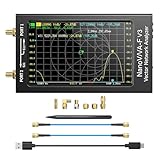
- [1MHz-6GHz ULTRA-WIDE RANGE] Upgraded NanoVNA-F V3 covers 1MHz to 6GHz. Features S21 dynamic range up to 65dB and S11 up to 50dB for fast, high-precision RF measurements.
- [801 SCAN POINTS & RTC] Delivers high data resolution with 101-801 customizable scan points and 12 calibration storage slots. Built-in Real-Time Clock (RTC) for easy timestamping.
- [4.3" IPS TOUCH SCREEN] High-resolution 4.3-inch IPS TFT LCD touch display offers wide viewing angles and clear visibility under bright outdoor light. Intuitive touchscreen interface.
- [VERSATILE RF MEASUREMENTS] Measures S-parameters, VSWR, Log Mag, Phase, Smith Chart, Group Delay, Resistance, and Reactance. Ideal for filters, amplifiers, cables, and duplexers.
- [4500mAh BATTERY & DURABLE SHIELD] Rugged metal aluminum housing shields against EMI interference. Built-in 4500mAh battery charges fully in 3 hours via Type-C for long field work.
The broader AI-native vision embeds AI into network architecture rather than adding it as a single operational feature. That direction could support more integrated adaptation, but it should be treated as an industry ambition and standards effort—not a description of every live network today.
What to check when evaluating an AI network capability
A useful assessment separates a tool’s demonstrated role from claims about autonomy. Ask:
Quick Recap
- Scope: Does it handle one task, such as fault detection, or coordinate work across network domains and the service lifecycle?
- Authority: Does it raise an alert, recommend an operator-approved action or make policy-bounded changes itself?
- Data and interoperability: Can it use relevant data across the vendors and systems involved, or is its operation limited to a narrower environment?
- Operational risk: What happens if its alert or action is wrong, and can an operator review, stop or reverse the response?
- Evidence of maturity: Is the capability described in a standard, evaluated in a proof of concept, used in a limited deployment or established in scaled production?
Product prices and availability are accurate as of the date/time indicated and are subject to change. Any price and availability information displayed on Amazon at the time of purchase will apply.

