
iTechGuides is reader-supported. When you buy through links on our site, we may earn an affiliate commission. As an Amazon Associate I earn from qualifying purchases. Learn more
Start with two separate numbers: usable energy capacity in kilowatt-hours (kWh) determines how long your selected loads can run, while inverter power in kilowatts (kW) determines which loads can run simultaneously. Estimate the daily energy use of the circuits you want backed up, multiply it by the outage duration, then add allowance for reserve settings, conversion losses, cold weather and battery ageing. Check startup power separately for motors and compressors.
A critical-load battery can be around 10 kWh, an average home may require about 30 kWh for a full day without recharging, and multi-day whole-home or off-grid operation can require at least 60 kWh. Those are planning benchmarks, not universal answers: heating, air-conditioning, electric water heating, well pumps and regional weather can change the result dramatically.
Capacity and power answer different questions
Capacity is runtime
Capacity is the amount of energy a battery can deliver, measured in kWh. If the backed-up circuits consume 5 kWh per day and you need two days of autonomy, the starting calculation is 10 kWh of usable capacity. Tesla uses this same 5-kWh-per-day, two-day example in its home-storage guidance.
Outdated Drivers Are Slowing You Down
One free scan finds every outdated or missing driver and matches the right update for your exact hardware.Free scan · exact hardware matchWindows Errors? Fix Them Before They Spread
Repair common Windows errors and clear accumulated junk for a smoother, more stable PC - no reinstall needed.Free scan · no reinstallUse usable capacity, not the battery’s gross nameplate figure. Reserve state-of-charge settings, inverter losses, a restricted depth of discharge, cold-weather limits and capacity degradation mean the installed nameplate may need to be larger than the energy your loads can actually receive.
#1 Best Overall
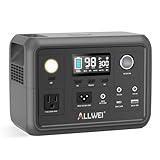
- 【Reliable Power for Every Scenario】This portable power station packs a 256Wh Capacity, delivering 300W continuous power and 600W peak surge (pure sine wave) to run your essentials seamlessly. As a versatile power station, it’s perfect for road trips (portable generator for camping), home emergency backup (portable generators for home use), and outdoor adventures—powering laptops, mini fridges, CPAP machines, drones, and more without damaging sensitive devices
- 【10-Year Long Performance】ALLWEI power bank power stations crafted with premium LiFePO4 (LFP) battery cells, this 300W portable power station delivers 3000 charge-discharge cycles—equating to nearly a decade of regular use. Advanced BMS (Battery Management System) provides 6-layer protection (short-circuit, over-current, over-voltage, etc.), while the pass-through function allows charging the station and your devices at the same time—safe for both home use and outdoor adventures
- 【6 Output Ports to Charge All Your Devices】Solar Generator equipped with 1* AC outlet, 2* DC5521 ports, 1* car cigarette lighter port, 1* USB-A fast charge 18W port, and 1* USB-C PD 60W port, this power station 300w can power up to 6 devices simultaneously. Whether you need fast charging for your smartphone, laptop or stable power for small appliances, this mini power station covers every charging need for family outings or solo camping
- 【3+1 Flexible Recharging Ways】This portable generator supports AC wall charging (3.5-4hrs full charge), 12V car charging (3.5-4hrs), solar panel charging (4-5hrs with 100W solar panel), and even dual charging (AC + solar) that fully recharges in just 2-2.5hrs. Built-in MPPT controller optimizes solar charging efficiency, making the 300W power station an ideal off-grid companion for road trips, hiking, or unexpected power outages
- 【Compact, Lightweight & Emergency-Ready】Weighing only 6.4 lbs and measuring 9.25×5×6.81 inches, this power station is easy to carry in your backpack or car trunk. It also includes a 3-level LED light with SOS mode for night camping or power outages. Backed by a 5-year warranty and 7×24 customer service, ALLWEI 300 watt portable power station is your trusted backup power source for home, camping, and all off-grid journeys
Power is simultaneous load capability
Power is the rate at which energy can be delivered. A battery’s continuous kW rating covers sustained operation; its peak kW rating covers short startup surges. A system can have enough kWh for an overnight outage and still trip when a compressor, pump or air-conditioner starts because the inverter cannot supply the instantaneous demand.
Tesla summarizes the distinction this way: “While energy (kWh) tells you how long a battery can run, power (kW) determines how many things it can run at the same time.” Size both figures independently.
Build a load-based sizing worksheet
1. Establish your home’s normal energy baseline
Collect at least one year of utility bills or interval data and calculate average daily consumption. Tesla cites approximately 10,500 kWh for a U.S. median home in 2023, or about 29 kWh per day, based on U.S. Energy Information Administration data. Treat that only as a reference: climate, floor area, occupancy and electrification can move your own figure far above or below it.
Do these 3 things before closing this tab:
1Repair Windows errors before they cause bigger problems2Fix the driver behind crashes, sound loss and screen glitches3Clear out junk files and repair common Windows errorsDo not use the whole-home average automatically. First decide which circuits must operate during an outage and which can remain off.
2. Separate critical and discretionary loads
Create two lists before requesting quotes. Critical loads commonly include refrigeration, internet equipment, lighting, medical equipment, heating controls, a well pump and selected cooking circuits. Large central air-conditioning systems, pool equipment, electric dryers, electric resistance heating and laundry are often excluded from a small critical-load design.
Rank #2

- 【192Wh Capacity, 300W Pure Sine Wave Output】This portable power station delivers a reliable 300W (600W surge) output, perfect for phones, tablets, laptops, fans, CPAP machines, lights, and cameras under 300W. It’s a smart battery station for outdoor camping, travel, home backup, and emergencies. Note: Not suitable for high-power appliances such as rice cookers, hair dryers, or mini-fridges that exceed 300W or have high start-up surges.
- 【Advanced LiFePO4 Battery with 3500+ Cycles】Built with high-quality LiFePO4 cells that last up to 10 times longer than standard lithium-ion batteries. Equipped with a smart Battery Management System (BMS) that protects against overcharging, overheating, and short circuits for long-lasting, safe use.
- 【Fast & Efficient Charging Options】Recharge your power station your way—via AC wall outlet (Max. 100W), car charger, or compatible solar panel (Max. 60W DC input). The built-in MPPT controller optimizes solar charging efficiency, helping you stay powered sustainably even off-grid. (Solar panels and car charging cables not included.)
- 【Charge 6 Devices at Once】Power up to 6 devices simultaneously with 2× 300W AC outlets, 1× USB-C PD (60W), 2× USB-A (18W QC3.0), and 1× 12V DC output. The stable pure sine wave current protects sensitive electronics, keeping your devices running smoothly without interference. Perfect for road trips, outdoor activities, and as an emergency power supply at home.
- 【Compact, Lightweight & Built-in LED Light】Weighing only 5.73 lbs, this compact portable power station is smaller than a toaster yet powerful enough to keep your essentials running anywhere. The integrated LED flashlight offers 4 brightness modes, including SOS for emergencies—your reliable light and power backup during outages or night adventures.
Tesla’s 2025 example puts a representative critical-load group at approximately 4–6 kWh per day when large HVAC, pool and laundry loads are excluded. Measure your own circuits where possible; appliance labels and online wattage charts are only starting estimates.
3. Multiply daily critical-load energy by the outage duration
Use this first-pass formula:
Required usable capacity (kWh) = daily energy for backed-up loads (kWh/day) × outage days.
The Tool Desk
Outbyte PC Repair FREERepair Windows errors before they cause bigger problemsFix Now →Outbyte Driver Updater FREEFix the driver behind crashes, sound loss and screen glitchesFind Drivers →For a six-hour outage, multiply daily use by 6/24. For a two-day target, multiply by two. If your selected loads use 5 kWh per day, two days requires 10 kWh before allowances for reserve and losses.
4. Add the engineering margin
Ask every installer and manufacturer how its “usable capacity” is defined. Account for the minimum reserve state of charge, round-trip conversion losses, reduced output in cold conditions and end-of-warranty capacity. A warranty that promises a percentage of original capacity at year 10 or 15 is more useful for planning than the day-one nameplate alone.
Solar generation during an outage can reduce the required stored energy, but do not count on a full recharge every day. Storm clouds, snow cover and short winter days can leave little production precisely when the grid is down.
Rank #3

- Powerful yet Compact: Boasting a 1,500W AC output and a 3,000W surge peak, the Solar Generator 1000 V2 can power multiple appliances, including AC units, fridges, and electric pots. With a 1,070Wh capacity and a lightweight build of only 23.8 lbs, along with a foldable handle, it makes an excellent companion for outdoor camping, road trips, or emergencies.
- One Hour Fast Charging: Charge your Explorer 1000 v2 Portable Power Station from 0% to 100% battery level in just one hour with emergency charging activated via the Jackery App. It defaults to 1.7 hours for a full charge to optimize battery health. Engineered with advanced ChargeShield 2.0 technology, this power station charges safer, faster, and smarter.
- 10 Year Lifespan: The Explorer 1000 v2 portable power station is equipped with a durable LFP battery, maintaining over 70% of its original capacity even after 4,000 charge cycles, offering longevity exceeding 10 years.
- Tailored for Versatility: Featuring two USB-C ports, one USB-A port, one DC car port, and three pure sine wave AC ports, along with LED lights, the Solar Generator 1000 V2 is capable of charging multiple devices simultaneously, meeting power needs in various scenarios. PD 100W fast USB-C charging ensures a rapid charging speed, even without power adapters.
- Smart App Control: Effortlessly switch between different charging modes with Jackery’s App—including one hour emergency charging from 0 to 100%, 30 dB quiet overnight charging mode, and energy efficiency mode. Maximize the freedom to adjust the power station to meet your needs.
Choose between critical-load and whole-home backup
| Design target | Planning scale | What it usually means |
|---|---|---|
| Critical loads | About 10 kWh | Refrigerator, communications, lighting, medical equipment, controls and selected pump or cooking circuits; large HVAC and other discretionary loads are shed. |
| Average home for one day | About 30 kWh | More circuits remain active, but consumption still depends on heating, cooling, water heating and appliance behavior. The figure assumes no dependable recharge during the day. |
| Whole-home, off-grid or multi-day | At least 60 kWh | Designed for long outages or limited solar availability. High-power electric heating, central air-conditioning and other large loads may require multiple battery units and a larger inverter. |
These EnergySage planning figures are useful for framing a quote, not for replacing a circuit-level audit. A small, efficient home with gas heat can need less than the average; an all-electric home in extreme weather can need substantially more.
Check inverter power and startup surges
List the running and starting requirements of every load that may operate at once. Tesla’s illustrative running-power values are:
| Appliance | Illustrative running power | Why it matters |
|---|---|---|
| Refrigerator | 0.8 kW | The compressor starts intermittently and can draw more than its running value. |
| Microwave | 1.2 kW | A sustained resistive load while operating. |
| Five-ton central air conditioner | 5 kW | Large continuous demand with a potentially high compressor-start surge. |
| Clothes dryer | 6.5 kW | Can consume a large share of a residential inverter’s output by itself. |
If all four illustrative loads ran together, their running demand would total about 13.5 kW before startup surges. A battery with ample kWh but a lower continuous or peak rating would need load management, a larger inverter or a different circuit allocation.
Ask for three values in a quote: continuous output, short-duration peak output and the duration of that peak rating. Confirm whether the stated peak supports motor starting or only a brief electronic overload. Tesla also notes that quality systems are modular, allowing energy capacity and output power to be scaled together; additional units may therefore solve both a runtime and a surge problem.
Battery chemistry: what the current examples show
Chemistry affects thermal behavior, usable energy, power capability, operating limits and warranty terms. There is no single “safest” label that eliminates the need for certified installation, protective controls and the manufacturer’s spacing and temperature requirements.
Quick wins for a faster PC:
Scan for outdated or missing drivers - takes under a minuteDriver Scan →Clear out junk files and repair common Windows errorsFree Scan →Rank #4

- 【Reliable UPS Backup for Power Outages】Built-in 10ms UPS automatically switches to battery power during outages, keeping WiFi routers, CPAP machines, and essential devices running without interruption.
- 【640Wh Capacity with 600W Output】Provides reliable power for daily essentials and outdoor gear, 1200W surge power with industry-leading PowerRaise technology to handle appliance startup loads.
- 【Full Charged in 1.5H】Ultra-fast AC charging takes the battery full charged in 1.5H, so you’re always ready for emergencies and trips.
- 【8 Output Ports for Multiple Devices】Includes 4 AC outlets plus USB ports to power up to 8 devices at once—ideal for home backup, camping, travel, and emergency use.
- 【Safer LiFePO4 Battery, Built to Last】Features an automotive-grade LiFePO₄ battery rated for 4000+ cycles, combined with a durable metal enclosure for improved heat dissipation and indoor safety.
EnergySage’s 2026 comparison of six featured home batteries lists lithium iron phosphate (LFP) chemistry for all six. That makes LFP the common chemistry in this current sample, but chemistry alone should not decide the purchase. Compare usable capacity, continuous and peak power, efficiency, coupling, warranty, end-of-warranty capacity and the installer ecosystem as a package.
AC coupling versus DC coupling
AC-coupled systems
AC coupling connects the battery on the home’s alternating-current side. It is usually the simpler path for retrofits because an existing solar array can remain in place while a separate battery inverter is added. The extra conversion step can reduce efficiency compared with a well-matched DC architecture, so compare the quoted round-trip efficiency and the actual solar-inverter compatibility.
DC-coupled systems
DC coupling connects battery and solar on the direct-current side through a compatible hybrid inverter. Avoiding one conversion stage can improve efficiency, particularly in a new installation, but the battery, inverter and solar equipment must be designed to work together. A DC product intended for a specific inverter ecosystem may be a poor fit for an otherwise compatible-looking array.
For an existing system, ask whether the proposal is AC or DC coupled, which hardware must be replaced, and how solar charging will work when the utility is offline. For a new solar-plus-storage project, compare both architectures using the same backup circuits and operating assumptions.
Recommended Free Tools
Current battery examples and specifications
The following figures come from EnergySage’s 2026 comparison. Scores reflect its ranking method, which considers performance, warranty, intelligence, value and popularity. “Not stated” means the cited comparison did not provide that field.
Best Value

- Ultra-Lightweight: At only 7.5 lbs, the Explorer 300 delivers a robust 292Wh capacity while remaining 17% lighter than the industry average. The sleek, integrated handle makes it effortless to carry on long hikes or pack with your camping gear, providing reliable off-grid power without adding bulk to your load.
- Versatile Power for 6 Devices: Equipped with 2 AC outlets, a 100W USB-C PD port, 2 USB-A ports, and a 120W car port. With a 300W rated output (600W peak surge), it easily handles laptops, drones, and cameras, while also serving as a dependable cpap battery for camping or a robust solar powered generator when paired with panels.
- Built to Last: Upgraded with premium LiFePO4 chemistry, this portable generator delivers over 4,000 charge cycles before reaching 70% capacity. This ensures more than 11 years of reliable service life, making it a sustainable and durable energy partner for a decade of exploration.
- Fast Solar Charging: Perfect for off-grid use, this solar powered generator pairs seamlessly with Jackery panels. Reach 80% capacity in approximately 2.8 hours with a 100W solar panel, or maintain your gear with a portable 40W panel (80% in 7.5 hours), making it an essential part of your hunting essentials.
- WHAT YOU GET: 1* Jackery Explorer 300 Portable Power Station, 1*AC adapter, 1* car charger cable, 1* user guide (𝐒𝐨𝐥𝐚𝐫 𝐏𝐚𝐧𝐞𝐥 𝐍𝐨𝐭 𝐈𝐧𝐜𝐥𝐮𝐝𝐞𝐝.)
| Model | Usable capacity | Continuous / peak power | Round-trip efficiency | Chemistry | Coupling | Warranty | End-of-warranty capacity | EnergySage score |
|---|---|---|---|---|---|---|---|---|
| Tesla Powerwall 3 | 13.5 kWh | 11.5 kW / not stated | 97.5% | LFP | AC/DC | 10 years | 70% | 100 |
| FranklinWH aPower 2 | 15.0 kWh | 10.0 kW / 15.0 kW | 90% | LFP | AC | 15 years | Not stated | 87 |
| MidNite Solar Powerflo 16 | 16.0 kWh | 8.1 kW / not stated | 97.5% | LFP | AC | 15 years | Not stated | 79 |
| Sigenergy SigenStor BAT | 8.8 kWh | 4.6 kW / 6.9 kW | 98% | LFP | AC/DC | Not stated | Not stated | 78 |
| Enphase IQ Battery 10C | 10.0 kWh | 7.1 kW / 14.2 kW | 90% | LFP | AC | 15 years | Not stated | 74 |
| SolarEdge BAT-10K | 9.7 kWh | 5.0 kW / 7.5 kW | 94.5% | LFP | DC | 10 years | Not stated | 74 |
Compatibility can outweigh a headline score. The Enphase unit is particularly suited to installations using Enphase microinverters, while the SolarEdge unit is designed for SolarEdge systems. Those ecosystem matches can affect monitoring, controls, labor and the equipment that must be replaced.
Independent reader supportYour contribution helps us test, update, and keep practical guides available for everyone.What the quoted prices mean
EnergySage reported these 2026 average quoted prices per kWh:
| Model | Average quoted price per kWh |
|---|---|
| Tesla Powerwall 3 | $998/kWh |
| FranklinWH aPower 2 | $1,177/kWh |
| MidNite Solar Powerflo 16 | $338/kWh |
| Sigenergy SigenStor BAT | $562/kWh |
| Enphase IQ Battery 10C | $1,404/kWh |
| SolarEdge BAT-10K | $1,532/kWh |
These are marketplace averages reported for 2026, not guaranteed retail prices. Installation scope, electrical-panel work, geography, permitting, project complexity and incentives can change the delivered cost. Compare complete proposals rather than multiplying a price-per-kWh figure by capacity.
Estimate backup time in real operation
Once usable capacity is known, a simple runtime estimate is:
Runtime (hours) = usable energy available (kWh) ÷ average load (kW).
Average load is the key variable. A refrigerator and networking equipment may draw little energy over an hour, while a 5-kW air-conditioner running continuously can consume 5 kWh in that hour alone. Cycling loads, thermostat settings, water-pump duty cycles and cooking habits therefore matter as much as the battery’s label.
Solar can extend runtime by supplying daytime loads and charging the battery, but output is weather-dependent. Storms, snow and low winter irradiance can sharply reduce that contribution. Set a reserve level for the loads you consider essential and practice the outage operating mode before an emergency.
How to compare installer proposals
- Give every bidder the same load list. Identify backed-up circuits, expected daily kWh, outage duration and appliances with motors or heating elements.
- Request usable, not just nameplate, capacity. Ask for the reserve setting, initial usable energy and the guaranteed capacity at the end of the warranty.
- Verify power ratings. Record continuous kW, peak kW, peak duration and the documented starting capability for compressors and pumps.
- Document the architecture. Note AC or DC coupling, inverter model, solar compatibility and which existing equipment will be retained or replaced.
- Check operating limits. Obtain the specified temperature range, charging restrictions, noise information and required clearances for the proposed location.
- Compare the complete installed price. Include electrical work, controls, monitoring, permits, labor and any incentive assumptions in the same total.
- Use a certified battery installer. Confirm local licensing, manufacturer certification, service coverage and who will support the system after commissioning.
A practical decision framework
Choose a critical-load system when
- Your priority is refrigeration, communications, lighting, medical equipment and essential controls.
- You can turn off central air-conditioning, electric heating, pool equipment and laundry during an outage.
- The service panel or budget cannot support a large whole-home inverter.
Choose a larger whole-home design when
- Heating, cooling, a well pump or other high-power equipment must remain available.
- You need a full day or more without dependable solar recharge.
- You are prepared for multiple battery units, higher inverter output and a larger installed cost.
Prioritize ecosystem compatibility when
- You already have a solar inverter platform and want to avoid replacing functioning equipment.
- Monitoring, warranty responsibility and one-company service are more important than the lowest quoted price per kWh.
- Your loads include motors or compressors that require a particular inverter’s surge behavior.
Common sizing mistakes
- Buying by kWh alone: Runtime capacity does not prove that the inverter can start your air-conditioner or pump.
- Using whole-home utility usage for a critical-load quote: This can oversize the battery if many circuits will be deliberately disconnected.
- Ignoring reserve and ageing: The advertised nameplate is not necessarily the energy available during a late-warranty outage.
- Assuming solar always recharges the battery: Severe weather can eliminate daytime production.
- Mixing incompatible equipment: Coupling type, inverter platform and monitoring controls must be evaluated as one system.
- Comparing prices without scope: A low $/kWh quote may exclude panel work, controls or other installation items included elsewhere.
The Bottom Line
Size the battery’s usable kWh from the loads you will actually run and the outage duration you want to cover. Size inverter kW separately for continuous demand and startup surges, then select chemistry, AC/DC architecture and ecosystem compatibility together. A certified installer should verify the load calculation, reserve assumptions, end-of-warranty capacity and complete installed cost before you buy.
Quick Recap
Product prices and availability are accurate as of the date/time indicated and are subject to change. Any price and availability information displayed on Amazon at the time of purchase will apply.

