
Outdated Drivers Are Slowing You Down
One free scan finds every outdated or missing driver and matches the right update for your exact hardware.Free scan · exact hardware matchPC Slower Than It Used to Be?
A free scan shows the junk files, broken settings and background clutter dragging Windows down - then fixes them in one click.Free scan · Windows 10 & 11iTechGuides is reader-supported. When you buy through links on our site, we may earn an affiliate commission. As an Amazon Associate I earn from qualifying purchases. Learn more
The Hitachi SimpleDrive Rev 3 2.0TB USB External Hard Drive was a capable but noisy desktop hard drive for its 2010 era. Its 7,200-RPM mechanism and aluminum enclosure were respectable, but USB 2.0 limited transfers to roughly 23–30MB/s. In 2026, a used unit is suitable only after health testing and never as the sole backup.
Also called the Hitachi SimpleDrive III 2TB, this discontinued product is best understood as a historical review rather than a current buying recommendation. The reviewed unit combined a 3.5-inch Hitachi Deskstar 7K2000 drive with an externally powered upright enclosure. Contemporary testing found solid construction and broadly acceptable USB 2.0 performance, but also unusually high noise, significant heat, and inconveniently slow large backups.
Key takeaways
- The Hitachi SimpleDrive Rev 3 2.0TB used a 7,200-RPM Hitachi Deskstar 7K2000 mechanism behind a USB 2.0 interface.
- Historical testing measured roughly 23–27MB/s reads, approximately 13.1ms average access time, and a 30GB mixed-file transfer lasting 20 minutes 32 seconds.
- StorageReview measured approximately 47dB average read noise, 63dB peak drive-use noise, and a 56°C internal temperature after sustained activity.
- The 3.5-inch desktop enclosure required a separate AC adapter, used passive cooling, and was designed to stand upright.
- The original three-year limited warranty and bundled backup software should be treated as historical; neither makes a surviving 2026 unit safer to buy.
- A used SimpleDrive is defensible for secondary or occasional offline storage only when SMART data, temperature, sustained transfers, and the power adapter all check out.
What exactly is the Hitachi SimpleDrive Rev 3 2.0TB?
The Hitachi SimpleDrive Rev 3 2.0TB was a capacity-focused, externally powered desktop hard drive from the USB 2.0 era. The product used a 3.5-inch internal mechanical disk rather than a portable 2.5-inch bus-powered drive, so it required a separate AC adapter and was intended to remain on a desk.
Contemporary coverage used both “Rev 3” and “SimpleDrive III” for this product generation. The reviewed 2TB version contained a Hitachi Deskstar 7K2000 mechanism, reported as model HDS722020ALA330, inside an aluminum-and-plastic tower enclosure. The original StorageReview product review identifies the drive, its USB 2.0 interface, and its internal mechanism.
#1 Best Overall

- J-ZMQER USB 2.0 Cable Compatible with Hitachi SimpleDrive 2.0TB External Hard Drive Laptop Data Cord
- 【Input】: AC 100-240V 50/252Hz.
- 【SAFETY】: With the international quality certification authority, our products are in compliance with top industry standards, and include numerous safety mechanisms, including protection against short circuiting, overvoltage, overcurrent, and internal overheating.
- 【Kindly Note】:Please make sure that you choose the right device before purchasing.
The distinction between the internal drive and the external product matters. The Deskstar mechanism was a 7,200-RPM hard disk, but the computer connected through USB 2.0. The external interface therefore restricted the performance that the internal disk could deliver.
Key specifications
| Specification | Reported detail |
|---|---|
| Marketed capacity | 2.0TB |
| Internal mechanism | Hitachi Deskstar 7K2000 |
| Reported internal model | HDS722020ALA330 |
| Form factor | 3.5-inch desktop hard drive |
| Spindle speed | 7,200 RPM |
| Cache | 32MB |
| Host interface | USB 2.0 |
| Power | External AC adapter |
| Enclosure | Aluminum and plastic upright tower |
| Security feature | Kensington security slot |
| Cooling | Passive cooling; no active fan reported |
| Warranty | Three-year limited warranty in contemporary U.S. coverage |
Capacity figures require the usual qualification. A marketed 2TB drive does not display as exactly 2,000GB in every operating system because manufacturers use decimal capacity units, operating systems may report binary-equivalent values, and formatting consumes a small amount of space.
How was the Hitachi SimpleDrive Rev 3 2.0TB USB External Hard Drive designed?
The enclosure was one of the product’s stronger features. StorageReview described a brushed-aluminum outer shell with plastic sections, rubber feet in the stand, secure-feeling cable connections, and a clean appearance. A front activity LED indicated drive operation, and a Kensington slot provided a way to attach a compatible physical security cable.
What’s actually slowing this PC down?
Pick the symptom - the matching free tool is one click away.
The SimpleDrive was designed as an upright tower. The stand was permanently attached rather than removable, which saved desk depth but limited placement flexibility. The drive could tip if pushed, and the permanent stand meant that the enclosure was not a freely orientable external case.
The enclosure also had practical shortcomings. StorageReview found the case difficult to open without potential damage, while the large wall-plug power adapter could obstruct an adjacent outlet. Those design choices were inconvenient when the product was new and become more important when evaluating a used unit whose disk, bridge board, or power adapter may need service.
The Tom’s Hardware comparison coverage also treated the product as a conventional externally powered desktop drive rather than a portable device. The SimpleDrive therefore needs a desk location, a free AC outlet, and a USB connection.
How fast was the SimpleDrive?
The Hitachi SimpleDrive Rev 3 2.0TB was reasonably capable for a USB 2.0 external hard drive, but USB 2.0 was its defining performance limitation. Historical test results varied with file size, direction, software, host system, filesystem, and caching, so no single benchmark should be treated as a guaranteed speed.
Recommended Free Tools
| Measurement | Historical result | What it means |
|---|---|---|
| Read throughput | Approximately 23–27MB/s in Tom’s Hardware testing | Normal for an older USB 2.0 external drive, not fast by modern standards |
| USB 2.0 sequential ceiling | Approximately 30MB/s in StorageReview’s assessment | The interface limited the external product more than the 7,200-RPM mechanism alone |
| Average access time | Approximately 13.1ms | Typical mechanical-drive latency rather than SSD-like responsiveness |
| Mixed-file transfer | Nearly 30GB in 20 minutes 32 seconds | Large backups and collections could take a long time |
According to Tom’s Hardware’s 2010 testing, read results were approximately 23–27MB/s and average access time was approximately 13.1ms. StorageReview described USB 2.0 sequential performance as topping out around 30MB/s and recorded a nearly 30GB mixed-file transfer in 20 minutes 32 seconds in its own test.
The numbers are not necessarily contradictory. A sequential test, a mixed-file copy, a read test, and a write test stress different parts of the system. A result above 30MB/s in one long-transfer passage may also reflect a particular workload or measurement method rather than a universal sustained rate.
Rank #2

- High capacity in a small enclosure – The small, lightweight design offers up to 6TB* capacity, making WD Elements portable hard drives the ideal companion for consumers on the go.
- Plug-and-play expandability
- Vast capacities up to 6TB[1] to store your photos, videos, music, important documents and more
- SuperSpeed USB 3.2 Gen 1 (5Gbps)
What do those speeds feel like in practice?
Large media files could be streamed adequately because playback does not require the entire file to be copied first. Copying a large photo library, video collection, or disk image was much less pleasant. Small files add filesystem and seek overhead, while a full 2TB copy at approximately 25–30MB/s would take many hours under ideal sustained conditions and longer in real mixed workloads.
StorageReview’s 30GB transfer result is more useful than calling the drive simply “fast” or “slow.” The drive could serve occasional media storage, but a large backup could become an overnight operation. The original StorageReview review specifically connected the USB 2.0 limit with the inconvenience of backing up 2TB.
Free tools Windows power users keep installed
One-click scans. No signup required.
Connecting the SimpleDrive to a USB 3.x computer does not turn the drive into a USB 3.x device. A modern host may provide backward compatibility, but the external enclosure and its bridge electronics remain USB 2.0-limited.
Was the SimpleDrive noisy?
Yes. Noise was the most consistent major criticism of the Hitachi SimpleDrive Rev 3. The mechanical disk produced audible read/write clicks and a noticeable hum, while the aluminum enclosure could amplify vibration rather than conceal it.
According to StorageReview’s localized acoustic testing, the drive averaged approximately 47dB during read activity and reached approximately 63dB at peak drive use. StorageReview characterized the SimpleDrive as among the loudest external drives tested by that outlet.
Those figures came from one sample and one test method, so they should not be compared directly with current manufacturer noise specifications. A surviving unit may be louder because of bearing wear, surface degradation, loose mounting, or enclosure vibration. Repeated clicking, grinding, chirping, spin retries, or regular disconnects should be treated as warning signs rather than normal operating noise.
Quick wins for a faster PC:
Repair Windows errors before they cause bigger problemsFix Now →Scan for outdated or missing drivers - takes under a minuteDriver Scan →Did the SimpleDrive run hot?
The SimpleDrive ran relatively warm during sustained activity because the enclosure used passive cooling and had no reported active fan. StorageReview measured an external enclosure temperature of 100.5°F and an internal drive temperature of 56°C after one hour of read/write activity.
The StorageReview thermal test placed the internal temperature close to the approximately 60°C maximum operating temperature cited for the drive. The measurement was not a universal specification: it represented one review sample, one workload, and one environment.
Heat deserves extra attention in 2026. Dust, blocked ventilation, aging bearings, a failing power supply, and a warm cabinet can make an old enclosure operate less favorably than a new review sample. Monitor the drive during a sustained transfer, keep the vents clear, and avoid placing the tower in a closed cabinet if the temperature rises quickly.
Rank #3

- Slim durable design to help take your important files with you
- Vast capacities up to 6TB[1] to store your photos, videos, music, important documents and more
- Back up smarter with included device management software[2] with defense against ransomware
- Help secure your important files with password protection and hardware encryption
- 3-year limited warranty
How much power did the SimpleDrive use?
The SimpleDrive required external AC power and therefore was not suitable for cable-only portable operation. StorageReview measured between 12W and 28W depending on the drive state, with startup drawing the most power in the test setup.
| Drive state | Historical measured power |
|---|---|
| Idle | 12W |
| Startup | 28W |
| Random access | 18W |
| Sequential write test | 14W |
| Sequential read test | 13W |
These values are historical measurements from one sample and test setup, not current universal specifications. The original power-consumption results are useful for understanding the product’s behavior, but a used unit may differ because of adapter efficiency, drive wear, or bridge-board condition.
What power adapter does it need?
StorageReview identified the supplied adapter as a Sunfone ACW018A3-12U with 100–240V, 50–60Hz, 0.8A input and 12V, 1.5A output. The large wall-plug design could interfere with neighboring power sockets.
A used buyer should verify the adapter’s voltage, polarity, current rating, connector dimensions, cable condition, and plug condition. A random adapter marked “12V” is not automatically safe. Incorrect polarity, an unsuitable connector, or inadequate current capacity can damage the drive or create an electrical hazard.
What backup software came with the drive?
Contemporary coverage does not name one universally consistent software bundle. StorageReview described a preloaded Get Started launcher and ArcSoft TotalMedia Backup & Record, while Tom’s Hardware referred to Hitachi Backup software.
The difference may reflect regional packaging, retail bundles, firmware images, or review samples. StorageReview described functions including scheduled backups, password-protected backup selections, restore operations, and disc-burning utilities. The Tom’s Hardware coverage confirms the separate Hitachi Backup reference.
Bundled software should be treated as historical context in 2026. Old utilities may not be supported on current operating systems and should not be installed merely because they are present on a surviving drive. Use a maintained operating-system backup feature or current third-party backup software instead.
Backup software also does not make one disk a complete backup strategy. Important data needs multiple copies, at least one copy disconnected or otherwise isolated, and periodic restore testing. A used mechanical disk should never be the only copy of photos, financial records, or other irreplaceable files.
Was the enclosure easy to repair?
No. The SimpleDrive enclosure was difficult to disassemble, and opening the case could damage the enclosure. StorageReview regarded serviceability as a disadvantage, particularly because opening the case could have affected the original warranty.
Do these 3 things before closing this tab:
1Scan for outdated or missing drivers - takes under a minute2Clear out junk files and repair common Windows errors3Fix the driver behind crashes, sound loss and screen glitchesRank #4

- Easily store and access 4TB of content on the go with the Seagate Portable Drive, a USB external hard drive.Specific uses: Personal
- Designed to work with Windows or Mac computers, this external hard drive makes backup a snap just drag and drop
- To get set up, connect the portable hard drive to a computer for automatic recognition no software required
- This USB drive provides plug and play simplicity with the included 18 inch USB 3.0 cable
- The available storage capacity may vary.
That limitation creates several possible failure points:
- The internal hard disk can develop bad sectors, failing heads, worn bearings, or other mechanical faults.
- The USB-to-SATA bridge board can fail while the disk remains readable.
- The external AC adapter can fail or become electrically unsafe.
- The enclosure can develop vibration, connector, or thermal problems.
If the USB bridge or power system fails, the internal disk may still contain recoverable data, but opening the enclosure is not a casual troubleshooting step when the drive holds the only copy of important files. For valuable data, preserve another copy before attempting disassembly or board-level diagnosis.
What warranty did the SimpleDrive have?
The original StorageReview review reported a three-year limited warranty for normal use when the drive was purchased through an authorized Hitachi dealer. The reported RMA process required the owner to ship the drive at the owner’s expense using approved packaging.
Any original warranty should be assumed expired for a 2026 purchase. The historical warranty terms describe the product’s launch-era support, not protection available to a current used buyer.
What did the 2TB model cost when new?
Historical pricing varied by region, retailer, and date. StorageReview’s regional page listed a suggested retail price of $249.99 for the 2TB model, while Tom’s Hardware described the 2TB version as costing roughly $200 in its comparison.
| Source and context | Historical 2TB price | How to interpret it |
|---|---|---|
| StorageReview regional suggested pricing | $249.99 | Launch-era suggested retail figure |
| Tom’s Hardware comparison | Roughly $200 | Approximate contemporary comparison price |
The StorageReview regional pricing page also listed $99.99 for 500GB and $129.99 for 1TB. Historical prices are not a current valuation, and a used SimpleDrive should be priced according to health, included accessories, return rights, and risk—not its original capacity label.
What should you check before buying one used in 2026?
A used SimpleDrive should be evaluated as an old mechanical disk with a legacy enclosure, not as a cheap 2TB capacity upgrade. A unit that powers on and mounts is not necessarily healthy.
- Request SMART data. Check reallocated sectors, pending sectors, uncorrectable sectors, power-on hours, start/stop count, and reported temperature. Any concerning sector count or health warning should be treated seriously.
- Perform a full-surface read test. A quick format checks neither the complete surface nor long-duration stability. A full test can take many hours because the USB 2.0 interface is slow.
- Test sustained transfers. Copy a large quantity of data and watch for disconnects, pauses, clicking, spin-up loops, or sudden speed collapse. Directory browsing alone is not enough.
- Listen carefully. A normal mechanical hum differs from repeated clicks, grinding, chirping, or repeated attempts to spin up.
- Monitor temperature. Watch the drive during sustained activity. A unit that rapidly approaches the historical 56°C internal result deserves caution, especially in a warm or enclosed location.
- Verify the power adapter. Confirm the original adapter or a correctly specified replacement. Check voltage, polarity, current rating, connector fit, and cable condition.
- Confirm a return option. A short testing period is valuable because some failures appear only after prolonged operation.
- Keep another copy. Do not place irreplaceable files on the SimpleDrive until another verified copy exists, and do not make the SimpleDrive the only backup.
The internal mechanism reported in the original review should not be assumed to be present in every surviving enclosure. A previous owner may have replaced the disk, and the enclosure may now contain a different model with different capacity, health, temperature, or performance characteristics.
The Tool Desk
Outbyte Driver Updater FREEScan for outdated or missing drivers - takes under a minuteDriver Scan →Outbyte PC Repair FREERepair Windows errors before they cause bigger problemsFix Now →What are the best uses for the SimpleDrive today?
The SimpleDrive is most defensible as secondary, occasional, or disposable storage after testing. Its low throughput, desktop power requirement, age, noise, and uncertain condition make it a poor fit for important primary storage.
Best Value
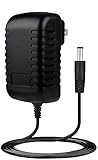
- ✎World Wide Input✎ :Voltage 100-240VAC 50/60Hz
- ✎Safety Protection✎: No noise, low temperature operation, no spontaneous combustion, no explosion, no fire hazard, stable output. Automatic overload cut-off, over voltage cut-off, automatic thermal cut-off, short circuit protection.
- ✎Voltage Consistency ✎: No voltage fluctuations at power on, during transmit, receive, or at power off. It will protect your electronic products from destruction.
- ✎2-Year Warranty ✎: We will provide 2 year manufacturer warranty and 30 days return - we've got your back!
- BestCH 12V AC Adapter for Hitachi SimpleDrive 2.0 TB External Hard Drive HITACHI XL Desk External Hard Drive 12VDC Power Supply Cord Cable PS Wall Home Battery Charger Mains PSU
| Use case | 2026 assessment | Reason |
|---|---|---|
| Secondary media library | Reasonable after testing | Large files can be read adequately, and occasional access reduces wear and inconvenience |
| Offline rotating copy | Conditionally reasonable | Useful only with another verified copy and a tested drive |
| Temporary bulk storage | Acceptable | Low speed may be tolerable when the data is replaceable |
| Frequent large backups | Poor fit | USB 2.0 makes long transfers inconvenient |
| Video editing or scratch disk | Poor fit | Mechanical latency and USB 2.0 throughput restrict workflow performance |
| Always-on NAS storage | Poor fit | Age, heat, noise, external power, and lack of redundancy create unnecessary risk |
| Sole copy of important data | Unsafe | One old disk and one difficult-to-service enclosure provide no meaningful redundancy |
How does the SimpleDrive compare with modern storage choices?
The most useful modern comparison is not nominal capacity alone. Interface speed, noise, power, serviceability, warranty, and the age of the mechanism matter at least as much as the 2TB label.
| Storage choice | Speed and noise | Power and portability | Serviceability and risk | Best fit |
|---|---|---|---|---|
| Used Hitachi SimpleDrive Rev 3 | USB 2.0-limited and mechanically noisy | External AC adapter; desktop-only | Old disk and difficult-to-open enclosure; condition varies | Low-cost secondary or occasional offline storage after testing |
| Current external HDD | Usually faster interface and still mechanically audible | Desktop models require power; portable models may be bus-powered | Newer electronics and current warranty terms, subject to model | Inexpensive bulk storage |
| External SSD | Silent and substantially more responsive | Usually portable and bus-powered | No moving parts, but capacity per dollar is commonly lower than HDD storage | Frequent transfers, laptops, quiet workspaces, and shock-prone use |
| Internal HDD with modern enclosure or dock | Interface can be much newer than USB 2.0 | Usually externally powered for 3.5-inch disks | Replaceable disk and enclosure; compatibility still needs checking | Technically capable users who value upgradeability |
| Network-attached storage | Shared network access; speed depends on the network and disks | Always-on system with ongoing power use | Can support redundancy, but requires configuration and maintenance | Multiple-device access and managed backups |
A current external HDD is generally the closest functional replacement for inexpensive bulk storage, while an external SSD is the better choice for silent operation, portability, and frequent large transfers. An internal drive paired with a modern USB-to-SATA enclosure or dock offers easier replacement than the sealed SimpleDrive. A NAS is more appropriate when multiple devices need shared access or redundant storage.
Specific current models, prices, warranties, and availability require a fresh product check. The legacy SimpleDrive research does not establish those volatile details, so the comparison above deliberately avoids naming a current product as a guaranteed recommendation.
Is the Hitachi SimpleDrive Rev 3 worth buying in 2026?
The Hitachi SimpleDrive Rev 3 is worth considering only under narrow conditions: the price is very low, the seller permits testing or offers a meaningful return period, SMART data is clean, a correct power adapter is included, sustained transfers are stable, and the drive will hold only replaceable or redundant data.
The drive is not a sensible primary backup purchase merely because it still mounts or advertises 2TB. The original reviews evaluated new hardware in 2010. A 2026 buyer is evaluating a potentially sixteen-year-old mechanical disk, aging enclosure electronics, an external power supply, and a USB 2.0 interface that can turn large backups into many-hour jobs.
Historically, the SimpleDrive was reasonably well-built high-capacity hardware hampered by its interface, noise, and thermal behavior. As a modern used purchase, it is poor value unless unusually cheap and thoroughly tested.
Frequently Asked Questions
Is the Hitachi SimpleDrive Rev 3 compatible with modern computers?
The Hitachi SimpleDrive Rev 3 may work with modern computers through USB backward compatibility, but the drive remains limited to USB 2.0 and compatibility should be tested rather than assumed. The external AC adapter must also be present and electrically correct.
Can the Hitachi SimpleDrive Rev 3 be used as a backup drive?
The Hitachi SimpleDrive Rev 3 can serve as a secondary or offline backup copy after SMART and full-surface testing, but it should never be the only copy of important data. The old mechanical disk, difficult-to-open enclosure, and USB 2.0 transfer speed make redundancy and restore testing especially important.
Does plugging the SimpleDrive into USB 3.0 make it faster?
Plugging the SimpleDrive into a USB 3.x computer does not turn the enclosure into a USB 3.x drive. The SimpleDrive’s own USB 2.0 bridge remains the performance limit.
What causes clicking noises from a used SimpleDrive?
Repeated clicking, grinding, chirping, or spin-up retries can indicate mechanical wear or a failing disk and should not be dismissed as normal activity. Occasional access clicks can be normal for a mechanical hard drive, but important data should be copied before further diagnosis.
The Bottom Line
Bottom line: The Hitachi SimpleDrive Rev 3 2.0TB was respectable historical hardware with a solid aluminum enclosure and a capable 7,200-RPM mechanism, but USB 2.0, high noise, heat, external power, and difficult serviceability limited its appeal even when new. In 2026, buy one only if it is exceptionally cheap, fully tested, correctly powered, and used as secondary storage—not as a sole backup or modern primary drive.
Quick Recap
Product prices and availability are accurate as of the date/time indicated and are subject to change. Any price and availability information displayed on Amazon at the time of purchase will apply.

