
Quick wins for a faster PC:
Clear out junk files and repair common Windows errorsFree Scan →Fix the driver behind crashes, sound loss and screen glitchesFind Drivers →Repair Windows errors before they cause bigger problemsFix Now →iTechGuides is reader-supported. When you buy through links on our site, we may earn an affiliate commission. As an Amazon Associate I earn from qualifying purchases. Learn more
You can host an application that handles electronic protected health information (ePHI) on virtual machines or containers, but neither architecture is “HIPAA compliant” by itself. The key questions are whether the cloud provider is acting as a business associate and has an appropriate business associate agreement (BAA), how ePHI moves through the system, and which party implements each required safeguard.
Can I host a HIPAA app on a VM or container platform?
Yes. HHS Office for Civil Rights (OCR) guidance allows a covered entity or business associate to use cloud services to store or process ePHI if it has an appropriate BAA with a cloud service provider acting as a business associate and otherwise complies with the HIPAA Rules. The guidance does not grant a compliance status to a VM, container, Kubernetes cluster, cloud account, or provider product.
The deployment model affects risk and the division of work, but it does not replace the underlying analysis. A VM can leave you responsible for its guest operating system, application, and data while the provider handles lower infrastructure layers. A managed Kubernetes service may take on parts of the control plane while leaving you responsible for workloads, identity, networking, and configuration. The exact boundary depends on the service and its terms.
Do I need a BAA for cloud hosting?
Generally, a provider that maintains ePHI on behalf of a covered entity or business associate is a business associate and needs an appropriate BAA. HHS says that this can be true even when the provider stores only encrypted ePHI and does not possess the decryption key. The narrow conduit exception generally applies to transmission-only services with transient storage incidental to transmission, not a provider that persistently stores or processes ePHI.
#1 Best Overall

- Dell T7810 Precision Tower Workstation
- 2x Intel Xeon E5-2690 v4 14-Core/28 Threads 3.1GHz (3.5GHz Turbo)
- 128GB Memory DDR4 – Nvidia Quadro K620 2GB
- Add your own Hard Drives/ SSDs
- Add your own Operating System
A BAA should establish permitted uses and disclosures and require appropriate safeguards. It is not a handoff of your HIPAA duties: each covered entity and business associate remains responsible for its own risk analysis and risk management for the ePHI it handles. The BAA and related service terms should make the parties’ responsibilities understandable in the actual deployment.
Check the service scope, not just the provider name
Confirm that the specific cloud services and features you plan to use are within the provider’s BAA scope. A provider’s list of eligible services does not establish that every service in your account, integration, or architecture is included. Provider scope and agreement terms can change, so verify the current documentation and signed terms before placing ePHI in a service.
Rank #2

- HPE ProLiant ML350 Gen10 4U Tower Server for small business or Enterprise
- Dual (2) Xeon Silver 4110 8-Core 2.10GHz 8MB CPUs
- 256GB DDR4 PC4-25600 3200MHz Unbuffered Memory
- 15.36TB Enterprise 2.5” SATA III 6Gb/s SSDs for Ultra Fast Storage
- Operating System: Server 2019 Standard – Designed primarily for physical or minimally virtualized environments
HHS OCR says it does not endorse, certify, or recommend specific technologies or products. A provider’s BAA or eligible-service listing is evidence about the provider relationship and covered service scope; it is not approval of your application, configuration, or overall compliance.
Who is responsible for HIPAA compliance in the cloud?
Responsibility is shared, but not necessarily evenly. HHS advises cloud customers to understand the particular environment well enough to conduct a risk analysis and establish risk-management policies. It also says the parties should document how applicable Security Rule requirements will be addressed, in the BAA or another written agreement. For example, a customer may control user authentication for a no-view service, while the provider still needs appropriate controls over administrative tools used to manage its infrastructure.
Rank #3
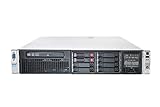
- HP Proliant DL380P G8 8 Bays 2.5 Server
- 2x Intel Xeon E5-2680 2.7GHz 8 Core
- 128GB DDR3 REG MEMORY
- HP P420i 512MB Raid Controller
- 600GB (2x 300GB 10K SAS HDD)
There is no universal VM responsibility matrix that applies across providers. For each service, map responsibility for the physical environment, VM host or hypervisor, guest operating system, patching, identity, network configuration, logging, backups, recovery, and application and data controls. Check the actual service terms and documentation rather than assuming that “cloud” or “managed” settles the question.
How managed Kubernetes changes the boundary
A managed control plane does not mean the provider secures your workloads. The provider examples below describe different responsibility boundaries; they are not rankings or guarantees that a customer deployment is compliant.
Rank #4
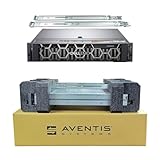
- Dell PowerEdge R740 2U Rack Server with Rail kit for small business or Enterprise
- Dual (2) Xeon Gold 6148 20-Core 2.40 GHz, 27.5MB, Up To 3.70 GHz Turbo
- Memory: 256GB (8 x 32GB) DDR4 PC4-25600 3200MHz Unbuffered Memory
- Storage: 7.68TB (4 x 1.92TB) Enterprise 2.5” Solid State Drive (SSD) for Ultra Fast Storage
- Hard drives & memory upgrades included separately, not installed, installation required.
| Service documentation | Provider responsibilities described | Customer responsibilities described |
|---|---|---|
| Amazon EKS compliance and shared-responsibility guidance | Shared responsibility for security of the cloud and in the cloud; selected services are listed as HIPAA-eligible and BAA-covered in AWS documentation. | Workload images and applications; EKS guidance also calls out configuration of nodes, containers, data plane, and network controls. |
| Microsoft AKS support policies and Azure HIPAA information | Microsoft manages the control plane and selected platform components; responsibility matrices also mark some areas, including upgrades, node OS images and patching, managed add-ons, and storage, as shared. | Workloads, data, networking, identity, and multiple configuration tasks. Azure’s BAA applies to in-scope services, and Microsoft says it does not inspect, approve, or monitor customer applications. |
| Google Cloud GKE shared-responsibility guidance | Underlying infrastructure and control-plane security. | Workload code, build files, container images, data, IAM policy, and the containers and pods the customer runs. |
These descriptions are provider documentation, not a substitute for checking the current service scope, BAA, and configuration guidance for your deployment. Responsibility matrices can change, and the customer duties listed are only part of a complete HIPAA risk analysis.
What’s actually slowing this PC down?
Pick the symptom - the matching free tool is one click away.
Containers share a host kernel
Container isolation is not the same as running each workload on a separate physical host. AWS EKS security guidance explains that Linux containers use cgroups and namespaces to limit access but share the host EC2 instance’s Linux kernel. That architectural fact is relevant to isolation and threat modeling; it does not, by itself, determine whether a deployment meets HIPAA requirements. AWS EKS security guidance.
Best Value

- 【Powerful Processor & Graphics】The MS-02 Ultra Mini Workstation is powered by an Intel Core Ultra 9 Processor 285HX (24C/24T, up to 5.5 GHz) built on a hybrid architecture. It features integrated Intel Graphics with a maximum frequency of up to 2.0 GHz, delivering enhanced graphics acceleration and hardware ray tracing for an elevated user experience. Engineered for next‑generation efficient high‑performance computing, it excels in gaming, 3D rendering, video editing, and remote work.
- 【High‑Speed Multi‑Port Networking】This mini workstation is equipped with dual 25G SFP+ ports, each supporting 25 Gbps transfer speeds and link aggregation—ideal for users requiring ultra‑fast wired connections to high‑speed LANs, network storage, servers, and other high‑bandwidth devices. It also includes one 10G and one 2.5G RJ45 port, supporting high‑speed home and office networking and other scenarios demanding rapid data transfer.
- 【Flexible & High Capacity Expandability】The workstation features four DDR5 slots supporting up to 256GB total capacity with ECC support (XMP overclocking not supported), plus four M.2 2280 PCIe 4.0 SSD slots supporting RAID 0/1/5/10. 2×M.2 2280 NVMe SSD slots (PCIe4.0x4, up to 8TB per slot), 2×M.2 2280 NVMe SSD slots (integrated on the 25GbE NIC; up to 8TB per slot with PCIe 3.0 x4 /4TB per slot with PCIe 4.0 x4). It also provides: 1 × PCIe 5.0 x16 slot (supports bifurcation), 1 × PCIe 4.0 x4 slot, 1 × PCIe 4.0 x16 slot (prepopulated with 25GbE NIC and dual M.2 slots, not available for expansion). This configuration enables effortless storage of movies, videos, photos, and critical files.
- 【Quad Video Output & Multi‑Display Support】The MS-02 Ultra Workstation supports four simultaneous video outputs:1 × HDMI 2.1 (8K@60Hz, 4K@120Hz), 1 × USB4 with DP Alt Mode (8K@60Hz, 4K@120Hz), 2 × USB4 V2 with DP Alt Mode (8K@60Hz, 4K@120Hz). This setup supports multi‑monitor configurations for an expanded field of view and improved productivity.
- 【Enhanced Cooling & Ultra‑Quiet Operation】The MS-02 Ultra features a server‑grade airflow design with dedicated CPU/GPU cooling channels and a server‑style exhaust layout for precise thermal management and long‑term system stability. With six heat pipes and dual fans, it efficiently dissipates up to 140W of turbo power and sustains a 100W TDP load, operating quietly at just 36 dB. A built‑in 350W power supply ensures stable, efficient power delivery for consistent high performance, simplifying deployment and maintenance.
What should I check before putting ePHI in a cloud deployment?
- Trace the ePHI. Identify where ePHI is collected, transmitted, processed, stored, backed up, logged, and exposed to support or administrative tools. Include data flows between services, not just the primary database.
- Confirm the business associate relationship. Determine whether each provider that persistently stores or processes ePHI is acting as a business associate, and obtain an appropriate BAA before the service handles that information.
- Verify coverage for every service. Check that the actual services and features in the design are within the BAA scope. Do not treat an eligible-service label for one product as blanket coverage for an account or application.
- Write down the control boundary. For every service, assign an owner for infrastructure, hosts, control plane, nodes, operating systems, runtime, workloads, identity, network, logging, and data controls. Record shared duties explicitly.
- Assess access and configuration. Establish who configures user authentication, privileged administration, IAM or RBAC, management-plane access, network segmentation, secrets, and image and application security. Validate the settings in use rather than relying on a provider’s general description.
- Plan for availability and recovery. Determine how backups are created, protected, restored, and tested; what recovery paths exist; and whether reliability commitments fit the operational need. HHS identifies availability, backup and recovery, and reliability as matters that can be addressed in service-level terms consistent with the BAA and HIPAA Rules.
- Plan for termination and data return. Make sure the agreement explains how ePHI will be returned or destroyed when the service ends, and that the process preserves any access or retention required by your obligations.
- Perform and maintain your risk analysis. Evaluate risks in the chosen public, private, or hybrid environment and put risk-management measures in place. Revisit the analysis when services, data flows, architecture, or responsibilities change.
Is encryption enough to make cloud hosting compliant?
No. Encryption is an important safeguard, but HHS explains that encryption alone does not ensure ePHI’s integrity or availability and does not replace administrative or physical safeguards. It also does not remove a cloud provider’s business associate obligations when the provider persistently maintains encrypted ePHI without a decryption key.
Assess encryption alongside access controls, configuration, monitoring, incident handling, availability, recovery, and the other safeguards that apply to your organization and system. A control that protects confidentiality does not automatically address the other risks in the deployment.
What belongs in the BAA and related service terms?
Use the BAA and related agreements to make the relationship operational, not merely formal. HHS identifies permitted uses and disclosures, safeguards, and written allocation of applicable Security Rule responsibilities as key considerations. Service-level terms can also address:
- Availability and reliability expectations.
- Backup, recovery, and restoration arrangements.
- Security responsibilities for provider-managed and customer-managed components.
- Return or destruction of ePHI at termination.
- Use, retention, and disclosure of ePHI.
Make sure service-level terms do not conflict with the BAA or HIPAA Rules. Contract language cannot make an unsafe configuration safe, but an unclear agreement makes it harder to know who must perform a safeguard or respond when something goes wrong.
Quick Recap
Product prices and availability are accurate as of the date/time indicated and are subject to change. Any price and availability information displayed on Amazon at the time of purchase will apply.

