
Do these 3 things before closing this tab:
1Repair Windows errors before they cause bigger problems2Scan for outdated or missing drivers - takes under a minute3Clear out junk files and repair common Windows errorsiTechGuides is reader-supported. When you buy through links on our site, we may earn an affiliate commission. As an Amazon Associate I earn from qualifying purchases. Learn more
Hellraiser: Revival’s puzzles revolve around the Genesis Configuration, a puzzle box that changes the environment as well as solving conventional locks. On the PS5 version, check stick sensitivity, inversion, vibration, adaptive triggers, difficulty, tutorial reminders, pausing and manual saving before you begin. The official pages do not publish a button-by-button control map or exact menu paths, so verify those details in your installed game rather than relying on a guessed binding.
What the Genesis Configuration does
The Genesis Configuration is not merely an inventory puzzle. Assistant Game Director Vid Rajin describes it as “a puzzle box” used “at the centre of things,” helping the team create puzzles and manipulate the world. That means a solution may change the route through a room, alter an object’s form or expose a new relationship between objects. The PlayStation Blog’s feature on the game gives two useful examples without publishing their complete solutions: a huge wheel that realigns walkways through a spike-filled room, and a courtyard sequence in which a statue is missing an item and the box must be changed into the correct shape to serve as a key. Read the full developer feature at PlayStation Blog.
Think of it as an environmental tool
When a room appears physically impossible, ask what can be reconfigured rather than searching only for a conventional key. The giant-wheel example shows that the configuration can alter alignment and make a dangerous path usable. The courtyard example shows a second pattern: an object’s shape can be the required key, so the important step is identifying the form the lock or mechanism expects.
Do not assume every solution is single-track
The developer feature says some puzzles permit multiple solutions, but it does not reveal what those solutions are. Treat that as a design promise, not an invitation to look for a prescribed sequence in advance. If an interaction produces a plausible result, inspect the new state of the room instead of resetting simply because it differs from a walkthrough.
#1 Best Overall
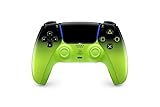
- Heighten Your Senses. Discover Deeper, highly immersive gaming experiences.
- Feel your in-game actions and environment simulated through haptic feedback
- Chat online through the built-in microphone or connect a headset directly via the 3.5mm jack
- Play on more devices Connect using a USB Type-C cable or Bluetooth wireless technology so you can easily play on more devices including Windows PC and Mac computers, Android and iOS mobile phones.
- Elevate PC gaming with advanced features like haptic feedback and adaptive triggers in a range titles
Puzzle types you should expect
Environmental reasoning
These puzzles connect a device, a structure and the space around you. The wheel-and-walkway example is the clearest illustration: the objective is not just to rotate an object, but to understand how its position changes the route through the room. Track what moves, what becomes reachable and what danger is reduced after each meaningful change.
Perspective and route puzzles
One sequence takes place in a looping room. The published description says the player must turn back rather than continue forward. Rajin explains that “The labyrinth Aidan is trapped in is intertwined with the real world,” and that the environment is trying to make him change perspective and try another approach. If a corridor keeps returning you to a familiar point, treat repetition as a clue that the expected action may be reversal, observation or a different route—not simply faster forward movement.
Rank #2

- Haptic feedback - Feel physically responsive feedback to your in-game actions with dual actuators which replace traditional rumble motors. In your hands, these dynamic vibrations can simulate the feeling of everything from environments to the recoil of different weapons. .Operating temperature : 41 °F to 95 °F (5 °C to 35 °C)
- Adaptive triggers - Experience varying levels of force and tension as you interact with your in-game gear and environments. From pulling back an increasingly tight bowstring to hitting the brakes on a speeding car, feel physically connected to your on-screen actions.
- Built-in microphone and headset jack - Chat with friends online using the built-in microphone or by connecting a headset to the 3.5mm jack. Easily switch voice capture on and off at a moment’s notice with the dedicated mute button. Internet and account for PlayStation Network required.
- DualSense Controller PS5 and PC compatible. Not compatible with PS4.
- PS Remote Play requires Remote Play App connected to Wi-Fi, PS4 or PS5 console with the latest system software and compatible game. A PS4 or PS5 console with a wired connection via a LAN cable is recommended. Version 4.0 of the Remote Play App on iOS and iPadOS or version 4.1 on macOS is required for games to be playable with the controller over Bluetooth.
Image-based locks
The blog describes a sliding-picture safe lock with a diagram clue. For this kind of puzzle, study the diagram before moving pieces. Look for the relationship the image is communicating—an arrangement, sequence or shape—rather than treating the safe as a generic sliding-tile challenge. The official description does not disclose the finished image, so this guide intentionally does not supply a spoiler solution.
Outdated Drivers Are Slowing You Down
One free scan finds every outdated or missing driver and matches the right update for your exact hardware.Free scan · exact hardware matchPC Slower Than It Used to Be?
A free scan shows the junk files, broken settings and background clutter dragging Windows down - then fixes them in one click.Free scan · Windows 10 & 11Lock-picking and combination puzzles
Conventional lock-picking and safe-combination puzzles also appear. Their presence means not every obstacle requires the Genesis Configuration. Separate the question “What object or number opens this?” from “How can the configuration change the room?” Mixing those two problem types can lead you to manipulate the box when the answer is an ordinary clue, or to search for a code when the environment itself needs to be altered.
Rank #3

- Bring gaming worlds to life - Feel your in-game actions and environment simulated through haptic feedback*. Experience varying force and tension at your fingertips with adaptive triggers*
- Find your voice, share your passion - Chat online through the built-in microphone. Connect a headset directly via the 3.5mm jack. Record and broadcast your epic gaming moments with the create button
- A gaming icon in your hands - Enjoy a comfortable, evolved design with an iconic layout and enhanced sticks. Hear higher-fidelity** sound effects through the built-in speaker in supported games
- Multi-device connectivity - Connect using a USB Type-C cable or Bluetooth technology and easily play on more devices including Windows PC and Mac computers.
- Elevate PC gaming with advanced features like haptic feedback and adaptive triggers in a range of blockbuster PC titles.
A non-spoiler method for solving difficult interactions
- Describe the obstacle precisely. Decide whether you are facing a blocked route, a shaped receptacle, an image lock, a combination, a lock-pick interaction or a room that loops. Naming the mechanism narrows the likely clue type.
- Inspect the whole scene. Before changing anything, look for diagrams, missing components, unusual geometry and objects that appear to line up. The published examples rely on relationships between the mechanism and its surroundings, not on a random button sequence.
- Test one meaningful change. Use the Genesis Configuration when the room suggests that alignment or form matters. After each change, check which walkway, gate, receptacle or line of sight has changed. Avoid making several changes at once; you then lose the cause-and-effect connection.
- Re-evaluate a loop. If the same space repeats, stop assuming that forward movement is progress. Turn back or examine the environment from a different position, as in the looping-room example described by the developer.
- Match clues to mechanisms. A diagram belongs with an image-based lock; a missing object points toward retrieval and placement; a shape-sensitive opening may require changing the box. This keeps unrelated clues from becoming noise.
- Allow for more than one valid route. Because some puzzles support multiple solutions, do not discard a workable result merely because it is not the first method you imagined. Observe the world after the interaction and continue from the state you created.
- Save before an experiment when practical. Manual saving is listed for the PS5 version, although the official listing does not state where saves can be made or whether any restrictions apply. Use the in-game save command shown by your copy before a risky experiment, rather than assuming every location is a valid save point.
PS5 settings worth checking before you play
The official PS5 product and accessibility listing describes feature availability, not a full settings manual. It lists the following options and support at the feature level. The listing reviewed was for PS5 and gave an October 8, 2026 release date; platform pages and menus can change, so confirm the labels in your installed release. See the listing at PlayStation’s official Hellraiser: Revival page.
| Setting or feature | What the PS5 listing establishes | What to check in your game | What is not published |
|---|---|---|---|
| Stick sensitivity | Adjustable stick sensitivity is listed. | Set it so camera or movement changes feel controllable before attempting precision interactions. | No numeric range, default value, per-stick detail or exact menu label beyond the feature name. |
| Stick inversion | Inversion is listed as an option. | Choose the vertical or other inversion behavior that matches your established preference, then test it in a safe area. | The listing does not specify axes, scope or whether the setting applies to camera, movement or both. |
| Controller vibration | The game can be played without vibration; DualSense vibration is also supported. | Leave vibration on for physical feedback or turn it off if sustained rumble is distracting or uncomfortable. | No intensity slider or individual effect controls are stated. |
| Adaptive trigger effects | The game can be played without adaptive trigger effects; DualSense trigger effects are supported. | Keep effects enabled if resistance is useful to you, or disable them for a lighter trigger feel. | No effect-by-effect strength controls are stated. |
| Difficulty | An alternative preset can reduce difficulty. | Use the lower preset if pressure from combat or progression is getting in the way of reading puzzles. | The listing does not name the presets or explain which systems they change. |
| Tutorial reminders | Tutorial information can be reviewed at any time. | Reopen reminders when you forget an interaction concept instead of guessing at an undocumented control. | No menu path or complete tutorial index is supplied. |
| Pause | Pausing is listed during gameplay and cinematics in offline play. | Use pause to take notes, inspect a diagram or adjust your setup when playing offline. | The listing does not describe online behavior, exceptions or the exact pause command. |
| Manual saving | Manual saving is listed. | Use the save action exposed by your current game menu before testing a questionable solution. | Save locations, frequency limits, overwrite behavior and button sequence are not documented. |
| Remapping and puzzle bindings | No verified control-remapping table is supplied by the reviewed official pages. | Open the current control and accessibility menus and read the binding prompts shown by your copy. | Exact buttons, remap coverage, interaction-hold behavior and menu navigation are unknown from these sources. |
How to choose the settings for your play style
If camera movement feels too fast or disorienting
Lower stick sensitivity first, then check inversion. Change one option at a time and make a short movement test so you know which adjustment helped. Because the listing gives no values or axis breakdown, describe the result by feel rather than expecting a documented percentage or preset.
Rank #4

- Ultra Customizable Controls
- Mappable Back Buttons
- DualSense Wireless Controller Features Built In
- Replaceable Stick Modules and Caps
If physical feedback is tiring
Disable vibration and adaptive trigger effects independently if the game exposes them separately. These are optional sensory-feedback features: turning them off does not remove the puzzle content described by the developer. DualSense support remains relevant if you prefer those effects, but no new controller is required to play.
If you want more assistance without puzzle spoilers
Try the listed lower-difficulty preset only if the game’s broader challenge is blocking progress, and use tutorial reminders when you have forgotten how an interaction works. Neither feature is documented as revealing puzzle solutions. The official pages do not state the preset’s name or the exact information shown by reminders, so check the wording on your own system.
Best Value

- Enjoy precise, comfortable control over 10,000+ supported Steam games.
- Easily pair the controller directly to your Windows PC via Bluetooth or play as you charge with the included USB Type-C cable
- Stay paired with up to four different Bluetooth devices, making it easy to enjoy the controller across Windows PC, Mac, PS5 consoles and smartphones. Discover more connection tips and tricks at playstation.com/pair-dualsense
- Access the latest available controller firmware directly from your PC with the free-todownload PlayStation Accessories app
- Play games streamed from your PS5 or PS4 console to your PC via the PS Remote Play App
If interruptions are likely
Offline pausing during gameplay and cinematics is listed, which is useful when you need to step away or study notes. Manual saving is also listed. Since no save restrictions are published, confirm the save has completed in the game’s own interface before quitting.
Independent reader supportYour contribution helps us test, update, and keep practical guides available for everyone.Controls: what is confirmed and what is not
The reviewed pages do not provide a verified table of button bindings for examining the Genesis Configuration, rotating structures, changing shapes, lock-picking, sliding picture tiles or entering combinations. They also do not publish a step-by-step route through the settings menus. Do not infer a control from another game or from a screenshot: open the control or accessibility screen in your release and follow the on-screen prompts.
This distinction matters because a puzzle guide can accurately explain what a mechanism does without establishing which button activates it. If an interaction does not respond, first confirm that you are targeting the intended object, then consult the current tutorial reminder or control prompt. Only after those checks should you consider a sensitivity or inversion change.
Free tools Windows power users keep installed
One-click scans. No signup required.
Hardware and platform scope
This guide is scoped to the official PS5 listing. That page identifies DualSense vibration and trigger effects as supported and lists play without either effect. A compatible DualSense controller is therefore relevant optional hardware, not a requirement for the puzzles. The reviewed sources do not establish that the same accessibility controls, bindings or menu structure exist on another platform or edition. If you play elsewhere, use that version’s current product page and in-game menus rather than carrying over PS5 assumptions.
A quick pre-puzzle checklist
- Confirm whether stick sensitivity feels manageable and set inversion before a complex room.
- Decide whether vibration and adaptive triggers help or distract you.
- Choose the standard or lower difficulty preset according to the overall challenge you want.
- Open a tutorial reminder if an interaction concept is unclear.
- Verify how your copy pauses offline gameplay and cinematics.
- Locate the manual-save action and confirm a save before an experiment.
- Read the on-screen control prompt for the current object; do not rely on an assumed button map.
- When a puzzle stalls, classify it as environmental, perspective-based, image-based, lock-picking or combination-based before trying random actions.
Bottom line for puzzle interactions
Approach Hellraiser: Revival as a game of relationships: the Genesis Configuration can rotate structures, reshape objects and alter the route through a room, while other obstacles use diagrams, combinations or lock-picking. The safest preparation is to tune the PS5’s basic comfort and feedback options, learn where your version exposes tutorial, pause and manual-save commands, and treat undocumented button bindings as something to verify in-game. The official feature pages establish the kinds of puzzles and settings available, but they do not provide spoiler solutions or a complete control manual.
Quick Recap
Product prices and availability are accurate as of the date/time indicated and are subject to change. Any price and availability information displayed on Amazon at the time of purchase will apply.

