
Do these 3 things before closing this tab:
1Repair Windows errors before they cause bigger problems2Fix the driver behind crashes, sound loss and screen glitches3Clear out junk files and repair common Windows errorsiTechGuides is reader-supported. When you buy through links on our site, we may earn an affiliate commission. As an Amazon Associate I earn from qualifying purchases. Learn more
For a higher-intensity workout that uses the same muscle groups, allow at least 48 hours before another hard session targeting those muscles, advises the American College of Sports Medicine (ACSM). That is a practical starting point—not a universal rule or a guarantee that everyone is ready at the 48-hour mark. Recovery depends on the workout’s intensity, type, and duration, as well as how you are feeling.
How long should you wait before working the same muscles again?
ACSM’s guidance is specific: allow at least 48 hours between higher-intensity exercise sessions that work the same muscle groups. The recommendation is useful when planning demanding sessions, but it is not an exact biological threshold. A different muscle group, an easier session, or ordinary low-intensity activity is a different training demand; the guidance does not assign each of those a precise recovery interval. ACSM’s 2019 recovery brochure says recovery techniques should be tailored to the individual based on workout intensity, type, and duration.
For example, if a hard session leaves a muscle group notably fatigued, plan another hard session for those same muscles no sooner than 48 hours later, then adjust based on symptoms and function. Do not treat the time alone as proof of readiness.
Does the 48-hour guideline mean you need two full rest days?
No. It addresses higher-intensity exercise of the same muscle groups, not every kind of movement. You may choose a light activity or train different muscles if you can do so comfortably, but the reviewed guidance does not provide a formula for how much recovery a particular person needs in those cases. “Rest” can mean avoiding another hard bout for the muscles in question; it does not necessarily mean remaining inactive.
#1 Best Overall

- IMPROVE MUSCLE RECOVERY – Multi-density GRID features a three-dimensional surface that provides more efficient muscle recovery by promoting tissue aeration as you roll, while promoting the flow of blood and oxygen for optimal muscle recovery
- OPTIMIZED FOR COMFORT – Unique foam construction with proprietary Distrodensity Zones is perfect to use on both tight, sore muscles, as well as soft tissue, for a more effective recovery experience
- PERSONALIZED ROLLING EXPERIENCE – Multi-density GRID pattern of varying ridges and nodules replicate the feeling of a massage therapist's hands, allowing users to utilize different areas of the roller to target key body parts
- DEEP TISSUE MASSAGE – EVA-foam-wrapped, hollow core design is firmer than traditional foam rollers, delivering a deeper compression-like a sports massage on tight muscles, knots, and kinks to achieve comfortable, effective, and targeted muscle recovery
- BUILT FOR FREQUENT USE – Durable EVA-foam roller maintains its shape without breaking—even after repeated use—allowing you to use the same roll-intensive recovery patterns massage therapists use for highly effective recovery
How does workout recovery differ from weekly activity recommendations?
Weekly public-health targets and recovery intervals answer different questions. The CDC recommends that U.S. adults aim for at least 150 minutes of moderate-intensity aerobic activity each week and muscle-strengthening activity on at least two days per week. Those targets describe weekly activity, not how many hours a particular person must wait between strength sessions. See the CDC adult activity recommendations and its overview of meeting physical activity recommendations.
When arranging a weekly plan, consider which muscles each hard session uses, how demanding and long each session is, and whether symptoms affect your movement. The CDC targets do not prescribe an individualized athlete’s schedule or override the need to space hard sessions for the same muscles.
Rank #2

- High-density foam roller in Black
- Ideal for balance, strengthening, and flexibility exercises
- Firm, durable polypropylene maintains shape; molded edges for added comfort
- Lightweight and easy to carry to class and to reposition during workouts
- Wipes clean easily
Can you work out if you are still sore?
Mild delayed-onset muscle soreness (DOMS) can follow unfamiliar or demanding exercise and usually lasts a few days. ACSM notes that soreness often becomes less severe as the body adapts to regular exercise, and that fitness gains do not require pain. Soreness alone is not proof that a workout was effective—or that recovery is complete. ACSM’s DOMS guidance distinguishes ordinary soreness from symptoms that make activity difficult or too painful.
Quick wins for a faster PC:
Repair Windows errors before they cause bigger problemsFix Now →Scan for outdated or missing drivers - takes under a minuteDriver Scan →- Mild soreness: Consider whether you can move normally and whether the planned session is appropriate. Do not use soreness as a required sign of progress.
- Severe soreness or symptoms that make the activity difficult or too painful: Refrain from that activity for a few days and return as discomfort allows, following ACSM’s consumer guidance.
- Acute pain during exercise: Stop the activity. Do not push through pain on the assumption that it is a normal or necessary part of training.
Symptoms may ease temporarily during activity and return afterward, so feeling better during a warm-up does not by itself establish that the muscles are fully recovered. Seek medical advice for concerning pain or symptoms.
Rank #3
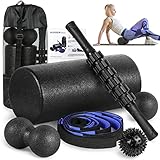
- " Whole Body Massage Foam Roller KIT " – You can get a high density 12" deep foam roller, a 15” anti-slip massage stick, a Peanut Massage Ball, 1 Plantar Fasciitis Ball: a solid heavy-duty 2-in-1 and spiky ball, 78” Stretching Strap, 1 Massage Guide,1 Nylon Bag, Relieve muscle soreness, massage away stress and rehabilitate injuries.
- " Relief Muscle Injury and Improves Performance " – One of the best recovery tools to treat muscle pain and increase performance and flexibility. Rolling before and after workouts is part of a great stretching routine. Increases blood flow to the massage site, and flush away stored lactic acid with the included spike ball. Reduce stiffness and pain before and after workouts, exercise, running and training with the deep tissue massage extra firm ball.
- " High Density and NO Squeezing Noise " – These are Solid high density foam, are capable of supporting up to an amazing 300lbs of weight, they will not lose their shape after heavy use, have No squeezing noise, and Repels Liquids, enabling you to use them for a wide variety of exercises without worrying about compatibility; They are will help you achieve better performance for many years to come.
- " PORTABLE NYLON BAG and SPACE SAVING " – The total body wellness kit comes with a durable Portable nylon mesh bag to increase portability that doubles as a yoga mat carrier. makes it the ideal companion for anywhere. Simply throw the set in your bag and use it anytime, anywhere.
- " PROVEN TO INCREASE PERFORMANCE " – Perfect for positioning, balance, postural and muscle re-education, spinal stabilization, body awareness and coordination, and strengthening activities. This set is great for physical therapy and exercise , back pain , massage therapy, rehabilitation,before and after workout warm ups and warm downs, and yoga. Foam muscle rollers help to relieve muscles tension and increase muscle reflexology.
What can you do on a recovery day?
A recovery day can include no exercise, or comfortable, less intense movement. ACSM lists recreational activity at a lower intensity, light yoga, mobility work, massage, and foam rolling as possible options. It cautions that light activity should not impair recovery, while evidence that it speeds recovery is limited. A foam roller is optional—not a requirement or a guarantee of faster tissue repair.
ACSM’s 2019 brochure also emphasizes rest and sleep, nutrition, and hydration as recovery considerations. It recommends at least eight hours of sleep nightly; treat that as the brochure’s general recommendation, not an individualized assessment. The brochure cites a joint position statement from the Academy of Nutrition and Dietetics, Dietitians of Canada, and ACSM on nutrition strategies for sports performance and recovery. These sources do not establish that a particular supplement is necessary for recovery; a personalized nutrition plan is a dietitian’s remit.
Rank #4
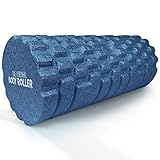
- 3D textured rollers measure 12.5 x 5.5 inches with triple massage zones to replicate the fingers , thumbs , and palms of the human hand .
- Roll before and after your work out at the gym , Pilates , or yoga to condition and stretch muscle tissue , and remove painful trigger points . Dual grid design has finger zone with ridges , and spiked bumps on the opposite side .
- Great for runners , after a long workout , or as part of your stretching routine . Heavy Duty EPP construction tough enough for athletes , and still comfortable enough for a beginner .
- Choose from lightweight and portable 13" model or get full body coverage with our 17" model to get physical therapy grade massages , deep stretches , and acupressure relief all in the privacy of your own home .
- Speed up recovery , treat muscle pain , increase performance , flexibility , and mobility . One of the best fitness tools to help your body recover , rolling before and after exercise is critical for beginners and pros alike .
When should you get individual guidance?
There is no validated recovery calculator in the guidance cited here that turns age, training history, sleep, nutrition, or a soreness score into a precise number of hours. If you have a chronic health condition or disability, ask a health care professional or physical activity specialist what type and amount of activity is appropriate. The CDC’s guidance for people with chronic conditions and disabilities recommends seeking that kind of advice.
The Tool Desk
Outbyte Driver Updater FREEFix the driver behind crashes, sound loss and screen glitchesFind Drivers →Outbyte PC Repair FREEClear out junk files and repair common Windows errorsFree Scan →Quick Recap
Best Value

- High-density foam roller in Black
- Ideal for balance, strengthening, and flexibility exercises
- Firm, durable polypropylene maintains shape; molded edges for added comfort
- Lightweight and easy to carry to class and to reposition during workouts
- Wipes clean easily
Product prices and availability are accurate as of the date/time indicated and are subject to change. Any price and availability information displayed on Amazon at the time of purchase will apply.

