
What’s actually slowing this PC down?
Pick the symptom - the matching free tool is one click away.
iTechGuides is reader-supported. When you buy through links on our site, we may earn an affiliate commission. As an Amazon Associate I earn from qualifying purchases. Learn more
Hall Effect thumbsticks replace the rubbing electrical contact in a conventional potentiometer with magnetic sensing. That removes one important wear path behind stick drift, but it does not make an entire controller drift-proof. Centering springs and gimbals can wear, magnets and sensors have tolerances, temperature and nearby materials can affect readings, and calibration or software can introduce offsets.
The practical answer is model-specific: choose a controller whose platform support, mechanical center return, calibration and dead-zone controls, repair options, and independently verifiable performance fit your use. “Hall Effect” identifies the sensing method, not a guaranteed accuracy, lifetime, or drift rate.
What a Hall Effect stick changes
How a potentiometer stick senses position
A traditional analog stick commonly uses a potentiometer. As you move the thumbstick, a wiper physically slides over a resistive track. The wiper’s position changes the resistance and therefore the voltage reported to the controller. The console or PC converts those two voltage readings into horizontal and vertical stick coordinates.
Quick wins for a faster PC:
Fix the driver behind crashes, sound loss and screen glitchesFind Drivers →Repair Windows errors before they cause bigger problemsFix Now →That electrical contact is also a wear surface. Repeated movement, contamination, oxidation, or an inconsistent contact point can alter the neutral signal or make the output noisy. A small change around the nominal center can appear in a game as unwanted movement.
#1 Best Overall

- Compatible with Windows and Android.
- 1000Hz Polling Rate (for 2.4G and wired connection)
- Hall Effect joysticks and Hall triggers. Wear-resistant metal joystick rings.
- Extra R4/L4 bumpers. Custom button mapping without using software. Turbo function.
- Refined bumpers and D-pad. Light but tactile.
How Hall sensing works
A Hall Effect stick moves a magnet relative to one or more Hall sensors. The sensor detects changes in magnetic field, and the controller’s electronics translate those measurements into X and Y position. There is no potentiometer wiper rubbing across a resistive track. PowerA describes its implementation as contactless and says that it reduces the risk of drift (PowerA Hall Effect explainer). SCUF likewise explains that non-contact magnetic sensing removes friction wear at the sensing element (SCUF calibration and drift guide).
“Contactless” must be read narrowly. The sensing element does not have the potentiometer’s rubbing electrical contact, but the complete thumbstick still contains mechanical parts, wiring, a circuit board, firmware, and signal-processing code. Those parts can be misaligned, damaged, contaminated, or worn.
Do Hall Effect sticks eliminate stick drift?
No. They eliminate potentiometer-track wear as one cause of drift; they do not guarantee that a stick will always report a perfect center.
Recommended Free Tools
What can still move the reported center
PowerA lists centering wear, physical damage or heavy use, calibration and software problems, and environmental conditions as possible causes of drift-like behavior even in Hall Effect thumbsticks (PowerA Hall Effect FAQ). A weakened spring or worn gimbal can leave the shaft slightly off center. A hard impact can change the magnet-to-sensor geometry. A connector, firmware issue, or corrupted calibration value can also create an offset without any sensor-track wear.
Rank #2

- Versatile compatibility: supports Xbox Series X/S, Xbox One X/S consoles and PC Win10 and above (including the game platform Steam).
- Precise control: features Hall joysticks and Hall triggers for a comfortable feeling, long service life and improved game accuracy.
- Plug and Play Convenience: Wired USB connection (removable) for easy setup and instant play without the need for additional drivers.
- Customizable experience: Includes 2 custom backbuttons that allow users to eliminate false triggers and improve their gaming experience.
- Impressive gameplay: Provides a pulsating vibration trigger and an asymmetric vibration grip motor for intense tactile feedback.
Environmental and electrical effects matter too. Texas Instruments’ engineering note identifies sensor and magnet variation, device offset, temperature drift, external magnetic fields, nearby materials, supply-voltage tolerance, mechanical tolerance, and measurement precision as possible error sources (Texas Instruments, Joystick and Lever Design With Hall-Effect Sensors).
What “drift resistance” means in practice
Drift resistance is a reliability advantage, not immunity. A Hall design should be less exposed to the specific failure mode in which a potentiometer’s resistive track or wiper becomes inconsistent. It can still develop an off-center reading from mechanical wear, damage, an unsuitable calibration, or conditions outside the design’s assumptions.
There is no independent cross-brand statistic in the cited material that establishes a universal drift rate, accuracy advantage, or lifespan for Hall Effect controllers versus potentiometer controllers. Treat broad claims such as “never drifts” or “lasts forever” as marketing rather than as a guaranteed engineering result.
Are Hall Effect sticks more accurate?
Not automatically. Hall sensing can provide a clean, repeatable signal, but accuracy depends on the sensor, magnet, mechanics, electronics, calibration, and software together.
Rank #3

- Tri-mode Connectivity: Wired for Xbox, 2.4G & Wired for PC, and Bluetooth for Android. The G7 Pro supports seamless connectivity across Xbox, PC, and Android. Effortlessly switch between modes using the convenient physical mode switch.
- TMR Sticks: The G7 Pro features GameSir's Mag-Res TMR sticks, combining Hall Effect durability with traditional potentiometer performance. This advanced technology delivers stable polling rates for smooth, drift-free gaming with low power consumption.
- Hall Effect Analog Triggers: The GameSir precision-tuned Hall Effect analog triggers provide unmatched smoothness and linear input for precise control. Featuring clicky Micro Switch trigger stops, gamers can easily switch based on their preferences.
- 1000Hz Polling Rate on PC: Experience ultra-responsive gaming with a 1000Hz polling rate on PC, available through both wired and 2.4G wireless connections. This ensures instantaneous input registration, reducing lag and optimizing your performance for the most competitive gameplay.
- GameSir Nexus App: The G7 Pro is compatible with the upgraded GameSir Nexus app, which brings a significant upgrade over the original. It introduces powerful new features such as gyro settings, stick curve adjustments, and button-to-mouse mapping, giving you deeper customization and more control than ever before.
The engineering factors behind the number
Texas Instruments explains that measured magnetic-field data must be calibrated and post-processed before it becomes a useful user-facing position. Its application note states: “Regardless of whether the joystick is implemented with 1 magnet and 1 sensing device or 2 magnets and and 2 sensing devices, some post processing is required to translate measured data into position data relevant to the end user.”
The note discusses several ways a real assembly can depart from an ideal response:
- Sensor and magnet variation: production parts do not have identical magnetic strength or electrical characteristics.
- Offsets and temperature: the sensor’s baseline and sensitivity can shift with temperature and device variation.
- Mechanical tolerances: pivot geometry, magnet placement, and assembly alignment affect the field seen by the sensor.
- Linearity limits: operating outside the sensor’s useful linear region can make equal physical movements produce unequal reported movements.
- External influences: nearby magnetic fields, materials, supply tolerance, and measurement resolution can alter the result.
- Hysteresis: the mechanical prototype discussed by TI did not necessarily follow the exact same path when moving in opposite directions; material and assembly choices influenced that behavior.
Consequently, a controller with a well-tuned Hall implementation may feel more consistent than a poorly tuned one, while another model can have a high-quality sensor but mediocre centering or calibration.
How to interpret a precision specification
Thrustmaster’s HEART CONTROLLER product page lists PC and Xbox compatibility and says its H.E.A.R.T. technology tracks stick movements “within 0.01 degree” (Thrustmaster HEART CONTROLLER). That is a vendor specification for that product, not an independent laboratory comparison or proof that it is more accurate than every competing controller. The cited sources do not independently validate the figure.
Rank #4

- Compatible with Windows and Android.
- 1000Hz Polling Rate (for 2.4G and wired connection)
- Hall Effect joysticks and Hall triggers. Wear-resistant metal joystick rings.
- Extra R4/L4 bumpers. Custom button mapping without using software. Turbo function.
- Refined bumpers and D-pad. Light but tactile.
Do Hall Effect sticks need calibration?
Yes, or at least they can benefit from calibration. Calibration establishes how the controller’s raw sensor values correspond to center and usable travel. It is different from a dead zone.
Calibration versus dead-zone adjustment
- Calibration estimates or adjusts the center point and range. It addresses an offset in the sensor’s interpretation of the stick position.
- Dead-zone control tells the game or controller software to ignore a small area around center. It masks minor input fluctuations rather than moving the physical or electrical center.
SCUF explains that calibration can correct a minor center offset, while a dead zone suppresses small movements near center. It also cautions that software adjustments cannot fully repair physical damage (SCUF, updated July 6, 2026).
A safe calibration workflow
- Update first. Install the controller’s current firmware and the manufacturer’s companion software, if the model provides them. A firmware bug can look like a sensor fault.
- Disconnect variables. Test with other controllers, remappers, accessibility layers, and unusual adapters disabled. Connect directly to the supported platform where possible.
- Run the model’s calibration routine. Use the exact center-and-range procedure supplied for that controller. Keep the stick untouched when the software asks for neutral, and move it through its full travel only when instructed.
- Check the raw or neutral reading. With the stick released, confirm that the reported axes return close to center. If the value changes while the stick is physically still, note whether the movement is constant, intermittent, or direction-dependent.
- Use the smallest practical dead zone. Increase it only until unwanted idle movement stops. A large value can hide a problem while reducing fine control around center.
- Retest in another game or input tester. If the symptom appears everywhere, suspect the controller or its calibration. If it appears in one title, inspect that game’s input settings and software layers.
Menu names and available controls differ by model. Do not assume that a “calibrate” button can compensate for a loose gimbal, a cracked mount, or a damaged sensor assembly.
What to compare before choosing a Hall Effect controller
“Hall Effect” is only one line in a specification sheet. Compare the complete implementation against how and where you play.
Best Value
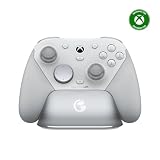
- Tri-mode Connectivity: Wired for Xbox, 2.4G & Wired for PC, and Bluetooth for Android. The G7 Pro supports seamless connectivity across Xbox, PC, and Android. Effortlessly switch between modes using the convenient physical mode switch.
- TMR Sticks: The G7 Pro features GameSir's Mag-Res TMR sticks, combining Hall Effect durability with traditional potentiometer performance. This advanced technology delivers stable polling rates for smooth, drift-free gaming with low power consumption.
- Hall Effect Analog Triggers: The GameSir precision-tuned Hall Effect analog triggers provide unmatched smoothness and linear input for precise control. Featuring clicky Micro Switch trigger stops, gamers can easily switch based on their preferences.
- 1000Hz Polling Rate on PC: Experience ultra-responsive gaming with a 1000Hz polling rate on PC, available through both wired and 2.4G wireless connections. This ensures instantaneous input registration, reducing lag and optimizing your performance for the most competitive gameplay.
- GameSir Nexus App: The G7 Pro is compatible with the upgraded GameSir Nexus app, which brings a significant upgrade over the original. It introduces powerful new features such as gyro settings, stick curve adjustments, and button-to-mouse mapping, giving you deeper customization and more control than ever before.
| Decision point | Questions to ask | Why it matters |
|---|---|---|
| Platform and connection | Is the exact model licensed or supported for your console, PC, mobile device, wired connection, or wireless mode? | A stick cannot help if the controller cannot authenticate, map correctly, or expose its full controls on your platform. |
| What uses Hall sensing | Are the thumbsticks Hall Effect, or are the triggers also magnetic? Are all axes covered? | “Hall Effect controller” can describe sticks, triggers, or both. Verify the product’s own specification. |
| Calibration and software | Can you calibrate center and range? Can you set sensitivity or dead zones? Are settings stored in hardware or only in an app? | Useful controls help address small offsets and tune feel, but they cannot repair mechanical damage. |
| Center return and feel | Does the stick return consistently to neutral? Is the tension, travel, and gate shape suitable for your games? | Mechanical centering and ergonomics affect practical control as much as the sensing principle. |
| Repairability | Are replacement modules available for the exact model? Can the shell, gimbal, or module be serviced without proprietary tools? | Contactless sensing does not make every other component replaceable or indestructible. |
| Evidence quality | Is a claim a vendor specification, an independent measurement, or an anecdotal report? | Separate a model’s advertised capability from performance that has been measured under comparable conditions. |
Verified examples and how to read their claims
PowerA Hall Effect ranges
PowerA’s official Hall Effect page identifies controller ranges for Xbox, Nintendo, and PC and says its companion software can customize sensitivity and dead zones (PowerA Hall Effect). Those are range-level statements. Confirm the exact model, connection type, supported operating system, and available software controls before buying because features can differ within a family.
Thrustmaster HEART CONTROLLER
The HEART CONTROLLER page lists PC and Xbox platforms and describes the company’s H.E.A.R.T. Hall Effect technology. Its “within 0.01 degree” tracking statement should be read as a manufacturer claim for that product. It is not an independently validated cross-brand ranking.
Common symptoms and what they indicate
| Symptom | Likely categories | First response |
|---|---|---|
| Slow movement while the stick is untouched | Center offset, calibration, dead-zone setting, or centering wear | Check firmware, recalibrate, then use the smallest dead zone that stops the movement. |
| Sudden jump after an impact | Mechanical damage, shifted magnet, loose assembly, or cracked mount | Inspect the housing and test on a second platform or input tester; do not expect software to restore damaged mechanics. |
| Different behavior after warming up | Temperature-related sensor or electronics drift | Repeat the test at a stable temperature and record whether the offset changes; contact the manufacturer if it is persistent. |
| Movement only in one game | Game dead-zone, remapping, or input-processing settings | Reset that game’s controls and compare with another title before blaming the hardware. |
| Unequal response by direction | Mechanical hysteresis, alignment, range calibration, or nonlinearity | Run a full-range calibration and inspect the return-to-center behavior; compare raw readings if the software exposes them. |
Are Hall Effect sticks worth it?
They are a sensible choice when avoiding potentiometer-track wear is important and the specific controller also meets your platform and mechanical requirements. They are less compelling when a model has poor center return, no useful calibration, awkward compatibility, or no practical repair path.
Outdated Drivers Are Slowing You Down
One free scan finds every outdated or missing driver and matches the right update for your exact hardware.Free scan · exact hardware matchWindows Errors? Fix Them Before They Spread
Repair common Windows errors and clear accumulated junk for a smoother, more stable PC - no reinstall needed.Free scan · no reinstallChoose Hall Effect when
- You want to remove the potentiometer’s rubbing-track failure mode.
- The exact controller supports your platform and connection method.
- You value adjustable sensitivity or dead zones and the companion software actually provides them.
- The stick’s tension, travel, and return-to-center behavior feel consistent for your games.
- You can verify model-specific replacement or service options.
Be cautious when
- The listing promises “zero drift” without explaining calibration, mechanics, or testing conditions.
- The seller does not specify whether Hall sensing applies to sticks, triggers, or both.
- Compatibility is described only by a console family rather than the exact model and platform mode.
- The only accuracy evidence is a vendor number with no test method or independent comparison.
- A large dead zone is required to hide movement that should be investigated as a mechanical fault.
Can Hall Effect controllers still drift?
Yes. They can show unwanted movement from centering wear, damage, calibration, software, environmental conditions, or sensor and mechanical tolerances. Their advantage is narrower and more precise: the potentiometer’s rubbing electrical contact is no longer the sensing mechanism.
Do Hall Effect sticks need calibration?
They may need calibration at setup or after an offset develops. Calibration aligns raw readings with center and range; it is not a substitute for repairing a damaged gimbal, mount, magnet, or sensor board.
Are Hall Effect sticks more accurate?
Not by definition. Accuracy depends on the whole implementation, including magnet and sensor variation, temperature, alignment, linearity, signal processing, and mechanical hysteresis. A manufacturer specification such as Thrustmaster’s “within 0.01 degree” claim must not be treated as an independent comparison.
What is the most useful buying test?
Verify the exact platform support, identify which controls use Hall sensing, confirm calibration and dead-zone options, check neutral return and feel, investigate repairability, and separate independently measured evidence from vendor claims. That checklist predicts practical satisfaction better than the Hall Effect label alone.
Quick Recap
Product prices and availability are accurate as of the date/time indicated and are subject to change. Any price and availability information displayed on Amazon at the time of purchase will apply.

