
What’s actually slowing this PC down?
Pick the symptom - the matching free tool is one click away.
iTechGuides is reader-supported. When you buy through links on our site, we may earn an affiliate commission. As an Amazon Associate I earn from qualifying purchases. Learn more
Hackathons are a powerful way to learn to build because they put you in a short, focused cycle of choosing a problem, making something, getting feedback, and learning alongside other people. They are not proven to be the best learning method for everyone: what you gain depends on the challenge, your teammates, the support available, and what you do after the event.
What makes a hackathon a place to learn?
A hackathon is a time-limited, collaborative effort to develop a solution to a defined challenge. Educational hackathons are typically hands-on and team-based; the European Commission describes them as intensive events, often lasting one or two days, where teams develop solutions to teaching and learning challenges. The European Commission’s DigiEduHack overview gives that format as one example.
The learning comes from doing: you have to turn an idea into a working or demonstrable project under real constraints. That can mean learning a tool as you need it, explaining a technical choice to teammates, dividing work, or changing direction when a first attempt fails. The event creates a reason to apply knowledge rather than only read or watch someone else use it.
Quick wins for a faster PC:
Repair Windows errors before they cause bigger problemsFix Now →Scan for outdated or missing drivers - takes under a minuteDriver Scan →Clear out junk files and repair common Windows errorsFree Scan →What participants say they learn
In 2019, GitHub Blog reported results from a Major League Hacking survey of student hackathon participants. In that survey, 80% said they explored a new technology or service while working on a project, 93% said they learned a skill or idea not covered in their coursework, and 69% said they later used skills gained at a hackathon for coursework. Another 85% said those skills might help with future coursework. GitHub’s account of the survey describes reported experiences, not a controlled comparison of hackathons with courses or other ways of learning.
#1 Best Overall

- Intro to Robotics & Circuits: The kit includes motors, PCB microcontroller boards, and wires, by assembling and operating this robotic arm, It offers a fantastic first-time opportunity for children to know how electronic circuits work and control mechanical movement. Combining 3D puzzle with electrical enginnering, it's Fun and entertaining robotic science experiment for kids ages 8-14 and up! Note: 6 AA batteries needed but not included.
- Spark Interest in Engineering: This mechanical arm perfectly combines education with fun. Kids gain hands-on experience in physics & engineering principles while enjoying the thrill of building and play, making learning exciting. It sparks interest in future engineering and science pursuits.
- Challenging & Cool Wood Building Set! With wooden pieces and precise assembly tutorial, this wood building kit offers a satisfyingly complex building experience that enhances problem-solving skills, patience.
- Perfect Gift Idea: Designed for people who love to build and create, this DIY electronics kit for kids makes a gift or basker stuffer for boys and girls, tweens, teens, adults on birthday, christmas, easter, valentine day, also works for students in educational institutions, school science classes like science summer camping toy, or as STEAM game for families. It provides hours of challenging fun and a great sense of accomplishment once completed.
- STEM Project & Fun Toy for All Ages: No solidering required, the robot arm toy comes with all accessories you need to assemble this. Developing a lifelong love for science, the mechanical engineering kit is good for kids, teens, adults, boys and girls 8,9,10,11,12,13,14 years old and up
That distinction matters: these figures describe that survey’s respondents, not all hackathon participants or current students. They show why participants can find hackathons useful, but do not guarantee a particular learning gain for any individual.
Building involves more than coding
A project may be the visible result, but the work around it can teach skills that are easy to overlook. Literature reviews of hackathons identify teamwork, communication, practical skills, problem framing, and peer learning among relevant outcomes. A multidisciplinary literature review presented at ACM CHI examines the range of purposes and practices associated with hackathons.
Those skills are part of building because projects require decisions about what problem to solve, what can be finished, and how to make different pieces work together. Explaining an idea, asking a teammate for help, or making a small contribution to a shared prototype can be valuable even when you are not the person writing most of the code.
Rank #2

- Hands-On STEM Robot Learning---This STEM robot kit combines coding, electronics, and robotics into a fun, hands-on learning experience. Powered by an ESP32 controller and guided by 16 story-based tutorials, this robotics kit for kids helps children ages 8–12 and 12–16 build real-world STEM skills. Ideal for robotics for kids, classroom teaching, or at-home learning.
- 3 Programming Languages for All Skill Levels---This coding robot kit supports Scratch, Arduino, and Python, making it suitable for beginners and advanced learners alike. Scratch block coding is perfect for younger kids and first-time coders, while Arduino and Python support deeper learning for teens and tech enthusiasts. A flexible programmable robot designed to grow with students.
- Mobile-Friendly Coding – Learn Anytime, Anywhere---Unlike many traditional robot kits, this robotics kit supports programming on computers, laptops, tablets, and mobile devices like smartphones and iPads. Kids can code directly on mobile devices, making it especially suitable for schools, training centers, and self-learning at home. A practical STEM kit for kids in modern learning environments.
- Build Your Own Robot – Beginner-Friendly DIY---This robot building kit includes HD videos and illustrated step-by-step instructions, allowing kids to assemble the robot independently or with parents. No soldering required. The building process strengthens hands-on skills, patience, and confidence—making it a strong choice among STEM toys for kids and engineering kits for kids. Tutorial path: ACEBOTT Official Website → Resources → WIKI & Assembly Video Note: Batteries not included.
- App & Remote Control for Interactive Learning---Control the robot using the smartphone App (iOS & Android) or the included IR remote. Kids can instantly see how their code affects movement and behavior, reinforcing core coding logic. This robot kit keeps learning engaging while remaining easy to use for beginners.
Why “the best” needs a qualification
Hackathons make a compelling case as a learning setting, but research has not established them as universally superior to a course, tutorial, or solo project. A 2024 systematic review examined 39 research papers published over a 10-year span and found no standardized event setup for promoting and assessing learning. It also cautioned that perceived learning alone does not comprehensively demonstrate positive outcomes. The review by Schulten and Chounta highlights why claims about hackathons should be framed carefully.
Instead of asking which format always wins, compare the conditions that matter to your goal:
- Hands-on building: Will you spend meaningful time making something, or mostly listening and watching?
- Feedback and support: Can you ask mentors or peers questions, test your approach, and get useful reactions?
- Time and scope: Is the challenge small enough to make progress in the event’s available time?
- Continuation: Is there a realistic way to keep developing the project or practicing the skills afterward?
How beginners can contribute without knowing everything
You do not need to arrive as an expert to take part. A beginner can help define the problem, research how a tool works, sketch a screen, test a feature, document decisions, or take on a manageable technical task with support from teammates. Collaboration makes it possible to learn while contributing, rather than waiting until you feel qualified to begin.
Rank #3
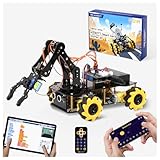
- Build Your Own Programmable Robotic Arm. This advanced robot kit includes a 5DOF programmable robotic arm, powered by an ESP32 controller. Kids and teens can build their own robot, learning how to grab, lift, and place objects. With a paper user manual and 16 guided tutorials, this robotics kit offers hands-on experience in coding robot control, real-world robotics, and problem-solving—ideal for STEM kits for kids age 12–14 and engineering kits for kids age 14–16.
- Beginner-Friendly STEM Assembly. This DIY robot kit for kids age 8-12 includes uniform screws and a paper user manual, making the building process accessible to beginners while teaching mechanical principles. With pre-burned necessary program, you can enjoy the joy after assemblying without download any electronic tutorial. Perfect for family STEM time or school projects, it doubles as an interactive science kit and a building set for boys age 8–12. (Note: Batteries required but not included.)
- Expandable for Ongoing Exploration. This expandable STEM robot car kit supports modular add-ons like cameras, tank tracks, solar panels, and robotic arms (sold separately). As kids grow, they can explore object tracking, photo capture, and multi-DOF control, keeping them engaged with coding toys for ages 8–13 and helping them transition into more complex engineering kits for kids age 14–16.
- Dual Control for Indoor & Outdoor Play. Use the IR remote or mobile App (iOS/Android) to take full command of the coding robot, including arm movements and car navigation. This hands-on robotics kit offers smooth and intuitive control—an excellent choice for families seeking robotics for kids ages 8-12 or expanding their stem toys for boys age 8-12 collection.
- 360° Mecanum Wheel Movement. Equipped with omnidirectional 6cm Mecanum wheels, this robotics kit performs advanced movement patterns like drifting, diagonal travel, and precise turning. Whether navigating tight spaces or creating complex routes, this robot kit boosts spatial awareness, critical thinking, and problem-solving—perfect for STEM learning across multiple age groups.
Before the event, choose one area you would like to practice and get comfortable with the basics you will need. During the event, tell your team what you can do and what you want to learn, then agree on a task small enough to complete or test. A useful first goal is not a polished product; it is a working slice that lets the team learn something concrete.
Make the short event count
Choose a small problem
Look for a challenge that can be narrowed to one clear user need or question. A small, testable idea gives a team room to build and learn; an overly broad ambition can consume the event in planning.
Build a first version, then test it
Make the simplest version that can demonstrate the idea. Try it, show it to someone, or ask a teammate to use it. Feedback can reveal a mistaken assumption sooner than adding more features.
Rank #4

- Beginner-friendly: The ACEBOTT smart robot car kit is controlled by an advanced ESP32 controller board, making programming easy. Through 16 story-rich tutorials, students will systematically master the principles of programming and electronic hardware, and easily master the mysteries of the smart car. (The robot kit does not include batteries)
- Rich Expandability: ACEBOTT based on the classic omnidirectional mecanum wheel robot car kit, we have added a rich set of expansion packs that can be freely matched: camera expansion pack, robotic arm expansion pack, tank expansion pack, solar expansion pack. Whether it is App and IR remote control, photo taking, image recognition, voice recognition, tracking mode, shooting, or multi-degree-of-freedom robotic arms, etc., the STEM robot kit will satisfy your desire for exploration and unleash your creativity!
- All-round control: This ACEBOTT coding robot for kids is equipped with advanced 6cm omnidirectional Mecanum wheels, also known as omnidirectional wheels or lion wheels, which can easily achieve 360° movement in any direction, support multiple movement modes (forward, sideways, diagonal, rotation), and can complete difficult actions such as left and right drifting, and easily cross any position, including narrow bends, narrow alleys, and intricate roads.
- Multi-way Cruise & Multi-direction Obstacle Avoidance: Accurate multi-way cruise allows the rc control car to easily plan the path and realize autonomous navigation; multi-direction obstacle avoidance allows flexible response in the face of obstacles; the new follow mode allows the car to always follow your steps.
- IR remote Control and App Control: Allows children to control this robotics kit through the IR remote control and App, make you enjoy the fun and convenience of intelligent technology. Simply master all the actions of the car with just one touch.
Use the team as a learning resource
Share what you know, ask specific questions, and make decisions visible. If a teammate has a skill you do not, ask them to explain the approach while you take a related task. Teaching and learning can happen in parallel with making the project.
Decide what happens next
A prototype or presentation is not the same as a continuing product. Before the event ends, identify one next step: keep developing, test with users, document how it works, or carry a technique into coursework or another project. Hackathon literature treats project continuation as a separate challenge from what participants learn during the event.
The Tool Desk
Outbyte PC Repair FREERepair Windows errors before they cause bigger problemsFix Now →Outbyte Driver Updater FREEScan for outdated or missing drivers - takes under a minuteDriver Scan →What organizers can do to improve learning
Event design affects whether participants have a genuine chance to learn. Microsoft’s Power Platform hackathon guidance recommends preparation, participant training, identifying use cases, assembling teams with varied skills, planning presentations and judging, and deciding follow-up steps.
Best Value

- Robot kit support RPi: This STEM Educational Robot car kits support Raspberry Pi 4B/4/3B+/3B. Before assembling the robotic arm need to buy it by yourself, otherwise you will have no way to proceed with assembling the robotic arm. (NOTE:Raspberry Pi board NOT include). Thank you for your understand.
- Multiple fun features: The high-quality 2 in 1 robot car kit include robot arm free grabbing, HD camera real-time display and color tracking, Line tracing, obstacle avoidance, full-color RGB lights, Type-C charging port for continuous power supply, and remaining power display function ect.
- Perfect Gift-DIY Robot kits: It is equipped with a pair of small clips and large clips, a set of tank tires and off-road tires with high quality spring shock reduction can run on various grounds, you can experience the fun of assembly. For kids, It is a perfect for Christmas, birthday and festival gift.
- Multi-platform Web and remote control: The 2 in 1 robot car kit supports phones, tablets and computers to linking and control it. Without to download and install the APP. You can control it by clicking the screen buttons. You can modify the code to change the interface and add functions to improve programming learning ability.
- NOTE: Raspberry Pi board is NOT included! !The remote control requires two 1.5Volt AA Batteries you need to buy them by yourself.( The kits NOT included two 1.5Volt AA Batteries !!) If parts are missing or any technical problom. Please contact us, we will reply you within 24 hours.Thank you.
For an educational event, those choices translate into a clear challenge, enough orientation for participants to begin, teams with complementary strengths, access to facilitation, and a plan for what happens after demonstrations. They make learning more deliberate without implying that one format or checklist guarantees an outcome.
DigiEduHack illustrates the scale an organized initiative can reach: the European Commission reports more than 12,000 participants across 56 countries over six editions since 2019. The initiative has concluded, though its page points to resources such as a host guide, evaluation grids, judging tools, case studies, and communication materials through the European Digital Education Hub. Access to that collection requires membership; the page describes membership as free and subject to confirmation within five working days. Availability and access details may change. Check the European Commission’s DigiEduHack page for current information.
Quick Recap
Product prices and availability are accurate as of the date/time indicated and are subject to change. Any price and availability information displayed on Amazon at the time of purchase will apply.
Recommended Free Tools

