
Free tools Windows power users keep installed
One-click scans. No signup required.
iTechGuides is reader-supported. When you buy through links on our site, we may earn an affiliate commission. As an Amazon Associate I earn from qualifying purchases. Learn more
GSA’s latest available data counts 283 publicly announced NTN operator–satellite partnerships across more than 100 countries and territories by the end of June 2026, making the earlier “80 territories” figure a historical snapshot. The data shows real commercial launches, but announced partnerships still substantially outnumber live services.
The original headline referred to GSA data published on September 16, 2025. At that point, GSA had identified 170 publicly announced partnerships across 80 countries and territories, with 34 operators in 25 markets offering commercial services. By the end of June 2026, GSA’s updated count had reached 283 partnerships in more than 100 countries and territories.


The central issue is how to interpret those numbers. GSA is counting public partnership announcements and classifying their status; the total is not a count of operational networks, paying subscribers, active satellites, or territories with universal coverage.
PC Slower Than It Used to Be?
A free scan shows the junk files, broken settings and background clutter dragging Windows down - then fixes them in one click.Free scan · Windows 10 & 11Crashes, No Sound, or Screen Glitches?
Random freezes, missing sound and display glitches usually trace back to one bad driver. Find and replace yours safely.Free scan · under a minuteKey takeaways
- GSA counted 283 publicly announced NTN operator–satellite partnerships across more than 100 countries and territories by the end of June 2026.
- The “80 territories” headline described GSA’s August 2025 snapshot of 170 partnerships, not the latest available market total.
- GSA listed 123 publicly announced satellite-to-cellphone partnerships in the June 2026 data, but only 23 had launched a service.
- Starlink led GSA’s June 2026 partnership count with 99 deals, followed by AST SpaceMobile with 44, Amazon Leo with 30, Eutelsat Group with 29, and Lynk with 21.
- Rural and enterprise broadband remains a major NTN use case, while direct-to-device activity is expanding faster in public visibility and partnership volume.
- A partnership announcement does not prove regulatory approval, handset compatibility, continuous coverage, usable capacity, or commercial customer adoption.
What does “GSA: NTN operator–satellite partnerships now in 80 territories” mean?
The phrase refers to a September 2025 GSA snapshot that recorded 170 publicly announced mobile-operator and satellite partnerships across 80 countries and territories. GSA published that data on September 16, 2025, based on information available through August 2025. The figure was significant because it showed satellite connectivity becoming part of mobile operators’ coverage and service strategies across many markets, rather than remaining limited to isolated demonstrations.
#1 Best Overall
The headline is now dated. GSA’s current NTN key-data page, updated in August 2026, reports 283 announced operator–satellite partnerships across more than 100 countries and territories by the end of June 2026. The original 80-teritory figure remains useful as a historical milestone, but it should not be presented as the current market size.
What is NTN?
Non-terrestrial networking, or NTN, extends communications through satellites or other aerial platforms instead of relying solely on terrestrial cellular infrastructure. In the GSA dataset, NTN is a broad category that includes several different technical and commercial models, not just satellites connecting directly to ordinary mobile phones.
| NTN category | Typical customer | Connection equipment | Main advantage | Main limitation |
|---|---|---|---|---|
| Fixed satellite broadband | Households, communities, enterprises, remote sites | Dedicated dish, antenna, or satellite terminal | Relatively mature broadband model with equipment designed for satellite links | Requires installation, power, and customer-premises equipment |
| Direct-to-device or satellite-to-cellphone | Mobile subscribers and emergency-service users | Compatible mobile phone, sometimes without a separate satellite terminal | Can extend basic connectivity beyond terrestrial cellular coverage | Phone antenna, spectrum, visibility, capacity, and service-level constraints |
| IoT/M2M NTN | Industrial, logistics, agricultural, maritime, and infrastructure customers | Specialized sensor, modem, or tracker | Connects low-data devices over very large or remote areas | Low data rates and long industrial device-replacement cycles |
| Satellite backhaul | Mobile operators, public networks, and remote-site operators | Satellite-connected base station or network terminal | Connects a remote terrestrial site to the wider network | Capacity, latency, weather, integration, and operating-cost considerations |
| Emergency and resilience connectivity | Consumers, governments, public-safety agencies, and businesses | Phone, portable terminal, or backup network equipment | Provides communications when terrestrial infrastructure is unavailable or damaged | Availability and performance depend on location, device, power, and satellite capacity |
That distinction matters because a fixed broadband partnership, an IoT roaming arrangement, and a satellite-to-phone messaging trial may all appear in the same headline total while serving different customers and requiring different technology, spectrum, regulation, and economics.
The Tool Desk
Outbyte PC Repair FREERepair Windows errors before they cause bigger problemsFix Now →Outbyte Driver Updater FREEFix the driver behind crashes, sound loss and screen glitchesFind Drivers →How much has the NTN partnership market grown?
GSA’s published snapshots show a rapid expansion in announced partnerships and geographic scope, although the two editions do not necessarily use identical reporting dates or classification rules. The figures should therefore be compared as snapshots rather than converted into a precise year-over-year growth rate.
| GSA snapshot | Announced operator–satellite partnerships | Geographic footprint | Commercial-service indication | Satellite-to-cellphone indication |
|---|---|---|---|---|
| August 2025 data, published September 16, 2025 | 170 | 80 countries and territories | 34 operators in 25 markets had launched commercial services | 12 launches; 24 trials or licensed projects |
| End-June 2026 data, reported on GSA’s August 2026 key-data page | 283 | More than 100 countries and territories | 23 partnerships overall had launched services | 123 publicly announced partnerships; 23 had launched a service |
The historical and current commercial figures are not directly interchangeable. The September 2025 release counted operators and markets with commercial services, while the later GSA page highlights partnerships that had launched services. The safest conclusion is that commercial activity is real, but the total pool of announcements is much larger than the number of live deployments.
A useful intermediate comparison comes from GSA’s May 2026 reporting. As summarized by Mobile Europe’s coverage of the GSA report, GSA had identified 275 partnerships in 101 countries and territories, with 57 operators in 35 countries and territories offering commercial services. That report also said 21 partnerships in 17 countries had launched satellite-to-phone services.
Are NTN partnerships mostly commercial or still experimental?
NTN is both commercial and experimental: operators and satellite companies have launched services, but most public partnership announcements should not be treated as live deployments. A partnership can represent a memorandum of understanding, technical evaluation, trial, regulatory or licensing work, a future commercial plan, or an already launched service.
For practical analysis, four statuses should be kept separate:
- Commercially launched: Customers can use a defined service under the provider’s commercial terms in at least some market or coverage area.
- Licensed or authorized: Regulatory or spectrum-related permissions have been obtained or are being used for a project, but a broad customer service may not have launched.
- Testing, trialling, or evaluation: The parties are validating technology, devices, coverage, network integration, or customer use cases.
- Planned or announced: The parties have publicly described an intended relationship or future deployment without proving that service is available.
GSA’s May 2026 comparison reported 23 partnerships with launched services, seven in evaluation, testing, trial, or licensed status, and 75 with services planned as of mid-April 2026. Those categories illustrate why the 283 total should be read as a measure of market intent and partnership activity rather than deployment count.
Why are mobile operators partnering with satellite companies?
Mobile operators are using satellite partnerships to extend coverage, add resilience, and reach customers or machines in places where terrestrial infrastructure is unavailable, damaged, or uneconomic.
- Coverage extension: Satellite can reach rural, remote, maritime, mountainous, and sparsely populated locations beyond the practical footprint of terrestrial sites.
- Network resilience: Satellite links can provide backup communications after storms, earthquakes, fires, conflict, or other events that damage terrestrial networks.
- Lower infrastructure requirements: A partnership can give an operator access to satellite capacity without requiring the operator to build and operate an entire constellation.
- New mobile services: Messaging, emergency communications, location sharing, and low-rate data can provide useful coverage before higher-throughput services become viable.
- Enterprise and industrial connectivity: Satellite can connect remote sensors, vehicles, facilities, and other equipment that cannot depend on local cellular coverage.
- Standards and device momentum: The convergence of terrestrial and non-terrestrial networking standards is making it easier to investigate integrated services, although device and regulatory compatibility remains market-specific.
GSA describes satellite connectivity as a complement to terrestrial coverage, particularly in hard-to-reach areas. Satellite connectivity is therefore more likely to supplement mobile networks than replace them wholesale.
What’s actually slowing this PC down?
Pick the symptom - the matching free tool is one click away.
Which NTN use cases are leading?
Why is rural and enterprise broadband still important?
Rural and enterprise broadband was the largest category in GSA’s September 2025 edition, accounting for approximately half of the identified partnerships. In the May 2026 analysis, fixed broadband represented 38% of identified partnerships, down from 45% in the prior edition as satellite-to-smartphone activity expanded.
Fixed satellite broadband is generally more mature than direct-to-phone connectivity because a fixed installation can use a larger, directional antenna with more power and a clearer view of the sky. A dedicated terminal can also support a service designed around predictable installation and network performance rather than the severe antenna and battery constraints of a handheld phone.
Why is direct-to-device attracting so much attention?
Satellite-to-cellphone, also called direct-to-device or D2D, is the most visible and rapidly developing NTN segment because it promises coverage through a device many customers already carry. GSA’s June 2026 data counted 123 publicly announced satellite-to-cellphone partnerships, of which 23 had launched a service.
Direct-to-device does not describe one uniform capability. A service may initially provide emergency messaging, two-way text messages, location sharing, narrowband data, or selected applications. Voice and broadband ambitions are technically and commercially more demanding than short messages or low-rate data, so “satellite-to-cellphone service” should not automatically be interpreted as ordinary terrestrial 5G broadband.
Quick wins for a faster PC:
Repair Windows errors before they cause bigger problemsFix Now →Fix the driver behind crashes, sound loss and screen glitchesFind Drivers →Some announcements describe connections to unmodified smartphones. The September 2025 GSA summary discussed such approaches, but handset compatibility is not universal. Compatibility can depend on the phone model and modem, supported RF bands, antenna performance, operating-system support, carrier provisioning, SIM or eSIM arrangements, satellite visibility, and regulatory certification.
Why is IoT/M2M progressing more slowly?
IoT and machine-to-machine connectivity is a major NTN category, but adoption can move more slowly than headline-making smartphone trials. Mobile Europe reported that IoT/M2M represented 8.3% of partnerships in GSA’s May 2026 analysis.
Industrial customers often replace devices on long procurement and refresh cycles. A fleet operator may need to certify a modem, redesign hardware, validate power consumption, integrate data into operational systems, and keep the solution supported for years. Those requirements can delay adoption even when satellite coverage is technically available.
Rank #3
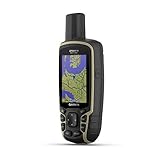
- Large 2.6” sunlight-readable color display for easy viewing
- Expanded global navigation satellite systems (GNSS) and multi-band technology allow you to get optimal accuracy in challenging locations, including steep country, urban canyons and forests with dense trees
- Includes routable TopoActive mapping and federal public land map (U.S. only)
- Compatible with the Garmin Explore website and app (compatible smartphone required) to help you manage tracks, routes and waypoints and review statistics from the field
Which satellite operators have the most GSA-counted partnerships?
GSA’s June 2026 provider ranking is a ranking of publicly announced partnerships in GSA’s dataset, not a ranking of revenue, subscribers, satellites in orbit, capacity, reliability, or service quality.
| Satellite provider | GSA-counted partnerships, June 2026 | What the count does and does not show |
|---|---|---|
| Starlink | 99 | Highest partnership count in the GSA dataset; does not by itself establish revenue, coverage quality, or direct-to-device leadership in every market |
| AST SpaceMobile | 44 | Strong partnership presence in operator-focused direct-to-device strategies; the count is not a measure of launched capacity |
| Amazon Leo | 30 | Shows announced operator interest; does not prove that every partnership is operational or that services are commercially available |
| Eutelsat Group | 29 | Reflects partnerships across the group’s satellite-connectivity activities; it is not a service-quality or subscriber ranking |
| Lynk | 21 | Indicates announced operator relationships, especially relevant to direct-to-device connectivity; it is not a count of active subscribers |
For comparison, the September 2025 snapshot placed Starlink first with 44 partnerships, followed by AST SpaceMobile and Lynk. The increase in Starlink’s counted partnerships between the two snapshots shows how quickly the public partnership landscape has changed, but it should not be converted into an equivalent claim about revenue, deployed capacity, or customer growth.
The broader ecosystem also includes providers such as Skylo and other satellite operators. The meaningful competitive question is not simply which company has the most announcements, but which provider can deliver the required combination of spectrum rights, coverage, capacity, handset or terminal support, regulatory approvals, latency, integration, pricing, and service availability.
What does a multivendor NTN strategy mean?
A multivendor NTN strategy means that a mobile operator works with more than one satellite provider across different markets or use cases instead of assigning its entire satellite strategy to one constellation. GSA has observed operators pursuing this approach for satellite-to-cellphone services.
Operators may choose multiple providers for several reasons:
- Different constellations may offer better coverage in different geographic regions.
- Providers may use different spectrum arrangements or technical architectures.
- One provider may focus on messaging while another targets higher-rate data, fixed broadband, or backhaul.
- Multiple providers can improve resilience and reduce dependence on a single network.
- Parallel relationships can improve an operator’s negotiating position.
- Different providers may support different handsets, chipsets, terminals, or provisioning models.
Multivendor does not mean that satellite services are interchangeable. An operator still has to compare spectrum permissions, network integration, constellation architecture, device requirements, regulatory status, capacity, latency, commercial launch timing, and service-level commitments.
How do spectrum and 3GPP standards affect NTN deployment?
NTN deployment combines standards work with market-specific spectrum and regulatory decisions. 3GPP work beginning with Release 17 established an important standards foundation for integrating non-terrestrial components with cellular networks, while later trials examined Release 18 and 5G NR NTN services. The standards context is summarized in the IEEE ComSoc discussion of GSA’s April 2026 webinar.
Standards do not automatically create global roaming or universal handset compatibility. A standards-based service still needs suitable RF support, network integration, device certification, spectrum rights, national authorizations, satellite capacity, and a commercial arrangement between the operator and satellite provider.
The September 2025 GSA release identified Ka-band as the most widely used range for feeder and service links, while L- and S-bands were increasingly important for direct-to-cell applications. These descriptions should be kept precise: feeder links connect satellites to gateways or network infrastructure, service links connect satellites toward user equipment, and direct-to-device applications have their own spectrum and interference constraints.
Do these 3 things before closing this tab:
1Repair Windows errors before they cause bigger problems2Scan for outdated or missing drivers - takes under a minute3Clear out junk files and repair common Windows errorsRank #4

- Used Book in Good Condition
Regulatory work may involve national spectrum regulators, satellite landing rights, operator licensing, interference coordination, device certification, emergency-services obligations, and cross-border or roaming arrangements. A public partnership announcement cannot establish that all of those requirements have been completed.
What can stop an NTN partnership becoming a commercial service?
The main failure points are regulatory, technical, commercial, and operational. A signed announcement may not become a dependable service if any of the following barriers remains unresolved:
- Licensing and spectrum: National authorization, interference coordination, or satellite landing rights may take longer than expected.
- Insufficient capacity: Geographic coverage does not guarantee enough capacity for simultaneous users in a busy area.
- Handset incompatibility: A phone may lack the required bands, modem features, software support, provisioning, or regulatory approval.
- Visibility and environment: Buildings, heavy foliage, terrain, weather, and the user’s orientation can affect a satellite connection.
- Service limitations: An initial service may support only messaging, emergency use, location, or low-rate data rather than broadband.
- Network integration: The operator must connect satellite systems to its core network, identity systems, billing, customer support, and emergency workflows.
- Economics: Constellation costs, launch schedules, terminal prices, wholesale rates, and customer willingness to pay may prevent a plan from scaling.
- Industrial procurement: IoT customers may need years to replace installed equipment and qualify new modules.
Coverage and capacity are also different. A satellite can illuminate a territory geographically while offering limited usable throughput, intermittent availability, low connection probability, or poor indoor performance. Buyers should ask about beam capacity, service continuity, latency, throughput, device positioning, and expected availability rather than relying only on a coverage map.
Independent reader supportYour contribution helps us test, update, and keep practical guides available for everyone.What does the GSA data mean for different stakeholders?
Mobile operators
For mobile operators, NTN partnerships offer a way to extend coverage, improve disaster resilience, and create new messaging, IoT, broadband, or backhaul services without constructing terrestrial sites everywhere. The trade-offs include dependence on third-party constellations, uncertain margins, integration costs, regulatory delays, and the risk that customers experience a limited service rather than a seamless extension of terrestrial 5G.
Recommended Free Tools
Satellite operators
For satellite operators, mobile partnerships provide access to established subscriber bases, spectrum arrangements, distribution channels, and enterprise relationships. Satellite operators also face high constellation and launch costs, complex national approvals, device constraints, competition from multiple providers, and the challenge of converting announcements into recurring service revenue.
Enterprises
For enterprises, NTN can provide remote-site connectivity, network backup, maritime coverage, industrial monitoring, and communications in areas without reliable terrestrial service. Enterprise buyers should evaluate service-level commitments, terminal or modem requirements, power consumption, regional availability, data integration, security, support, and the cost of switching from existing equipment.
Consumers
For consumers, the clearest near-term benefits are emergency communications, text messaging, location sharing, and limited connectivity outside terrestrial coverage. Consumers should check the exact phone models, supported regions, plan requirements, outdoor-visibility conditions, expected speeds, and extra fees before assuming that a satellite-to-phone announcement means ordinary broadband service.
Equipment and chipset vendors
For equipment vendors, NTN creates opportunities in modems, RF components, satellite terminals, network infrastructure, testing, device certification, SIM and eSIM provisioning, and network-core integration. The risk is fragmentation: different providers may use different technical approaches, spectrum, device requirements, and commercial models, making volume forecasts difficult.
How should decision-makers read the 283-partnership figure?
The 283 figure is best understood as an indicator that satellite connectivity has become an operator procurement category. Mobile operators across more than 100 countries and territories are publicly exploring or arranging satellite relationships for coverage extension, rural broadband, emergency resilience, IoT, backhaul, and direct-to-device services.
Best Value
The figure is not evidence that 283 operational networks exist. It is also not evidence that every territory has continuous coverage, that every resident can subscribe, that every partnership has secured spectrum, or that all satellite-to-phone services support voice and broadband.
Teams evaluating a partnership should ask five questions before comparing providers:
- What service is actually required? Fixed broadband, mobile messaging, emergency backup, IoT, backhaul, and operator wholesale capacity have different requirements.
- What is the partnership status? Confirm whether the relationship is announced, under evaluation, licensed, trialling, commercially launched, or broadly available.
- Which devices and terminals work? Verify phone models, chipsets, RF bands, antennas, operating systems, SIM or eSIM provisioning, and certification.
- What spectrum and regulatory approvals apply? Confirm national authorization, interference coordination, satellite landing rights, and any emergency or cross-border obligations.
- What performance is contractually available? Ask about coverage, capacity, latency, throughput, connection probability, indoor performance, service continuity, support, and pricing.
Organizations that need a searchable map of operator relationships, countries, spectrum, devices, chipsets, and network activity can review the GSA GAMBoD database and the related GSA member access options. The September 2025 GSA release says detailed partnership data is available to GSA members and associates subscribing to GAMBoD, while non-members can purchase the report; public pricing was not identified in the supplied research.
Frequently Asked Questions
Does 80 territories mean that satellite phone service was available everywhere in those territories?
No. The 80-territory figure counted countries and territories with publicly announced operator–satellite partnerships in GSA’s August 2025 snapshot. The figure did not establish universal coverage, continuous service, completed regulatory approvals, handset compatibility, or commercial availability for every resident.
Are all 283 NTN partnerships commercial deployments?
No. GSA’s 283 total counts publicly announced partnerships, which can include planned projects, trials, evaluations, licensed initiatives, and launched services. GSA’s June 2026 data said 23 partnerships overall had launched services, so announced partnerships substantially outnumbered identified live service launches.
Is direct-to-device the same as full 5G broadband?
No. Direct-to-device services may initially support emergency messaging, two-way texts, location sharing, narrowband data, or selected applications. Voice and broadband require more capacity and face additional handset, spectrum, satellite, and regulatory constraints.
Which satellite provider led GSA’s June 2026 partnership count?
Starlink led GSA’s publicly announced partnership count with 99 partnerships as of June 2026, followed by AST SpaceMobile with 44, Amazon Leo with 30, Eutelsat Group with 29, and Lynk with 21. These counts do not measure revenue, subscribers, active satellites, capacity, or service quality.
The Bottom Line
The important change is not only that the NTN partnership footprint grew from 80 territories in the August 2025 snapshot to more than 100 countries and territories in the June 2026 data. Satellite connectivity is becoming a mainstream operator procurement category across broadband, direct-to-device, IoT, backhaul, and resilience. The critical qualification is that public announcements still outnumber dependable commercial deployments by a wide margin.
Quick Recap
Product prices and availability are accurate as of the date/time indicated and are subject to change. Any price and availability information displayed on Amazon at the time of purchase will apply.

