
Recommended Free Tools
iTechGuides is reader-supported. When you buy through links on our site, we may earn an affiliate commission. As an Amazon Associate I earn from qualifying purchases. Learn more
Start by choosing a party that can cover the roles your scenarios demand, then follow Frosthaven’s calendar and outpost rhythm carefully. The game is a 139-scenario legacy campaign with 17 classes that unlock over time, but a new campaign begins with six classes: Drifter, Banner Spear, Boneshaper, Geminate, Blinkblade, and Deathwalker. There is no universally best beginner class. Your party size, tolerance for hand management, preferred complexity, and need for damage, control, support, mobility, or durability should determine the choice.
Frosthaven is a long-form campaign rather than a sequence of disconnected tactical battles. Scenario results alter your settlement, the calendar opens new possibilities, seasonal events create consequences between missions, and prosperity, defense, buildings, and resources determine what your group can do next. A smooth first campaign comes from learning that loop early, not from finding a supposedly unbeatable class combination.
“Frosthaven is our biggest, boldest game, and one we’d recommend to you only after experiencing both Jaws of the Lion and Gloomhaven.” — Cephalofair Games, official Welcome to Frosthaven page
Special offer. See more information about Outbyte and uninstall instructions. Please review EULA and Privacy policy.
If you are starting a campaign, look for the Frosthaven board game core box; verify the edition and component language before buying. The physical core box is required for the campaign systems described here.
What a new Frosthaven campaign contains
Cephalofair describes Frosthaven as a 139-scenario campaign with 17 new classes, a summer-and-winter calendar, and seasonal road and outpost event decks. Those numbers describe the scope of the full campaign, not the amount you must understand on your first night. You begin with six available classes and a small settlement whose systems expand as the party succeeds.
#1 Best Overall

- Award-winning base game in the Gloomhaven universe that includes everything you need to have 90+ thematic roleplaying sessions with tactical combat.
- Play together with up to 4 players or tackle the campaign alone as a solo mercenary. Decide and shape how your character grows and their story progresses.
- No GM or Gamemaster needed! Everyone is a player and there's no homework before game sessions. Turn to your next scenario and start playing immediately.
- Includes miniature figures for each character and detailed standees for all monsters and creatures in the game. Use the immersive map tiles and tokens included to get a real feel of the fight.
- Unique card based fighting system that allows you to have more control over your choices each round than just dice would allow.
- Scenarios: Tactical missions where your characters gain experience, collect loot, pursue personal and party goals, and follow links or calendar instructions.
- Frosthaven settlement: The place where you resolve the outpost phase, manage buildings and resources, and prepare for the next expedition.
- Calendar: A progression track that determines when events occur and which season’s event deck is used.
- Road and outpost events: Short narrative decisions with costs and consequences that happen while travelling to a scenario or after returning to town.
- Prosperity and defense: Campaign measures that influence the settlement’s available development and resilience.
The campaign is deliberately cumulative. Keep a single campaign record, mark every calendar instruction immediately, and do not treat an event or reward as optional bookkeeping.
Which starting class should you choose?
The six starting classes are Drifter, Banner Spear, Boneshaper, Geminate, Blinkblade, and Deathwalker. The rulebook does not establish a universal ranking, and a tier list cannot account for party size, scenario objectives, player experience, or preferred play style. Instead, compare candidates using the five questions below.
1. How much teaching and sequencing can the player handle?
Every class asks the player to read cards, plan two actions per round, and understand how initiative and positioning affect the rest of the party. Some players enjoy a dense puzzle of timing, adjacency, summons, or resource conversion; others want a class they can explain quickly and pilot confidently while everyone is still learning the rules. In a first campaign, include at least one class that the group can operate without constant rules consultation.
2. What role does the party actually need?
Before selecting a character, list the jobs your expected scenarios may require:
- Reliable damage against ordinary enemies and tougher targets.
- Control through conditions, forced movement, or other ways to reduce enemy effectiveness.
- Healing or support that keeps the party functioning over several rooms.
- Mobility for objectives, doors, difficult terrain, and separated targets.
- Durability or mitigation when the group must stand in danger rather than avoid it.
A four-character party does not need one specialist in every category, but it should know which weaknesses it is accepting. A small party has fewer actions and less room to cover gaps, while a larger party can tolerate a more focused build but may create crowding and coordination problems.
3. How demanding are positioning and action economy?
Read each candidate’s starting cards and ask how often the character needs a precise square, an adjacent ally, a particular enemy arrangement, or a carefully timed sequence. A class that is powerful when its setup is correct may feel frustrating if the group dislikes planning several turns ahead. Conversely, players who enjoy spatial puzzles may prefer that trade-off to a simpler, more forgiving turn.
4. How much resource and hand management is enjoyable?
Frosthaven rewards players who track card loss, recoveries, summons, conditions, and other limited resources over the course of a scenario. Ask whether the player wants to make long-horizon decisions every round or would rather concentrate on immediate tactical choices. The answer is a play-style preference, not a measure of class quality.
5. Does the class fit the rest of the team?
Look at interactions, not isolated damage numbers. Attacks that apply conditions, summons that occupy spaces, forced movement, adjacency requirements, and support effects can either reinforce one another or compete for the same positions and targets. Place the six chosen class mats side by side and identify conflicts before the first scenario: Who wants to be near enemies? Who needs allies adjacent? Who benefits when a target is already affected by a condition? Who can act when the plan goes wrong?
A practical selection exercise
- Each player names a preferred complexity level and whether they enjoy planning several turns ahead.
- As a group, mark the two roles you most want to emphasize and the one gap you are willing to accept.
- Read the six starting class cards and remove any class whose positioning or resource demands are clearly unpleasant for its player.
- Compare the remaining classes for overlap. Two characters competing for the same spaces or targets may be less comfortable than two slightly less specialized characters with complementary plans.
- Choose the combination the players are excited to learn. Campaign commitment matters more than a theoretical ranking.
Do not restart solely because the opening party is not an internet-approved lineup. Record what is not working, adjust card choices and tactics, and use the campaign’s progression systems to develop the settlement.
How the seasonal event calendar works
At setup, each of the four event decks starts with cards 1–20 available. When the game instructs you to draw an event, use the season indicated by the next unmarked box on the campaign calendar. The calendar, not the month on your household calendar, determines which seasonal deck applies.
Rank #2
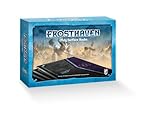
- Includes scenario narrative text and special rules for all 138 Frosthaven scenarios!
- 4 Scenario Play Surface Books, 96 pages each
- 16 "Destroyed" obstacle tokens
- ACCESSORY ONLY. REQUIRES A COPY OF THE FROSTHAVEN BOARD GAME TO PLAY
The event loop
- Complete the relevant scenario or settlement step. Do not draw an event simply because you have finished a battle; follow the campaign and scenario instructions.
- Read or mark the next calendar section as instructed. Marking a box changes what the game considers the next unmarked section, so do this before drawing a later event.
- Identify the season shown by that next unmarked box. Select the matching road or outpost event deck.
- Draw and resolve the event. Pay any listed costs, make the decision, and apply the outcome before proceeding.
- Record permanent effects. Update resources, notes, unlocks, or other campaign records immediately.
Some events charge the party collectively. The official FAQ confirms that collective event costs may be paid from resources in the Frosthaven Supply, so check the supply rather than assuming one character must pay. Event cards can contain locked outcomes or class-related information; keep the first campaign spoiler-light and consult the official FAQ for card-specific questions and printing corrections instead of searching for revealed outcomes.
When do you return to Frosthaven?
The normal rhythm is to return to Frosthaven after a successful scenario and resolve the outpost phase. The main exception is a scenario that is linked or force-linked to another scenario. In those cases, the campaign may direct you straight into the next mission or otherwise postpone the ordinary town sequence. Read the scenario’s conclusion and link instructions before packing away the map.
What to record before leaving the scenario
- Scenario rewards and any experience gained.
- Loot collected and treasure information that the scenario tells you to record.
- Scenario links, force-links, and calendar instructions.
- Character exhaustion, spent resources, and any other state your campaign record tracks.
- Which objectives, goals, or unlock conditions were completed.
Once the scenario allows a return, resolve the outpost phase in a consistent order: events and calendar timing, buildings and construction, resources, character upkeep, and any other systems your campaign has unlocked. A written checklist prevents the common mistake of starting the next scenario while a building, event, or calendar instruction is still unresolved.
Campaign Mode versus Casual Mode
Use Campaign Mode when the result should change your Frosthaven campaign. Use Casual Mode when you want to replay a scenario for practice or entertainment without altering the campaign record.
The Tool Desk
Outbyte PC Repair FREERepair Windows errors before they cause bigger problemsFix Now →Outbyte Driver Updater FREEFix the driver behind crashes, sound loss and screen glitchesFind Drivers →| Feature | Campaign Mode | Casual Mode |
|---|---|---|
| Campaign progression | Advances the active campaign | No campaign advancement |
| Rewards | Can award resources, experience, quest progress, unlooted treasure, and eligible random loot | No campaign rewards are added |
| Events | Uses the campaign’s event and calendar instructions when required | No campaign event draw |
| Outpost phase | Returns to Frosthaven and resolves the outpost phase when applicable | No outpost phase |
| Best use | First completion and all progression decisions | Learning a scenario, testing tactics, or replaying for fun |
Decide the mode before setup. If you play casually to learn a scenario, keep its rewards, loot, and calendar changes separate from the campaign record.
Frosthaven’s initial settlement and first building decisions
The official FAQ lists the following starting state:
| Settlement element | Starting value or level |
|---|---|
| Prosperity | 1 |
| Defense | 0 |
| Barracks | Level 1 |
| Alchemist | Level 1 |
| Craftsman | Level 1 |
| Workshop | Level 1 |
| Initial soldiers | Four, added through the Barracks during setup |
What Prosperity 1 allows
At Prosperity 1, the FAQ says the party may build the foundations for a Logging Camp, Mining Camp, and Hunter’s Lodge; build Wall Section J; upgrade the Craftsman or Alchemist; and build any of the three Travel Tools as a Workshop upgrade. Every option is still subject to the printed resource cost and any applicable rules.
There is no single optimal opening order independent of party composition. Choose in response to the bottleneck you can identify:
- Resource bottleneck: If your early plans repeatedly lack a particular resource, favor the available structure that addresses that shortage, provided its cost does not delay a more urgent need.
- Scenario bottleneck: If upcoming objectives reward movement, preparation, or endurance, consider the legal upgrade that supports that plan rather than building for a distant possibility.
- Settlement safety: Defense and wall-related choices matter when the campaign makes settlement protection a priority.
- Crafting and consumables: A Craftsman, Alchemist, or Workshop decision can be valuable when the party can immediately use the resulting equipment or tools.
Write down the reason for the first construction choice and review it after several scenarios. A building that looked attractive before the party understood its resource flow may be less urgent later, while a modest upgrade can become important once a character’s strategy changes.
Rank #3
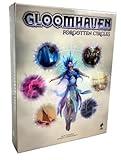
- This is the first expansion for Gloomhaven featuring twenty new scenarios that take place after the events of the original Gloomhaven campaign which involve one new character class the Aesther Diviner and her attempts to prevent an approaching calamity.
- Players will delve into twenty new scenarios that take place after the events of the original Gloomhaven campaign. These new adventures will involve one new character class—the Aesther Diviner—and her attempts to prevent an approaching calamity. The accompanying scenario book breaks up these scenarios across multiple pages to create more dynamic and surprising encounters.
- Expansion also features seven new monster types (including three new bosses) and fourteen new items.
- 1-4 players, Ages: 12+ 60–120 play time
A repeatable campaign-progression checklist
Use this sequence after every scenario so that no reward or instruction disappears between sessions.
- Finish the scenario. Confirm whether the result is a success, failure, link, or force-link according to the scenario rules.
- Resolve immediate scenario instructions. Record rewards, experience, loot, treasure, goals, and any calendar or story direction.
- Check whether the next scenario is linked. If it is linked or force-linked, follow that instruction before beginning the normal outpost routine.
- Return to Frosthaven when allowed. Keep the party’s campaign record together with the settlement record.
- Advance the calendar exactly as instructed. Mark the relevant section and identify the next unmarked box.
- Draw the required seasonal event. Use the road or outpost deck indicated by the calendar and pay collective costs from the Frosthaven Supply when the rules permit.
- Resolve the outpost phase. Handle buildings, resources, character upkeep, and other systems already unlocked.
- Choose the next available scenario. Check prerequisites, links, and objectives before committing the party.
This order separates what happened in the scenario from what happens in town. It also makes it easier to audit a campaign when several players share administrative duties.
Independent reader supportYour contribution helps us test, update, and keep practical guides available for everyone.Common first-campaign mistakes and fixes
Choosing a class from a tier list alone
Why it fails: A ranking cannot know your party size, preferred complexity, scenario objective, or tolerance for positioning and hand management.
Free tools Windows power users keep installed
One-click scans. No signup required.
Fix: Use the five comparison axes—teaching load, role coverage, action economy, resource pressure, and team synergy—and select a group the players want to operate for a long campaign.
Drawing from the wrong event deck
Why it fails: Players often use the season they remember from the previous session rather than the season shown by the next unmarked calendar box.
Fix: Mark or read the calendar section first, then identify the next unmarked box and draw from its indicated seasonal deck.
Skipping the outpost phase after a normal scenario
Why it fails: Buildings, resource decisions, events, and calendar effects are part of campaign progression, not optional bookkeeping.
Quick wins for a faster PC:
Clear out junk files and repair common Windows errorsFree Scan →Fix the driver behind crashes, sound loss and screen glitchesFind Drivers →Repair Windows errors before they cause bigger problemsFix Now →Fix: Check for a linked or force-linked scenario. If none applies, return to Frosthaven and use the post-scenario checklist.
Mixing Casual results into the campaign
Why it fails: Casual play is designed to be consequence-free; adding its loot or experience changes the campaign’s balance and record.
Rank #4

- REDUCE THE CLUTTER - This character dashboard is the perfect solution for managing your character by providing a neat or tidy place. It saves a lot of room on the table and holds pretty much all of the player items. No more table clutter for your characters, just enjoying the fun of Gloomhaven!
- SPEEDS UP YOUR GAME - Game time preparation become shorter and you can save more time as players can easily take all the elements of the last game setup from the player dashboard, instead of looking for them all over the table. This hero organizer makes Gloomhaven so much easier and quicker gameplay.
- DURABILITY AND QUALITY - This character organizer is made of high quality birch plywood. It's much stronger and lighter than similar materials. Character boards can be inserted into the middle layer of this player dashboard.
- REQUIRE ASSEMBLY - If you in love with painstaking and lengthy strategy board games, then you will be delighted with the assembly of our organizer. Bring your family or friend in assembly, follow the easy instructions and become real creators!
- IDEAL GIFT FOR GLOOMHAVEN LOVER - Give an unexpected and very necessary gift to your friends, acquaintances or best half and you will see what impression the player board Gloomhaven board game will make. Organize the atmosphere of a real Gloomhaven game around you by using CZYY character organizer!
Fix: Declare the mode before setup and keep casual notes separate from the campaign sheet.
Spending every resource immediately
Why it fails: A construction that consumes all available supplies can prevent the party from paying an event cost or pursuing a near-term scenario plan.
PC Slower Than It Used to Be?
A free scan shows the junk files, broken settings and background clutter dragging Windows down - then fixes them in one click.Free scan · Windows 10 & 11Crashes, No Sound, or Screen Glitches?
Random freezes, missing sound and display glitches usually trace back to one bad driver. Find and replace yours safely.Free scan · under a minuteFix: Compare the printed cost with the next scenario’s needs and leave a reserve when your calendar or event timing is uncertain.
Building by a universal online order
Why it fails: The best opening building depends on the party’s resource flow, chosen classes, and immediate objectives.
Fix: Identify the current bottleneck, choose among the options legal at your Prosperity level, and revisit the decision after the party has real campaign data.
Keeping the campaign manageable over many sessions
- Use one clearly labeled folder or box section for the campaign sheet, calendar record, settlement notes, and unlocked material.
- At the end of each session, write the next available scenario and any unresolved instruction in one place.
- Have one player read event and scenario directions while another updates resources or buildings; confirm changes aloud.
- Do not reveal locked class or event information to players who want a spoiler-light campaign.
- When a card or rule appears misprinted, consult Cephalofair’s official FAQ and errata resources rather than improvising a permanent campaign change.
Cephalofair describes its official tutorial and resources page as the place for how-to-play videos, frequently asked questions, rules errata, and component lists. Those references are especially useful when a card-specific question cannot be resolved from the rulebook at the table.
Do these 3 things before closing this tab:
1Fix the driver behind crashes, sound loss and screen glitches2Repair Windows errors before they cause bigger problems3Scan for outdated or missing drivers - takes under a minuteHow to decide whether your opening party is working
After two or three completed scenarios, review the party using evidence from play rather than impressions from a class list:
- Did the party fail because it lacked damage, control, healing, mobility, or durability?
- Were characters frequently competing for the same spaces or targets?
- Did a player enjoy the class’s resource and hand-management demands?
- Were scenario objectives being missed because the group could not reach or protect the required locations?
- Did the party’s chosen building and resource plan support the next available scenario?
Use the answers to adjust tactics, card choices, and settlement priorities. The campaign is designed to reveal more options over time; a difficult opening does not mean the party selected the wrong class.
Quick-start summary for your first session
- Select from Drifter, Banner Spear, Boneshaper, Geminate, Blinkblade, and Deathwalker by comparing complexity, role, positioning, resource pressure, and synergy.
- Set up the settlement at Prosperity 1 and Defense 0 with the level-1 Barracks, Alchemist, Craftsman, and Workshop, plus four Soldiers through the Barracks.
- Keep all four event decks at cards 1–20 initially, and use the next unmarked calendar box to determine the season when an event is required.
- Play the first mission in Campaign Mode if you want progression; reserve Casual Mode for consequence-free practice.
- After a normal successful scenario, return to Frosthaven and resolve the outpost phase unless the scenario is linked or force-linked.
- Choose early buildings around actual resource and scenario bottlenecks; at Prosperity 1, use only the options the FAQ and printed costs allow.
Following that loop gives a new group the information it needs without forcing a “best” class or building order that the campaign’s changing objectives cannot justify.
Quick Recap
Product prices and availability are accurate as of the date/time indicated and are subject to change. Any price and availability information displayed on Amazon at the time of purchase will apply.
What’s actually slowing this PC down?
Pick the symptom - the matching free tool is one click away.

