
Quick wins for a faster PC:
Clear out junk files and repair common Windows errorsFree Scan →Fix the driver behind crashes, sound loss and screen glitchesFind Drivers →Repair Windows errors before they cause bigger problemsFix Now →iTechGuides is reader-supported. When you buy through links on our site, we may earn an affiliate commission. As an Amazon Associate I earn from qualifying purchases. Learn more
Neither approach wins universally. A frontline communication app is usually the better fit for employees who move between locations or shifts and need messages, files, schedules, meetings, and operational tools with them. A desk phone remains valuable at a fixed counter, reception point, shared station, or other place where a predictable voice endpoint and managed call routing matter. Many organizations should use both: mobile or shared-device collaboration for roving teams, plus desk phones for designated calling points.
Start with the work, not the device
The useful comparison is not an app icon versus a handset. It is a comparison of complete operating models: how employees identify themselves, where they communicate, how calls arrive and leave, which devices are available, how shifts hand over work, and who administers the service.
Microsoft’s frontline documentation describes collaboration across retail, healthcare, financial services, and manufacturing. The documented capabilities include chats, channel conversations, meetings, file sharing, calling, and work apps such as Shifts and Walkie Talkie. Microsoft Teams Phone documentation describes individual phones and common-area phones with functions such as auto-attendants, call queues, delegation, shared calling, transfer, call park, and hotline phones. These are capability descriptions, not independent proof that one model produces better productivity, reliability, or total cost.
| Decision axis | Frontline communication app | Desk-phone unified communications | What to decide |
|---|---|---|---|
| Where work happens | Useful for staff moving through a store, plant, care facility, branch, or service area, including movement between sites. | Useful at a counter, reception point, office, shared station, or other location where the phone can remain available. | Match the endpoint to movement, shift patterns, and the physical location where calls must be answered. |
| Communication context | Combines messages, channels, meetings, files, and available work apps on a mobile or shared device. | Centers on voice access and managed call handling for people, queues, groups, or shared functions. | Determine whether the dominant need is continuous team coordination, inbound and outbound voice, or both. |
| Shared access | A shared device can be signed in and out between shifts, subject to identity, privacy, and device configuration. BYOD is another option. | A common-area phone can stay in one place and serve a group or a defined operational role. | Plan handoffs, auditing, availability, and privacy before selecting shared access. |
| Workflows | Can connect communication with schedules, tasks, files, approvals, and custom or third-party tools where supported. | Can support auto-attendants, queues, transfers, call park, delegation, shared calling, and hotline functions. | Compare the deployed workflows and service administration, not a handset against an app in isolation. |
| Deployment constraints | BYOD depends on personal-device access, policy, mobile coverage, privacy expectations, and sometimes legal or union requirements. Managed shared devices require support and sign-in planning. | Shared phones are easy to locate but still require network service, hardware lifecycle management, ownership, and emergency-calling decisions. | Include workforce policy, support capacity, and governance in the initial design. |
What a frontline app changes
Communication follows the employee
An app-centered design puts day-to-day coordination where frontline work occurs. A worker can participate in a chat or channel conversation while moving between departments, sites, or care areas, rather than returning to a fixed phone to receive every update. The documented scenario is broader than voice: files, meetings, schedule information, and operational applications can be part of the same experience.
#1 Best Overall

- Item Package Quantity - 1
- Product Type - LANDLINE PHONE
- Memory - 0. GB
- Accessories may not be original, but will be compatible and fully functional. Product may come in generic box.
This model is strongest when information must reach a whole team, when shifts overlap briefly, or when work involves handoffs. A channel can hold an ongoing operational conversation; a direct chat can handle a one-to-one question; a meeting can bring multiple locations together; and a file or task tool can preserve the action that follows the conversation.
Mobility does not require personal phones
“Mobile-first” should not be treated as a synonym for BYOD. Microsoft’s device-management guidance identifies several choices: company-owned or personal devices, shared or individually assigned devices, and devices that remain at work or are taken home.
A shared, managed device may be a better fit when employees do not have reliable personal mobile access, when personal-device use conflicts with policy or a collective agreement, or when the organization needs a consistent security baseline. It also introduces work that an individual phone may not: sign-in and sign-out between shifts, charging, replacement, cleaning, app updates, inventory, and a way to recover a device that is lost or damaged.
Free tools Windows power users keep installed
One-click scans. No signup required.
Where an app is a poor substitute for a phone
An app does not automatically create a dependable public calling point. If a receptionist, customer-service counter, warehouse desk, or clinic station must answer a known number throughout the day, a fixed endpoint may be easier for employees and callers to understand. A mobile device also depends on battery status, connectivity, authentication, and the availability of the right person at the right moment.
What desk-phone unified communications adds
Predictable voice at a known place
A desk phone or common-area phone gives a team a physical endpoint that remains in a defined location. That can matter when visitors, customers, couriers, patients, or colleagues need to know exactly where to call or where to find a phone. It can also simplify a function such as a loading-dock line, reception desk, security point, or warehouse hotline.
Rank #2

- Professional Business Phone: The Poly CCX 600 desktop media phone delivers enterprise-grade communication capabilities with a premium handset, designed specifically for modern business environments requiring reliable voice and multimedia functionality
- Vibrant Touchscreen Display: Features a large 7-inch color touchscreen interface that provides intuitive navigation, easy access to contacts, and seamless control of calls and settings with responsive touch controls
- Power Over Ethernet: Equipped with PoE technology that eliminates the need for separate power adapters by delivering both data and power through a single Ethernet cable, simplifying installation and reducing cable clutter on your desk
- Open SIP Compatibility: Built with Open SIP protocol support, enabling flexible integration with multiple unified communications platforms including Zoom (Certified) and Microsoft Teams, providing versatility for various business communication needs
- Renewed Quality Product: This professionally renewed device has been inspected and tested to work like new, offering the premium features of the Poly CCX 600 at an accessible price point while maintaining high performance standards
Managed call flows
Teams Phone for Frontline Workers documentation names several call-handling functions:
- Auto-attendants: direct callers through an automated menu or destination structure.
- Call queues: present calls to a defined group rather than relying on one person.
- Call delegation and shared calling: let designated people handle calls for another person or a shared role, subject to the service configuration.
- Transfer and call park: move a caller to the right person or hold a call for retrieval from another endpoint.
- Hotline phones: provide a phone for a specific, direct operational purpose.
The source examples include customer inquiries, deliveries, medical-facility coordination, appointment scheduling, and warehouse inventory management. Whether a particular flow is suitable depends on the organization’s licensing, network, emergency-calling configuration, and administrative setup.
Common-area phones are a role, not a model number
Microsoft says Teams-certified desk phones can be used as common-area phones. That establishes a category and use case, not a permanent recommendation for a particular device. Before buying, verify the current certification list, supported calling service, licensing requirements, network behavior, update process, and the functions required at the location. Certification and compatibility can change, so a current product listing must be checked at the time of purchase.
Choose by work pattern
Favor an app-centered design when
- Employees move through a site or between sites during a shift.
- Most coordination is asynchronous messages, channel updates, files, schedules, or tasks rather than calls to a fixed number.
- Teams need to see the same operational information across shifts.
- Workers benefit from meetings or collaboration with people in other locations.
- The organization can provide managed shared devices or has a policy that supports BYOD.
Favor fixed phones when
- A known physical location must always have a voice endpoint.
- Reception, a service counter, or a shared station handles customer or public calls.
- A queue, auto-attendant, hotline, transfer, or call-park workflow is central to the job.
- Employees cannot reasonably carry, authenticate, charge, or monitor a mobile device during work.
- The organization needs a shared function rather than a person-specific identity.
Use a mixed deployment when the work is mixed
Coexistence is not a compromise or a failure to choose. A mobile team can use app-based collaboration for updates, files, schedules, and handoffs while reception, a warehouse dispatch desk, or a clinic station keeps a managed phone. The same calling service may support individual devices and common-area phones, provided the organization configures identities, permissions, routing, and support responsibilities coherently.
Design the identity and device model first
Decide who owns each device
Document whether every endpoint is company-owned, personally owned, or shared. For shared devices, specify where they are stored, who charges them, which shifts use them, and what happens when a worker forgets to sign out. For personal devices, specify what the organization can manage, what data it can remove, and how access ends when employment or a role changes.
Rank #3
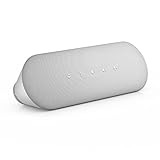
- ELEGANT AESTHETIC: With a compact style and finish, this desk micro soundbar sits easily on a monitor base, or beside a laptop or desktop.Waterproof : No
- LED LIGHTS: MS-Teams app status, call / hang-up, volume up, volume down, and mic mute / unmute are all clearly indicated by LED indicators
- FULL DUPLEX AUDIO: With AI noise cancellation, numerous people can speak at the same time, while still being heard clearly in a business conference
- ENHANCED CONNECTIVITY: With an intuitive set up process, connect the speakerphone to monitors, laptops, or desktops through the USB-A or USB-C port
- MS TEAMS BUTTON: Provides quick access to meetings and notifications -- the perfect multimedia speaker for business conferences and a home office
Set the sign-in and handoff process
A frontline workflow needs an explicit shift-change procedure. A shared tablet or phone should have a visible, short path for sign-out and sign-in, with a fallback if authentication fails. Individual accounts require onboarding and offboarding; shared accounts require stronger controls around privacy and auditing. Test the process with the people who will perform it during a busy handoff, not only with administrators.
Outdated Drivers Are Slowing You Down
One free scan finds every outdated or missing driver and matches the right update for your exact hardware.Free scan · exact hardware matchPC Slower Than It Used to Be?
A free scan shows the junk files, broken settings and background clutter dragging Windows down - then fixes them in one click.Free scan · Windows 10 & 11Check access and fairness before BYOD
Microsoft’s guidance highlights device variation, possible legal or union restrictions, and workers who may lack reliable personal mobile access. Ask these questions before making BYOD the default:
- Does every affected worker have a suitable phone and dependable coverage at the worksite?
- Are personal-device requirements permitted by local rules, employment policy, or a collective agreement?
- Can workers keep personal and work data separate?
- What happens when a phone is lost, replaced, shared with family, or unavailable?
- Can the organization support different operating systems and device ages?
Map the communication jobs before selecting endpoints
List the actual jobs a communication system must perform. A useful inventory separates coordination from calling:
| Job | Questions to answer | Likely endpoint emphasis |
|---|---|---|
| Shift updates | Do workers need a persistent conversation, schedule visibility, file access, or a quick broadcast? | App, often on a managed shared or individual device. |
| Customer or public calls | Is there a known number, a queue, an auto-attendant, or a requirement for transfers? | Fixed phone, common-area phone, or a configured calling service; app access may supplement it. |
| Urgent local coordination | Does the user need a channel, a direct call, a hotline, or a walkie-talkie-style function? | Depends on the location and response pattern; test both reachability and escalation. |
| Files, schedules, and tasks | Must the worker read or update information while away from a desk? | App-centered workflow on a mobile or shared device. |
| Shared operational role | Does the role belong to a place or group rather than an individual? | Common-area phone, shared device, or both, with explicit ownership and auditing. |
A practical selection and rollout sequence
- Observe a representative shift. Record where workers stand or travel, how often they change locations, which updates are missed, and which calls require a guaranteed answer.
- Inventory communication jobs. Separate team coordination, one-to-one conversations, public calling, emergency or hotline functions, file exchange, schedules, and task completion.
- Choose identity and ownership. Decide between individual accounts, shared accounts, company-owned devices, and BYOD. Record privacy, legal, union, and offboarding implications.
- Draw the call flows. For each public or operational number, show the auto-attendant, queue, delegates, transfer destinations, call-park behavior, and after-hours path. Mark which flows require a physical phone.
- Verify service and hardware compatibility. For any desk phone, confirm current certification for the selected calling platform, licensing, network requirements, emergency-calling behavior, update support, and the exact functions needed.
- Pilot a complete workflow. Include a moving worker, a shared-device shift handoff, a fixed calling point, and an administrator. Test sign-in, missed messages, file access, transfers, queue overflow, device failure, and connectivity loss.
- Measure operational outcomes. Track whether calls reach the intended role, whether handoffs preserve information, how long onboarding takes, how often devices need support, and which steps employees bypass. Do not substitute a vendor ROI claim for local measurements.
- Roll out by role and location. Publish a short operating procedure for each role, assign an owner for devices and call routing, and schedule periodic reviews as teams, sites, and service capabilities change.
Costs and support obligations to include
No neutral source in the available material quantifies app-versus-desk-phone total cost head to head. Build your own cost model around the complete deployment:
- Calling-service and collaboration licensing.
- Desk phones, chargers, mounts, cases, spares, and replacement cycles.
- Shared mobile devices, mobile data, charging storage, cleaning, and inventory.
- Identity administration, authentication, onboarding, offboarding, and access reviews.
- Network capacity, coverage improvements, and service resilience.
- Call-flow configuration, number management, emergency-calling administration, and testing.
- Training, shift-handoff support, help-desk workload, and field replacement logistics.
- Integration work for schedules, tasks, files, approvals, third-party apps, or custom tools.
A phone that is inexpensive to purchase can still require substantial service administration. A shared mobile device that avoids handset installation can still create costs for charging, management, support, and replacement. Compare these recurring obligations by role and site rather than using a single per-user estimate.
Rank #4

- CALL CLARITY: Never miss a word or inflection with HD Voice with Acoustic Clarity technologies from Poly.
- EASY-TO-USE: Traditional dial pad experience. Ideal for glove-hand use in retail, warehouse, and manufacturing locations, thanks to durable design and debris resistance.
- BLOCK DISTRACTING NOISE: Eliminate distracting background noise with Poly Acoustic Fence and NoiseBlockAI technologies.
- SPEAKERPHONE: Keep conversations on track with full-duplex speakerphone operation and echo cancellation.
- MICROSOFT TEAMS: Great for Microsoft Teams users who want (or need) a dial pad and full Microsoft Teams integration.
Common failure modes and fixes
Workers are expected to use personal phones but cannot
Symptom: Some employees lack a reliable device, coverage, or permission to use it for work. Fix: Provide managed shared or individual devices, or retain a fixed endpoint for the affected function. Recheck local requirements and collective agreements before changing the policy.
A shared device exposes the previous shift’s information
Symptom: The next user sees chats, files, or account data left by the previous user. Fix: Make sign-out part of the shift checklist, test the identity reset process, and define who verifies it. Use the least data exposure compatible with the workflow.
Calls reach a person instead of the role
Symptom: A customer or colleague calls an absent employee, or a shared task has no clear owner. Fix: Use a queue, auto-attendant, shared calling, delegation, or a common-area phone where the work belongs to a group or place.
The app works in one area but not another
Symptom: Messages, meetings, or calls are unreliable in a plant, basement, warehouse, or remote site. Fix: Test coverage and network behavior at the locations and times where work occurs. Do not treat a successful office test as proof for every frontline area.
The Tool Desk
Outbyte PC Repair FREEClear out junk files and repair common Windows errorsFree Scan →Outbyte Driver Updater FREEScan for outdated or missing drivers - takes under a minuteDriver Scan →A certified phone does not deliver the expected workflow
Symptom: The handset connects, but a required queue, transfer, hotline, or emergency behavior is missing. Fix: Confirm current platform certification, licensing, service compatibility, and configuration for the exact function before deployment.
Best Value

- Wide Compatibility: Microsoft and zoom certified, compatible with multiple UC platforms: Teams, zoom, Google, RingCentral, Genesys, 8x8, 3CX, unify, netsapiens, etc. Ensuring a seamless experience. Covering a wider range of work scenarios, and optimizing the work experience, improve work efficiency
- Noise Canceling Microphone: Coupled with a next-generation algorithm, enhanced speaker, and two noise-canceling microphones, the WH63 E2 wireless headsets effectively blocks out background noise, ensuring full-bodied, stable, and clear voices during calls, even in noisy offices, get high-quality calls
- 8H Talk Time & 607Ft Wireless Freedom: The antenna design boosts coverage, extending the DECT range up to 185m/607 feet, while reducing interference and increasing deployment density. It gives you the freedom to move with reliable performance in any environment. And all day battery life keep your calls flowing with up to 8h talk time and 71h standby on a single charge
- Multiple Wearing Styles: 3 wearing styles to choose from: Eartips, Earhook, Headband. Users can choose accessories based on their work environment, enjoying a more personalized wearing experience with the lightweight and compact headset design. Meet the ergonomic standards, ensures that users can wear the headset comfortably for long periods
- Multi-device Connectivity: The WH63 E2 supports multi-device connectivity, allowing simultaneous telephone and PC connection. Supports mixed-mode conferencing for quicker online meetings. (No Bluetooth, unable to connect to smartphones.)
How to interpret the available evidence
The Microsoft documentation establishes that frontline collaboration can combine chats, channels, meetings, files, calling, schedules, and work apps, and that desk-phone calling can provide individual and common-area endpoints with managed routing. It does not establish a neutral productivity, reliability, adoption, or total-cost winner.
A Microsoft Teams Phone document reports a 143% return on investment for enterprise customers, citing a Forrester Total Economic Impact study commissioned by Microsoft in December 2022. The footnote describes a three-year, risk-adjusted present-value analysis for a composite organization representative of enterprise customers. It is a vendor-promoted, commissioned-study result, not a comparison of frontline apps with desk phones and not a typical outcome guaranteed for every organization.
The same document includes a testimonial from REI’s manager of voice and video for IT infrastructure engineering saying that Teams Phone enabled a customer-management system at a fraction of the cost of a traditional call-center platform. That statement is a vendor-published testimonial, not an independent cost comparison.
Recommended Free Tools
Use those materials to identify possible capabilities and scenarios. Use a role-based pilot and your own operational measurements to decide whether those capabilities produce value in your environment.
Decision checklist
- Have you mapped where each role works during a shift?
- Have you separated coordination needs from fixed-number calling needs?
- Have you decided whether devices are personal, individual company-owned, or shared?
- Have you checked access, privacy, legal, union, coverage, and authentication constraints?
- Have you documented queues, auto-attendants, transfers, delegation, call park, hotlines, and after-hours behavior?
- Have you verified current phone certification, service compatibility, licensing, network, and emergency-calling requirements?
- Have you assigned owners for identity, devices, numbers, routing, updates, and replacements?
- Have you piloted a real shift handoff and a real call flow at every important location?
- Have you compared recurring support and administration costs instead of only purchase prices?
If most answers point to movement, cross-site coordination, and shared operational information, make the app the center of the frontline workflow. If they point to known physical locations, public calling, and predictable routing, keep or deploy desk phones there. When both patterns are present, a governed combination is usually more faithful to the work than forcing every employee onto one endpoint.
Quick Recap
Product prices and availability are accurate as of the date/time indicated and are subject to change. Any price and availability information displayed on Amazon at the time of purchase will apply.

