
iTechGuides is reader-supported. When you buy through links on our site, we may earn an affiliate commission. As an Amazon Associate I earn from qualifying purchases. Learn more
Frieza, Cell, and Majin Buu are not simply three points on one power ladder. Frieza represents organized tyranny and controlled transformation; Cell is an engineered composite who improves by absorbing life and copying the strongest fighters; Buu is a magical, shape-changing catastrophe whose forms, motives, and methods constantly shift. If you mean the strongest versions shown in the original Dragon Ball Z story, the Buu arc is the latest escalation, but no official source publishes a single numerical scale that cleanly ranks all three. The fairest comparison therefore examines each villain’s form, abilities, survivability, threat style, and defeat conditions separately.
Frieza, Cell, and Buu at a glance
The three villains escalate in fundamentally different ways. Frieza keeps power in reserve and reveals it through transformations. Cell gathers power and abilities from other beings, then reaches “perfection” through absorption. Buu changes state through magic, regeneration, and absorption, making both his body and his personality unstable.



| Comparison axis | Frieza | Cell | Majin Buu |
|---|---|---|---|
| Origin | Natural mutant and galactic ruler | Bio-engineered composite created by Dr. Gero | Magical being represented by several forms and states |
| Main escalation | Transformations and controlled releases of power | Absorption, copied biology, and regeneration | Form changes, magic, absorption, and extreme resilience |
| Threat style | Empire, conquest, extortion, and terror | Planned perfection and technological horror | Catastrophic destruction and unpredictability |
| Signature advantage | Strategic control combined with lethal ranged attacks | Adaptability, inherited techniques, and recovery | Difficulty of permanently stopping him |
| Thematic role | Tyranny and fear | Perfection through appropriation | Chaos, destruction, and the possibility of change |
| Key comparison warning | His stated power levels come from the Namek-era context | His capabilities depend on which form is being discussed | “Buu” refers to materially different forms, not one static fighter |
Frieza: power used as imperial control
Origin and objective
Frieza is the clearest political villain of the three. The official character profile calls him the “Emperor of the Universe” and describes the army he uses to conquer planets. He treats worlds, populations, and military forces as assets in an interplanetary hierarchy. On Namek, his immediate objective is the Dragon Balls: he wants eternal life so that his authority and personal survival can become effectively permanent.
Quick wins for a faster PC:
Clear out junk files and repair common Windows errorsFree Scan →Fix the driver behind crashes, sound loss and screen glitchesFind Drivers →Repair Windows errors before they cause bigger problemsFix Now →The same profile records a first-form power level of 530,000 (Dragon Ball Official Site character profile, 2021). That number belongs to Frieza’s first form in the Namek-era story; it is not a universal conversion rate that can be applied to Cell or Buu.
#1 Best Overall
Transformation as controlled escalation
Frieza’s transformations are part of his character, not merely visual upgrades. His first form conceals how much power he possesses. Each later form removes another limit and demonstrates that opponents have been fighting only a fraction of his potential. The official site describes his second form as having a power level over one million (2023). The figure is again tied to that specific form and period.
This design makes Frieza’s battles psychologically oppressive. Heroes do not just face a powerful opponent; they repeatedly discover that the apparent final stage was another deception. Frieza can also choose how much force to reveal, which fits his preference for hierarchy and control.
Why Frieza is dangerous even before the final fight
- Institutional reach: his army lets him conquer or threaten worlds without personally appearing at every battlefield.
- Ranged lethality: he can kill at a distance and devastate environments rather than relying only on close combat.
- Strategic cruelty: when he returns to Earth as Mecha Frieza, he plans to kill its inhabitants before Goku arrives so the revenge will cause maximum emotional pain.
- Long-term objective: the Dragon Balls give his campaign a concrete route to eternal life, rather than destruction for its own sake.
Frieza’s threat is therefore personal, military, and geopolitical at once. A defeated soldier may be replaced; a defeated planet may be sold or occupied; and a defeated population may be used as leverage.
Do these 3 things before closing this tab:
1Fix the driver behind crashes, sound loss and screen glitches2Repair Windows errors before they cause bigger problems3Scan for outdated or missing drivers - takes under a minuteCell: an engineered composite built to improve
How Cell was created
Cell is not born into a dynasty or summoned as a curse. Dr. Gero engineers him from the cells of powerful fighters and invaders. The official character profile identifies cells from Goku, Piccolo, Vegeta, Frieza, and King Cold among his biological components. His identity is cumulative from the beginning: he is designed to contain the strengths of people who have already shaped the series.
That origin explains why Cell can use techniques associated with other characters. His toolkit includes the Kamehameha and Solar Flare, while Piccolo-derived biology gives him regeneration. He is a laboratory project that turns the heroes’ own abilities into raw material.
Absorption and the route to perfection
Cell’s early forms are incomplete stages. He absorbs living beings to increase his energy and eventually absorbs Android 17 and Android 18 to reach Perfect Cell. Unlike Frieza, who has power hidden inside himself, Cell must acquire the components that make his intended form possible. Unlike Buu, whose changes can be chaotic, Cell’s progression follows a planned biological program.
“Perfect” describes more than a high battle rating. It means Cell has assembled the traits Dr. Gero designed him to obtain: the power of multiple fighters, copied techniques, regeneration, and the confidence that comes from believing his construction has reached its intended endpoint.
Cell’s combat advantages
- Adaptability: inherited cells give him access to different fighting styles and techniques.
- Recovery: Piccolo-derived regeneration allows him to survive damage that would end an ordinary fighter.
- Absorption: he can gain power through a process other than training or transformation alone.
- Self-destruction: Perfect Cell can deliberately self-destruct, creating a threat even when direct victory appears possible.
A Perfect Cell feature on the official site describes a final Kamehameha with enough power to blow away the entire solar system (Dragon Ball Official Site, 2022). That is a description of a specific attack and form, not a standardized measurement shared with Frieza’s published power levels.
Majin Buu: magic, mutation, and a moving target
Why “Buu” is not one fighter
“Majin Buu” is best understood as a family of forms and states. The story’s Fat or Good Buu, Evil Buu, Super Buu, and Kid Buu differ in appearance, temperament, behavior, and combat context. Official campaign material also distinguishes Good Majin Buu from other Buu content. Combining every feat under one name can make the comparison misleading.
Buu’s body is unusually mutable. He can stretch, reshape, split, absorb others, regenerate from extreme damage, and change behavior as his form changes. These abilities make him harder to model than either Frieza’s transformation sequence or Cell’s engineered progression.
Destruction without a stable political goal
Frieza wants dominion and Cell wants completion. Buu’s threat is less orderly. Depending on the form and circumstances, he may seek amusement, follow another personality’s influence, or simply destroy. Bandai Namco’s official game description presents the Buu threat reaching the point where Earth is destroyed. That material supports the scale of the catastrophe, but it should not be treated as a single numerical statistic for every Buu form.
Good Buu also complicates the idea that the villain is only an embodiment of evil. The character can display innocence, appetite, friendship, and moral change, while other forms express much more focused destruction. The result is a villain whose danger and potential for change coexist.
What makes Buu so difficult to kill
- Regeneration: ordinary damage does not reliably end the fight because his body can reform.
- Absorption: Buu can incorporate opponents and alter the balance of power and personality.
- Unpredictable anatomy: attacks that would disable a conventional body may have little lasting effect.
- Form-dependent behavior: the opponent may be fighting a different tactical and emotional problem after a transformation.
- Catastrophic scale: the danger can shift from a duel to the destruction of Earth and civilization.
How their escalation mechanisms differ
Frieza reveals what was already there
Frieza’s escalation is controlled disclosure. His transformations reveal stored potential, and his confidence comes from knowing that opponents have not yet seen his true limit. This makes him the most straightforward example of a villain whose power is tied to rank and domination.
Cell acquires what he needs
Cell’s escalation is accumulation. He is built from stolen biology, absorbs additional targets, copies techniques, and uses regeneration to remain in the fight. His “perfect” state is the product of a process: a designed endpoint reached through appropriation.
Buu changes the rules of the fight
Buu’s escalation is mutation. Form changes can alter power, personality, tactics, and the conditions required for victory. Absorption is not only a power increase; it can change who the opponent is dealing with. That is why Buu comparisons require explicit form labels.
Who is stronger: Frieza, Cell, or Buu?
If the question means the strongest versions shown during the original Dragon Ball Z storyline, the narrative progression generally places the Buu arc after and above the Frieza and Cell arcs. That is a story-order conclusion, not an official unified statistic.
The available official material gives different kinds of evidence:
| Evidence | What it establishes | What it does not establish |
|---|---|---|
| Frieza first form: 530,000, official profile (2021) | A stated power level for one Frieza form in the Namek-era context | A direct numerical comparison with Cell or Buu |
| Frieza second form: over one million, official profile (2023) | That his second form exceeds one million in the stated context | A complete scale for all later forms or other villains |
| Perfect Cell’s solar-system-level Kamehameha description, official feature (2022) | The described destructive scope of one attack by one Cell form | A conversion into Frieza’s power-level system |
| Earth’s destruction in official Buu game material | The catastrophic scope attributed to the Buu threat in that material | A single ranking for Fat, Super, and Kid Buu |
So the most defensible answer is conditional: later Buu-arc forms are generally treated as the strongest escalation in the original Z narrative, Perfect Cell is a major jump beyond the Namek-era threat, and Frieza’s published figures describe only selected forms. Any exact placement that pretends these sources share one measurement system is more precise than the evidence allows.
Which villain is the most dangerous?
Frieza is the greatest strategic threat
Frieza can mobilize an army, conquer planets, exploit populations, and pursue immortality. His danger persists even when he is not personally fighting. If “dangerous” means the ability to impose a durable system of fear across worlds, Frieza is the strongest candidate.
Crashes, No Sound, or Screen Glitches?
Random freezes, missing sound and display glitches usually trace back to one bad driver. Find and replace yours safely.Free scan · under a minuteWindows Errors? Fix Them Before They Spread
Repair common Windows errors and clear accumulated junk for a smoother, more stable PC - no reinstall needed.Free scan · no reinstallCell is the greatest adaptive threat
Cell combines planning with the ability to learn from and absorb others. He can turn an opponent’s biological strengths into his own, recover from damage, and reach a form designed to surpass the fighters who created the crisis. If “dangerous” means a villain who becomes more difficult to defeat as the heroes reveal their abilities, Cell stands out.
Buu is the greatest immediate catastrophe
Buu is the hardest to predict and, in several forms, the hardest to permanently eliminate. His regeneration, absorption, magical body, and shifting personality can turn a battle into a civilization-level emergency. If “dangerous” means the most chaotic and difficult crisis to contain, Buu is the answer.
Why Cell is called “Perfect”
Cell is called Perfect because he has completed the biological sequence Dr. Gero designed: he has absorbed Android 17 and Android 18 and reached the form that combines the intended components. The title also signals his thematic role. Cell is a manufactured ideal assembled from the abilities of others, so his perfection is both a power-state and an expression of appropriation.
That perfection is not the same as invulnerability. Cell can still be damaged, forced into tactical decisions, and ultimately defeated. His regeneration and self-destruction make victory difficult, but “Perfect” identifies the completion of his design rather than an absolute guarantee that no opponent can overcome him.
The Tool Desk
Outbyte Driver Updater FREEFix the driver behind crashes, sound loss and screen glitchesFind Drivers →Outbyte PC Repair FREERepair Windows errors before they cause bigger problemsFix Now →What makes Majin Buu so hard to kill?
Buu’s survival advantage comes from several mechanisms operating together. His body can reform after devastating attacks; his magical nature means conventional anatomy is a poor guide to what counts as fatal; and absorption can change both his capabilities and his identity. The heroes therefore need more than enough force to win an exchange. They need a method that prevents regeneration, separates or neutralizes absorbed power where relevant, and addresses the specific Buu form in front of them.
Best Value
- New
- Mint Condition
- Dispatch same day for order received before 12 noon
- Guaranteed packaging
- No quibbles returns
This is also why the phrase “Buu’s strength” needs a qualifier. Good Buu, Super Buu, and Kid Buu should not be treated as interchangeable examples. A statement about one form’s motives or feats should remain attached to that form.
Which villain has the best Dragon Ball Z arc?
Frieza’s arc is the most focused
The Namek conflict has a clear engine: Frieza’s search for immortality, the Dragon Balls, his army, and the escalating transformations that culminate in the Super Saiyan confrontation. His personal cruelty and imperial structure reinforce the same theme, so the arc feels tightly unified.
Cell’s arc has the strongest integration of the cast
Cell’s origin connects Dr. Gero’s technology with the cells and techniques of the main fighters and earlier invaders. His progress through absorption makes the heroes’ own histories materially relevant to the new threat. The arc’s central idea—perfection assembled from stolen strengths—also explains why Cell’s abilities look like a composite of the series itself.
Free tools Windows power users keep installed
One-click scans. No signup required.
Buu’s arc is the most varied and unpredictable
The Buu storyline moves through comedy, possession, fusion, absorption, redemption, and mass destruction. That variety gives Buu a broader range of moods and forms, but it also makes the arc less uniform than Frieza’s. Its appeal depends on whether you value unpredictability and transformation over a single, tightly controlled villain objective.
For a focused villain narrative, Frieza has the strongest claim. For thematic construction, Cell is the most conceptually integrated. For range, reversals, and the largest swing between innocence and annihilation, Buu is distinctive.
How to compare them without mixing evidence
- Name the form first. Say first-form Frieza, second-form Frieza, Perfect Cell, Good Buu, Super Buu, or Kid Buu instead of treating each name as one fixed fighter.
- Separate stated numbers from feats. Frieza’s 530,000 and over-one-million figures are published power levels; Cell’s solar-system description is an attack-scope statement; Buu’s Earth-destruction reference comes from official game material.
- Identify the escalation method. Ask whether the villain transforms, absorbs, regenerates, changes personality, or commands an army.
- Test the defeat condition. A villain who can be beaten in a duel is a different kind of problem from one who must be prevented from regenerating, absorbing, or destroying a planet.
- Keep source context attached. A profile, feature article, manga event, and game description may describe different continuities or purposes. Do not merge them into one artificial measurement.
Reading the three arcs in the original manga
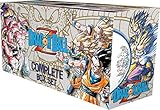
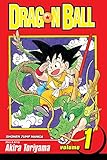
The complete original Dragon Ball manga is commonly presented as a 42-volume collection in official campaign material. Reading the three villain arcs in sequence makes the escalation easier to see: Frieza expands the scale from martial rivalry to galactic empire; Cell turns the heroes’ own biology and techniques into an engineered enemy; Buu makes the final crisis magical, mutable, and resistant to ordinary notions of defeat. The sequence is more informative than a single ranking because each villain changes what “winning” requires.
Quick Recap
Bottom-line comparison
| If you value… | The best fit | Reason |
|---|---|---|
| Imperial presence and personal cruelty | Frieza | He combines an army, planetary conquest, immortality ambitions, and deliberate psychological terror. |
| A coherent science-fiction concept | Cell | His origin, copied techniques, absorption, regeneration, and perfection all arise from engineered biology. |
| Unpredictability and survival difficulty | Buu | His forms, magic, regeneration, absorption, and shifting motives make him the least stable target. |
| Strongest original-Z escalation | Buu-arc forms, with a form-specific caveat | The story’s final villain escalation is generally treated as the highest, but official sources do not provide one cross-arc numerical scale. |
Product prices and availability are accurate as of the date/time indicated and are subject to change. Any price and availability information displayed on Amazon at the time of purchase will apply.
What’s actually slowing this PC down?
Pick the symptom - the matching free tool is one click away.

