
Recommended Free Tools
iTechGuides is reader-supported. When you buy through links on our site, we may earn an affiliate commission. As an Amazon Associate I earn from qualifying purchases. Learn more
Fire TV Stick 4K Plus (2025) has the broadest published surround-sound format support of these three platforms. Amazon lists passthrough for Dolby Digital, Dolby Digital Plus, Dolby Atmos, DTS, DTS-HD and MPEG-H. Choose Roku Ultra instead when DTS passthrough is the deciding requirement or when you want Roku’s documented Dolby Atmos decode over HDMI. Google TV Streamer (4K) is a straightforward Dolby-focused choice, supporting Dolby Digital, Dolby Digital Plus and Dolby Atmos.
Those specifications do not guarantee that one device will sound better in every room. The usable result is limited by the streaming app and title, the exact device generation and firmware, your TV, the AV receiver or soundbar, and whether the HDMI connection uses ARC or eARC. A streamer cannot deliver a format that another component in the HDMI chain rejects.
At a glance: surround-sound support
| Device | Formats explicitly listed by the manufacturer | Passthrough or decode information | Best fit |
|---|---|---|---|
| Fire TV Stick 4K Plus (2025) | Dolby Digital, Dolby Digital Plus, Dolby Atmos, DTS, DTS-HD and MPEG-H | Amazon lists HDMI audio passthrough for all six named formats; Amazon’s Dolby guidance describes playback of Dolby Digital, Dolby Digital Plus and Atmos, with passthrough to a soundbar or AV receiver. | The widest published Dolby-and-DTS format list. |
| Roku Ultra | Roku documents stereo, Dolby Digital, Dolby Digital Plus, some-model Dolby Atmos and DTS passthrough; its product page also names Dolby Atmos decode over HDMI. | DTS Digital Surround passthrough over HDMI and Dolby Atmos decode require compatible downstream equipment. | A system where DTS passthrough is essential and the HDMI path should stay simple. |
| Google TV Streamer (4K) | Dolby Digital, Dolby Digital Plus and Dolby Atmos | HDMI 2.1 output; Google provides Automatic, Dolby Digital Plus, Dolby Digital and PCM stereo output choices. | A Dolby-centered setup using current TV eARC or HDMI 2.1-capable audio equipment. |
The table compares published capability, not a listening-test ranking. No controlled first-party test establishes that any of these platforms sounds audibly better than the others when they deliver the same format to the same audio system.
The Tool Desk
Outbyte Driver Updater FREEScan for outdated or missing drivers - takes under a minuteDriver Scan →Outbyte PC Repair FREERepair Windows errors before they cause bigger problemsFix Now →What “surround-sound support” actually involves
Three separate questions are often collapsed into one specification:
#1 Best Overall

- Ultra-speedy streaming: Roku Ultra is 30% faster than any other Roku player, delivering a lightning-fast interface and apps that launch in a snap.
- Cinematic streaming: This TV streaming device brings the movie theater to your living room with spectacular 4K, HDR10+, and Dolby Vision picture alongside immersive Dolby Atmos audio.
- The ultimate Roku remote: The rechargeable Roku Voice Remote Pro offers backlit buttons, hands-free voice controls, and a lost remote finder.
- No more fumbling in the dark: See what you’re pressing with backlit buttons.
- Say goodbye to batteries: Keep your remote powered for months on a single charge.
- Which audio codecs can the streamer handle? Dolby Digital and Dolby Digital Plus are compressed multichannel formats. Dolby Atmos is an object-based presentation that is commonly carried inside Dolby Digital Plus for streaming. DTS and DTS-HD are DTS-family formats. A longer codec list means more source formats can potentially reach your audio equipment, but it does not mean every app or title uses all of them.
- Does the device decode or pass through the signal? Decoding means the streamer turns the compressed bitstream into audio channels or another output representation. Passthrough means it sends the encoded signal through HDMI for the TV, soundbar or AV receiver to decode. The receiving equipment must support the format in either case.
- Can the HDMI return path carry it? When the streamer connects to the TV and the TV sends sound back to a soundbar or receiver, ARC and eARC determine the return-path bandwidth. The same streamer can therefore behave differently when connected directly to an AV receiver, to a soundbar, or first to a TV.
For a fair comparison, check the exact model, the app and title, the output mode selected in settings, and every HDMI link before treating a logo on a product page as a guarantee.
Fire TV Stick 4K Plus (2025): the broadest published format list
Supported formats
Amazon’s Fire TV device specification states: “HDMI Audio pass-through for Dolby Digital, Dolby Digital+, Dolby Atmos, DTS, DTS-HD, MPEG-H.” That is the broadest explicit list among the three products compared here. Amazon’s Dolby guidance also says Fire TV can play Dolby Digital, Dolby Digital Plus and Dolby Atmos, and can use passthrough when connected to a soundbar or AV receiver.
For a household with a mix of Dolby-streaming services and content that uses DTS-family audio, this breadth makes the Fire TV Stick 4K Plus the safest choice on paper. It reduces the chance that the streamer itself is the first component to rule out a format, although the TV or audio system can still do so.
How the HDMI path affects Fire TV
Passthrough is useful when the soundbar or receiver has the stronger decoder. Connect the Fire TV to an HDMI input that can carry the desired signal, then let the downstream device identify and decode it. If the streamer is routed through a television, the TV must accept the incoming format and return it over ARC or eARC. A television that only returns compressed formats can prevent a higher-bandwidth signal from reaching the receiver even when the Fire TV specification lists it.
Rank #2
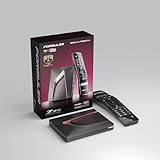
- Next-Gen Flagship Performance. Powered by a high-performance quad-core processor, 4GB DDR4 RAM, and 128GB storage, Z12 Ultra delivers ultra-fast navigation, seamless multitasking, and space for all your favorite apps and recordings.
- Dolby Vision and Dolby Atmos. Enjoy cinematic 4K playback with ultra-vivid colors, deeper contrast, and immersive 3D surround sound that places you right in the middle of the action.
- Advanced Decoding Technology. Supports 4K 60fps 10-bit playback with AV1, H.265 (HEVC), H.264, and HDR formats including HDR10+ and HLG, ensuring compatibility with the latest streaming and live broadcast standards.
- Next-Gen Connectivity. Equipped with Gigabit LAN and WiFi 6E (AX) for faster, more stable, and interference-free streaming—ideal for 4K and beyond.
- Simple and Elegant Home Screen. No ads, no clutter. Customize your home screen with your favorite apps and contents, including direct access to MYTVOnline3 for the ultimate streaming experience.
Model and content cautions
“Fire TV” is a platform name, not one hardware specification. Amazon’s format support varies by model, so verify the exact model number rather than assuming that an older or less expensive stick has the 2025 model’s list. Firmware, region, app implementation and the particular title can also change the available track. The published list describes what the Fire TV Stick 4K Plus can pass through; it does not promise that every service supplies DTS, DTS-HD or MPEG-H.
Roku Ultra: the clearest DTS choice
What Roku documents
Roku’s Ultra product information lists “DTS Digital Surround™ pass through over HDMI” and “Dolby Atmos® decode via HDMI,” with compatible speakers required. Roku’s support guidance for supported players describes passthrough for stereo, Dolby Digital, Dolby Digital Plus, some-model Dolby Atmos and DTS.
That wording makes Roku Ultra particularly attractive if DTS passthrough is a hard requirement. It also distinguishes Roku’s documented Atmos decode behavior from a blanket promise that every Roku player passes every Atmos variant. The phrase “some-model Dolby Atmos” matters: confirm the exact Ultra generation and software support for the player you are buying.
Do these 3 things before closing this tab:
1Scan for outdated or missing drivers - takes under a minute2Repair Windows errors before they cause bigger problems3Fix the driver behind crashes, sound loss and screen glitchesRoku TV ARC and eARC limits
Roku’s television guidance separates ARC from eARC. ARC supports Dolby Digital Plus and compressed Dolby Atmos. On select Roku TV models, eARC adds higher-bandwidth formats such as DTS-HD Master Audio, DTS:X and Dolby TrueHD. These statements describe the television’s return path, not an automatic upgrade for every Roku Ultra connection.
Rank #3

- The Google TV Streamer (4K) delivers your favorite entertainment quickly, easily, and personalized to you[1,2]
- HDMI 2.1 cable required (sold separately)
- See movies and TV shows from all your services right from your home screen[2]; and find new things to watch with tailored recommendations for everyone in your home based on their interests and viewing habits
- Watch live TV and access over 800 free channels from Pluto TV, Tubi, and more[3]; if you find an interesting show or movie on your TV, mobile app, or Google search, you can easily add it to your watchlist, so it’s ready when you are[2]
- Up to 4K HDR with Dolby Vision delivers captivating, true-to-life detail[4]; and you can connect speakers that support Dolby Atmos for more immersive 3D sound
If the Ultra is plugged directly into a receiver or soundbar, that device handles the incoming HDMI audio. If it is plugged into a Roku TV, the TV’s ARC/eARC hardware and settings become part of the decision. A Roku TV without eARC cannot be assumed to return the higher-bandwidth formats listed for eARC-capable models.
Google TV Streamer (4K): a focused Dolby option
Supported formats and output modes
Google’s current specifications for Google TV Streamer (4K) list Dolby Digital, Dolby Digital Plus and Dolby Atmos. The device has HDMI 2.1 output. Google recommends an Ultra High Speed HDMI 2.1 cable for optimal performance and says high-quality audio requires compatible HDMI 2.1 audio equipment or a TV eARC connection.
Google’s sound settings document four practical choices: Automatic, Dolby Digital Plus, Dolby Digital and PCM stereo. Automatic lets the connected system negotiate an available mode. Manual Dolby selections can help when a receiver or soundbar fails to identify the automatic signal, while PCM stereo is a compatibility fallback that intentionally gives up multichannel output.
Outdated Drivers Are Slowing You Down
One free scan finds every outdated or missing driver and matches the right update for your exact hardware.Free scan · exact hardware matchPC Slower Than It Used to Be?
A free scan shows the junk files, broken settings and background clutter dragging Windows down - then fixes them in one click.Free scan · Windows 10 & 11What you do and do not get
Google TV Streamer is well suited to systems built around Dolby Digital Plus and Dolby Atmos. Its current specifications do not list DTS or DTS-HD support, so it is not the first choice for a library or app whose surround tracks are primarily DTS-family formats. The absence of a DTS item in Google’s published list should be treated as a product-selection limitation, not something a cable or setting can add.
Rank #4

- MAKE YOUR TV SMARTER - Enhance any TV with the ability to play videos, music, and photo slideshows from a USB drive or MicroSD Card! It’s so simple and intuitive - anyone can use it. The Micca 4K is amazingly compact and affordable, get one for each TV in the house!
- PLAYS 4K ULTRA-HD VIDEOS - Works with TVs old and new! Smoothly plays videos up to 4096x2304@30fps over UHD 4K/60Hz HDMI output. Sharp and clear video and audio in pure digital format, compatible with 4K and 1080p TVs, projectors, and monitor displays. Composite AV output for use with analog TVs or for sending sound to a stereo system.
- DUAL USB AND MICRO SD READER - Play media files from USB flash drives and USB hard drives up to 8TB, or microSD cards up to 1TB. Supports FAT/FAT32, exFAT and NTFS file systems. Compatible with wireless air mouse remotes for non-line-of-sight control so that the player can be hidden away!
- SIMPLE DIGITAL SIGNAGE - Automatic video playback with endless repeat and looping, and the ability to resume from the last stopping point. Configurable 90/180/270 degree video output rotation. Great for digital signage applications such as restaurant menu boards, lobby welcome videos, art and museum installations.
- MEDIA FORMAT SUPPORT - Videos: MKV, MP4/M4V, AVI, MOV, MPG, VOB, M2TS, TS files encoded with H.265/HEVC, H.264/AVC, MPEG1/2/4, VC1, up to 4096x2304, 30fps, 200mbps. Subtitles: SRT, PGS, IDX+SUB. Music: MP3, WAV, FLAC. Photos: JPG, GIF, BMP, PNG
Google’s US comparison page lists a price of $99.99 for Google TV Streamer (4K), as shown in the current comparison information accessed in 2026. The same page says its CPU is 22% faster than Chromecast with Google TV (4K). Those figures describe price and general platform performance, not surround-sound quality.
ARC, eARC and direct connections
| Connection arrangement | What to verify | Typical implication from the documented guidance |
|---|---|---|
| Streamer directly into AV receiver or soundbar | The receiver or soundbar’s HDMI input and decoder support; the output connection from that device to the TV. | The audio device can decode or pass through the stream without relying on the TV’s return path. |
| Streamer into TV, TV to audio device over ARC | TV ARC support and the TV’s supported output formats. | Roku’s guidance identifies Dolby Digital Plus and compressed Dolby Atmos as ARC-capable examples. |
| Streamer into TV, TV to audio device over eARC | Whether the TV actually has eARC, whether it is enabled, and whether the cable and audio device support the target format. | Roku says select eARC-capable TVs can add DTS-HD Master Audio, DTS:X and Dolby TrueHD; Google recommends a TV eARC connection or compatible HDMI 2.1 audio equipment for high-quality audio. |
ARC and eARC labels are not interchangeable. eARC offers the higher-bandwidth return path, but every component still needs compatible hardware and software. A certified high-speed cable is especially important for the Google TV Streamer arrangement Google describes; replace a suspect cable before changing multiple audio settings.
How to choose by system and content
Choose Fire TV Stick 4K Plus when format breadth comes first
Select the 2025 Fire TV Stick 4K Plus if you want the strongest published combination of Dolby, DTS, DTS-HD and MPEG-H passthrough. It is the logical fit for a receiver or soundbar that can decode several families and for viewers who do not want to narrow their device choice to Dolby-only specifications.
Choose Roku Ultra when DTS is non-negotiable
Roku Ultra is the more focused pick when DTS Digital Surround passthrough is the deciding test. It is also appropriate when you prefer Roku’s documented Atmos decode over HDMI and have compatible speakers. Confirm the exact model and consider whether your TV uses ARC or eARC before expecting higher-bandwidth DTS or lossless formats to return through the television.
Best Value

- 4K streaming made simple:With America’s number 1 TV streaming platform,* exploring popular apps—plus tons of free movies, shows, and live TV—is as easy as it is fun. *Based on hours streamed—Hypothesis Group
- 4K picture quality: With Roku Streaming Stick Plus, watch your favorites with brilliant 4K picture and vivid HDR color.
- Compact without compromises: Our sleek design won’t block neighboring HDMI ports, and it even powers from your TV alone, plugging into the back and staying out of sight. No wall outlet, no extra cords, no clutter.
- No more juggling remotes: Power up your TV, adjust the volume, and control your Roku device with one remote. Use your voice to quickly search, play entertainment, and more.
- Shows on the go: Take your TV to-go when traveling—without needing to log into someone else’s device.
Choose Google TV Streamer for a Dolby-centered setup
Google TV Streamer suits a system whose services and discs-in-the-cloud equivalent are Dolby-based, particularly Dolby Digital Plus and Dolby Atmos. Its current HDMI 2.1 output, Ethernet-oriented hardware design and explicit sound-mode controls make it a straightforward choice when the TV or audio equipment meets Google’s HDMI requirements. Do not choose it expecting DTS passthrough based on a generic “surround” label.
Independent reader supportYour contribution helps us test, update, and keep practical guides available for everyone.Setup procedure for reliable surround output
- Identify every component. Write down the exact streamer model, TV model, soundbar or AV receiver model, and whether the TV connection is ARC or eARC. Include the HDMI cable type if known.
- Choose the signal route. If the receiver or soundbar has a suitable HDMI input, test a direct streamer-to-audio-device connection first. If the streamer must connect to the TV, use the TV’s labeled ARC/eARC port for the audio return.
- Enable the TV’s return function. Turn on ARC or eARC in the TV’s audio settings, select the external audio system, and make sure the receiver or soundbar is set to its HDMI input. Menu names differ by manufacturer, so use the labels shown by your equipment rather than copying a setting from another brand.
- Use the streamer’s automatic mode initially. On Google TV Streamer, open the sound settings and select Automatic. If negotiation fails, test Dolby Digital Plus or Dolby Digital when the connected equipment supports that format. Use PCM stereo only as a compatibility fallback.
- Play a title with a known track. Check the app’s audio-language or track selector and choose the available 5.1, Dolby Digital Plus or Atmos track. A title with only stereo audio cannot demonstrate the streamer’s surround capability.
- Confirm the receiving device’s display. The soundbar or receiver should show the format it is decoding, such as Dolby Digital Plus, Dolby Atmos or DTS. If it shows PCM stereo, investigate the output mode, TV return path and app track before concluding that the streamer lacks support.
- Change one variable at a time. Swap the cable, bypass the TV, or change one audio setting, then retest the same title. This isolates whether the limitation is the streamer, the app, the TV or the downstream audio equipment.
Troubleshooting common failures
Atmos appears as stereo or ordinary Dolby Digital
- Confirm that the title and app actually provide an Atmos track and that the track is selected.
- Use the TV’s eARC connection, if available, or test a direct connection to the Atmos-capable receiver or soundbar.
- On Google TV Streamer, avoid PCM stereo and test Automatic or Dolby Digital Plus.
- Check that the soundbar or receiver, not only the streamer, supports Atmos decoding.
DTS works on one device but not another
- Roku Ultra and Fire TV Stick 4K Plus have published DTS-related support; Google TV Streamer’s current list does not name DTS or DTS-HD.
- If the streamer is routed through a TV, inspect whether the TV has ARC or eARC and whether its model supports the DTS format on that path.
- Test the streamer directly into the audio device to separate a TV return-path limitation from a player limitation.
The receiver reports “no audio” after enabling passthrough
- Return temporarily to Automatic or a lower compatible Dolby mode.
- Verify the HDMI input is assigned to the correct source and that HDMI-CEC or the manufacturer’s equivalent control is not switching inputs unexpectedly.
- Try a known-good Ultra High Speed HDMI 2.1 cable where Google recommends one, then retest with the same title.
A specification says Atmos, but the app never shows it
Format support is conditional. The app, subscription tier, title, region, firmware and connected equipment can each remove an option. The device specification tells you what the hardware can handle; it does not force a service to provide a particular soundtrack.
Important limits of this comparison
Model names are not interchangeable across generations. “Fire TV,” “Roku” and “Google TV” each cover multiple hardware products, and their audio support can differ. Always match the specification to the exact retail model. Availability, firmware and app behavior can also change by region and over time.
What’s actually slowing this PC down?
Pick the symptom - the matching free tool is one click away.
Prices and stock are similarly time-sensitive. The $99.99 Google TV Streamer figure above is the US comparison price shown by Google in 2026, not a universal or permanent street price. The Fire TV and Roku specifications cited here establish supported formats, not retail pricing.
Finally, codec support is not the same as audible superiority. With identical source material, identical output format and identical downstream equipment, there is no controlled comparison in the cited manufacturer information that proves one platform sounds better. Select the device whose published formats and HDMI behavior fit your actual system.
Quick Recap
Product prices and availability are accurate as of the date/time indicated and are subject to change. Any price and availability information displayed on Amazon at the time of purchase will apply.

