
Do these 3 things before closing this tab:
1Clear out junk files and repair common Windows errors2Scan for outdated or missing drivers - takes under a minute3Repair Windows errors before they cause bigger problemsiTechGuides is reader-supported. When you buy through links on our site, we may earn an affiliate commission. As an Amazon Associate I earn from qualifying purchases. Learn more
Choose Final Fantasy XIV if you want a long, authored story, traditional tank-healer-damage party roles, and the freedom to change combat classes on one character. Choose Guild Wars 2 if you want to start without a subscription fee, explore at your own pace through events, and spend substantial time in persistent competitive modes.
The practical difference is the business model as much as the design. Final Fantasy XIV requires a paid edition and then a recurring subscription after its included play period. Guild Wars 2 has a free core game that reaches maximum level, with optional paid expansions. Both are enormous, long-term MMOs, so the best choice is the one whose pacing, combat structure and payment model match how you actually play.


Final Fantasy XIV and Guild Wars 2 at a glance
These games can both occupy years of your time, but they ask you to play in very different ways. Final Fantasy XIV is organized around a continuous main scenario and scheduled group duties. Guild Wars 2 is built around a broad world of dynamic events, exploration and several activity types that you can enter without paying a monthly fee.
| Question | Final Fantasy XIV | Guild Wars 2 |
|---|---|---|
| How do you start? | Buy the Starter or Complete Edition. Square Enix says either purchase includes a 30-day free play period. | Start with a free core game that includes maximum-level access, eight professions, story and competitive play. |
| What happens after the included/free access? | Continued play requires a subscription. | The core game remains available without a subscription; expansions are optional purchases. |
| Story structure | Long, authored main scenario with a directed progression path. | Open-world events, exploration and multiple activity types create a less linear pace. |
| Character flexibility | One character can change combat classes. | Characters are built around professions and build choices. |
| Group combat | Traditional tank, healer and damage roles in scheduled duties. | More fluid participation in open-world events and encounters. |
| Competitive focus | Offers competitive modes, but its identity is primarily cooperative PvE progression. | Persistent World versus World and structured PvP are central long-term options. |
| Documented recurring price | Entry: $12.99 for 30 days; Standard: $14.99 for 30 days (Square Enix, 2026). | No subscription fee for the core game (ArenaNet); expansion pricing varies by package. |
The table is a decision aid, not a ranking. A player who dislikes monthly billing can still prefer Final Fantasy XIV’s story, while a player who normally avoids competitive modes can still find Guild Wars 2’s exploration compelling.
#1 Best Overall
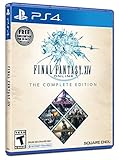
- A new adventure awaits in Norvrandt
- New jobs, including gun breaker and dancer
- New playable races: Viera and Hrothgar
- Level cap increase from 70 to 80
- New cities to explore: The Crystarium and Eulmore
Cost and access: subscription versus free core game
How Final Fantasy XIV billing works
Square Enix lists Starter and Complete Editions. Customers who purchase either edition receive a 30-day free play period, after which continued play requires an active subscription. The official 2026 pricing listed by Square Enix is:
- Entry subscription: $12.99 for 30 days.
- Standard subscription: $14.99 for 30 days.
Those are 30-day prices, not a lifetime purchase, and prices or terms can change. Check the current account-management page for the region and platform you intend to use before paying. The edition you buy also matters: a Starter Edition and a Complete Edition are not interchangeable purchase decisions, so confirm which game content is included in the listing you select.
How Guild Wars 2 access works
ArenaNet describes Guild Wars 2 with the statement “No subscription fee ever!” Its free game includes maximum-level progression, eight professions, story content and competitive play. You can therefore play the core game without adding a monthly charge to your budget. When you want more content, you buy expansions rather than activating a recurring subscription.
The official store lists the Heart of Thorns & Path of Fire package at $29.99 USD in 2026. That is a listed expansion price, not a guarantee for every region, edition or future promotion. Expansion catalogs and prices can change, so treat the store listing as the authority at checkout.
Which payment model is cheaper for your use?
| Your play pattern | Likely financial fit | Why |
|---|---|---|
| You play every month and want a guided campaign. | Final Fantasy XIV may be easier to justify. | The subscription provides continuing access once you have bought the edition, and the main scenario gives you a clear long-term path. |
| You play in bursts or take long breaks. | Guild Wars 2 usually fits better. | The core game has no subscription fee, so a break does not require keeping a recurring plan active. |
| You want to sample before spending. | Try each game’s documented free-entry route first. | Guild Wars 2’s core game is free; Final Fantasy XIV provides a 30-day period with a purchased Starter or Complete Edition. Verify current trial and account rules before checkout. |
| You expect to buy additional content. | Compare the specific expansion bundles you need. | Guild Wars 2 sells optional expansions, while Final Fantasy XIV access combines an edition purchase with ongoing subscription costs. |
Do not compare the $29.99 expansion price directly with one month of Final Fantasy XIV and call that a total cost of ownership. They pay for different things: one is a one-time expansion package, and the other is a 30-day subscription period. Your play duration and whether you buy expansions determine the real total.
Rank #2
Story and pacing
Why Final Fantasy XIV suits story-first players
Final Fantasy XIV’s main scenario is a long, authored narrative. Quests and group duties are arranged to move you through a planned sequence, so the next objective, character beat or major encounter is usually part of a larger arc. This structure rewards readers who want the MMO equivalent of a multi-season role-playing campaign rather than a collection of disconnected activities.
The trade-off is commitment. You are often progressing through the game’s intended order instead of choosing any activity with equal priority. If you prefer to pause a central plot for exploration, crafting, social play or competitive matches, you can do that, but the game’s strongest identity remains its continuing story and cooperative progression.
Free tools Windows power users keep installed
One-click scans. No signup required.
Why Guild Wars 2 suits exploratory players
Guild Wars 2 emphasizes open-world events, exploration and multiple activity types. Instead of requiring every session to advance one central quest chain, it lets you move through the world, join events that are already happening and decide whether the next hour is spent exploring, improving a build or entering a competitive mode.
This is a better fit when you want an MMO that tolerates irregular attention. You can log in with a local objective rather than a chapter of a campaign in mind. The cost is that players who need a tightly directed story may find the experience less linear than Final Fantasy XIV.
Choose by the kind of momentum you enjoy
- Choose authored momentum if you want a sequence of narrative goals that tells you what matters next.
- Choose self-directed momentum if discovering an event, zone or activity for yourself is more satisfying than following a prescribed order.
- Choose a hybrid test by using each game’s free-entry option for several sessions: one session focused on story progression, one on combat and one on unstructured exploration.
Character flexibility and progression
Final Fantasy XIV: one character, multiple combat classes
Final Fantasy XIV supports changing combat classes on a single character. That is valuable if you want one persistent identity while trying different roles, or if you want to fill a tank, healer or damage position without creating a separate character for each experiment.
Rank #3
This flexibility also changes how you plan progression. You can keep investing in one character and switch roles when your group needs something different. The decision is less about permanently selecting one profession and more about deciding which class to play in a particular session or duty.
Guild Wars 2: profession identity and build choices
Guild Wars 2 uses profession-based characters and build choices. Your profession establishes the character’s core identity, while the build determines how you configure that profession for the activity you are doing. The result is flexibility inside a character rather than the same single-character class-switching model used by Final Fantasy XIV.
This approach suits players who enjoy tuning a build and maintaining several characters with distinct identities. It is less convenient if your main goal is to move every role onto one character, because the profession choice is a more fundamental part of that character’s identity.
Which system should you pick?
| If you value… | Better match | Reason |
|---|---|---|
| Trying tank, healer and damage roles without rerolling | Final Fantasy XIV | Combat classes can be changed on one character. |
| Distinct characters with different profession identities | Guild Wars 2 | Characters are organized around professions and build choices. |
| A clear role in scheduled group content | Final Fantasy XIV | Its party structure makes tank, healer and damage responsibilities explicit. |
| Adjusting a setup for open-world or competitive activities | Guild Wars 2 | Build choices and fluid participation support switching activities without the same duty-based structure. |
Combat and group play
Final Fantasy XIV’s role-based duties
Final Fantasy XIV centers familiar tank, healer and damage roles. Scheduled duties ask each participant to understand a defined responsibility, and group success depends on those roles working together. This creates a readable social contract: the tank manages attention and positioning, the healer keeps the party functioning and damage players concentrate on defeating the encounter.
That clarity is useful when you are learning group play. You can identify what your role is expected to do and improve against repeatable duties. It can also feel demanding if you want to change your responsibilities from moment to moment or dislike content that assumes a coordinated party.
Rank #4

- Access to all expansion content from Heavensward and Stormblood, unlocking additional jobs, areas, story quests and more ways to explore: flying, swimming and diving
- A flexible class system that allows players to switch freely between a variety of classes and jobs, including new additions red mage and samurai, and reach the new level cap of level 70
- All the hallmarks of the FINAL FANTASY franchise, including an engaging storyline, genre-leading graphics, and HD real time cut scenes.
- Robust gameplay features such as player-managed Free Companies, diverse party finder features to group up with other players with ease, and a variety of fun activities in the Gold Saucer area, all designed to accommodate a dynamic player community.
- Challenging trials, dungeons and raids for groups of up to 24, and exciting player-vs-player (PvP) content for groups of up to 72 players
Guild Wars 2’s fluid participation
Guild Wars 2’s open-world events and encounters support more fluid participation. You can arrive at an event already in progress, contribute without forming the same kind of fixed party composition and move on when the activity ends. This lowers the friction of joining other players while exploring.
Fluid participation does not mean every encounter is effortless. It means the game’s open-world structure is less dependent on arranging a specific tank-healer-damage group before you can take part. Players who prefer spontaneous cooperation often find that model more welcoming; players who enjoy carefully rehearsed party roles may prefer Final Fantasy XIV’s duties.
How to test combat fairly
- Play each game long enough to reach a representative group or event rather than judging only the opening tutorial.
- In Final Fantasy XIV, try the role you naturally prefer and then a second role to test the class-switching system.
- In Guild Wars 2, join several open-world events and change a build choice between activities to see whether that type of flexibility appeals to you.
- Notice the kind of pressure you enjoy: executing a defined party assignment or reacting to a changing public event.
Competitive play: casual option or central reason to stay?
Guild Wars 2 for persistent competition
Guild Wars 2 offers persistent World versus World and structured PvP. World versus World provides an ongoing large-scale competitive setting, while structured PvP supplies a more organized match format. These modes give you a reason to return even when you are not advancing a story chapter or exploring a new zone.
If competition is a major part of your MMO schedule, this breadth matters. You can treat the open world as one activity and competitive modes as another without changing games or paying a separate subscription for the core access.
The Tool Desk
Outbyte Driver Updater FREEScan for outdated or missing drivers - takes under a minuteDriver Scan →Outbyte PC Repair FREERepair Windows errors before they cause bigger problemsFix Now →Final Fantasy XIV for cooperative progression first
Final Fantasy XIV has competitive modes, but its primary identity is cooperative PvE progression. Its strongest reasons to stay are the authored scenario, class experimentation on one character and scheduled group content, not a persistent player-versus-player campaign.
Best Value

- Customer must have Final Fantasy XIV: A Realm Reborn to play Stormblood
- Increased level cap up to level 70
- New Jobs – Red Mage and Samurai
- New Beast Tribe and Primal
- New Alliance Raid
That does not exclude competitive-minded players. It means you should make the choice based on how much of your weekly time you expect to spend in those modes. If persistent World versus World or structured PvP is a deciding requirement, Guild Wars 2 has the clearer emphasis.
Independent reader supportYour contribution helps us test, update, and keep practical guides available for everyone.Platforms, accounts and purchase checks
Square Enix’s product page lists Windows, Mac, Steam, PlayStation 4, PlayStation 5, Xbox Series X|S and Nintendo Switch 2 subscription categories. Because platform licenses and account rules can differ, check the exact edition, account-linking requirements and subscription terms for the platform you will use. Do not assume that buying access on one storefront automatically grants access on another.
Guild Wars 2’s free-core model makes the initial platform decision less financially risky, but expansion ownership still depends on the account and store where you purchase it. Before buying an expansion, confirm that it attaches to the same game account you use for the free core game.
- Confirm the supported operating system or console edition.
- Check whether the storefront is separate from your game account.
- Read the current regional price and currency before payment.
- Verify whether a subscription is required after an included play period.
- Keep purchase receipts and account credentials; moving between platforms can have account-specific restrictions.
Which MMO fits your priorities?
Pick Final Fantasy XIV when these statements sound like you
- You want one continuous, authored story to be the spine of your MMO time.
- You enjoy clear tank, healer and damage responsibilities in scheduled group duties.
- You want to change combat classes on one character instead of maintaining separate characters for every role.
- You are comfortable budgeting for a recurring subscription after the included 30-day period.
- You mainly want cooperative PvE progression, with competitive modes as an optional extra.
Pick Guild Wars 2 when these statements sound like you
- You want to begin with a free core game and avoid a subscription fee.
- You prefer open-world events and exploration to a strictly ordered campaign.
- You like deciding each session’s activity instead of following one required progression path.
- You want persistent World versus World or structured PvP to be a major part of the game.
- You enjoy shaping profession-based characters through build choices.
When neither answer is obvious
Use a two-stage test instead of trying to predict your preference from screenshots or feature lists. Start Guild Wars 2’s free core game and observe whether its event-driven pacing keeps you engaged without a subscription. For Final Fantasy XIV, use the currently available free-entry route or purchase a Starter or Complete Edition only after checking the current terms; the documented purchase includes 30 days of play, not permanent free access.
During the test, write down three observations: whether you looked forward to the next story objective, whether the combat felt better with a defined role or a fluid event contribution, and whether you wanted to play another class or refine one profession. Those answers are more useful than a generic “which MMO is better?” ranking because they map directly to the systems you will use for hundreds of hours.
A practical decision checklist before you buy
- Set your billing limit. Decide whether a recurring $12.99 or $14.99 30-day subscription is acceptable after Final Fantasy XIV’s included period, or whether you require no monthly fee.
- Choose your story shape. Select a long, directed scenario if you want authored progression; select open-world events and exploration if you want to set your own route.
- Choose your character model. Pick Final Fantasy XIV for one-character class switching, or Guild Wars 2 for profession identities and build choices.
- Choose your group pattern. Pick scheduled duties with explicit roles, or public events where participation is more fluid.
- Choose your competitive emphasis. If persistent World versus World or structured PvP is essential, weight that requirement heavily toward Guild Wars 2.
- Check your platform. Confirm the current edition, account rules and storefront before entering payment details.
- Try before committing. Use each game’s free-entry option and judge the pacing over several sessions, not one opening cutscene or tutorial.
Bottom line
Final Fantasy XIV is the stronger first choice for a story-led MMO player who wants traditional party roles and one character capable of changing combat classes, and who accepts a subscription after the included play period. Guild Wars 2 is the stronger first choice for a player who wants no subscription fee for the core game, open-world events, flexible session goals and persistent competitive modes.
Neither model is universally better. Your safest decision is to test the free access available for each game, then buy the one whose everyday loop—not just its setting or reputation—makes you want to log in again.
Recommended Free Tools
Quick Recap
Product prices and availability are accurate as of the date/time indicated and are subject to change. Any price and availability information displayed on Amazon at the time of purchase will apply.

