
iTechGuides is reader-supported. When you buy through links on our site, we may earn an affiliate commission. As an Amazon Associate I earn from qualifying purchases. Learn more
A file recovery program scans storage for deleted or inaccessible data and attempts to identify, reconstruct, or restore files. It can help when a file was deleted from a local drive and its data has not been overwritten, but recovery is never guaranteed. If a file has just gone missing, stop using the affected device as much as possible and save any recovered files to a different drive.
What is a file recovery program?
A file recovery program is software that looks for file data that is no longer readily accessible through the normal file system. It may inspect file-system records, search storage for content, or use other techniques; methods vary by tool. NIST describes deleted-file recovery as “Examining file system metadata to identify deleted files and to attempt their reconstruction or recovery.”
These programs are used when files have been deleted or storage has become inaccessible. A recovery attempt may return a file, but it may be incomplete, difficult to identify, or not recoverable at all. It should not be assumed that a recovered file will keep its original name, folder, or contents intact.
Quick wins for a faster PC:
Fix the driver behind crashes, sound loss and screen glitchesFind Drivers →Repair Windows errors before they cause bigger problemsFix Now →How can deleted files still be recoverable?
Deleting a file often changes file-system information to mark its storage space as available for reuse rather than immediately erasing every data block. Recovery software may be able to find data that remains in that space. If the device writes new data over the relevant area, the original content may be damaged or lost, making recovery less likely or impossible.
#1 Best Overall

- Data recovery software for retrieving lost files
- Easily recover documents, audios, videos, photos, images and e-mails
- Rescue the data deleted from your recycling bin
- Prepare yourself in case of a virus attack
- Program compatible with Windows 11, 10, 8.1, 7
Microsoft’s guidance for Windows File Recovery puts the practical advice plainly: “If you want to increase your chances of recovering a file, minimize or avoid using your computer.” Continued use can write new data to storage, so avoid installing recovery software or saving downloads on the affected drive when possible.
What affects the chance of recovery?
- Whether the data was overwritten: If storage space holding the deleted file has been reused, a program may not be able to restore it. Microsoft notes that recovery can be especially difficult on SSDs.
- How and where the file was lost: Tool support varies by operating system, file system, and storage location. A utility designed for local drives may not work with cloud storage or network shares.
- The recovery method and result quality: A scan can return extraneous material or fail to discover some data. NIST’s scientific foundation review discusses these limits, so finding files is not the same as proving that every result is complete.
No general success-rate percentage applies to every file recovery program or situation. The outcome depends on the device, file system, type of loss, and what has happened to the storage since deletion.
Rank #2
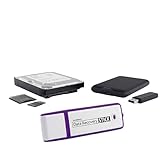
- The Data Recovery Stick requires no technical skills — simply plug it into your Windows computer, click Start, and the software automatically begins scanning and recovering lost files within minutes. Compatible with Windows Vista, 7, 8, 10, & 11, it's designed to be a reliable first step when accidental deletion occurs.
- Recover photos (JPG, BMP, PNG, TIFF), Microsoft Office documents (Word, Excel, PowerPoint, Publisher, Access), Open Office files, MP3 music files, PDFs, RTF documents, AutoCAD files, and HTML web pages. Whether it's personal memories or critical business files, the Data Recovery Stick covers the file types that matter most.
- Works with hard drives, USB drives, SD cards, memory sticks, and other common storage formats that use FAT or NTFS file systems — making it a single solution for hard drive recovery, USB drive recovery, SD card recovery, and more. Note: a media reader is required for micro SD cards and some mass storage devices.
- No Installation Required - The Data Recovery Stick runs entirely from the USB drive with no software installation on your computer — helping prevent new data from overwriting the files you're trying to recover. This also makes it ideal for use across multiple computers or in emergency situations where installation isn't practical.
- Use the Data Recovery Stick on as many computers as often as needed — simply clear the recovered data between uses to free up storage space. Software updates keep the tool compatible with newer systems and devices, backed by 25+ years of data software expertise from Paraben Consumer Software.
Recovery software and backups are different
A recovery utility tries to locate or reconstruct data on storage. A backup is a separate copy intended to make restoration possible; NIST defines a backup as “A copy of files and programs made to facilitate recovery if necessary.” If a current backup or retained cloud version exists, restoring that copy may be more dependable than scanning for deleted local data.
Microsoft describes cloud backup as part of a broader device resiliency approach. That is distinct from scanning local deleted-file space: a backup can help only if the file or a suitable version was included and remains available for restoration.
Rank #3

- Stellar Data Recovery Professional is a powerful data recovery software for restoring almost every file type from Windows PC and any external storage media like HDD, SSD, USB, CD/DVD, HD DVD and Blu-Ray discs. It recovers the data lost in numerous data loss scenario like corruption, missing partition, formatting, etc.
- Recovers Unlimited File Formats Retrieves lost data including Word, Excel, PowerPoint, PDF, and more from Windows computers and external drives. The software supports numerous file formats and allows user to add any new format to support recovery.
- Recovers from All Storage Devices The software can retrieve data from all types of Windows supported storage media, including hard disk drives, solid-state drives, memory cards, USB flash storage, and more. It supports recovery from any storage drive formatted with NTFS, FAT (FAT16/FAT32), or exFAT file systems.
- Recovers Data from Encrypted Drives This software enables users to recover lost or deleted data from any BitLocker-encrypted hard drive, disk image file, SSD, or external storage media such as USB flash drive and hard disks. Users will simply have to put the password when prompted by the software for recovering data from a BitLocker encrypted drive.
- Recovers Data from Lost Partitions In case one or more drive partitions are not visible under ‘Connected Drives,’ the ‘Can’t Find Drive’ option can help users locate inaccessible, missing, and deleted drive partition(s). Once located, users can select and run a deep scan on the found partition(s) to recover the lost data.
Example: Windows File Recovery
Windows File Recovery is Microsoft’s command-line example of a consumer recovery utility. Microsoft says it is available from the Microsoft Store and applies to Windows 10 and Windows 11. The listing of Windows 10 as applicable to the utility does not change the fact that Microsoft support for Windows 10 ended on October 14, 2025.
Microsoft documents recovery from local storage, including internal drives, external drives, and USB devices. It does not support recovery from cloud storage or network file shares. Its basic command format is:
Rank #4
![Data Recovery Professional [Download]](https://m.media-amazon.com/images/I/A1wl+dLOd-L._SL160_.jpg)
- No technical skills required
- Recovers deleted folders and over 300 file types
- Recover from drives, cameras, iPods, MP3 players, CD/DVD, memory cards, lost partitions and more
- Recovers deleted email files, folders, calendars, contacts, tasks and notes from Outlook.
winfr source-drive: destination-drive: [/mode] [/switches]The source and destination drives must be different. If the computer has only one drive, Microsoft advises using a USB or external drive as the destination. This prevents recovered files from being written back onto the drive being scanned.
PC Slower Than It Used to Be?
A free scan shows the junk files, broken settings and background clutter dragging Windows down - then fixes them in one click.Free scan · Windows 10 & 11Crashes, No Sound, or Screen Glitches?
Random freezes, missing sound and display glitches usually trace back to one bad driver. Find and replace yours safely.Free scan · under a minuteRegular and Extensive modes
Windows File Recovery offers Regular and Extensive modes. Microsoft recommends starting with Regular mode if you are unsure. Its guidance maps recent NTFS deletions to Regular mode; older NTFS deletions, formatting, or corruption to Extensive mode; and FAT or exFAT recovery to Extensive mode. If Regular mode does not work, Microsoft suggests trying Extensive mode when the file type is supported. Neither mode can restore data that has been overwritten.
Best Value

- Recover deleted files, photos, documents, audio, videos & more
- Recover lost data from PC, Hard Drive, USB, SD Cards, and other external devices.
- Restore deleted or lost files from formatted/crashed and unbootable hard drives.
- Preview deleted data before recovery in scan results.
- Accurate, trusted, and reliable data recovery software to restore deleted and lost data.
How to choose between recovery and restoration
- Try a deleted-file recovery utility when the file was on local storage, no usable copy is available elsewhere, and the chosen tool supports the device and file system.
- Restore from a backup or cloud version when a suitable copy exists. Check what locations were included, how recent the copy is, and what restore options the service provides.
- Use a separate destination drive for recovered files if you proceed with a scan. An external drive or USB device can serve as the destination when there is no second internal drive; it is not itself recovery software and does not increase the chance that deleted data can be recovered.
To compare recovery utilities, check their supported operating systems, file systems and storage locations, recovery modes, interface type, and destination-drive requirements. Those differences define what a program can attempt; they do not establish that one tool will recover more files than another.
Quick Recap
Product prices and availability are accurate as of the date/time indicated and are subject to change. Any price and availability information displayed on Amazon at the time of purchase will apply.

