
Free tools Windows power users keep installed
One-click scans. No signup required.
iTechGuides is reader-supported. When you buy through links on our site, we may earn an affiliate commission. As an Amazon Associate I earn from qualifying purchases. Learn more
Factory Reset Protection (FRP) bypass is not a normal Android unlock: FRP is an anti-theft control that can require a Google Account previously synced to a phone after an unauthorized or recovery-mode reset. AddROM is an unofficial third-party collection of guides and downloads, not a universal or Google-approved solution. Account recovery, previous-owner removal, or authorized service are the safe remedies.
This guide explains how to identify FRP, separate it from other locks, understand what “AddROM bypass” claims usually mean, and recover a legitimately owned device without using hidden setup-screen exploits, random APKs, or instructions designed to defeat Android’s ownership verification.
Key takeaways
- FRP, also called Factory Reset Protection or Google Device Protection, can require a Google Account previously associated with an Android phone after a recovery-mode or otherwise unauthorized reset.
- AddROM is a third-party ROM, firmware, app, and Android-guide resource; it is not an official Google, Android, or Samsung FRP-removal tool.
- There is no responsibly verifiable universal AddROM method for current Android phones because compatibility depends on the exact model, manufacturer software, Android release, security patch, and setup state.
- Google’s Android preparation guidance recommends confirming the account and screen lock, waiting 24 hours after a recent password change, backing up data, charging the phone to at least 70%, and connecting to a network before resetting.
- The safest recovery routes are the original Google Account, the previous owner’s account removal, manufacturer service with proof of purchase, or an organization’s authorized Android-management process.
What does Factory Reset Protection (FRP) bypass mean?
Factory Reset Protection (FRP) bypass means attempting to get around Android’s post-reset ownership verification instead of authenticating with the Google Account previously linked to the device. That distinction matters: FRP is not a forgotten screen PIN and is not removed simply because local phone data has been erased.
Google designed FRP to make a lost or stolen Android phone harder to wipe and reuse. A factory reset removes local user data, but the device can retain an ownership signal that causes Android Setup to request previous account credentials. Google’s Android factory-reset guidance explains the account and screen-lock checks that may be required after a reset.
#1 Best Overall
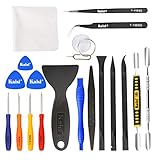
- Kaisi 20 pcs opening pry tools kit for smart phone,laptop,computer tablet,electronics, apple watch, iPad, iPod, Macbook, computer, LCD screen, battery and more disassembly and repair
- Professional grade stainless steel construction spudger tool kit ensures repeated use
- Includes 7 plastic nylon pry tools and 2 steel pry tools, two ESD tweezers
- Includes 1 protective film tools and three screwdriver, 1 magic cloth,cleaning cloths are great for cleaning the screen of mobile phone and laptop after replacement.
- Easy to replacement the screen cover, fit for any plastic cover case such as smartphone / tablets etc
FRP is commonly called Factory Reset Protection, Google Device Protection, or Google FRP. FRP is activated by the phone’s account and security state, not by a separate “FRP app.” The exact behavior varies by manufacturer, Android version, reset method, and device configuration.
Why does a recovery reset trigger FRP?
A reset performed from Android Settings is different from a reset performed through recovery buttons or another unauthorized path. A Settings reset can give the authenticated owner an opportunity to remove accounts first. A recovery-menu reset may erase the data without proving that the person holding the phone is the owner, so Setup can request the previously used Google credentials afterward.
Samsung describes this behavior as Google Device Protection: adding a Google Account and using a lock screen can activate protection, while a reset from the recovery menu may require the previously used Google credentials. Samsung’s FRP troubleshooting guidance documents that manufacturer-specific behavior.
How is FRP different from a screen lock, carrier lock, or MDM enrollment?
FRP is only one of several restrictions that can appear on an Android phone. Identifying the exact lock prevents a reader from buying a carrier-unlock service for an account-verification problem or flashing firmware when the real issue is enterprise enrollment.
| Lock or problem | What the phone is asking for | Correct remedy |
|---|---|---|
| FRP / Google verification | A Google Account previously synced with the device after a reset | Recover the original account, have the previous owner remove it, or use authorized manufacturer service |
| Screen PIN, pattern, or password | The local screen-lock credential used before normal access | Use the manufacturer’s supported recovery process or an authorized reset, recognizing that data may be lost |
| Samsung Account or reactivation issue | A Samsung account or related brand service remains linked | Recover the Samsung account or contact Samsung support |
| Carrier SIM or network lock | A restriction on which carrier’s SIM or network the phone accepts | Follow the carrier’s network-unlock policy |
| MDM or enterprise enrollment | A company’s device-management or provisioning record | Ask the employer’s administrator to release or manage the device |
| Bootloader or firmware problem | The phone cannot boot normally or accepts only approved software | Use the manufacturer’s repair or authorized firmware service |
A phone may have more than one problem. For example, a used Samsung phone can have both Google FRP and a Samsung Account association, while a company phone can have enterprise management in addition to Google verification.
What is AddROM, and what does “AddROM bypass” usually refer to?
AddROM is a third-party resource ecosystem associated with ROMs, firmware, apps, and Android guides. “AddROM bypass” generally refers to pages that collect APK links, shortcuts, setup-screen workarounds, or routes intended to reach an app, browser, Settings page, or other part of Android during FRP verification.
The name does not make a method official. The AddROM contact page identifies addROM as its own third-party site, but that identity is not evidence that Google, Android, Samsung, or another manufacturer endorses its instructions. Other websites may copy the AddROM name or republish its material, and a page using the brand may not be operated by the original site.
Recommended Free Tools
Rank #2

- Error Diagnosis: This OBD2 adapter can be connected to a smartphone via Bluetooth, and together with the dedicated application, it can quickly read the vehicle fault codes. It can effectively assist car owners in promptly understanding the vehicle's condition and formulating maintenance plans
- Real Time Monitoring: This product supports real-time viewing of various vehicle data, such as coolant temperature, fuel system status, vehicle speed, airflow, and fuel pressure. Data updates are rapid, allowing drivers to monitor the vehicle's current operating status and enhance driving safety
- Superior Quality: The scanner's housing is made of high-strength ABS, offering excellent insulation and impact resistance. Its smooth, wear-resistant surface effectively prevents scratches and wear during daily use, ensuring long-term, stable operation
- Compact Size: This OBD2 Bluetooth car diagnostic scanner measures 3.1 × 1.6 inches or 3.5×1.8 inches and weighs 41 grams. It is compact and lightweight, making it easy to carry. It fits easily into a pocket or glove compartment, making it ideal for daily commutes, long-distance drives, or emergency checks
- Scope of Use: This OBD2 diagnostic scanner is specifically designed for 12V vehicles equipped with a standard OBD2 port and is widely compatible with sedans, SUVs, pickup trucks, and light trucks. To ensure compatibility, please verify that your vehicle's model year and port type match before purchasing
AddROM material is therefore better understood as a collection of unofficial, device-dependent workflows rather than a single product with guaranteed support. This article does not provide hidden-dialer tricks, APK download links, setup-wizard exploits, or instructions for defeating FRP without authentication. Those instructions could weaken an anti-theft feature and facilitate unauthorized access.
Does AddROM work on modern Android phones?
AddROM cannot be responsibly described as a universal solution for modern Android phones. Any reported success depends on the exact model, Android release, manufacturer skin, carrier or regional firmware, security-patch level, Google components, and the entry points still available in the setup process.
Older guides often depend on an unpatched route into a browser, Settings, file manager, account-management screen, or app-installation flow. A security update can close that route without changing the phone’s model name. An APK built for one Android generation may also refuse to install, crash, lack the required permissions, or behave differently on a carrier-specific build.
Third-party compatibility coverage describes AddROM methods as dependent on the model, Android version, and security patch. That coverage is secondary evidence, not a manufacturer guarantee or independent proof that a particular download is safe.
| Variable | Why it changes the result | What a responsible claim must include |
|---|---|---|
| Exact model number | Closely named phones can use different hardware and setup software | The complete model and, where relevant, carrier variant |
| Android version | Setup Wizard, permissions, and Google components change between releases | The installed Android release |
| Security-patch date | Patches close setup-screen and intent-routing weaknesses | The phone’s actual patch level, not just its model year |
| OEM software | One UI and other manufacturer skins restrict different menus and apps | The manufacturer skin and software build |
| Reset method | Recovery resets can produce different verification behavior from Settings resets | Whether the reset came from Settings, recovery, or remote management |
| Setup state | Network, account, USB, browser, and installation restrictions can prevent a workflow | The exact screen and error message currently shown |
A guide claiming that one AddROM APK “works on all Android phones” or on a broad Android version range without identifying these variables is not a reliable compatibility statement. Reaching the launcher temporarily is also not the same as permanently removing FRP; a later reset can trigger verification again.
How should you prepare before a factory reset?
The safest FRP strategy is to prepare the authenticated phone before erasing it. Menu names vary by manufacturer and Android version, but the account, backup, credential, power, and network checks are broadly useful.
- Back up important data. Confirm that photos, contacts, messages, files, and app data are stored in a trusted backup destination. A reset removes local data, while backed-up cloud data may remain restorable.
- Identify the Google Account. Open Settings and find Accounts, Passwords & accounts, or the manufacturer’s equivalent. Record the Google Account username currently associated with the phone.
- Verify the password elsewhere. Sign in to the account on another trusted device. Do not wait until after the reset to discover that the password is unknown.
- Confirm the screen lock. Make sure the current PIN, pattern, or password is known.
- Wait after a password change. Google’s Android Help guidance recommends waiting 24 hours after changing the Google password before resetting. A newly changed password can complicate immediate post-reset verification.
- Charge the phone. Google recommends at least 70% charge as a preparation measure. The recommendation is not a universal technical requirement, but losing power during setup or a reset creates avoidable risk.
- Connect to a reliable network. Android Setup may need Wi-Fi or mobile data to contact Google and complete authentication.
- Remove accounts when transferring ownership. Remove Google and relevant manufacturer accounts before resetting a phone for sale or return.
- Use Settings to reset when possible. A Settings-initiated reset is preferable to a recovery-button reset because the authenticated owner can remove accounts first and follow the manufacturer’s supported flow.
What is the Samsung account-removal path before resale?
On supported Samsung devices, the current menu family is Settings > Accounts and backup > Manage accounts. Select the Google Account, tap Remove account, and confirm. Repeat for other Google Accounts if necessary, remove relevant Samsung or manufacturer accounts, then use Settings > General management > Reset > Factory data reset.
Rank #3

- Sim Card Removal Tool Eject Pin compatible with all phones, includes all iphones and android phones. Specially sized to be longer than old paper clip style eject pins, so it can fit iPhone, Samsung, Moto, Pixel... all phones with a physical sim tray in current market. Also Works for Doorbell Reset. Perfect for resetting smart doorbells and other small pin-access devices.
- Convenient: The eject pin can be easily attached to your keychain, making it convenient to carry with you wherever you go. Plus, each pack comes with total six eject pins, so you'll always have spare ones on hand
- Great Gift: With total 6 eject pins in each pack, you can gift others to friends or family members who might find it useful
- Durable: Made of durable stainless steel, the eject pin is durable and built to last
- Contents: Small Sim Tray Eject Pin x 3, Large Sim Tray Eject Pin x 3, Keyring x 1
Samsung’s factory-reset instructions use these menu families but note that paths vary by model, region, and software. Samsung may request the device PIN, password, or pattern before account removal or reset.
Quick wins for a faster PC:
Scan for outdated or missing drivers - takes under a minuteDriver Scan →Repair Windows errors before they cause bigger problemsFix Now →Fix the driver behind crashes, sound loss and screen glitchesFind Drivers →How do you recover a phone that is already FRP-locked?
Use the following order: recover the previously associated Google Account, resolve any password-change delay or network issue, involve the previous owner if the phone was used, and escalate to authorized service with ownership evidence.
- Identify every possible Google Account. Check old email addresses, recovery phone numbers, recovery email accounts, purchase records, and other trusted devices. Multiple Google Accounts may have been present on the phone.
- Recover the original account. Use Google’s official Account Recovery page if the username or password is forgotten. A newly created Google Account generally will not satisfy FRP because FRP is asking for an account previously associated with the device.
- Allow time after a recent password change. If the password was changed shortly before the reset, wait the period specified in Google’s guidance rather than repeatedly submitting credentials.
- Check the connection. Connect the phone to stable Wi-Fi or mobile data and retry with the correct account credentials.
- Contact the previous owner for a used phone. The seller should remove the Google Account from the phone and, where applicable, remove a Samsung or other manufacturer account. The seller should complete the reset from Settings while authenticated.
- Gather ownership evidence. Collect the original receipt, carrier or retailer invoice, matching IMEI or serial information, warranty or repair documentation, and business transfer records where relevant.
- Contact the manufacturer’s authorized service channel. Service availability, fees, country coverage, and documentation requirements vary. Samsung specifically directs users who cannot remove the account or remember it to an authorized service center with proof of purchase.
A manufacturer is not a universal ownership override. Authorized service may refuse a device with unclear provenance, altered hardware or IMEI information, missing documentation, or an unsupported regional configuration.
What should you do with a used phone that is FRP-locked?
A used phone that arrives at the Google verification screen is a seller-resolution problem unless the buyer can recover the previously linked account legitimately. A receipt proves a transaction, but a service center may still require additional evidence that the device is lawfully owned.
Buyer checklist
- Ask the seller to remove all Google and manufacturer accounts before payment or before the return period expires.
- Have the seller reset the phone from Settings while authenticated.
- Restart the phone and confirm that the initial setup accepts the buyer’s own account.
- Match the IMEI or serial number on the phone with the receipt or invoice.
- Keep messages, listing details, payment records, and photographs of the device.
- Use the retailer’s return process or marketplace dispute system if the seller refuses to release the account.
Seller checklist
- Back up personal data before changing the device state.
- Remove every Google Account from the phone.
- Remove Samsung or other manufacturer accounts and disable relevant device-finding services as instructed by the manufacturer.
- Reset through Settings rather than recovery when possible.
- Complete the first setup screen far enough to confirm that the former account is no longer requested, then stop before adding personal information.
An FRP-locked used phone is a warning sign, not conclusive proof that the phone is stolen. However, an unclear history, altered IMEI, unusually low price, or seller refusal to remove the account should be treated as a reason to return the device or seek a marketplace remedy rather than install bypass software.
The Tool Desk
Outbyte Driver Updater FREEScan for outdated or missing drivers - takes under a minuteDriver Scan →Outbyte PC Repair FREERepair Windows errors before they cause bigger problemsFix Now →How do enterprise administrators handle FRP and EFRP?
Company-owned Android devices should be prepared through the organization’s enterprise mobility management system before a wipe. Enterprise FRP, often called EFRP, is an administrative recovery mechanism, not a consumer bypass.
Google’s enterprise FRP documentation explains that EFRP policies must be configured before a reset and that behavior differs between fully managed deployments and work-profile deployments. The organization should also understand how its EMM handles ownership transfer, deprovisioning, and factory resets.
Rank #4

- manufacturer: Dottorpod
- Item Trademark: DOTTORPOD
- Item Category: Phone Accessory
For a device already locked after an unplanned reset, the administrator should check the management console, enrollment record, provisioning policy, and asset documentation. If no recovery policy was prepared, Google’s enterprise guidance says to contact the manufacturer. Android Management API deprovisioning documentation provides additional context for enterprise wipe and FRP-related data handling.
An organization must not ask a former employee to disclose a personal Google password or one-time verification code. The organization should use its preconfigured management policy, ownership-transfer workflow, or authorized manufacturer support instead.
Windows Errors? Fix Them Before They Spread
Repair common Windows errors and clear accumulated junk for a smoother, more stable PC - no reinstall needed.Free scan · no reinstallCrashes, No Sound, or Screen Glitches?
Random freezes, missing sound and display glitches usually trace back to one bad driver. Find and replace yours safely.Free scan · under a minuteWhy are random FRP APKs and one-click tools risky?
Unknown FRP APKs and one-click unlock tools carry both security and operational risks. A download may be repackaged, corrupted, incompatible with the phone, or designed to collect credentials rather than solve the stated problem.
- Malware and credential theft: An APK installed from an unknown source can request access to sensitive data, accounts, accessibility services, or device settings.
- False compatibility: A file that worked on an older build may fail on a newer patch, different carrier variant, or different Android generation.
- Temporary access: Reaching Settings or the launcher does not prove that the device’s ownership state has been removed.
- Device damage: Flashing or modifying firmware can erase data, cause boot failure, change device state, or leave FRP active.
- Privacy exposure: Remote “unlock” sellers may request account passwords, one-time codes, IMEI details, or remote-control access.
- Security degradation: Rooted or modified installations can lose security updates and built-in protections.
Google warns that modified Android environments and unapproved apps can undermine protections and expose data. Safety cannot be inferred from an APK filename, mirror, download count, comment section, or a claim that a method is “100% working.”
Google announced additional FRP hardening associated with Android 16 in its 2025 Android security and privacy announcement. The announcement describes planned hardening; it should not be interpreted as identical behavior on every Android 16 device or as proof that every older workaround is blocked everywhere.
Independent reader supportYour contribution helps us test, update, and keep practical guides available for everyone.What should you check before paying for FRP-related software?
Paid desktop unlock utilities are a category, not an assurance of success. Search results include commercial vendors marketing Android screen-unlock or FRP-related products, but vendor marketing does not establish universal compatibility, safety, or official authorization.
What’s actually slowing this PC down?
Pick the symptom - the matching free tool is one click away.
Before paying for any repair-oriented service or utility, ask:
Best Value
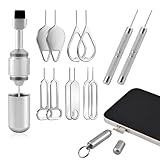
- Dual Head Design: Not only a SIM card tray removal tool, but also a cleaning brush. The dual-head design can be freely switched for use
- High-density Brush: High-density soft bristles are closely arranged, easily sweeping away dust, and are soft and clean without damaging the device. Easily clean the dirt on the output port of the earphone and sound output port, charging port of the mobile phone
- Practical and Multi-function Tool: SIM card removal tool is suitable for all phone models and good SIM card eject tools that allow you to easily open, remove and eject the SIM card tray. It can also reset devices such as routers with one click
- Portable Keychain: Lightweight, compact and portable, it can be hung on a keychain orAirpods case or stored in a pocket or wallet, making it a very convenient EDC small item tool with multifunctional uses to meet your all needs
- Precision Alloy Casting: SIM card removal tool is made of high-quality alloy metal steel, which is lightweight and difficult to bend. (Note: The SIM card removal tool is small in size and has a pointed bottom; Keep them away from to avoid accidental swallowing or accidental injury.) Threaded locking, sturdy and durable, with pressure-resistant protection guarantee
- Does the vendor identify the exact supported model, Android release, manufacturer software, and security-patch level?
- Does the service require proof of ownership?
- Does the vendor explain whether the process is official recovery, repair, firmware service, or a security workaround?
- Will the process erase local data, require bootloader unlocking, rooting, flashing, or a wipe?
- Is there a clear refund policy for the reader’s exact model and country?
- What data does the application collect, and does it require account credentials or one-time codes?
- Does the vendor provide a legitimate support channel and a clear business identity?
Commercial coverage of AddROM-related tools should be treated as vendor or secondary marketing material, not as proof that a tool permanently removes FRP. No reliable, current universal price or success rate was established in the supplied research.
Do not use a service that promises universal support, refuses ownership checks, requests a Google password or verification code, relies on an unverified APK mirror, or cannot explain what happens if the phone remains locked after a reset.
What is the safest FRP troubleshooting sequence?
- Read the exact message on the setup screen and confirm that the problem is Google verification rather than a screen lock, carrier lock, Samsung Account issue, MDM enrollment, or firmware failure.
- Write down the exact phone model, manufacturer software version, Android version, and security-patch date if the setup screen or service records provide them.
- Try every Google Account that was previously used on the device, beginning with the account most recently synchronized.
- Use Google Account Recovery if the email address or password is forgotten.
- Wait after a recent password change instead of repeatedly attempting setup.
- Connect to stable Wi-Fi or mobile data and retry.
- For a used phone, require the seller to remove the account or begin a return or dispute process.
- For a company phone, contact the EMM or Android administrator and check EFRP preparation.
- Gather the receipt, IMEI or serial number, warranty documents, and transfer records.
- Contact the manufacturer or authorized service center.
- Stop installing random APKs, flashing repeated firmware packages, or using diagnostic menus when the phone remains locked.
When should you stop trying unofficial methods?
Stop when the phone’s ownership is unclear, the seller refuses to help, an APK requests sensitive permissions, a remote service asks for credentials or one-time codes, a tool does not identify the exact model and patch, or a failed attempt causes boot problems. Repeated experimentation does not create ownership evidence and can make manufacturer support or a return more difficult.
For a legitimately owned device, the defensible escalation path is account recovery followed by authorized service. For a used device, the practical escalation path is seller-assisted release or a return. For an enterprise device, the correct path is the organization’s management console, ownership-transfer process, or manufacturer support.
Frequently Asked Questions
Will a newly created Google Account remove FRP?
A newly created Google Account normally will not remove FRP because FRP asks for an account previously associated with the device. Recover the original Google Account or contact the previous owner or authorized manufacturer service.
Is an FRP-locked phone the same as a carrier-locked phone?
No. FRP is post-reset Google ownership verification, while a carrier lock restricts which mobile network or SIM the phone accepts. Google account recovery or manufacturer service addresses FRP; the carrier’s unlock policy addresses a network lock.
Can the seller remove FRP from a used phone?
Yes, the previous owner should remove Google and relevant manufacturer accounts from the phone and reset it through Settings while authenticated. The buyer should confirm that the setup screen accepts the buyer’s account before the return period ends.
Can a company administrator remove FRP from a work phone?
A company administrator can manage enterprise FRP only when the organization prepared the device through an authorized Android-management or EMM policy. If an already locked device has no usable recovery policy, Google’s enterprise guidance directs the organization to the manufacturer.
The Bottom Line
Bottom line: AddROM is an unofficial, model- and patch-dependent collection of FRP-related guides, not a universal or manufacturer-approved unlock. For a device you own, recover the previously linked Google Account or use authorized service with proof of purchase. For a used phone, have the seller release the account or return the device. For a company phone, use the organization’s EMM/EFRP workflow. Avoid random APKs, credential requests, and “100% working” bypass claims.
Quick Recap
Product prices and availability are accurate as of the date/time indicated and are subject to change. Any price and availability information displayed on Amazon at the time of purchase will apply.

