
What’s actually slowing this PC down?
Pick the symptom - the matching free tool is one click away.
iTechGuides is reader-supported. When you buy through links on our site, we may earn an affiliate commission. As an Amazon Associate I earn from qualifying purchases. Learn more
There is no single benchmark winner between the Exynos 2400e and Snapdragon 8 Gen 3. NanoReview’s surfaced comparison puts Snapdragon ahead in AnTuTu 11 and Solar Bay, while Exynos leads in Steel Nomad Light. Those results are aggregated scores, not a controlled test of matched phones. Samsung identifies the Exynos 2400e as the processor in the Galaxy S24 FE; the Snapdragon 8 Gen 3’s actual performance depends on the phone that uses it.
How their published CPU specifications compare
| Specification | Exynos 2400e | Snapdragon 8 Gen 3 |
|---|---|---|
| Published CPU configuration | Deca-core; Samsung’s regional product page lists the phone configuration, not a full architecture breakdown. | 64-bit Kryo CPU: one prime core, five performance cores, and two efficiency cores, according to Qualcomm. |
| Listed maximum CPU frequencies | Up to 3.1 GHz, with listed frequencies of 3.1, 2.9, 2.6, and 1.95 GHz on Samsung Mexico’s Galaxy S24 FE page. | Up to 3.4 GHz for the prime core, 3.2 GHz for performance cores, and 2.3 GHz for efficiency cores. Qualcomm says CPU speed varies by platform version. |
| Identified phone | Samsung identifies it as the Galaxy S24 FE processor. | Qualcomm’s product brief describes the platform; the specific phone implementation depends on the OEM. |
| Graphics details in the cited specifications | The cited Samsung specifications do not establish a directly comparable GPU feature set. | Qualcomm lists an Adreno GPU, Vulkan 1.3 support, and hardware-accelerated ray tracing among platform capabilities; phone implementation can vary. |
Sources: Samsung’s Galaxy S24 FE announcement, Samsung Mexico’s Galaxy S24 FE specifications, and Qualcomm’s Snapdragon 8 Gen 3 product brief.
The listed core counts and peak frequencies do not by themselves predict app responsiveness, gaming frame rates, battery life, heat, or sustained speed. Cooling, power limits, firmware, software, and workload all affect what a particular phone delivers. A platform feature also does not guarantee that every phone implements or exposes it.
Recommended Free Tools
What the benchmark comparison says
NanoReview’s surfaced comparison, displaying a September 8, 2026 test entry, reports different leaders across its benchmarks:
#1 Best Overall

- 6.7" Dynamic AMOLED 2X FHD+, 120Hz Adaptive Refresh Rate, 1900nits Peak brightness, 1080x2340px, 4700mAh Battery, Android 14, One UI 6.1
- 128GB, 8GB RAM, No SD Card Slot, Exynos 2400e (4nm), 10-core CPU, Xclipse 940 GPU, Bluetooth 5.3
- Rear Camera: 50MP, f/1.8 (wide) + + 12MP, f/2.2 (ultrawide) + 8MP, f/2.4 (telephoto), 3x Optical Zoom, Front Camera: 10MP, f/2.4
- CDMA 800/1900, 3G: HSDPA 850/900/1700(AWS)/1900/2100, CDMA2000 1xEV-DO, 4G LTE: 1/2/3/4/5/7/8/12/17/18/19/20/25/26/28/32/38/40/41/66, 5G: 1/2/3/5/7/8/12/20/25/26/28/38/40/41/66/75/77/78 SA/NSA/Sub6 - Nano-SIM and eSIM
- US Model. Compatible with Most GSM and CDMA Carriers like T-Mobile, AT&T, MetroPCS, etc. Will Also work with CDMA Carriers Such as Verizon, Straight Talk.
| Benchmark | Exynos 2400e | Snapdragon 8 Gen 3 | Higher reported score |
|---|---|---|---|
| AnTuTu 11 | 1,977,269; 56 samples shown | 2,345,563; 443 samples shown | Snapdragon 8 Gen 3 |
| 3DMark Steel Nomad Light | 1,769 | 1,652 | Exynos 2400e |
| 3DMark Solar Bay | 7,699 | 8,190 | Snapdragon 8 Gen 3 |
These are NanoReview’s aggregated results, not scores from a controlled lab comparison of two phones selected and tested under identical conditions. The sample counts shown for AnTuTu 11 differ substantially, and the available data does not establish equivalent phone models, software, cooling, or test conditions across the processor results. The Steel Nomad Light result is a useful counterexample to treating the other scores as proof of a universal graphics winner. See NanoReview’s comparison and its displayed results.
Why the Geekbench results do not settle the chip comparison
Two Geekbench Browser uploads provide device-level context for the Galaxy S24 FE, but neither is a Snapdragon comparison. Both used Geekbench 6.7.1 on Android 16: an August 6, 2026 run recorded 2,072 single-core and 6,610 multi-core, while an October 1, 2026 run recorded 1,955 single-core and 6,315 multi-core. They are individual submissions, not a representative average or a controlled test against a named Snapdragon 8 Gen 3 phone.
Rank #2

- The Galaxy S24 FE packs a large 6.7‑inch Dynamic AMOLED 2X display with adaptive 120 Hz refresh rate, enhanced brightness and a “Vision Booster” mode — ideal for clear, bright visuals even outdoors.
The difference between those two uploads also illustrates why one result should not be treated as a guaranteed score for every run. View the August 6 Galaxy S24 FE submission and the October 1 submission.
The Tool Desk
Outbyte PC Repair FREEClear out junk files and repair common Windows errorsFree Scan →Outbyte Driver Updater FREEFix the driver behind crashes, sound loss and screen glitchesFind Drivers →Which processor should you choose?
Choose based on the specific phones you are considering, not the chip names alone. The available benchmark evidence favors Snapdragon in two listed tests and Exynos in one; it does not establish which platform delivers better sustained performance, thermals, or battery life in equivalent phones.
Rank #3

- The Galaxy S24 FE packs a large 6.7‑inch Dynamic AMOLED 2X display with adaptive 120 Hz refresh rate, enhanced brightness and a “Vision Booster” mode — ideal for clear, bright visuals even outdoors.
- Compare the actual phone models, because cooling, power limits, and firmware can change performance.
- Check that scores use the same benchmark version and workload before comparing them.
- For gaming, look for results from the same game, graphics settings, and test duration, including repeated or sustained runs rather than just a short peak.
- For battery or heat decisions, seek measurements from the exact phones; the cited benchmark scores do not measure either.
Samsung’s Galaxy S24 FE product page identifies one concrete Exynos 2400e phone. It should not be taken as a stand-in for every device using that processor. Qualcomm also advises consulting OEM specifications for a phone’s actual implementation.
Quick Recap
Best Value
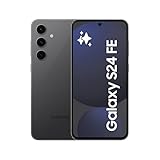
- MOVE IT. REMOVE IT. IMPROVE IT: Take a great pic, then make it better using Photo Assist¹ with Galaxy AI,² It gives you suggestions for improving your photo and makes it easier to move, remove or resize objects for post-worthy pics every time.
- NEVER BE LOST IN TRANSLATION AGAIN: Understand text, calls and in-person conversations in another language using real-time translations¹ with Galaxy AI.²
- SLOW-MO MADE SIMPLE: Sometimes you just want to make the moment last longer. Using Instant Slow-Mo¹ with Galaxy AI,² simply tap and hold to replay any video in epic slow motion.
- DO MORE W/ EPIC BATTERY POWER: Do what you love, whether work or play, without worrying about your battery. Galaxy S24 FE intuitively manages your apps to make your charge last longer.⁴.
Product prices and availability are accurate as of the date/time indicated and are subject to change. Any price and availability information displayed on Amazon at the time of purchase will apply.

