
Outdated Drivers Are Slowing You Down
One free scan finds every outdated or missing driver and matches the right update for your exact hardware.Free scan · exact hardware matchPC Slower Than It Used to Be?
A free scan shows the junk files, broken settings and background clutter dragging Windows down - then fixes them in one click.Free scan · Windows 10 & 11iTechGuides is reader-supported. When you buy through links on our site, we may earn an affiliate commission. As an Amazon Associate I earn from qualifying purchases. Learn more
Implement enterprise single sign-on as a risk-led identity program, not a switch you flip in each application. Inventory your apps and users, choose an identity provider, match each application to a supported integration, plan MFA and account recovery, then pilot and expand in manageable waves. Keep ownership of access, keys, certificates, monitoring, and recovery after launch.
What enterprise SSO centralizes—and what it does not
Single sign-on (SSO) lets users authenticate through a central identity provider (IdP) and then access connected applications without separately signing in to each one. The GSA Enterprise Single Sign-On Playbook, version 1.3, describes SSO as a pattern for centralizing authentication among multiple applications.
Centralization does not transfer all security responsibility to the IdP. The IdP authenticates users and issues an assertion or token; each application must validate it and map the identity and its attributes to the right account, roles, and permissions. SSO also concentrates risk: an IdP outage or compromise can affect many connected services. Treat the identity service as critical infrastructure, with deliberate recovery, administrative controls, and incident procedures.
Quick wins for a faster PC:
Repair Windows errors before they cause bigger problemsFix Now →Scan for outdated or missing drivers - takes under a minuteDriver Scan →How to prepare the application estate
Inventory applications, identities, and dependencies
Start with an application and identity inventory rather than enabling integrations one app at a time. Record the application owner, user populations, authentication method, hosting environment, sensitivity, administrative roles, and dependencies. Include workforce, contractor, and guest populations where they are in scope. Identify which applications are cloud-based, on-premises, or legacy, and which have a test environment.
#1 Best Overall

- POWERFUL SECURITY KEY: The Security Key C NFC is the essential physical passkey for protecting your digital life from phishing attacks. It ensures only you can access your accounts.
- WORKS WITH 1000+ ACCOUNTS: Compatible with Google, Microsoft, and Apple. A single Security Key C NFC secures 100 of your favorite accounts, including email, password managers, and more.
- FAST & CONVENIENT LOGIN: Plug in your Security Key C NFC via USB-C and tap it, or tap it against your phone (NFC) to authenticate. No batteries, no internet connection, and no extra fees required.
- TRUSTED PASSKEY TECHNOLOGY: Uses the latest passkey standards (FIDO2/WebAuthn & FIDO U2F) but does not support One-Time Passwords. For complex needs, check out the YubiKey 5 Series.
- BUILT TO LAST: Made from tough, waterproof, and crush-resistant materials. Manufactured in Sweden and programmed in the USA with the highest security standards.
For each application, document its supported sign-in protocols, required identity attributes or claims, provisioning and deprovisioning options, MFA needs, sign-in and audit logs, certificate or key requirements, fallback path, and recovery procedure. Note licensing and role assignments as well: connecting authentication does not guarantee that a user is licensed or authorized inside the application.
Assign owners before configuration begins
Name accountable owners for identity administration, application configuration, user lifecycle, signing keys and certificates, user communications, monitoring, incident response, and application-owner coordination. Define who can approve access and policy exceptions, who supports enrollment and recovery, and who can make emergency changes if the IdP or a federation connection fails.
Should enterprise apps use SAML or OIDC?
Choose according to what the application supports and what your environment can securely operate. The GSA playbook recommends preferring OIDC when an app supports it while retaining SAML for applications that require it. Microsoft Entra guidance similarly recommends OIDC or OAuth 2.0 where supported and SAML for existing applications that do not use those protocols. These are implementation recommendations, not a rule that every enterprise or app must use one protocol.
What’s actually slowing this PC down?
Pick the symptom - the matching free tool is one click away.
Rank #2

- POWERFUL SECURITY KEY: The YubiKey 5C NFC is the most versatile physical passkey, protecting your digital life from phishing attacks. It ensures only you can access your accounts
- WORKS WITH 1000+ ACCOUNTS: Compatible with popular accounts like Google, Microsoft, and Apple. A single YubiKey 5C NFC secures 100+ of your favorite accounts, including email, password managers, and more
- FAST & CONVENIENT LOGIN: Plug in your YubiKey 5C NFC via USB and tap it, or tap it against your phone (NFC), to authenticate. No batteries, no internet connection, and no extra fees required
- MOST SECURE PASSKEY: Supports FIDO2/WebAuthn, FIDO U2F, Yubico OTP, OATH-TOTP/HOTP, Smart card (PIV), and OpenPGP. That means it’s versatile, working almost anywhere you need it
- PRIMARY & SPARE KEYS: Just like having a spare house key, we recommend buying two YubiKeys - one for daily use and one as a spare. That way you’ll never get locked out of your accounts
| Protocol | What it is | Practical fit | Implementation consideration |
|---|---|---|---|
| OIDC | An identity layer over OAuth 2.0 that uses JSON-based identity assertions. | Applications with OIDC support, particularly when selecting a modern integration path. | Validate the application’s supported flow and its handling of issuer, audience, signatures, tokens, and user attributes. |
| SAML | An XML-based assertion standard. | Existing or legacy applications that support SAML but not OIDC. | Check assertion validation, signing-certificate configuration, expiry, rollover, and the application’s attribute mapping. |
Some applications cannot federate directly. Depending on the application design and security boundary, a platform may offer a bridge such as password-based SSO, integrated Windows authentication, header-based access, a linked application, or an application proxy. These are platform-specific patterns, not interchangeable forms of modern federation. In particular, password-based SSO stores or reuses credentials and should not be treated as equivalent to an app validating a federation assertion. Assess how any proxy or adapter authenticates users, protects credentials and headers, and connects to the application.
How to plan MFA, enrollment, and recovery
Set policy by risk and user group
Define separate expectations for administrators, ordinary users, sensitive applications, untrusted contexts, and risk events. Choose authentication methods based on required assurance, usability, device availability, and applicable organizational or regulatory requirements. For federal environments, the GSA playbook addresses FICAM and NIST SP 800-63-4 assurance considerations, including phishing-resistant MFA; those federal requirements should not be presented as universal legal obligations for every enterprise.
Available methods depend on the identity platform. Microsoft’s guidance, for example, documents FIDO2 security keys, Authenticator, OATH tokens, and other methods in its environment, and recommends making more than one method available so users have a backup. Confirm that the selected method works with your IdP, devices, policies, accessibility needs, and procurement rules.
Rank #3
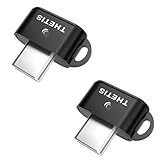
- FIDO2 & Passkey Ready: Business-ready and FIDO2 L1 certified. This key is supported by major management suites and is ideal for both individual and enterprise deployment. Works seamlessly with Gmail, Facebook, GitHub, Dropbox, Coinbase, and more.
- Dedicated Manager App: Use the Thetis Manager App for the initial hardware PIN setup. Setting the PIN on the device first ensures a smooth registration process. Once the PIN is configured, you can begin registering the key across your favorite FIDO2-compatible online services.
- USB TYPE C Connectivity & DONGLE Design: Designed for PCs, Macs, laptops, iPhones, and Android devices that utilize a USB-C port. Plug and stay, or carry it on a keychain. (Item Size: 0.73 x 0.60 x 0.30 inches)
- Enhanced MFA (FIDO2 & TOTP/HOTP): Strengthen your security with flexible options. Use the Manager App to access TOTP/HOTP features for accounts that do not yet support FIDO2.
- Check FIDO2 compatibility before purchase - Known limitations: ID Austria is not supported (requires FIDO2 Level 2). Windows Hello login only works with Windows Enterprise editions that support Entra ID. NFC functionality is not supported.
Separate registration from enforcement
Plan how people will register before requiring MFA. Communicate the enrollment deadline and steps, provide a secure route to register, and define how staff verify a user before assisting with account recovery or replacing an authentication method. A recovery process that is easier to bypass than MFA can undermine the protection MFA is intended to provide.
Do not assume that connecting an app enrolls users or makes recovery safe. Microsoft warns that in its environment, allowing enrollment immediately after a password-only sign-in can expose registration to an attacker who has a compromised password. It documents conditional controls and Temporary Access Pass as platform-specific mitigations. Evaluate equivalent controls in your chosen identity service and test the complete enrollment and recovery journey.
Test session policies with real work patterns
Set session lifetime and reauthentication rules to match the sensitivity of the application and the organization’s threat model. Frequent prompts can train users to approve or enter credentials without considering the request. Microsoft advises limiting sign-in-frequency controls in its environment to specific business cases. Test the effect on both security and work—for example, long-running tasks, shared workstations, and mobile access—before making a policy universal.
Rank #4

- POWERFUL SECURITY KEY: The Security Key NFC is the essential physical passkey for protecting your digital life from phishing attacks. It ensures only you can access your accounts.
- WORKS WITH 1000+ ACCOUNTS: Compatible with Google, Microsoft, and Apple. A single Security Key NFC secures 100 of your favorite accounts, including email, password managers, and more.
- FAST & CONVENIENT LOGIN: Plug in your Security Key NFC via USB-A and tap it, or tap it against your phone (NFC) to authenticate. No batteries, no internet connection, and no extra fees required.
- TRUSTED PASSKEY TECHNOLOGY: Uses the latest passkey standards (FIDO2/WebAuthn & FIDO U2F) but does not support One-Time Passwords. For complex needs, check out the YubiKey 5 Series.
- BUILT TO LAST: Made from tough, waterproof, and crush-resistant materials. Manufactured in Sweden and programmed in the USA with the highest security standards.
How to protect assertions, tokens, and signing keys
Review the full path from identity provider to application, including assertion or token creation, transmission, validation, storage, and eventual expiration or revocation. The GSA playbook emphasizes that applications consume assertions and are responsible for validating them. NIST Interagency Report 8587, published September 15, 2026, addresses protecting identity tokens, access tokens, and assertions against forgery, theft, and misuse; its scope includes key management, verification, lifecycle controls, secure-by-design practices, interoperability, and continuous monitoring.
- Confirm that each application validates the expected issuer and audience and rejects invalid signatures or otherwise unacceptable assertions.
- Document how signing keys are protected, who can change them, how rotation is tested, and how applications receive updated keys.
- Review token and assertion lifetimes, revocation behavior, secure transport, and any storage of credentials or tokens in clients and servers.
- Ensure sign-in, administrative, and key-related events are logged and that alerts and incident procedures cover suspected token theft or misuse.
Do not assume that a successful test login proves these controls work. Have application and identity owners verify validation and failure behavior, including what happens when a key changes or an assertion is expired, malformed, or intended for another service.
How to pilot and expand without locking users out
- Build representative test cases. Cover the integration patterns in your inventory: OIDC, SAML, any legacy bridge, privileged accounts, and guest or contractor identities if applicable. Include authorization checks, not just successful authentication.
- Test recovery and failure paths. Verify enrollment, lost-factor recovery, deprovisioning, application access removal, certificate or key change procedures, and the support route users will actually follow.
- Start with a small pilot. Choose users and application owners who can represent different workflows and can report problems. Microsoft’s MFA guidance recommends a small initial pilot followed by expansion in waves after assessing impact and registration behavior.
- Measure readiness and impact. Track sign-in successes and failure reasons, enrollment completion, support demand, policy exceptions, and whether application roles and permissions are correct. Use results to fix configuration and support gaps before the next wave.
- Communicate each wave. Tell users what changes, when to enroll, how to find the application launcher, where to get help, and how to recover access. Microsoft’s SSO planning guidance also calls for advance communications and a support route.
- Expand at a supportable pace. Set wave size according to risk, application dependencies, and support capacity. Keep a controlled fallback for critical workflows while testing it; a fallback should not become an unmonitored permanent route around the new controls.
What to operate after cutover
Keep certificates, keys, and integrations current
Maintain an inventory of federation certificates and signing keys, their owners, expiry dates, dependent applications, and tested rollover procedures. Microsoft Entra ID creates a SAML application certificate with a three-year validity by default when federation is enabled, according to Microsoft Learn’s page last updated April 30, 2025; the validity can be customized. This is a Microsoft product default, not a universal SAML rule. Check the actual configuration of every deployment and schedule renewal before expiry.
Best Value
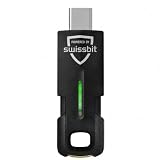
- MULTI-APPLICATION SECURITY KEY FOR ENTERPRISE USE: Supports FIDO2 passkeys, U2F, Smart Card (PIV), and OTP for flexible authentication across enterprise environments.
- PHISHING-RESISTANT AUTHENTICATION: Enables passwordless login with secure credential storage and PIN-based user verification.
- COMPATIBLE WITH ENTERPRISE SYSTEMS: Works with FIDO2, WebAuthn, U2F, PIV, and OTP across enterprise, cloud, and identity infrastructure.
- DRIVERLESS FIDO2 AUTHENTICATION: FIDO2 works natively with modern browsers and platforms. Additional software may be required for PIV or OTP
- USB AND NFC CONNECTIVITY: Supports authentication via USB-C and NFC. No batteries or drivers required for FIDO2.
Manage lifecycle and administrative access
Verify that account provisioning and deprovisioning behave as intended rather than assuming an SSO connection manages the full user lifecycle. Reconcile application entitlements with role assignments and licensing. Microsoft warns that insufficient application licenses can cause provisioning or update errors in its platform. Apply least privilege to identity administrators, and remove temporary elevation when the configuration work is complete where appropriate.
Review logs, exceptions, and recovery cases
Set a recurring review for sign-in and audit logs, app coverage, stale accounts, exceptions, recovery incidents, and key or token events. NIST IR 8587 emphasizes continuous monitoring for token and assertion security. Use recurring findings to refine policies, ownership, and support procedures, not merely to report that the rollout is complete.
How to judge whether the rollout is ready
- Every in-scope application has an owner, a documented integration path, and a tested authorization outcome.
- MFA policies, registration, backup methods, recovery verification, and session behavior have been exercised with representative users.
- Applications validate assertions or tokens correctly, and key ownership, rotation, logging, and incident responsibilities are assigned.
- Provisioning, deprovisioning, role assignment, licensing, and emergency fallback have been checked in the relevant platform and application.
- Pilot findings have been addressed, support teams are prepared for the next wave, and users know how to enroll and request help.
The GSA playbook is a government-authored framework for its federal context, while Microsoft’s documentation describes behavior and recommendations for Microsoft’s own platform. NIST IR 8587 supplies technical token-protection guidance. These sources support a risk-led implementation sequence, but they do not establish a neutral vendor ranking or prove that one identity product is best for every enterprise. The appropriate design depends on the application estate, assurance needs, deployment environment, and operational capacity.

