
Recommended Free Tools
iTechGuides is reader-supported. When you buy through links on our site, we may earn an affiliate commission. As an Amazon Associate I earn from qualifying purchases. Learn more
High-precision root engineering combines tissue-specific gene control, synthetic genetic circuits, developmental and hormone biology, root phenotyping, and rhizosphere engineering. The objective is not simply to make roots larger, but to tune their number, branching, angle, depth, tissue identity, exudates, and microbial partnerships so crops acquire water and nutrients efficiently while remaining anchored and productive under stress.
What “precision” means in root engineering
Root architecture is the three-dimensional arrangement and internal organization of a root system. Engineers may target the number of roots, where they initiate, how far they elongate, the angles at which they grow, their depth, branching pattern, or the identity of specialized tissues. These traits influence water and nutrient acquisition, anchorage, drought response, carbon costs, and interactions with soil organisms.

In cereals, crown and lateral roots are especially important. Lateral-root formation begins when founder cells are specified and primordia form, a process centered on auxin but modified by cytokinin, peptides, environmental signals, and microbial cues. LATERAL ORGAN BOUNDARIES DOMAIN transcription factors have been implicated in shoot-borne root initiation in maize, rice, and wheat.
Precision therefore has several dimensions: the correct tissue, the correct developmental window, the right expression level, and stability across realistic soils and weather. A gene that improves one root trait in a growth chamber is not automatically an agronomically useful crop trait.
#1 Best Overall

- Useful in the management of difficult-to-mow areas and can be used to minimize the need for edging turfgrass
- Multiple applications will reduce water use and improve drought tolerance
The main engineering targets
| Target | What researchers try to change | Why it matters |
|---|---|---|
| Root initiation | Number and location of crown, seminal, or lateral roots | Sets the starting architecture for soil exploration and anchorage |
| Branching | Spacing, density, and timing of lateral roots | Balances soil coverage against the carbon cost of extra roots |
| Growth angle and depth | Whether roots grow more vertically or laterally | Changes access to deep water, mobile nutrients, and surface resources |
| Elongation | Rate and duration of root extension | Determines how quickly a plant reaches new soil volumes |
| Tissue identity | Development of conducting, absorbing, or protective tissues | Can alter transport capacity, drought response, and mechanical strength |
| Rhizodeposition | Compounds released from roots into surrounding soil | Changes nutrient mobilization and the microbial community near roots |
| Root–microbe interactions | Recruitment or support of beneficial organisms | May improve nutrient acquisition, stress tolerance, or disease resistance |
How scientists control root traits
Tissue-specific promoters
A promoter can restrict a gene’s activity to a particular root type or tissue rather than turning it on throughout the plant. This approach is intended to preserve above-ground growth while changing the root process of interest. Spatial control is particularly useful when a regulator has unwanted effects in leaves, stems, or reproductive tissues.
Synthetic transcriptional circuits
Synthetic circuits combine regulatory parts so a gene responds to a defined developmental, tissue, or environmental condition. Circuit design can tune expression level instead of treating a regulator as simply on or off. That matters because too little activity may have no effect, while too much can disrupt other developmental programs.
Rank #2

- KEY FEATURES: Manage growth and improve quality and stress tolerance of warm- and cool-season turf grasses
- BENEFITS: Improves rich color, lateral stems and root mass developmen and helps produce healthy, durable blades in turf grass
- USE SITES: Turf, Golf Courses
- EFFECTIVE AGAINST: Bahiagrass, Fescue, Bentgrass, Kikuyugrass, Bermudagrass, Annual bluegrass (Poa annua), Bluegrass, Ryegrass, Buffalograss, St. Augustinegrass, Carpetgrass, Zoysiagrass
- ACTIVE INGREDIENT: Trinexapac-ethyl 12%
Hormone and developmental-pathway engineering
Auxin and cytokinin pathways are central levers for initiation and branching, but they operate within larger networks. Peptide signals, environmental conditions, and microbes also influence the final architecture. Changing one hormone pathway can therefore produce effects outside the intended root region, requiring measurements of the whole plant rather than a single root segment.
Genome editing and allele selection
Researchers can alter a regulatory sequence, create a defined allele, or select naturally occurring variants through breeding. These approaches differ in molecular method and regulatory treatment, but all still require evidence that the change causes the desired phenotype and does not create unacceptable trade-offs.
Rank #3
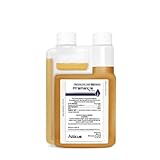
- TRIED AND TRUSTED PGR: Pramaxis MEC contains 11.3% trinexapac-ethyl; the same active ingredient as Primo Maxx Plant Growth Regulator. For more than 30 years, trinexapac-ethyl has been the active professional turf managers trust for improved turfgrass quality and growth management.
- GROW STRESS TOLERANCE: Pramaxis MEC promotes below-ground root and rhizome growth for improved root mass and turfgrass quality. Combined with best cultural practices, treated areas can better withstand stressors such as mowing, drought, heat, and disease.
- LIGHTEN THE LABOR LOAD: Reduce mowing frequency and clipping amount with Pramaxis MEC. Labeled for cool- and warm-season turfgrasses, Pramaxis MEC slows vertical growth which saves labor and equipment. Pramaxis MEC is ideal for nearly all managed turf areas including lawns, golf courses, and athletic fields and is especially helpful in frequent-mow or difficult-to-mow areas.
- EASY-MIX FORMULA: You have better tasks to tend than mixing and re-mixing. Our advanced microemulsion concentrate (MEC) is made with extremely small particles making it easy to blend into solution. Once mixed, it resists settling, eliminating the need for further agitation. Pramaxis MEC is highly tank-mix compatible with many other pesticides and liquid fertilizers saving on application trips. Always read the product label for complete compatibility, mixing, and application instructions.
- MAKE A LASTING MARK: Pramaxis MEC may be applied before or with your marking agent to extend its visibility timeline. When applying Pramaxis MEC with a marking agent, mix Pramaxis MEC first with water, then combine with a latex-based marking agent. Refer to the Pramaxis MEC product label as well as the marking agent’s product label for complete mixing instructions.
Microbiome and rhizosphere engineering
Roots alter their surroundings through exudates, and microbes can in turn influence root growth and nutrient availability. Engineering may target exudation chemistry, microbial recruitment, or the compatibility between a genotype and a beneficial microbial community. Such effects are highly dependent on soil conditions and are difficult to validate in a single standardized assay.
A precision workflow from gene to field
- Define the agronomic problem. Specify whether the goal is deeper water capture, improved nutrient foraging, stronger anchorage, drought recovery, or a particular microbial interaction. A vague goal such as “more roots” does not identify the useful architecture.
- Choose a measurable trait. Set endpoints such as crown-root number, lateral-root density, growth angle, depth distribution, elongation rate, tissue anatomy, exudate profile, or plant water-use performance.
- Identify a causal regulator. Use developmental genetics, expression data, natural variation, and mutant analysis to distinguish a gene that causes the trait from one that merely correlates with it.
- Restrict and tune expression. Select a tissue-specific promoter, regulatory sequence, edited allele, or synthetic circuit that controls location, timing, and quantity of activity.
- Verify causality genetically. Mapping, independently generated alleles, and complementation lines provide stronger evidence than a single altered line or an expression correlation.
- Measure roots and shoots together. Image architecture, assay molecular responses, and record above-ground growth, development, and water or nutrient status. A local root improvement is not useful if it reduces total plant performance.
- Test environmental interactions. Compare defined water and nutrient regimes, then move to heterogeneous soils with realistic moisture gradients and structure. Include more than one genotype or genetic background where possible.
- Validate across sites and seasons. Replicated field trials are needed to establish whether the trait is stable and beneficial under changing weather, soil types, and microbial communities.
What the sorghum crown-root project demonstrates
A U.S. Department of Energy Genomic Science Program project uses the bioenergy grass Sorghum bicolor to study whether crown-root development can be engineered to improve water-use efficiency. The project targets the location and expression level of the Crown Root Defective regulator with synthetic genetic circuits.
Rank #4
Its crd-1 mutant has defective crown-root development under well-watered conditions, while drought produces a partial rescue of the phenotype. Researchers confirmed the causal gene through genetic mapping, independently generated alleles, and complementation lines. This is an example of a precision workflow: identify a regulator, prove that it causes the developmental defect, tune its activity spatially or quantitatively, and then test resource-use consequences under defined environments.
The result is a research demonstration, not evidence that a finished crop variety or consumer technology can reproduce the outcome. The drought response also illustrates why environmental context must be part of the design: the same genotype can behave differently as water availability changes.
Best Value

- TRIED AND TRUSTED PGR: Pramaxis MEC contains 11.3% trinexapac-ethyl; the same active ingredient as Primo Maxx Plant Growth Regulator. For more than 30 years, trinexapac-ethyl has been the active professional turf managers trust for improved turfgrass quality and growth management.
- GROW STRESS TOLERANCE: Pramaxis MEC promotes below-ground root and rhizome growth for improved root mass and turfgrass quality. Combined with best cultural practices, treated areas can better withstand stressors such as mowing, drought, heat, and disease.
- LIGHTEN THE LABOR LOAD: Reduce mowing frequency and clipping amount with Pramaxis MEC. Labeled for cool- and warm-season turfgrasses, Pramaxis MEC slows vertical growth which saves labor and equipment. Pramaxis MEC is ideal for nearly all managed turf areas including lawns, golf courses, and athletic fields and is especially helpful in frequent-mow or difficult-to-mow areas.
- EASY-MIX FORMULA: You have better tasks to tend than mixing and re-mixing. Our advanced microemulsion concentrate (MEC) is made with extremely small particles making it easy to blend into solution. Once mixed, it resists settling, eliminating the need for further agitation. Pramaxis MEC is highly tank-mix compatible with many other pesticides and liquid fertilizers saving on application trips and tank cleanings. Always read the product label for complete instructions.
- MAKE A LASTING MARK: Pramaxis MEC may be applied before or with your marking agent to extend its visibility timeline. When applying Pramaxis MEC with a marking agent, mix Pramaxis MEC first with water, then combine with a latex-based marking agent. Refer to the Pramaxis MEC product label as well as the marking agent’s product label for complete mixing instructions.
How engineered roots are measured
Imaging and phenotyping
Roots are hidden in soil, so researchers use imaging systems, transparent or artificial growth media, excavation protocols, and high-throughput phenotyping to estimate architecture. Paper-roll and other laboratory assays can isolate early traits such as primary-root growth or lateral-root initiation, but they simplify soil structure and microbial conditions.
Molecular and genetic validation
Expression assays, hormone measurements, anatomical analyses, mutant comparisons, mapping, and complementation help connect a visible root phenotype to its mechanism. No single assay establishes field value; genetic evidence must be paired with physiological and agronomic measurements.
Field and model validation
Current cereal-root research calls for high-throughput phenotyping, multisite field trials, realistic heterogeneous-soil models, and models that include microbial dynamics. These requirements address the main source of uncertainty: soil moisture gradients, compaction, nutrient placement, genotype-by-environment interactions, and microbiome feedback can all change root performance.
Outdated Drivers Are Slowing You Down
One free scan finds every outdated or missing driver and matches the right update for your exact hardware.Free scan · exact hardware matchWindows Errors? Fix Them Before They Spread
Repair common Windows errors and clear accumulated junk for a smoother, more stable PC - no reinstall needed.Free scan · no reinstallChoosing among engineering strategies
| Strategy | Best suited to | Precision opportunity | Key limitation to test |
|---|---|---|---|
| Conventional allele selection | Existing natural variation with breeding value | Can combine a root trait with locally adapted backgrounds | Linked traits and slower combination of multiple regulators |
| Promoter or transgene engineering | Changing where or when a known gene is expressed | Strong spatial and developmental control | Unwanted expression, inheritance, or regulatory constraints |
| Synthetic genetic circuit | Quantitative or conditional control of a developmental regulator | Can tune thresholds, timing, and expression level | Network behavior may differ across environments and genetic backgrounds |
| Genome editing | Defined sequence or regulatory changes | Can make targeted alleles without changing unrelated loci | Edited effects still require whole-plant and field validation |
| Microbiome manipulation | Root exudation and beneficial plant–microbe interactions | Targets root function beyond anatomy | Performance can vary sharply with soil communities and management |
Trade-offs and unresolved risks
- Carbon allocation: More or longer roots require photosynthetic carbon and may reduce investment in shoots, grain, or storage organs.
- Whole-plant effects: A regulator used in roots may also influence other tissues or developmental stages unless control is sufficiently specific.
- Stress specificity: A trait that helps under drought may be neutral or costly under ample water, and the direction of the effect can change with soil structure or nutrient distribution.
- Pathogens and ecological effects: Altered anatomy, exudates, or microbial recruitment could change susceptibility to pathogens or affect organisms beyond the intended rhizosphere partners.
- Prediction limits: Regulatory networks are incomplete, and models that omit microbial dynamics or heterogeneous soil can overstate how reliably a laboratory phenotype will translate to farms.
- Deployment constraints: Breeding performance, seed production, ecological assessment, and applicable regulatory requirements remain separate questions from whether a molecular design works.
What counts as convincing evidence?
Evidence should be labeled by stage. A laboratory result can establish a molecular mechanism or an early root phenotype. Greenhouse experiments can show responses under controlled water or nutrient conditions. Replicated, multisite field trials are needed to establish agronomic value and stability. Breeding deployment requires an additional record showing that the trait can be combined with productive, locally adapted germplasm without unacceptable costs.
The practical standard is therefore not “does the engineered plant have different roots?” It is whether a defined root change improves the stated resource-use or resilience goal, under the environments where the crop will be grown, without creating larger losses elsewhere in the plant or ecosystem.
Quick Recap
Product prices and availability are accurate as of the date/time indicated and are subject to change. Any price and availability information displayed on Amazon at the time of purchase will apply.

