
iTechGuides is reader-supported. When you buy through links on our site, we may earn an affiliate commission. As an Amazon Associate I earn from qualifying purchases. Learn more
End-to-end autonomy changes what simulation must demonstrate, but it does not make simulation optional—or make simulated miles a safety proof. A learned model that maps sensor inputs to trajectories or commands can be harder to inspect stage by stage than a modular stack. Teams therefore need evidence about the full system’s behavior across ordinary conditions, unfamiliar settings and rare events, while also checking how it handles faults and fallback behavior. The industry has not settled on one architecture: modular, end-to-end and structured hybrid approaches remain in play.
What does “end-to-end” autonomy mean?
A modular autonomous-driving stack divides the driving task into explicit functions. A typical arrangement includes perception and prediction (understanding the scene and anticipating what others may do), motion planning (choosing where the vehicle should go), and control (turning that plan into vehicle actions). GM’s Director of Onboard Autonomy, Pratik Agarwal, describes this staged approach in the company’s March 19, 2026 Engineering article, “Compound AI: The architecture for safe, scalable autonomy.” The boundaries can make it easier to inspect intermediate outputs or test a component separately, though modularity alone does not guarantee straightforward validation.
An end-to-end model learns a mapping from sensor inputs to a driving trajectory or vehicle command, reducing the traditional explicit separation between those stages. It does not necessarily mean every system in the vehicle is one indivisible neural network: vehicle functions, safety constraints and other components can remain outside the learned mapping. NVIDIA’s autonomous-driving safety report describes a similar move toward unified models controlling multiple parts of the vehicle stack.
PC Slower Than It Used to Be?
A free scan shows the junk files, broken settings and background clutter dragging Windows down - then fixes them in one click.Free scan · Windows 10 & 11Crashes, No Sound, or Screen Glitches?
Random freezes, missing sound and display glitches usually trace back to one bad driver. Find and replace yours safely.Free scan · under a minuteThe trade-off is not simply “old versus new.” GM’s article argues that end-to-end methods can benefit from large volumes of data, while also identifying high data needs, opacity and more difficult systematic validation as challenges. GM presents its “Compound AI” approach as a structured response that combines learning with additional structure; that is GM’s proposal, not evidence of an industry-wide consensus.
#1 Best Overall

- For Raspberry Pi 5 & ROS2 Robot Car. MentorPi A1 smart AI robot car is powered by Raspberry Pi 5, compatible with ROS2, and programmed in Python, making it an ideal platform for AI robot development.
- High-Performance Hardware. Equipped with Ackerman chassis, closed-loop encoder motors, TOF lidar, depth camera, AI voice interaction box, and other advanced components to ensure optimal performance and efficiency.
- Advanced AI Capabilities. Supports SLAM mapping, path planning, multi-robot coordination, vision recognition, target tracking, and more, covering a wide range of AI applications.
- Autonomous Driving with Deep Learning. Utilizes YOLO model training to enable road sign and traffic light recognition, along with other autonomous driving features, helping users explore and develop autonomous driving technologies.
- Empowered by Large AI Model, Human-Robot Interaction Redefined. MentorPi AI robot car deploys multimodal models with ChatGPT at its core, integrating 3D vision and Al voice interaction box. This synergy enhances its perception, reasoning, and actuation capabilities, enabling advanced embodied AI applications and delivering natural, context-aware human-robot interaction.
How do the approaches change the simulation task?
Simulation lets engineers stage controlled scenarios, vary conditions, feed sensor readings into a driving stack and repeat tests. NVIDIA describes workflows that generate rendered sensor data and receive driving commands, as well as re-simulation that replays recorded real-world sensor data. These techniques can support both modular and end-to-end systems. What changes is the evidence engineers need to examine.
| Approach | What simulation can help examine | Validation challenge |
|---|---|---|
| Modular stack | Intermediate outputs and component behavior, as well as the assembled system. | Good component results do not by themselves establish that components work reliably together or that the overall system is safe. |
| End-to-end model | The full sensor-input-to-trajectory-or-command behavior across controlled scenarios and replays. | Fewer explicit internal boundaries can make failures harder to diagnose; testing must cover varied inputs and system-level outcomes. |
| Structured or hybrid approach | Learned behavior alongside whichever constraints, interpretable outputs or guardrails the design exposes. | The particular structure and its role in the safety argument must be evaluated; the label “hybrid” is not evidence of effectiveness. |
The table describes where to focus evaluation, not a ranking. The right evidence depends on the design and its intended operating conditions.
Rank #2

- OpenMV Smart Robotic AGV Car Kit: Contains AGV car kit for OpenMV cameras
- Auto Tracking Color Balls: Includes color balls for automatic tracking
- Following Lines: Features pre-programmed lines for simple navigation
- Compatible with OpenMV Cam H7 Plus: Works with OpenMV Cam H7 Plus models
- Compatible with OpenMV Cam H7: Works with OpenMV Cam H7 models
Why is end-to-end AI harder to validate?
In a modular stack, engineers can often ask whether a particular stage produced an acceptable output—for example, whether an object was detected or a planned path met a constraint. That does not settle the system-level question, but it gives the investigation a set of visible boundaries. A model that learns across the input-to-output task may share internal features and optimize behavior jointly, so a failure can be harder to localize to one function.
Recommended Free Tools
That shifts emphasis toward repeated evaluation of the complete behavior: what sensor inputs the system received, what trajectory or command it produced, and how that behavior changed when the scenario changed. Simulation can make unusual situations easier to stage repeatedly than waiting for them to occur on public roads. But a test only supports a conclusion about the scenarios and conditions it actually represents.
Rank #3
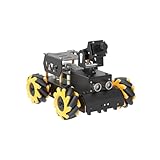
- Raspberry Pi 5 & ROS2 Platform. TurboPi runs on the ROS2 operating system and leverages Python and OpenCV to deliver efficient AI processing and a wide range of robotic applications.
- Multimodal large AI model ChatGPT & Voice Interaction. With an integrated multimodal large AI model and AI voice interaction capabilities, TurboPi supports smart conversations, environment awareness, and flexible task execution for richer human-machine interactions.
- AI Vision & Autonomous Driving. Equipped with a 2-DOF HD camera, TurboPi offers FPV video feedback, object and color recognition, line following, and autonomous driving features—perfect for creative AI projects.
- 360° Omnidirectional Movement. Featuring a robust metal chassis and Mecanum wheels, TurboPi can move in any direction and rotate on the spot, adapting smoothly to various scenarios.
- Comprehensive Code & Learning Resources. We provide full Python source code, diverse experiment examples, and detailed course materials to support your journey in mastering AI and programming while inspiring endless innovation.
Three limits matter when interpreting a simulation result:
- Scenario selection: A large test set can still miss important cases if its scenarios do not represent the conditions or interactions the system will encounter.
- Simulation fidelity: Conclusions depend on how well simulated sensors, environments and other road users represent the relevant real-world conditions.
- Transfer beyond the simulator: Passing simulated tests does not establish that the same performance will hold in unfamiliar real-world settings.
Simulation is a development and validation instrument, not a stand-alone demonstration of safety. The safety case also needs to address how the complete system behaves, including its limits and its response when something is insufficient or fails.
Rank #4

- V8 POWER: The model features a 400 cubic inch V8 engine, reflecting the muscle and power that defined the GTO's reputation.
- DETAILED SUSPENSION & EXHAUST: The kit incorporates separate rear suspension and exhaust detailing, adding to the realism of the model.
- BUCKET SEATS & CONSOLE: The model's interior features bucket seats and a floor shifter with a console, capturing the iconic look and feel of the GTO.
- OPTIONAL SUPERCHARGER: For those seeking more power, the kit offers an optional supercharger, allowing you to customize your model.
- CLEAR & COMPREHENSIVE INSTRUCTIONS: The included instructions are clear and user-friendly, making the kit accessible to modelers of different skill levels, from beginners to experienced hobbyists.
What does the evidence say about rare events and domain shift?
Rare events are difficult to evaluate because they may be infrequent in recorded driving data, yet consequential. Simulation offers a way to deliberately stage selected unusual conditions and repeat them while varying relevant factors. That can reveal weaknesses, but it cannot show that every important rare event has been identified or represented faithfully.
Quick wins for a faster PC:
Scan for outdated or missing drivers - takes under a minuteDriver Scan →Repair Windows errors before they cause bigger problemsFix Now →Fix the driver behind crashes, sound loss and screen glitchesFind Drivers →The 2017 CARLA paper, “CARLA: An Open Urban Driving Simulator,” is useful as a methodological example, not as a current commercial-system comparison. In the paper’s experiments, testing in a new town challenged all evaluated approaches, while generalization across weather was better. The study also discusses rare-event susceptibility in the end-to-end agents it tested. These observations apply to the paper’s models, simulator and tasks; they are not a ranking of today’s commercial systems or a population-wide measure of end-to-end autonomy.
Best Value

- Revell Model Kit #14576, Skill Level 4, Contains 74-Parts, Recommended for ages 12 and up
- High-rise four-wheel-drive suspension. Detailed small-block Chevy V-8 engine.
- Old-school spoke “wagon” wheels with oversize off-road tires.
- All-new decal sheet.
- Molded in white and clear with soft black tires. Paint and glue required(not included).
The practical lesson is to distinguish performance in familiar test conditions from robustness under a change in setting. A system that handles varied weather in one environment may still struggle when road layouts or other aspects of the domain change.
Independent reader supportYour contribution helps us test, update, and keep practical guides available for everyone.How should teams compare architecture options?
A benchmark score or a single successful simulation run cannot answer whether an architecture is appropriate for a deployment. Compare the design across the system and its intended operating conditions. The Autonomous Safety & Architecture Working Group’s 2025 second-edition report frames this as a system-level question, using an SAE Level 4 Highway Pilot reference use case; it is not an evaluation of one end-to-end model.
- Data needs: What data is required to train and evaluate the behavior, and how well does it represent the intended operating conditions?
- Interpretability and debugging: Which outputs and boundaries can engineers inspect when behavior is unexpected?
- Generalization: How does performance change in unfamiliar settings, rather than only in conditions close to development data?
- Validation burden: What must be tested at component level, at system level, and across interactions between the two?
- Scenario coverage: How are ordinary operation, domain shifts and rare events selected, represented and replayed?
- Robustness and availability: How does the vehicle behave when a component or input is insufficient, unavailable or faulty?
- Constraints and fallback: What guardrails or fallback behavior exist, and how are they exercised in tests?
- Safety argument: What evidence supports the claim that the complete system is acceptably safe for its defined use?
When a company describes an approach’s advantages, treat those as the company’s stated position unless independent evidence establishes more. In particular, GM’s Compound AI framing is one proposed middle path. The available sources document architectural plurality; they do not establish that autonomy developers have generally abandoned modular systems.
What’s actually slowing this PC down?
Pick the symptom - the matching free tool is one click away.
What does this mean for simulation in practice?
Simulation remains useful whichever architecture a team chooses, but the test plan should follow the system’s structure and risks rather than assume one recipe fits all. A practical evaluation plan can connect scenario design, system behavior and the safety argument:
- Define the operating conditions. State where and under what conditions the system is intended to operate. Choose scenarios that probe those conditions, including relevant changes in environment.
- Choose the evidence target. For a modular design, inspect meaningful intermediate outputs as well as the complete system. For an end-to-end model, record and assess the full path from sensor input to trajectory or command. For a structured approach, include the constraints or guardrails the design relies on.
- Use repeatable tests and replays. Vary scenario conditions in simulation and replay recorded sensor data where appropriate. Keep the inputs and resulting behavior available for investigation.
- Probe unfamiliar and unusual cases. Do not treat familiarity with a test environment as proof of generalization. Include deliberate tests of domain shifts and selected rare events, and be explicit about what remains outside the test set.
- Connect results to system behavior. Examine how the vehicle responds to insufficient components or failures, and how any fallback behavior works. Component-level success is not a substitute for evidence about the integrated system.
- State the limits of the conclusion. Describe what conditions were tested and what the results support. Do not present simulator performance alone as proof of real-world safety.
The architectural bet is therefore also a bet about how a team will produce and explain evidence. End-to-end learning may reduce explicit functional divisions, but it raises the importance of evaluating full-system behavior, coverage and transfer. Modular boundaries can help make parts of the system inspectable, but they do not remove integration or safety questions. Simulation helps make those questions testable; the strength of the answer still depends on the scenarios, fidelity and system-level evidence.
Quick Recap
Product prices and availability are accurate as of the date/time indicated and are subject to change. Any price and availability information displayed on Amazon at the time of purchase will apply.

