
Do these 3 things before closing this tab:
1Fix the driver behind crashes, sound loss and screen glitches2Repair Windows errors before they cause bigger problems3Scan for outdated or missing drivers - takes under a minuteiTechGuides is reader-supported. When you buy through links on our site, we may earn an affiliate commission. As an Amazon Associate I earn from qualifying purchases. Learn more
EDR is the more direct source when suspicious activity occurs on a managed endpoint; NDR is the more direct source when the evidence is in network traffic or network events. Neither category detects every unauthorized access attempt, and neither wins in every environment. The right choice depends on which devices, identities, network paths and workloads you can instrument, what evidence your investigators need, and whether your team can act on alerts.
For many organizations, EDR and NDR provide complementary views: EDR explains what happened on a covered host, while NDR shows communications and behavior visible along monitored network paths. Select and configure them around those observation points rather than around the acronyms.
Start with where the evidence will appear
Unauthorized access is not a single technical event. It may involve a stolen credential, an unapproved remote session, malware starting on a laptop, a server account used outside its normal pattern, or lateral movement between systems. Each activity leaves evidence in different places.
- Managed-device activity: A process launches, a service changes, a file is modified, a command shell is opened, or a user session performs an unusual action. An endpoint detection and response deployment can record those events when the device is enrolled and reporting the required telemetry.
- Network activity: A host communicates with an unusual destination, scans peers, moves data across a branch link, or establishes connections that are visible at a sensor or other network data source. Network detection and response can analyze that evidence when its collection points receive it.
- Evidence in both places: A compromised account may create a process on one endpoint and then make connections to several systems. Correlating host and network observations can give an investigator a stronger timeline, but the available sources do not establish a universal detection-rate improvement.
Before buying either category, write down the access events you need to detect and the evidence required to prove them. A product cannot compensate for an endpoint that does not report, a network path that bypasses sensors, or an identity record that is never collected.
#1 Best Overall
![Dualcomm10/100/1000Base-T Gigabit Ethernet Network TAP [ETAP-2003]](https://m.media-amazon.com/images/I/41BN4VAnktL._SL160_.jpg)
- Network Tap for use with 10/100/1000Base-T Ethernet link
- Reliable and high performance. Tested with maximum in-line cable length (200m) at full 1Gbps data throughput with no single packet loss
- Capable of being powered from a computer's USB port with built-in inrush current limiting circuit to prevent the computer from possible damages or disturbances by instantaneous current surge
- Compatible with Power-over-Ethernet (PoE)
- Probably the smallest portable GbE Network Tap available on the market
What EDR monitors
The Cybersecurity and Infrastructure Security Agency (CISA) defines endpoint detection and response in its CDM Technical Capabilities, Volume 2, version 2.5 as a capability that provides cybersecurity monitoring and control of endpoint devices. Its scope includes collecting and managing cybersecurity-relevant endpoint events and maintaining endpoint visibility. In the CISA capability description, endpoints include workstations, servers, laptops, thin clients and virtual desktops.
In practical terms, EDR operates through an agent, sensor or other endpoint component that reports activity from covered devices. Depending on the implementation and policy, records may include process execution, parent-child relationships, user context, persistence changes, file or registry activity, network connections initiated by a process, and security-control status. Those fields are product-specific; an implementation should be checked against its current documentation rather than assumed from the category name.
What EDR can show during an access investigation
- Which account was active on the device and when the session occurred.
- What process, script or service initiated an action.
- Whether a new executable, scheduled task, startup item or other persistence mechanism appeared.
- What files, configuration areas or local security settings were changed.
- Which connections a process attempted, when the endpoint records that information.
- Whether the device was online, reporting and eligible for a response action.
These details help answer host-level questions such as “what ran after the suspicious login?” or “which executable opened the outbound connection?” They do not automatically prove that an account was unauthorized. Authorization still depends on identity policy, role, timing, approval and business context.
Recommended Free Tools
What NDR monitors
CISA’s TIC 3.0 Branch Office Use Case, version 3.0, July 2025, defines network detection and response as “the collection and analysis of network event data to aid in the detection and remediation of malicious activity.” NDR therefore centers on network observations rather than on the internal state of a particular workstation or server.
Network event data can come from sensors, traffic analysis points, proxies, network security services, cloud or agency infrastructure, and other feeds. The exact fields vary, but investigators commonly work with communicating addresses, ports and protocols, connection timing, volume, direction, domain or certificate information, and behavioral relationships among hosts. Whether encrypted traffic can be interpreted beyond metadata depends on the deployment, available decryption or logging, legal constraints and the specific product.
What NDR can show during an access investigation
- Which systems communicated, over which protocol and at what time.
- Whether a host contacted an unusual internal or external destination.
- Patterns such as scanning, beaconing, repeated authentication attempts or unusual data transfer.
- Activity crossing a monitored branch, campus, data-center or cloud path.
- Relationships among multiple hosts that are difficult to see from one endpoint.
- Network evidence that remains available even when the communicating device is unmanaged, if the traffic reaches a sensor or another collected source.
NDR cannot analyze traffic or events it does not receive. A connection that stays on an unmonitored segment, uses a path outside the organization’s collection architecture, or is represented only by a missing log will not become visible simply because an NDR platform is licensed.
EDR and NDR compared
| Reader concern | EDR | NDR |
|---|---|---|
| Primary observation point | Endpoint devices and their security-relevant events. | Network event data visible to sensors or other network data sources. |
| Best host or network question | What happened on this covered device, account session or process? | Which systems communicated, and what behavior was visible along the monitored path? |
| Coverage test | Are the relevant workstations, servers, laptops, thin clients, virtual desktops and workloads enrolled and reporting the needed events? | Do sensors and feeds see the campus, branch, remote-access, data-center, cloud and third-party paths that matter? |
| Response described by CISA | Policy-configured endpoint response can include isolating an endpoint from the network. | Detection and remediation support; concrete response depends on the implementation and workflow. |
| Investigation strength | Detailed device, process, user-session and local-change context. | Cross-host communication patterns and network-level relationships. |
| Typical blind spot | Activity on an unmanaged or uninstrumented device, or events the agent does not collect. | Traffic and events outside monitored sensors, feeds or paths. |
| Main operating work | Agent deployment, policy tuning, endpoint health, retention and containment procedures. | Sensor placement, traffic or log routing, retention, encrypted/cloud/branch coverage and alert triage. |
The table describes category-level behavior, not a ranking of products. A particular platform may combine signals or package both functions, but that packaging is vendor-specific.
Free tools Windows power users keep installed
One-click scans. No signup required.
Rank #2

- (10/100/1G) Gigabit Bypass network tap / sniffer equivalent to port mirror on a switch.
- The two monitor/sniff ports are isolated from the network being monitored.
- Automatic bypass of device on power fail.
- Power-over-Ethernet (POE) pass-through. Rated at .75A max at 57vdc
- 5v power through USB3 port or 5v wall transformer (or both). ~500ma consumption.
Which one helps with common unauthorized-access scenarios?
Suspicious activity on a managed laptop
Suppose a user reports an unexpected shell window after signing in. EDR is the direct starting point because it can relate the user session to the process tree, command execution, file changes and local persistence on that laptop. If the laptop is not enrolled, is offline, or is missing the required telemetry, that advantage disappears. NDR may still show outbound connections from the laptop if those connections cross a monitored path, but it will not normally explain every local action.
A stolen credential used against several internal systems
This case can produce evidence in both layers. Authentication and identity logs establish the account use; NDR can reveal the sequence of connections between systems; EDR can show what ran on each covered host after the login. If only one system is instrumented, the timeline may be incomplete. Treat correlation as a design requirement, not as an assumed feature.
An unmanaged device or contractor system
An unmanaged endpoint may not provide EDR telemetry. NDR can still help if its traffic traverses a sensor or a network service that supplies events. The result is network-level visibility, not an endpoint forensic record. Define containment and ownership procedures before relying on that evidence.
Branch-office traffic routed through shared infrastructure
CISA’s July 2025 branch-office guidance describes obtaining visibility by routing traffic through sensor locations or using visibility from external agency services and infrastructure. A branch deployment might therefore place a sensor at the office, route selected traffic to a central inspection point, or consume an approved network-security feed. The appropriate design depends on bandwidth, latency, privacy, resilience and which traffic is actually required for detection.
Cloud workload access
Do not assume that a workstation agent covers a cloud workload or that a campus sensor sees cloud east-west traffic. Inventory the workload type, operating system, virtual network path and available logs. Then verify whether the selected EDR can instrument that workload and whether NDR receives the relevant cloud flow, service or security events.
Visibility is a deployment property
Coverage should be measured as an evidence map, not as a license count. Create an inventory with at least these dimensions:
- Endpoints: operating system, ownership, business criticality, location, connectivity and whether an agent can be installed.
- Network paths: campus, branch, remote access, data center, cloud, partner and internet egress routes.
- Data sources: endpoint events, authentication records, DNS, proxy, firewall, flow, cloud and identity-provider logs.
- Retention: how long each source is kept, in what searchable form, and whether timestamps are synchronized.
- Response authority: who may isolate a device, block a connection, disable an account or require business approval.
For NDR, document where traffic is copied or logged, how asymmetric routing is handled, which links are encrypted, and what happens when a sensor or forwarding path fails. A network TAP can be optional supporting infrastructure when a topology needs to provide traffic to a sensor; it is not a substitute for choosing compatible interfaces, correct placement and an operational monitoring workflow.
Rank #3
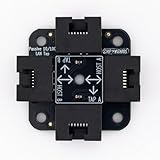
- 40% smaller than standard LAN tap
- Same Throwing Star LAN tap function in a new streamlined design
- Simple device for passively monitoring ethernet based communications
- Updated, intuitive silkscreen and streamlined design
- Every device assembled by hand in the USA with individual inspection and testing
For EDR, verify installation success, check-in health, policy assignment, event categories, resource impact and behavior when a device is off-network. Include servers, virtual desktops and special-purpose systems rather than limiting the plan to employee laptops.
Outdated Drivers Are Slowing You Down
One free scan finds every outdated or missing driver and matches the right update for your exact hardware.Free scan · exact hardware matchWindows Errors? Fix Them Before They Spread
Repair common Windows errors and clear accumulated junk for a smoother, more stable PC - no reinstall needed.Free scan · no reinstallDetection and response are different decisions
Finding an indicator is not the same as safely stopping it. CISA’s EDR capability documentation describes endpoint response actions that can be configured by policy, with endpoint isolation as an example. Isolation can limit spread, but it can also interrupt a critical service or remove a system from the evidence path. Define approval levels and exceptions before enabling automation.
CISA describes NDR as aiding detection and remediation. The actual response may require a firewall change, a network-access-control action, a ticket for a site operator, an identity action or a separate orchestration system. Ask whether an alert can trigger a supported action, how that action is authenticated, what rollback exists and who receives the result.
Use a response matrix
| Signal | Possible first action | Checks before automation |
|---|---|---|
| High-confidence malicious process on a workstation | Isolate the endpoint and preserve volatile evidence according to policy. | Confirm device identity, business criticality, user impact and an exception path. |
| Scanning or beaconing visible on a network path | Restrict the source connection or route the alert to the network operator. | Validate sensor location, source attribution, shared-address effects and false-positive history. |
| Suspicious account use without host evidence | Require identity verification or temporarily disable the account under access policy. | Check travel, service-account ownership, maintenance windows and approval requirements. |
Response actions should be recorded in the incident case so investigators can distinguish the original event from containment side effects.
A selection checklist for security and IT teams
- Define unauthorized access. Separate stolen credentials, policy violations, malware-driven sessions, lateral movement and accidental misuse. Each may need different signals.
- Map the endpoints in scope. Include servers, workstations, virtual desktops, cloud workloads and unmanaged devices. Mark systems that cannot run an agent.
- Map the network paths. Identify branch, campus, remote-access, data-center, cloud and third-party routes. Record where traffic is visible and where it bypasses collection.
- Specify the evidence package. Decide whether an analyst needs process and file activity, authentication events, network connections, or a correlated timeline.
- Set retention and search requirements. Match retention to investigation and legal needs; test whether analysts can retrieve events quickly enough for an active incident.
- Plan response authority. List actions that may be automated, actions requiring approval and the people responsible outside business hours.
- Check integrations. Confirm export to the existing SIEM, SOAR, ticketing and incident-response processes. CISA’s EDR requirements specifically discuss SIEM export and incident-response integration.
- Estimate operating capacity. Include deployment, upgrades, sensor maintenance, tuning, alert triage, privacy review, storage and training. A technically capable system can fail if no team can investigate its queue.
Do not use a detection-rate percentage, breach-reduction number or cost-savings claim as a generic tie-breaker. The cited official material does not establish a product-independent figure, and results depend on coverage, configuration and staffing.
An implementation sequence that limits blind spots
- Inventory and classify assets. Reconcile endpoint management, identity, network and cloud inventories. Flag unknown devices and paths as explicit coverage gaps.
- Choose priority scenarios. Start with the unauthorized-access paths that matter most, such as privileged-account misuse, remote access, branch compromise or server lateral movement.
- Deploy a measured pilot. Enroll representative endpoints and place network sensors or feeds where the priority paths are visible. Record what the pilot cannot see.
- Validate telemetry. Generate controlled test events, confirm timestamps and user attribution, and verify that the expected process, connection and authentication fields arrive in the investigation interface.
- Build correlation and case workflows. Link endpoint, network and identity records with stable host, account and time identifiers. Send actionable alerts to the system where analysts already work.
- Stage response policies. Begin in alert-only mode for disruptive actions, then introduce approval-based containment and narrowly defined automation after measuring false positives and recovery procedures.
- Measure health, not just alerts. Track endpoint check-in rates, sensor availability, missing feeds, event latency, retention success, analyst response time and closure quality.
- Reassess after architecture changes. Cloud migrations, new branches, remote-access changes and mergers can invalidate the original visibility map.
Operational pitfalls and fixes
“We installed agents, so every endpoint is covered.”
Agents may be absent from servers, virtual desktops, contractor systems or devices that are powered off for long periods. Reconcile the agent inventory with asset and identity records, and alert on devices that stop reporting.
“The NDR console sees the internet, so it sees the branch.”
Traffic may use a local breakout, encrypted tunnel, private link or alternate provider. Trace the actual route and confirm that the sensor receives the traffic or an equivalent event feed. CISA’s branch-office guidance treats routing and external infrastructure as visibility options, not automatic coverage.
Rank #4

- Network Tap for use with 10/100Base-T link
- Capable of being powered from a computer's USB port with built-in inrush current limiting circuit to prevent the computer from possible damages or disturbances by instantaneous current surge
- Compatible with PoE. PoE pass-through between two inline ports
- Can also be used as a portable 4-port 10/100 Ethernet switch
“An alert proves the login was unauthorized.”
Detection systems provide indicators. Authorization requires context such as role, approval, maintenance schedule, device ownership and identity-provider records. Build those records into the investigation rather than labeling every anomaly as an intrusion.
“More telemetry always improves security.”
Unbounded collection can increase storage, privacy exposure and analyst fatigue. Define the event fields and retention periods needed for the priority scenarios, then tune noisy detections and document exclusions.
Quick wins for a faster PC:
Repair Windows errors before they cause bigger problemsFix Now →Scan for outdated or missing drivers - takes under a minuteDriver Scan →“Isolation is harmless.”
Isolating a production server, medical device or executive workstation can create an outage. Use business-criticality metadata, approval rules, emergency contacts and a tested release procedure.
“IDS and NDR are interchangeable.”
CISA’s ransomware guidance recommends EDR among measures for ensuring only authorized software executes and discusses intrusion-detection systems for malicious network activity. Those recommendations support the relevance of endpoint and network monitoring, but IDS and NDR are not identical labels; verify the actual data, analytics and response functions offered by an implementation.
Independent reader supportYour contribution helps us test, update, and keep practical guides available for everyone.Integrate identity and incident response
Endpoint and network telemetry are strongest when paired with authoritative identity and access records. Collect successful and failed authentication, multifactor status, privilege changes, service-account ownership, remote-access details and approved maintenance windows. Normalize account, host and timestamp fields so an analyst can move from an account event to the device and connections involved.
Use a documented incident process for triage, containment, eradication, recovery and lessons learned. NIST published SP 800-61 Rev. 3 on April 3, 2025, superseding Rev. 2 and placing incident-response recommendations in the Cybersecurity Framework 2.0 risk-management context. That publication is incident-response guidance, not a definition of EDR or NDR, but it is a useful framework for assigning decisions and preserving evidence.
What’s actually slowing this PC down?
Pick the symptom - the matching free tool is one click away.
Staffing matters as much as tooling. Define who reviews alerts, who can authorize disruptive actions, who owns a branch or cloud environment, and how an incident is escalated when the usual administrator is unavailable. Test these handoffs with tabletop exercises and controlled technical events.
Best Value

- The SharkTap is a special purpose 10/100/1000Base-T ethernet device that allows you to 'tap into' an ethernet connection. It is intended to be used with the free Wireshark protocol analyzer or equivalent.
- Conventional switches route packets only to the intended destination port, reducing traffic but preventing a third port from seeing all packets. The SharkTap duplicates all packets to or from the Network ports to the TAP port.
- Supports 10, 100 and 1000Base-T, all ports. Power-Over-Ethernet (PoE) pass-through.
- Powered from a USB-B cable (included), draws 350mA or less.
- Other features: Auto-MDIX, so no crossover cables ever needed. Non-conductive enclosure for lab work. Will NOT route packets from TAP to Network ports.
Costs, privacy and procurement questions
There is no fair category-wide price comparison. Licensing, endpoint count, network throughput, sensor quantity, storage, retention, cloud ingestion, support and analyst labor vary by product and environment. Request a total operating estimate rather than comparing a per-device or per-gigabyte figure in isolation.
Ask vendors and internal stakeholders:
- Which endpoint operating systems and workload types are supported, and what telemetry is unavailable on each?
- How are remote, offline, virtual and shared devices represented?
- Which network protocols, cloud services, encrypted flows and branch topologies can be observed?
- Where is data stored, for how long, and what controls protect sensitive content?
- Can events be exported in the format and latency required by the existing SIEM or case system?
- Which containment or network actions are available, and what approvals, permissions and rollback procedures do they require?
- What happens during sensor, agent, network or service outages?
Review privacy, employment, data-residency and acceptable-use requirements before enabling collection of command lines, file names, user behavior or content-bearing network data. Minimize fields that are not needed for the stated detection objectives and restrict analyst access to sensitive records.
How to make the decision
| Your primary gap | First capability to evaluate | Validation question |
|---|---|---|
| You cannot explain what ran on managed devices after a suspicious login. | EDR | Are the relevant devices enrolled, healthy and collecting process, user-session and local-change events? |
| You lack visibility into communications across branch or internal paths. | NDR | Do sensors or approved network feeds receive the paths, including local breakouts and cloud links, that matter? |
| You need to connect host actions with lateral movement. | Both, with identity correlation | Can the systems join endpoint, network and authentication records into one searchable timeline? |
| You have alerts but cannot contain incidents safely. | Response workflow and integration | Who acts, which actions are approved, and how are outages and false positives recovered? |
If resources allow only one initial investment, choose the capability that covers the most important evidence source you currently lack, then document the blind spots left behind. Revisit the decision when network architecture, endpoint ownership or incident priorities change.
What the evidence supports—and what it does not
CISA’s endpoint capability documentation and branch-office guidance establish the different observation points and deployment considerations. A Microsoft Defender for Endpoint document is an example of one vendor’s implementation, not a feature list for every EDR product. CISA’s OpenEDR resource page also states that CISA does not endorse commercial products or services; a government resource listing should not be treated as a purchase recommendation.
The available official material does not establish universal superiority, measured detection accuracy, relative false-positive rates, a guaranteed ability to identify every compromised credential or lateral-movement attempt, or a product-independent cost winner. Those outcomes must be validated against the organization’s own assets, paths, policies, data and operating model.
Choose EDR when endpoint evidence is the immediate gap, NDR when network visibility is the immediate gap, and both when investigations require a correlated host-and-network view. In every case, validate coverage, configure suitable telemetry, connect alerts to an accountable response process, and treat identity and access controls as part of the detection design rather than as optional context.
Quick Recap
Product prices and availability are accurate as of the date/time indicated and are subject to change. Any price and availability information displayed on Amazon at the time of purchase will apply.
The Tool Desk
Outbyte PC Repair FREEClear out junk files and repair common Windows errorsFree Scan →Outbyte Driver Updater FREEScan for outdated or missing drivers - takes under a minuteDriver Scan →
