
iTechGuides is reader-supported. When you buy through links on our site, we may earn an affiliate commission. As an Amazon Associate I earn from qualifying purchases. Learn more
Use edge computing when a workload needs very fast, predictable responses, must keep operating during network outages, generates or consumes data at a specific site, or faces a location constraint. Use a centralized data center or cloud when the workload can tolerate network round trips and benefits more from pooled capacity, centralized operations, and broad access to managed services. In many production systems, the best answer is hybrid: execute time-critical functions locally, then send selected data to a central platform for coordination, analysis, storage, and fleet management.
What “edge” and “centralized” mean
Edge computing is a placement strategy, not a separate category of cloud provider. Compute, storage, or both are deployed close to the people, machines, sensors, or process that produce and use the data. The edge can be a factory server room, a retail branch, an industrial gateway, a telecom location, an on-premises cluster, or a provider-operated location near a population center. A cloud provider can supply edge services, but the defining characteristic is physical and network proximity to the workload.
A centralized data-center architecture sends requests and data to a relatively concentrated facility or cloud region. That design may still use caching, content-delivery nodes, or managed regional services, but the system of record and most processing remain in the central environment. Centralization makes it easier to pool hardware, apply uniform controls, and run large-scale analytics, provided the network path is good enough for the workload.
The choice applies to an individual workload or function, not necessarily an entire organization. A single application can place control loops and transaction acceptance at the edge while keeping model training, historical reporting, identity, and long-term storage centralized.
#1 Best Overall

- High Performance LPDDR5 - Orange Pi 5 Pro 8g uses Rockchip RK3588S 8-core 64-bit processor, quad-core A76+quad-core A55, with 8nm process design, up to 2.4GHz main frequency, with 4GB/8GB/16GB LPDDR5 and supports for eMMC module or SPI Flash (either one), integrated ARM Mali-G610, built-in 3D GPU, compatible with OpenGL ES1.1/2.0/3.2, OpenCL 2.2 and Vulkan 1.2
- High Computility - Orange Pi 5 Pro 8gb embedded NPU supports INT4/INT8/INT16 mixed computing, with up to 6TOPS of computility, which can meet the edge computing needs of most end devices.
- 8K Video Decoding - 8K video decoding for clear and realistic picture. With support for up to 8K@60Hz, the powerful video codec allows for clearer images and more detailed picture quality.
- WiFi5+ BT5.0 with BLE Support - Orange pi 5 pro 8G Built-in 2.4G/5G dual-band Wi-Fi5 and Bluetooth 5.0 with BLE support for stronger and more stable signals and easier and faster network transmission
- Rich Ports - The Orange Pi 5 Pro provides abundant interfaces, including HDMI output, GPIO ports, USB2.0, USB3.1, 3.5mm headphone socket,Gigabit LAN port with PoE+ support (PoE+ HAT required), etc., with an M.2 M-key slot that supports the installation of NVMe SSD or SATA SSD.
The decision criteria that matter
| Question | Edge is favored when… | Centralized is favored when… | What to verify |
|---|---|---|---|
| How quickly must the system respond? | A response must be immediate and predictable, or jitter (variation in response time) can make the process unsafe or unusable. | The application can tolerate network round trips and occasional variation. | Measure the complete request path, including device, network, queue, processing, and reply time. Do not assume a generic latency threshold applies to every workload. |
| Where is data produced and consumed? | Large volumes are created at a site and are used there, or moving all raw data would be wasteful. | Data is already centralized, shared across locations, or small enough to move reliably. | Map data sources, users, retention, and the direction and frequency of transfers. |
| What happens if the link fails? | Critical transactions must continue during an outage or an unreliable connection. | Temporary unavailability is acceptable, or another local mode already covers it. | Define offline behavior, local queues, replay rules, and how conflicts are resolved after reconnection. |
| Does location matter legally or contractually? | A workload has a verified local-processing or residency requirement that the chosen deployment can meet. | The data may be processed in the selected central region under the applicable rules. | Check the actual architecture, jurisdictions, subprocessors, retention, and transfer mechanisms. Location alone does not establish compliance. |
| Are pooled resources and managed services important? | The site needs only a bounded local function and can be operated as part of a managed fleet. | Elastic capacity, specialized services, shared platforms, and centralized administration provide the greater benefit. | Compare staffing, hardware lifecycle, observability, security controls, and service dependencies. |
AWS guidance recommends choosing locations in light of user location and workload network requirements, including location-oriented options such as Local Zones and 5G-linked Wavelength. Its data-location guidance also emphasizes running code close to data when an application is data-heavy. These are design patterns, not universal performance guarantees.
When edge computing is the better fit
Tight latency or low jitter
Edge placement shortens the network path between a device and the function that must respond. That is useful when a camera must reject a defective part while it is still on a production line, a vehicle must react to local sensor input, or a control system must keep a process within a narrow timing envelope. In these cases, average latency is not enough: variation, queue buildup, and a lost connection can be more damaging than a slightly slower but stable response.
Keep the boundary precise. A user interface may tolerate a central request while the underlying control loop cannot. Put only the latency-sensitive function at the edge and leave non-time-critical work—such as reporting, model training, or historical queries—in the central environment.
The Tool Desk
Outbyte PC Repair FREEClear out junk files and repair common Windows errorsFree Scan →Outbyte Driver Updater FREEScan for outdated or missing drivers - takes under a minuteDriver Scan →Data is generated and consumed at the same site
Video, machine telemetry, audio, and sensor streams can be much larger than the events that matter to a business. Processing at or near the source allows the system to discard irrelevant frames, aggregate readings, or send only alerts and selected evidence. That reduces backhaul traffic and can keep sensitive raw material inside the facility.
Centralization remains useful for retaining the resulting events, comparing sites, retraining models, and investigating incidents. The edge decision is therefore about where to perform the first transformation, not necessarily where the final record lives.
Intermittent or inadequate connectivity
If a branch, vessel, factory, power plant, or remote site cannot depend on a continuous high-quality link, local execution may be necessary. Google’s edge-hybrid pattern treats the connection to the central platform as noncritical for time- and business-critical local work. A site can accept transactions, operate equipment, or enforce local rules and synchronize with central services when the link returns.
Rank #2

- [Small and Power Geek] youyeetoo X1 is a very cost-effective X86 single board computer for Industrial control, Makers, DIYers and geeks. Powered by Intel 11th Gen 4 Core CPU N5095 (up to 2.80GHz), the size only 115*75mm, just the size of your palm.As small servers, edge computing, smart centres.
- [WIKI]http(s)://wiki.youyeetoo.com/en/x1; [Package Includes] 1x youyeetoo X1, 1x Active Cooling Fan (Assembled), 1x 12V/3A (5525) Power Adapter. If you have any question, please feel free to click "youyeetoo" to ask or mail am2#youyeetoo.com (#>>@).
- [Dual 4K HDR and 3-Way Video Output] Including HDMI 2.0, Mirco HDMI 2.0, and MIPI-DSI. One for office, one for entertainment, and one for personalisation. Daily work, entertainment, DIY can be easily satisfied.
- [Wireless Networks] M.2 E key extension. Support WIFI(2.4G/5G)+Bluetooth dual-band. Adapted WIFI5+BT5.0, WIFI6+BT5.2.Support 4G LTE. Extreme scalability allows you to surf the web wirelessly both indoors and outdoors.
- [LAN and PoE Power] Onboard Gigabit WAN port ,Support 24W PoE (802.3AT) power supply (default).Optional 60W / 72W high power PoE power supply module (customised). Start with industrial applications to reduce the difficulty of deployment and streamline costs.
Offline capability must be designed rather than assumed. Specify which operations are allowed without a connection, how long local data may accumulate, what happens when storage fills, and how duplicate or conflicting updates are reconciled. A local application that merely caches a screen is not the same as a system that can complete an authoritative transaction offline.
Do these 3 things before closing this tab:
1Repair Windows errors before they cause bigger problems2Fix the driver behind crashes, sound loss and screen glitches3Clear out junk files and repair common Windows errorsA verified location constraint
On-premises or edge deployment can help when an organization must keep processing in a particular country, facility, or network boundary. It does not automatically satisfy a legal or regulatory requirement. You still need to verify where replicas, backups, logs, support access, telemetry, and managed services operate, and whether applicable rules allow the transfers your synchronization design makes.
When centralized data centers are the better fit
Elastic, pooled capacity
Central facilities can aggregate demand from many sites and allocate compute, storage, and accelerators where they are needed. That is advantageous for bursty workloads, large analytics jobs, model training, enterprise reporting, and shared services. A central pool also avoids buying peak capacity at every branch or plant.
Centralized management and consistency
One platform is generally easier to patch, monitor, back up, and secure consistently than dozens or thousands of small installations. Identity, policy, audit, deployment pipelines, and incident response can be standardized. Centralization is especially attractive when the workload has no strong local timing or availability requirement and the organization lacks staff to operate equipment at every site.
Cross-site data and collaboration
Applications that compare customers, locations, or long time periods benefit from a common data set. Central processing simplifies global search, consolidated financial records, shared machine-learning features, and organization-wide dashboards. If every site keeps an isolated copy, reconciliation and access control become additional engineering problems.
Quick wins for a faster PC:
Repair Windows errors before they cause bigger problemsFix Now →Scan for outdated or missing drivers - takes under a minuteDriver Scan →Clear out junk files and repair common Windows errorsFree Scan →Dependence on specialized managed services
Central cloud and data-center environments commonly provide databases, queues, identity systems, observability, security tooling, and analytics services that are difficult to reproduce at the edge. Use those capabilities centrally when the workload can tolerate the network dependency and when the operational savings outweigh the extra round trip.
Rank #3

- AI-Accelerated Hybrid Performance: Unleash next-gen AI workloads with up to Intel Core Ultra 9, 12 Xe GPU cores, and NPU 5. Hybrid XPU architecture delivers up to 180 Platform TOPS, optimized for real-time Edge AI inference and machine learning tasks.
- Hyper-Connected Workspace: Intel Wi-Fi 7 and Bluetooth 6.0 enable low-latency wireless. Dual 2.5G LAN ensures network redundancy, Zero Trust security, and high throughput for enterprise and Edge AI workloads.
- Enterprise Security & Management: Supports Intel vPro (select SKUs) and fTPM for hardware-based security. ASUS Control Center & Edge Suite enable centralized management, remote monitoring, and asset reporting.
- Optimized Form Factor & Expansion: Compact 5x4 form factor (144 x117x42mm) with Tool-less Chassis 2.0 allows upgrades to dual M.2 SSDs (Gen5/Gen4). Maximizes thermal headroom while maintaining flexibility and performance.
- Industrial Readiness & Long-Term Value: Durable, modular design supports harsh environments and long-term deployment. Rich internal I/O (RS-232,PCIe x1) enables POS, IoT, and industrial automation expansion.
Workloads that illustrate the choice
Industrial automation and defect detection
A production line can run image or sensor inference locally so a defect decision arrives while the item is still in position. The site can retain a short evidence window and send defect events, selected images, equipment health, and aggregated metrics to a central platform. Central services can retrain models and compare quality across plants; they do not need to sit in the control loop.
Automotive systems
Vehicle functions that depend on immediate sensor input cannot rely on a distant service for every decision. Local processing handles the safety- or response-sensitive function, while a central service can manage fleet data, software distribution, diagnostics, and longer-term analysis. The exact split depends on the vehicle function, connectivity, safety case, and applicable regulations.
Retail branches
Point-of-sale acceptance, inventory actions, or other business-critical transactions may need a local mode when a store’s connection is unreliable. Central systems remain valuable for catalog updates, cross-store inventory, fraud analysis, and consolidated reporting. Define which prices, promotions, and authorization rules can be safely cached and how updates are versioned.
Connected vessels, factories, and power plants
These sites may have expensive, intermittent, or insufficient links. Local systems can keep operating equipment and recording events, then forward compressed or prioritized data when connectivity is available. A central control plane can distribute configuration, manage software versions, and show fleet health without making every local action depend on a live connection.
Live video, high-fidelity audio, and augmented or virtual reality over 5G
These experiences can be sensitive to both delay and bandwidth. AWS describes location-oriented deployment options for workloads such as live video, high-fidelity audio, and AR/VR over 5G. Before choosing an edge location, test the actual radio, transport, compute, and application path; a nearby site does not remove congestion or processing bottlenecks elsewhere.
Why hybrid architectures are often the practical answer
Hybrid design divides a workload by responsibility. The edge handles the smallest set of functions that require proximity or autonomy. The central environment handles tasks that benefit from scale, shared state, and managed services. This avoids forcing every component into the same placement.
Rank #4

- Powered by Rockchip RK3576 ARM processor
- Fanless design for silent, reliable 24/7 operation
- Built-in Wi-Fi 5 and Bluetooth
- Compact plug-and-play design for easy deployment
- 64GB eMMC storage with expandable microSD support
| Function | Typical placement | Reason |
|---|---|---|
| Device control, safety interlock, or local transaction acceptance | Edge or on premises | Must continue with low and predictable response time, including during a link outage. |
| Filtering, feature extraction, and immediate alerts | Edge first; selected results centralized | Reduces data movement while preserving evidence and events for broader use. |
| Fleet configuration, identity, policy, and software distribution | Central control plane with local agents | Provides consistent administration while allowing local execution. |
| Historical storage, cross-site analytics, and model training | Centralized | Needs pooled capacity and a broad data set rather than millisecond-level proximity. |
| Local cache, queue, and replay log | Edge | Buffers work while disconnected and supports ordered synchronization. |
The central link should have an explicit contract: what is sent, at what priority, how it is encrypted, how long it is retained locally, and what happens when delivery fails. Treat synchronization as a distributed-systems problem, not as an incidental background task.
Free tools Windows power users keep installed
One-click scans. No signup required.
A step-by-step placement method
- Define the workload boundary. Separate user interaction, control loops, data ingestion, analytics, storage, and administration. Avoid deciding “edge or cloud” for an entire application before identifying these functions.
- Set response and availability objectives. Record the maximum acceptable response time, jitter tolerance, throughput, and behavior during a disconnected period. Include device and network time, not just server execution time.
- Map data origins and destinations. List where data is generated, where it is consumed, its volume and sensitivity, and whether raw data, summaries, or events must be retained. Identify which transfers are continuous and which can be delayed.
- Measure the network you actually have. Test round-trip time, packet loss, jitter, bandwidth, congestion patterns, and outage duration at each relevant site. A provider’s advertised region or access technology is not a substitute for measurements at your locations.
- Check residency, security, and contractual constraints. Identify required jurisdictions and network boundaries. Trace primary data, replicas, backups, logs, support access, telemetry, and synchronization destinations. Obtain legal and compliance review for the specific deployment.
- Mark the minimum local function. Put only the operations that fail the central test—because of timing, autonomy, data movement, or location—at the edge. Keep other functions centralized unless a separate requirement justifies moving them.
- Design synchronization and failure behavior. Choose queues, retry limits, ordering, idempotency keys, conflict rules, and storage limits. Decide whether a transaction is authoritative locally, centrally, or only after reconciliation.
- Design operations before rollout. Specify secure enrollment, remote updates, configuration versioning, health checks, logs, metrics, alerting, backup, physical access controls, and a recovery path for a failed or unreachable site.
- Pilot the hardest location and workload. Test peak data rates, link outages, software updates, clock drift, storage exhaustion, and recovery. Measure business outcomes as well as technical performance before expanding the pattern.
Operating an edge fleet safely
Provisioning and identity
Every site and device needs a verifiable identity, least-privilege credentials, and a revocation process that still works if the site is offline for a period. Keep secrets out of images and scripts shared across locations. Record which software and configuration versions are active at each site.
Updates and rollback
Remote update capability is essential when equipment is distributed. Use staged deployment, health checks, signed artifacts, and an automatic rollback or maintenance procedure. Plan for an update that loses connectivity halfway through; a device that cannot boot or serve local operations may require physical intervention.
Observability
Collect local metrics for queue depth, storage consumption, clock health, processing time, sensor status, and synchronization backlog. Forward summaries and alerts centrally, but retain enough local diagnostics to investigate an outage without the central link. Alert on silence as well as explicit errors: a disconnected site may produce no new telemetry.
Security and physical exposure
Edge hardware is often easier to reach physically than equipment in a dedicated data center. Use tamper-aware procedures, encrypted storage where appropriate, secure boot features supported by the platform, network segmentation, and a process for replacing a compromised unit. Central policy is useful only if local enforcement continues when disconnected.
Recommended Free Tools
Costs, performance, and trade-offs
There is no universal cost break-even point or latency number for edge versus centralized deployment. The answer depends on site count, hardware, connectivity, staffing, data volume, service pricing, energy, lifecycle, and the cost of downtime. Provider documentation describes capabilities and patterns, not a neutral cross-provider benchmark.
Best Value
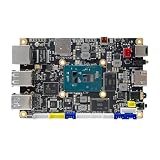
- [Small and Power Geek] youyeetoo X1 is a very cost-effective X86 single board computer for Industrial control, Makers, DIYers and geeks. Powered by Intel 11th Gen 4 Core CPU N5105 (up to 2.90GHz), the size only 115*75mm, just the size of your palm.As small servers, edge computing, smart centres.
- [WIKI]http(s)://wiki.youyeetoo.com/en/x1; [Package Includes] 1x youyeetoo X1, 1x Active Cooling Fan (Assembled), 1x 12V/3A (5525) Power Adapter. If you have any question, please feel free to click "youyeetoo" to ask or mail am2#youyeetoo.com (#>>@).
- [Dual 4K HDR and 3-Way Video Output] Including HDMI 2.0, Mirco HDMI 2.0, and MIPI-DSI. One for office, one for entertainment, and one for personalisation. Daily work, entertainment, DIY can be easily satisfied.
- [Wireless Networks] M.2 E key extension. Support WIFI(2.4G/5G)+Bluetooth dual-band. Adapted WIFI5+BT5.0, WIFI6+BT5.2.Support 4G LTE. Extreme scalability allows you to surf the web wirelessly both indoors and outdoors.
- [LAN and PoE Power] Onboard Gigabit WAN port ,Support 24W PoE (802.3AT) power supply (default).Optional 60W / 72W high power PoE power supply module (customised). Start with industrial applications to reduce the difficulty of deployment and streamline costs.
- Edge can reduce transfer costs and outage impact by filtering data locally and keeping critical functions available, but it adds hardware, spares, physical security, field support, and fleet-management work.
- Centralization can reduce operational complexity per site and provide elastic capacity, but may increase network charges, backhaul requirements, and the business impact of a link or regional outage.
- Hybrid designs incur synchronization complexity. You may operate two failure domains, local and central queues, duplicate monitoring, and reconciliation logic. Those costs are justified only when the local requirement is real.
- Performance claims must include conditions. State the site, network, workload, data size, concurrency, and measurement method. A nearby deployment can still be slow if it is overloaded or if the application makes additional central calls.
Common mistakes and how to correct them
“Edge is always faster”
Proximity helps only when the path and processing stack are designed well. A small, overloaded edge server or a request that immediately calls a central database may perform worse than a well-sized central service. Measure end-to-end behavior and remove unnecessary dependencies from the critical path.
“Edge automatically means compliant”
It does not. Data can leave the site through backups, logs, support tooling, analytics, or synchronization. Map every copy and obtain a deployment-specific determination against the applicable rules.
“Offline mode is just a cache”
A cache cannot necessarily authorize a transaction, enforce current policy, or reconcile two changes made independently. Define local authority, expiration, conflict handling, and replay semantics explicitly, then test them during realistic outages.
“Deploy the whole application at every site”
Duplicating every service multiplies patching, capacity, and security work. Extract the minimum local function and keep shared, stateful, or compute-intensive services central unless measurements show that they also require local placement.
“Centralize everything because management is easier”
Management simplicity does not compensate for a control loop that fails whenever the link is congested. If a critical operation has a local timing or availability requirement, move that function locally and retain centralized governance around it.
“A vendor feature settles the architecture”
Local Zones, 5G-linked locations, on-premises clusters, and other offerings are implementation choices. They do not remove the need to validate availability, service limits, data paths, operating responsibility, and regional support for your specific design. AWS guidance dated April 10, 2023, and Google Cloud documentation reviewed January 23, 2025, describe capabilities that can change; confirm current availability before committing.
A concise decision rule
Choose edge placement for the smallest workload component that needs local speed, local data, local autonomy, or a verified local boundary. Choose centralized placement for components that benefit from pooled resources, shared state, managed services, and centralized operations without violating their network or location requirements. Combine both when local execution protects the business while central services provide scale and coordination.
PC Slower Than It Used to Be?
A free scan shows the junk files, broken settings and background clutter dragging Windows down - then fixes them in one click.Free scan · Windows 10 & 11Outdated Drivers Are Slowing You Down
One free scan finds every outdated or missing driver and matches the right update for your exact hardware.Free scan · exact hardware matchQuick Recap
Product prices and availability are accurate as of the date/time indicated and are subject to change. Any price and availability information displayed on Amazon at the time of purchase will apply.

