
Do these 3 things before closing this tab:
1Scan for outdated or missing drivers - takes under a minute2Clear out junk files and repair common Windows errors3Fix the driver behind crashes, sound loss and screen glitchesiTechGuides is reader-supported. When you buy through links on our site, we may earn an affiliate commission. As an Amazon Associate I earn from qualifying purchases. Learn more
The best drought-resistant garden is not a collection of plants that never need water. It is a planting plan that matches each species to your local climate, sunlight, soil, drainage and seasonal moisture, then supplies extra water while roots establish and tapers irrigation as plants become self-sufficient. Start with a locally appropriate plant list, group plants with similar water needs, and keep irrigation focused on the entire expanding root zone.
“Drought-resistant” and “drought-tolerant” describe a plant’s ability to cope with limited water after establishment, not immunity to drought immediately after planting or protection from root rot in wet soil. The examples and schedules below are regional guidance rather than a universal shopping list.
What drought-resistant means in a garden
Drought tolerance is a relationship between a plant and its site. A species that performs with little summer irrigation in one region may fail in another because of colder winters, humid summers, shallow soil, poor drainage, reflected heat or a different rainfall pattern. Even a locally native plant needs water to develop a functioning root system after it is installed.
Quick wins for a faster PC:
Repair Windows errors before they cause bigger problemsFix Now →Fix the driver behind crashes, sound loss and screen glitchesFind Drivers →Clear out junk files and repair common Windows errorsFree Scan →Think of drought tolerance as a lower long-term irrigation requirement. During establishment, the priority is a healthy, expanding root system. The University of Arizona Cooperative Extension, Yavapai County, advises watering both the original root ball and the surrounding native soil, then reducing supplemental irrigation gradually as roots spread. Watering only the nursery root ball can leave the adjacent soil dry and discourage outward root growth.
#1 Best Overall

- High quality material and performance: The soaker hose is made of high quality PVC material, its lining is reinforced with strong fabric, and the upgraded fabric sleeve is thicker, double insurance to avoid leakage and ensure even seepage
- Effective arrival of water: Flat soaker hose using porous hose, do not worry about uneven water seepage; Because it is elastic and kink resistant, the outflow water is not easy to kink, saving nearly 80% of water when transporting water to plants
- A variety of use: The garden soaker hose is light and small, flexible and multi-purpose; It is easy to deploy and secure in a garden, flower bed or other landscape area, and can also be placed in the ground or buried according to your needs
- Easy to build irrigation systems: the soaker hose has standard threads at both ends for easy connection to faucets or other hoses, and can be connected to timers; Without any complicated steps, you can easily DIY your drip irrigation system
- Excellent choice for irrigation: The soaker hose 100ft adopts two sets, suitable for gardens, vegetable fields, lawns, orchards, etc., can support long-term use, pay attention to drain water when storing and can not be used with hot water
Overwatering is a separate risk. Plants adapted to dry summers can decline when their roots stay wet, even if the garden is intended to be water-wise. Plant choice, drainage and irrigation must agree.
Start with the garden site, not a plant name
Before selecting species, record the conditions a plant will actually experience. A local Cooperative Extension service, regional native-plant organization or locally maintained plant list can then help you filter candidates. Treat any regional list as a starting point, not a guarantee for every yard.
Measure sunlight and exposure
- Note which areas receive full sun, morning sun, afternoon shade or deep shade during the growing season.
- Identify reflected heat from paving, walls and south- or west-facing exposures.
- Mark windy or exposed locations where leaves and soil may dry faster.
- Observe whether shade changes as nearby trees leaf out; a spring-sunny bed may become summer shade.
Check soil and drainage
- Determine whether soil drains quickly, remains damp, or becomes waterlogged after rain.
- Look for compacted layers, shallow soil over rock and places where runoff collects.
- Separate dry, sharply drained areas from beds that receive roof or downspout runoff.
- Do not assume that a plant described as drought tolerant will accept permanently wet roots.
Account for climate and winter conditions
Compare candidates with your local winter hardiness, summer heat, rainfall pattern and length of dry season. A plant list produced for Iowa, the Pacific Northwest or an Arizona upland reflects those climates and should not be treated as a cross-region ranking. Your local Extension guidance is the best check for winter survival and summer performance.
Recommended Free Tools
Plan for mature size and maintenance
Record mature height and width, spacing, expected seasonal appearance and the amount of pruning, weeding and cleanup you can provide. A plant that fits its moisture conditions but outgrows a narrow bed will require corrective maintenance that undermines a low-input design.
Regional examples—and their limits
OSU Extension’s Pacific Northwest guidance lists several plants that can fit water-wise landscapes in that region. They are useful examples of how to build a regional palette, not universal recommendations.
Rank #2

- 【Saves Up to 80% Water】This upgraded 50FT soaker hose features a premium dual-layer design: a thick, durable rubber inner tube protected by a high-density fabric outer sleeve. By delivering water directly and evenly to the roots, this efficient drip hose minimizes evaporation and cuts water waste by up to 80%.
- 【Customizable DIY Irrigation】Easily daisy-chain multiple units end-to-end to build your custom hose system! Equipped with standard 3/4-inch threaded fittings, this flexible flat soaker hose connects seamlessly to outdoor faucets and water timers, allowing you to effortlessly cover your entire garden.
- 【Heavy-Duty Aluminum Connectors】Crafted with anodized aircraft aluminum, the connectors on this soaking hose are rustproof, leak-proof, and built to last. The 360° rotating inlet ensures hassle-free installation, while the lightweight, flat drip hose design stays kink-free and lays smoothly around your plants.
- 【Consistent & Even Distribution】Engineered to withstand water pressure without bursting, this upgraded drip irrigation hose maintains a stable flow for uniform soaking. Whether laid flat on the ground or buried under mulch, this heavy-duty soaker hose is the perfect watering solution for garden and yard.
- 【Optimal Performance Tips】To ensure the most consistent water distribution across the entire soaker hose, we recommend maintaining a water pressure of 40-60 PSI. For optimal performance, do not connect more than 100 feet of this drip hose in a single run, as longer setups may lead to uneven watering.
| Plant | Regional context | What to verify before planting |
|---|---|---|
| Oregon sunshine (Eriophyllum lanatum) | Pacific Northwest example for a water-wise landscape | Sun exposure, drainage, mature spread and local winter performance |
| Yarrow (Achillea millefolium) | Pacific Northwest example | Available space, sun and whether its growth habit suits the bed |
| Camas (Camassia species) | Regional example that can need summer-dry conditions | Seasonal moisture; excess summer irrigation can raise bulb-rot risk |
| Oregon white oak (Quercus garryana) | Pacific Northwest native example | Room for a mature tree and drainage; irrigation can contribute to root rot |
| California poppy (Eschscholzia californica) | Regional water-wise example | Local climate fit, winter conditions and summer appearance |
| California fuchsia (Epilobium canum) | Regional water-wise example | Sun, drainage and whether it is locally hardy |
OSU also cautions that plants from year-round wet ecosystems, some riparian habitats and moist mountain foothills are not automatically drought tolerant. “Native” describes geographic origin; it does not by itself describe a plant’s water requirement in your particular bed.
Iowa State University Extension and Outreach presents drought-tolerant annuals, perennials, shrubs and trees specifically for Iowa gardens. Its central point applies broadly: these plants still need initial watering before they can perform with little supplemental water.
Free tools Windows power users keep installed
One-click scans. No signup required.
How to compare two candidate plants
When two species appear suitable, compare the factors that determine both survival and workload. Do not choose a universal “best” plant; the available guidance does not establish a cross-region performance ranking.
| Comparison question | Why it matters | Evidence to collect locally |
|---|---|---|
| Is it suited to this region? | Climate and winter conditions determine long-term survival. | Local Extension or native-plant list and hardiness information |
| Does sun and drainage fit? | Shade, heat and wet roots can change performance more than a plant label suggests. | Site observations and drainage assessment |
| What is the mature size? | Spacing affects airflow, irrigation coverage and future pruning. | Reliable mature height, width and recommended spacing |
| How much establishment care is needed? | Every drought-adapted plant needs a period of supplemental water and weed control. | Species guidance plus local weather and soil conditions |
| What will it look like in summer? | Some plants flower, some go dormant and some retain foliage; expectations affect design. | Local observations or regional descriptions |
| Does it require summer dryness? | Extra irrigation can cause rot in plants adapted to a dry season. | Species-specific moisture guidance |
Group plants into irrigation zones
Place plants with similar water requirements together. A bed of summer-dry species should not share a sprinkler zone with plants that need consistently moist soil. Conversely, a thirsty plant should not be forced into a dry zone simply because it is nearby.
Make zones follow conditions
- Keep full-sun, fast-draining beds separate from shaded or runoff-fed areas.
- Place plants that need regular establishment irrigation where a hose or emitter can reach them easily.
- Use the upper or drier part of a slope for plants that dislike wet roots, and reserve lower areas for species verified to tolerate more moisture.
- Leave enough space for mature root and canopy spread so irrigation can be moved outward over time.
Design for changing water needs
A new plant’s water demand is highest while roots occupy only the original container-sized volume. As roots expand, irrigation should cover a wider area but occur less often when conditions permit. Mark emitters or hose locations so you can reposition them instead of watering the same small patch indefinitely.
Rank #3

- Ideal for watering plants: The flat design of this soaker hose makes it an ideal tool for watering plants. The slow and even release of water along the entire length of the hose ensures that the roots of the plants receive a constant and consistent supply of water. This helps to encourage healthy plant growth and reduces the risk of over-watering or underwatering.
- Efficient and conserve water: The flat soaker hose is an efficient and water-saving option compared to traditional watering methods. This is because the water is delivered directly to the roots of the plants, reducing the amount of water that is lost to evaporation or runoff. The soaker hose allows water to slowly seep out along its entire length, ensuring that the water is distributed evenly and reaches the roots of the plants.
- Durable Material: The durable material used in the construction of the flat soaker hose ensures that it can withstand the rigors of outdoor use, such as exposure to the elements, sunlight, and heavy foot traffic. The heavy-duty material used in its construction makes the hose resistant to punctures, tears, and kinks, ensuring that it can continue to provide reliable and efficient watering for your plants for many years to come.
- Easy To Install & Storage: The soaker hose can be easily integrated into your existing watering system without the need for specialized tools or expertise, allowing you to set it up and start using it in no time. The hose can be rolled up and stored in a compact manner when not in use, making it a space-saving option for those with limited storage space. Additionally, the flat design of the hose allows it to be easily coiled, preventing tangles and easy to store.
- Versatile use: The flat soaker hose is a versatile tool that can be used in a variety of settings, including garden beds, flower beds, and vegetable patches. The hose is available in different sizes such as 25ft, 50ft, 100ft, allowing you to choose the right length and diameter to meet your specific watering needs. Whether you have a small patio garden or a large vegetable patch, there is a flat soaker hose that is suitable for your needs.Suggested water pressure: 30-60psi
Planting and establishment: a practical sequence
Use this sequence for trees, shrubs, perennials and annuals, adjusting the details to the plant and local advice.
Windows Errors? Fix Them Before They Spread
Repair common Windows errors and clear accumulated junk for a smoother, more stable PC - no reinstall needed.Free scan · no reinstallCrashes, No Sound, or Screen Glitches?
Random freezes, missing sound and display glitches usually trace back to one bad driver. Find and replace yours safely.Free scan · under a minute- Choose a suitable planting window. Avoid installing when the soil is frozen or when extreme heat makes reliable follow-up watering impossible. Local Extension timing takes precedence.
- Prepare the planting area. Remove competing weeds and check that water can drain. Do not create a small pocket of amended soil surrounded by compacted ground that holds water around the root ball.
- Set the plant at the correct level. Keep the crown or trunk flare at the height appropriate for the species; do not bury stems or the trunk.
- Backfill and settle the soil. Eliminate large air gaps without compacting the bed. Water slowly so the root ball and nearby native soil become evenly moist.
- Extend the wetted area. Position emitters, a soaker hose or a gentle hand-watering pattern to reach beyond the original root ball. Arizona guidance specifically warns against watering only the container-shaped root zone.
- Inspect the soil rather than following a fixed calendar. Check moisture at root depth, account for rainfall, and adjust for heat, wind, soil texture and plant stress.
- Control competition. Keep weeds from consuming the same limited moisture, and maintain mulch without covering stems or trunks.
- Taper irrigation gradually. As new growth and root spread indicate establishment, lengthen the interval or reduce supplemental volume in stages. Do not stop abruptly during a hot, dry spell.
“During establishment, provide enough water to encourage development of a healthy root system.” — OSU Extension Service, Incorporating Pacific Northwest native plants into your water-wise landscapes, revised June 2018 and reviewed in 2025.
How long to water during establishment
There is no single calendar that fits every species or climate. The following recommendations come from different regional sources and should be treated as regional guidance, not interchangeable rules.
| Guidance | What it says | How to apply it |
|---|---|---|
| Pacific Northwest | OSU says establishment for some native plants can take two to three years. | Plan for extended monitoring and supplemental water, especially during dry seasons; reduce it as roots establish. |
| Arizona, Yavapai County | Regular irrigation is recommended for drought-tolerant plants during the first couple of years. | Wet the root ball and adjacent soil, then taper irrigation gradually rather than stopping at planting. |
| Illinois | New plants may need watering every other day for two weeks when rain is absent; hot, dry weather can require additional watering. | Use this as Illinois-specific early guidance and check soil and weather rather than applying it universally. |
| Iowa | Dry-soil plants need initial watering before they can perform with little watering. | Provide establishment care even for plants sold as drought tolerant. |
During this period, watch for wilting, curling leaves and a dull leaf appearance. These signs can indicate insufficient water, but they can also occur after root damage or in heat; inspect soil moisture and drainage before adding more water.
Water deeply, cover the root zone and avoid waste
Where the plant and soil are suited to it, deep and infrequent watering encourages roots to occupy more soil than frequent, shallow sprinkles. The correct interval depends on rainfall, temperature, wind, soil texture, root depth and plant type.
Rank #4
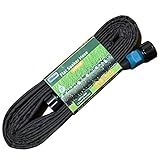
- Consistent & Even Watering Drip Irrigation Hose: Makes use of a clog-resistant fabric cover recyceld vinyl for consistent slow soaking seep throughout its entire length. Deliver water to the entire area that it covers. Only certain areas of your garden bed getting watered.For waste-free watering in garden beds and other tight spaces. Waters the base of the plants so less water-related leaf damage.
- Linkable Garden Soaker Hose For DIY Irrigation System:End to end connectable drip water hose,flexible versatile Above-ground or burry it bleow a up to 3 inch layer of mulch or soil;This fit with garden hose threads and come with rust resistant end caps that make it possible to connect multiple hoses and works well with timers.
- Maneuverability And 100% Environmentally-Friendly Drip Hose :Double layer design PVC Covered With Extra-Strength Fabric material protect from sun damage than rubber weeping hose;Ensure the longevity of the soaker hose, which is ideal for you using it regularly through all seasons in your garden.Made of 100% environmentally-friendly recycled vinyl,pass CA65 test ,water is safe for ground which makes it perfect for use with vegetables, herbs, and other edible plants.
- Easy To Store Flat Soaker Hose: This irrigation drip hose flat design is kink-resistant, lies flat makes it a breeze to roll up and store for next season.The flat shape also makes it simple to snake under existing plant growth.
- One-Year Warranty on Flat Soaker Hoses: Ensure a water pressure of 40-90 psi for best results—hot water is not suitable.
Check coverage
- Run irrigation long enough to wet the intended root zone, then inspect several points rather than testing only beside the emitter.
- Move emitters outward as roots expand, especially for trees and shrubs.
- Watch for runoff, puddling or water flowing away from the bed; these indicate that application is too rapid or the soil is compacted.
- Use a rain gauge if you need to track rainfall or calibrate a lawn-sprinkler system.
Choose an appropriate delivery method
Drip, trickle and micro-sprinkler systems can reduce evaporation and target beds, but only when their pattern matches the plant’s root spread. A soaker hose can provide slow establishment watering; arrange it so surrounding soil is moistened as well as the root ball. Hand watering is useful for checking new plants and correcting dry spots even when an automatic system is installed.
Independent reader supportYour contribution helps us test, update, and keep practical guides available for everyone.Mulch without creating new problems
A 2–3 inch layer of organic or natural shredded mulch can reduce evaporation, moderate soil temperature and suppress weeds. Illinois Extension and OSU guidance both support this approximate depth for landscape beds.
- Spread mulch over the bed rather than packing it against a stem, trunk or shrub base.
- Leave a visible bare gap around stems and trunks to keep the crown and bark dry.
- Inspect depth after settling and heavy rain; add only enough to restore the intended layer.
- Keep mulch maintenance part of the establishment routine, because displaced mulch can expose soil while piled mulch can retain excess moisture at the base.
Mulch conserves moisture; it does not compensate for a plant in the wrong drainage zone or for an irrigation system that misses the root area.
Respect plants that need a dry summer
Some drought-tolerant plants are adapted not merely to low rainfall but to a predictable summer-dry period. Adding routine summer irrigation can be harmful. OSU’s Pacific Northwest examples illustrate the distinction: Oregon white oak can develop root rot when irrigated, while camas bulbs need summer-dry conditions to reduce bulb-rot risk.
Before connecting a plant to an automatic zone, check whether it expects summer moisture, occasional deep watering or seasonal dryness. If neighboring plants need water, separate the zones or place the summer-dry species where irrigation can be excluded.
Best Value

- Heavy duty push-on plastic couplings — Cut, shorten, or expand the hose to any length and connect multiple sections for a leak-proof, custom-fit drip irrigation system
- Consistent Soaking, Every Time — Engineered for even water distribution along the full hose length, delivering a steady drip directly to plant roots in garden beds, raised beds, and vegetable gardens
- Set It and Forget It — Compatible with any standard garden hose timer for fully automated, hands-free watering that delivers consistent moisture to roots across garden beds and raised beds
- Ideal Coverage for Any Garden Layout — Sized to fit raised beds, vegetable gardens, flower beds, and foundational plantings, delivering targeted root-zone watering exactly where your plants need it most
- Water Smarter, Not Harder — Delivers water directly to plant roots, saving up to 80% more water versus overhead sprinklers by eliminating runoff, evaporation, and overspray across your garden
Maintenance after plants establish
Monitor instead of abandoning the bed
Established does not mean maintenance-free. Continue checking plants during unusual heat, drought, smoke, wind or construction that changes drainage. A mature plant may need occasional deep watering during exceptional conditions, while a summer-dry species may still need protection from accidental irrigation.
Manage weeds and mulch
Weed competition matters most while roots are developing. Keep the planting area open enough for irrigation to reach the soil, replenish mulch when it thins, and remove volunteer plants that alter the intended water balance.
Review irrigation as canopies grow
Tree shade can change a bed from full sun to partial shade, and expanding roots can alter where water is taken up. Recheck emitter placement and zone boundaries annually. A system that was appropriate for container-sized plants may be poorly matched to a mature root zone.
Troubleshooting common failures
| Symptom or situation | Likely issue to investigate | Corrective action |
|---|---|---|
| Leaves wilt soon after planting | The root ball or surrounding soil is dry, roots are damaged, or heat and wind exceed the plant’s current capacity. | Check moisture at root depth, water the full intended zone slowly, and provide follow-up care; do not assume one watering is enough. |
| Leaves curl or look dull | Possible establishment stress, uneven irrigation or root problems. | Inspect soil moisture and drainage, verify emitter coverage, and adjust gradually rather than adding water blindly. |
| Soil stays wet for days | Poor drainage, excessive irrigation or a plant placed in a wet zone. | Pause unnecessary irrigation, improve drainage where feasible, and move future plantings to species and locations that fit the moisture regime. |
| Only the area beside the emitter is moist | Irrigation is confined to the original root ball or a small patch. | Reposition or add emitters, or use a broader slow-watering pattern that wets adjacent native soil. |
| Plants compete despite irrigation | Weeds are using the same limited water during establishment. | Remove weeds, maintain a clear mulched bed and continue monitoring until roots occupy more soil. |
| A summer-dry plant declines after automatic watering begins | The species may be receiving moisture during its dormant or dry-season period. | Confirm its seasonal requirements and separate it from the wetter irrigation zone. |
A decision checklist for your next planting
- Write down the bed’s sun exposure, drainage, soil behavior and seasonal moisture.
- Find a plant list from your local Extension service or regional native-plant organization.
- Filter candidates by climate fit, mature size, spacing and maintenance goals.
- Group plants by irrigation needs and separate summer-dry species from plants requiring regular moisture.
- Install irrigation that wets both the existing root ball and the surrounding soil.
- Plan follow-up watering for the establishment period; regional guidance ranges from intensive early watering to two or three years of monitoring for some Pacific Northwest natives.
- Apply roughly 2–3 inches of mulch, leaving stems and trunks uncovered.
- Use soil checks, rainfall and plant condition to adjust watering, and taper supplemental irrigation only as establishment progresses.
This process produces a more reliable water-wise garden than choosing plants from a generic national list. The right plant is the one whose climate, light, drainage, mature size and seasonal water needs match the exact place where it will grow.
Quick Recap
Product prices and availability are accurate as of the date/time indicated and are subject to change. Any price and availability information displayed on Amazon at the time of purchase will apply.

