
PC Slower Than It Used to Be?
A free scan shows the junk files, broken settings and background clutter dragging Windows down - then fixes them in one click.Free scan · Windows 10 & 11Crashes, No Sound, or Screen Glitches?
Random freezes, missing sound and display glitches usually trace back to one bad driver. Find and replace yours safely.Free scan · under a minuteiTechGuides is reader-supported. When you buy through links on our site, we may earn an affiliate commission. As an Amazon Associate I earn from qualifying purchases. Learn more
Choose a drill-driver for general-purpose hole drilling and controlled screwdriving; choose an impact driver for repetitive, high-force fastening such as long screws, lag bolts and structural fasteners. An impact driver can make some holes with compatible hex-shank bits, but its rotational hammering and 1/4-inch hex interface make it a poor replacement for a drill when hole accuracy, smooth starts or a broad range of bits matter. If your work regularly includes both precise drilling and heavy fastening, owning both tools is the most capable setup. For occasional household jobs, a drill-driver is usually the better first purchase.
What is the difference between a drill and an impact driver?
A drill-driver uses continuous rotation
A standard cordless drill-driver turns the bit continuously, with the motor transferring steady rotation through the chuck. That smooth action is useful for starting a hole accurately, enlarging an existing hole, drilling different materials and driving screws without sudden pulses. The chuck accepts many bit shank shapes and sizes, so one drill can handle twist drills, spade bits, hole saws, countersinks and numerous driver accessories, subject to the tool’s capacity.
Because the rotation is continuous, you can regulate pressure and trigger speed as the bit enters a workpiece. That control is valuable when a hole must be located precisely or a screw head must finish flush without stripping. A drill-driver is also the more flexible choice when one tool must cover wood, metal, plastic and routine fastening.
Recommended Free Tools
An impact driver adds rotational hammering
An impact driver begins with normal rotation, then uses a hammer-and-anvil mechanism to deliver repeated blows in the direction of rotation when resistance rises. Bosch describes the mechanism as a hammer-and-anvil system; DEWALT describes the impacts as blows that twist the fastener. The pulses add turning force for jobs that can stall or overwork a conventional drill, such as driving long screws, lag bolts and structural fasteners.
#1 Best Overall

- High performance: delivers 1,460 in-lbs. Of torque and max 2,800 rpms/3,100 ipms for quick fastening applications
- Quick and easy: quickly release chuck for easy one-handed bit changes
- Improved visibility: LED light helps in dark work areas
- Applications: fastening screws, lag bolts, and large fasteners
- Includes: (1) CMCF800 impact driver; (1) V20 20-volt MAX 1.3-amp hour lithium ion battery; (1) V20 20-volt MAX lithium ion charger
The same mechanism changes the feel of the tool. Instead of one smooth stream of torque, the bit receives short rotational impacts. You will hear and feel those pulses, while the exact noise, vibration and fatigue depend on the model, bit, material and user. No single specification should be treated as a universal noise or comfort ranking.
The bit interface is different
Most impact drivers use a spring-loaded 1/4-inch hex collet. It is quick to load and works with hex-shank driver bits and other accessories rated for impact use. A conventional drill normally uses a keyed or keyless chuck that grips a wider range of round and hex shanks. Always check the manual and the bit packaging for the exact size, shank and impact rating.
| Characteristic | Drill-driver | Impact driver |
|---|---|---|
| Primary motion | Continuous rotation | Rotation with automatic rotational hammering under load |
| Typical interface | Chuck for varied bit shanks | 1/4-inch hex collet for compatible hex accessories |
| Best fit | Hole drilling, controlled driving and mixed household work | Long screws, lag bolts, structural fasteners and repetitive fastening |
| Hole-making precision | Better choice for controlled, accurate holes | Possible with suitable bits, but not intended as a precision-drilling substitute |
Which tool is better for your job?
| Job | Better starting choice | Reason |
|---|---|---|
| General holes in wood, metal, plastic or similar materials | Drill-driver | Its continuous rotation and chuck support a broader range of drilling accessories. |
| Long screws, lag bolts or structural fasteners | Impact driver | Rotational impacts are designed to keep turning when fastening resistance is high. |
| Occasional screws and a few holes around a home | Drill-driver | One tool covers both drilling and lighter fastening without requiring a second interface or bit system. |
| Precision holes or a broad round-shank bit selection | Drill-driver | A chuck and smooth rotation make alignment and control easier. |
| Masonry holes | Hammer drill or hammer-driver drill | Forward hammering is a separate function from an impact driver’s rotational blows. |
| Large nuts, seized bolts or vehicle lug nuts | Properly sized impact wrench or breaker bar | An impact driver’s 1/4-inch hex drive is not the intended interface for these loads. |
Choose a drill-driver for mixed or occasional work
If you do not yet own either tool, count the holes you expect to make as well as the fasteners you expect to drive. Shelving, furniture assembly, pilot holes, curtain hardware and ordinary repairs usually favor a drill-driver. It can drive screws with control and then switch to a drill bit without an adapter. That versatility often outweighs the impact driver’s extra fastening capability for an occasional user.
What’s actually slowing this PC down?
Pick the symptom - the matching free tool is one click away.
Choose an impact driver for high-volume fastening
An impact driver earns its place when fastening is the dominant task: building decks, installing many structural screws, assembling framing or repeatedly driving long fasteners. Its compact form and hex-bit loading suit repetitive work, and the impacts reduce the tendency of the motor to bog down when a fastener encounters substantial resistance. It is still wise to keep a drill available when the same project requires accurately located holes.
Rank #2

- Ergonomically Designed: Work in tight areas with a compact design that gets into tough spots
- Both tools are designed to fit into difficult to reach spaces
- Complete a wide range of applications with a high-performance motor that delivers up to 300 UWO, and an impact driver delivering up to 1,400 in-lbs of torque
- Both the DEWALT impact driver and drill driver feature integrated LED work lights with a convenient 20-second delay, ensuring enhanced visibility in dimly lit or challenging work areas
- One-Handed Loading - Keep one hand free with a 1/4 in. hex chuck that accepts 1 in. bit tips
Buy both when the work regularly alternates
Using a drill for holes and an impact driver for demanding screws avoids constant bit changes and lets each tool operate in the job for which its mechanism was designed. This two-tool setup is especially practical when drilling pilot holes and immediately driving long fasteners across many locations. It is not a claim that every combination kit is equal; compare the individual tools, batteries and accessories in the package.
Can you use an impact driver as a drill?
Yes, within limits. A 1/4-inch hex-shank drill bit can be held directly in the impact driver if the bit is made for that interface and for impact use. DEWALT also identifies adapter DW0521, which converts a 1/4-inch hex shank to a three-jaw 3/8-inch drill chuck. An adapter expands the accessories you can mount, but it does not turn the impact driver into a precision drill.
Bosch describes impact drivers as primarily fastening tools and says they are not intended for precision hole drilling. Depending on the model, the impact driver may also run at a higher speed than a drill. That combination can make a hole start abruptly, wander, enlarge unpredictably or damage a bit if pressure and speed are not controlled.
Quick wins for a faster PC:
Scan for outdated or missing drivers - takes under a minuteDriver Scan →Repair Windows errors before they cause bigger problemsFix Now →Fix the driver behind crashes, sound loss and screen glitchesFind Drivers →Safe procedure for an occasional hole
- Confirm the interface. Use a 1/4-inch hex-shank bit rated for impact use, or install a manufacturer-approved adapter and chuck. Do not force a round-shank bit into a hex collet.
- Check the tool and bit instructions. Confirm the permitted bit size, material and speed range for your exact model.
- Mark and support the workpiece. Clamp loose material where practical and mark the hole location clearly; rotational impacts are less forgiving of a wandering start.
- Start slowly. Use light pressure and low trigger speed until the bit has established a cutting path. Increase speed only if the bit and material instructions allow it.
- Keep the bit aligned. Let the bit cut rather than levering the tool sideways. Side loading can damage the bit, adapter or workpiece.
- Clear chips as required. Withdraw the bit periodically when the material or bit instructions call for it, and stop if the bit binds or overheats.
- Switch to a drill-driver for accuracy. If the hole must be straight, clean-edged, repeatable or made with a large specialty bit, use the drill instead of trying to compensate for the impact mechanism.
Can an impact driver drill into wood?
It can make holes in wood with a compatible hex-shank drill bit, particularly for occasional rough work. For pilot holes that determine screw alignment, repeated holes, countersinking or a clean finish, a drill-driver’s smooth rotation is easier to control. Use an impact driver for the fastening step and reserve the drilling step for the drill when both tools are available.
Rank #3
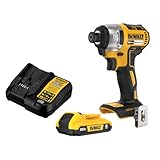
- Brushless motor for increased runtime and durability
- Compact and lightweight for hard to reach areas
- LED light with 20 second delay after trigger release
- Includes: (1) DCF787 1/4 in. Impact Driver (1) DCB203 20V MAX* 2Ah Battery (1) DCB107 Charger (1) Belt Hook
What about metal and plastic?
The same compatibility rule applies: the bit must suit the material, shank and impact use. Continuous rotation from a drill-driver is generally the more predictable choice for metal and plastic because the operator can regulate engagement without rotational hammering. Follow the bit maker’s instructions for speed, lubrication and pressure; the impact driver’s ability to turn a bit does not guarantee an appropriate cutting action.
Do not confuse an impact driver with nearby tools
Impact driver versus hammer drill
The names sound similar, but the impact directions differ. An impact driver delivers blows around the axis to help turn a fastener. A hammer drill delivers blows forward along the bit, helping a masonry bit break through brick, block or concrete while it rotates. A hammer-drill setting is therefore the relevant feature for masonry holes; rotational impact is not a substitute.
Impact driver versus impact wrench
Impact drivers are typically smaller tools with a 1/4-inch hex interface for driver bits and smaller fasteners. Impact wrenches use a square drive for sockets and are built for larger nuts and bolts. Do not assume an impact driver can remove vehicle lug nuts. Use a correctly sized impact wrench or a breaker bar, and follow the vehicle and socket manufacturer’s requirements.
Four-function and combination tools
Some specialized products combine drill, driver, hammer and impact modes. Makita’s XPT02Z is an example described by its manufacturer as a four-function tool. Such a product can be useful when space or budget favors one body, but its existence does not mean an ordinary impact driver performs all four jobs equally well. Check which mode is active and what the manufacturer says about each function.
Rank #4
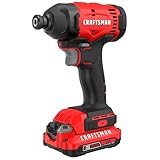
- Long Runtime - Drive up to 120 fasteners per charge**
- More Max Torque Vs. Leading Competitor - Complete fastening applications from deck screws to lag bolts with up to 1800 in-lbs. max torque.
- Quick And Easy - Quickly release the chuck for fast one-handed bit changes.
- Tailored To The Job - Customize performance to your application with a variable speed trigger and up to 2,900 RPM (no-load).
- High Visibility - Help illuminate your workspaces with a bright, onboard LED.
Control, handling and work environment
Precision and screw seating
For a hole, the drill-driver’s steady rotation lets you align the bit, begin gently and maintain a consistent path. For a screw, the same smooth action gives immediate feedback as the threads enter and the head approaches the surface. An impact driver can also drive ordinary screws, but its pulses may continue turning after the fastener is nearly seated. Use a light trigger and stop promptly to avoid overdriving or damaging the screw head or material.
Access and repetitive fastening
An impact driver’s short hex-bit system is convenient when you are changing among common driver bits repeatedly. The compact form can help in confined framing or cabinet locations, although actual reach and balance vary by model. A drill’s chuck is slower to change than a quick-release hex collet, but it accepts a much wider selection of drilling accessories.
Noise, vibration and fatigue
The impact mechanism creates distinct pulses that you can hear and feel. That may be acceptable during occasional fastening and tiring during long sessions, depending on the user and tool. Because there is no controlled side-by-side measurement here, treat noise, vibration and balance as items to assess in person or through the manufacturer’s specifications rather than as fixed differences between every model.
The Tool Desk
Outbyte Driver Updater FREEFix the driver behind crashes, sound loss and screen glitchesFind Drivers →Outbyte PC Repair FREEClear out junk files and repair common Windows errorsFree Scan →Battery platforms and kit contents can change the decision
Tool performance is only part of the purchase. If you already own compatible batteries and a charger, a bare tool may avoid duplicate hardware. If you are starting from zero, compare the total cost of a kit with the bare tool plus battery and charger. Confirm voltage family, battery connector and charger compatibility; a battery from one platform should not be assumed to fit another.
Best Value

- CMCD700: Power drill motor provides 280 uwo of power for demanding drilling and fastening tasks
- Electric drill cordless features 2 speed gearbox ranging from 0-350 RPM and 0-1,500 RPM for speed of application
- CMCF800: max torque: provides 1,460 in-lbs. of torque running at 2,800 RPM and 3,100 bpm impact drill for heavy duty fastening tasks
- Easy bit change impact gun : features a drop and load one handed bit change
- Power tool set comes with 3 Year Limited Warranty
The current US manufacturer listing for the DEWALT DCF845B illustrates why package details matter: it is a 20V MAX XR, three-speed, 1/4-inch impact driver sold as a tool-only product, with the battery and charger separate. This is an example, not a universal recommendation or a performance ranking. Catalog names, bundles and included accessories can change, so verify the listing at purchase.
Budget for the right bits
Impact-rated 1/4-inch hex driver bits are designed for the repeated shock loads of an impact driver. Ordinary bits may fit physically but can fail sooner under impact. For drilling, buy hex-shank bits explicitly approved for impact use when the bit will be struck by the mechanism. A drill-driver lets you continue using many conventional round-shank bits through its chuck, which can reduce accessory changes if you already own a mixed bit collection.
A practical buying decision
- List the dominant operation. If most of the work is making holes, start with a drill-driver. If most is driving long or structural fasteners, start with an impact driver.
- Mark precision requirements. Add a drill-driver when hole location, straightness, clean edges or repeatability matter.
- Check materials. Plan on a hammer drill or hammer-driver function for masonry rather than relying on rotational impact.
- Identify fastener size. Reserve an impact wrench or breaker bar for large nuts, seized bolts and lug nuts.
- Inventory your batteries. Staying on an existing platform can make a tool-only purchase sensible; otherwise price the complete kit.
- Match accessories. Confirm chuck or collet size, shank shape and impact rating before buying bits or adapters.
- Consider work duration. If you will fasten continuously, assess the impact tool’s pulses, balance and grip; if you will drill for long periods, assess the drill’s control and bit capacity.
Common mistakes and how to avoid them
- Treating an impact driver as a universal drill: Use it for occasional compatible holes, but choose a drill-driver for precision or broad bit selection.
- Using the wrong bit: A bit that fits the collet is not automatically rated for impact. Match the bit to the tool and material.
- Expecting a hammer drill to replace an impact driver: Axial masonry hammering and rotational fastening impacts solve different problems.
- Using a driver on lug nuts: Select a square-drive impact wrench or breaker bar sized for the fastener.
- Buying a bare tool without checking batteries: Add the battery and charger cost before comparing prices.
- Assuming a combination tool is equivalent in every mode: Read the manufacturer’s limits for each function and use the dedicated tool when accuracy or heavy fastening is central.
- Applying excessive pressure: Let the bit cut or the fastener turn. Forcing the tool can increase wandering, binding and accessory damage.
Bottom line for most buyers
A drill-driver is the safest default for a first tool because it drills accurately, accepts more bit types and handles ordinary screwdriving. Add an impact driver when long screws, lag bolts or repetitive structural fastening become a regular part of your work. Use a hammer drill for masonry, an impact wrench for large nuts and lug nuts, and impact-rated accessories whenever the tool’s mechanism will deliver rotational blows. The right choice follows the job, not the tool’s name or the assumption that more impact automatically means more versatility.
Quick Recap
Product prices and availability are accurate as of the date/time indicated and are subject to change. Any price and availability information displayed on Amazon at the time of purchase will apply.

