
Outdated Drivers Are Slowing You Down
One free scan finds every outdated or missing driver and matches the right update for your exact hardware.Free scan · exact hardware matchWindows Errors? Fix Them Before They Spread
Repair common Windows errors and clear accumulated junk for a smoother, more stable PC - no reinstall needed.Free scan · no reinstalliTechGuides is reader-supported. When you buy through links on our site, we may earn an affiliate commission. As an Amazon Associate I earn from qualifying purchases. Learn more
Dedicated DRAM can make an SSD’s controller faster at locating data, but it is not an automatic guarantee of better speed, endurance, or reliability. DRAM-equipped SSDs keep flash-translation metadata and some temporary data in memory on the drive. A DRAM-less NVMe SSD can instead request a Host Memory Buffer (HMB), which reserves part of the computer’s system RAM for the controller. HMB reduces the cost of omitting onboard DRAM, but it does not turn the drive into an identical DRAM-equipped design. For most boot, gaming, office, and laptop workloads, a well-designed HMB drive can be entirely adequate. Dedicated DRAM is easier to justify for heavy sustained writes, database-style random I/O, high write-amplification workloads, or systems where HMB support is uncertain.
What DRAM does inside an SSD
An SSD does not write a file directly to a permanent address in NAND flash. The controller presents the operating system with logical block addresses (LBAs), then maintains a flash-translation layer (FTL) that maps each LBA to a physical NAND location. Because NAND must be programmed and erased in larger units than a typical operating-system request, the controller also tracks valid pages, free blocks, wear, garbage-collection state, and other housekeeping information.
Dedicated DRAM is volatile, high-speed memory attached to the SSD controller. It gives the controller a local workspace for frequently used portions of the FTL mapping table and, depending on the design, for data being read or written temporarily. A 2020 study by Kim and Kim in PLOS ONE describes controller DRAM as being used for “temporarily keeping data that have been read from flash memory, data to be written to flash memory, or an address mapping table.” Western Digital similarly describes DRAM as a cache for write data and mapping tables.
The important point is that DRAM is primarily a latency and bookkeeping resource. It does not increase the raw number of NAND channels, change TLC NAND into faster SLC NAND, or prevent a controller from throttling when it gets hot. A drive with DRAM can still slow dramatically after its temporary NAND write cache is full, and a drive without DRAM can still deliver high sequential throughput if its controller, NAND, firmware, and cache policy are well matched.
#1 Best Overall

- HUGE SPEED BOOST: Get random read/write speeds that are 40%/55% faster than 980 PRO; Experience up to 1400K/1550K IOPS, while sequential read/write speeds up to 7,450/6,900 MB/s reach near the max performance of PCIe 4.0*
- BREAKTHROUGH POWER EFFICIENCY: Use less power and get more performance; Enjoy up to 50% improved performance per watt over 980 PRO, plus optimal power efficiency with max PCIe 4.0 performance**
- SMART THERMAL CONTROL: Samsung's own nickel-coated controller delivers effective thermal control; With its slim size, 990 PRO is a perfect fit for desktops and laptops that meet the PCI-SIG D8 standard***
- THE CHAMPION MAKER: Up to 65% improvement in random performance enables faster loads for an ultimate gaming experience on PS5 and DirectStorage PC games****
- SAMSUNG MAGICIAN SOFTWARE: Get the most out of your SSD with Samsung Magician's advanced yet intuitive optimization tools; Monitor drive health, protect valuable data, and receive important updates for your 990 PRO
How a DRAM-less NVMe SSD uses HMB
In a DRAM-less NVMe design, the controller can request a Host Memory Buffer through the NVMe protocol. The computer allocates and maps a region of its own DRAM, and the SSD controller accesses that region over the PCIe/NVMe path. The NVMe Base Specification Revision 2.3, ratified on August 1, 2025, defines the feature this way: “The Host Memory Buffer (HMB) feature allows the controller to utilize an assigned portion of host memory exclusively.”
HMB is therefore not a chip of DRAM soldered to the SSD. It is host memory assigned to the device for a defined purpose. Access travels through the host memory and PCIe path rather than staying beside the controller, so latency and access rules differ from those of local DRAM. HMB is an NVMe mechanism; do not assume that a SATA SSD, or every non-NVMe product, can use it.
HMB is not the same as a NAND SLC cache
Many SSDs reserve part of their NAND as pseudo-SLC cache. Incoming data is temporarily written in a faster single-bit-per-cell mode, then folded into the drive’s normal TLC or QLC format later. HMB is separate: it supplies host DRAM for controller metadata and other functions, while pseudo-SLC uses the SSD’s NAND. A drive can use both, one, or neither. Calling HMB an “SLC cache” confuses two different resources.
What testing shows HMB actually changes
The strongest evidence in the available literature comes from Kim and Kim’s 2020 PLOS ONE experiments on DRAM-less NVMe drives. The tested controllers mainly used HMB as a cache for the logical-to-physical address-mapping table, rather than as a large read cache or write buffer. That finding matters because it narrows what HMB can accomplish: it keeps frequently needed mapping entries close enough to reduce some extra NAND metadata reads, but it does not provide the same amount of general-purpose workspace as a full onboard DRAM implementation.
When a requested mapping entry is present in the HMB cache, the controller can find the corresponding NAND location without fetching that metadata from flash. When it is absent, the controller may need additional NAND reads before it can service the host request. The resulting latency depends on the HMB size selected by firmware, access locality, queue depth, controller design, NAND type, and whether the operating system and platform support the feature correctly.
Rank #2

- This product has been replaced by our latest generation. Please search for the SANDISK Optimus GX 7100 NVMe SSD
- HIGH-OCTANE GAMING. Experience speeds up to 7,250MB/s read and 6,900MB/s write (1-2TB models), with up to 35% faster performance than previous generation.
- PURPOSE-BUILT. Designed for serious on-the-go gamers, with a PCIe Gen4 interface and SANDISK’s next generation TLC 3D NAND.
- MORE TIME TO CLEAR THAT CHECKPOINT. Built with laptops and handheld gaming devices in mind, with up to 100% more power efficiency over the previous generation.
- DO MORE WITH DASHBOARD. Ensure your drive is optimized for prime performance with the downloadable WD_BLACK Dashboard (Windows only).
HMB is consequently a mitigation, not a magic upgrade. A modern DRAM-less controller can perform very well on a localized desktop workload, while the same architecture may show more tail latency when the working set is large and random. Conversely, a DRAM-equipped model with weak firmware, slow QLC NAND, or inadequate cooling can lose its advantage in a sustained transfer.
DRAM versus DRAM-less: the comparison that matters
| Decision factor | Drive with dedicated DRAM | DRAM-less NVMe with HMB |
|---|---|---|
| Mapping-table location | More of the frequently used FTL metadata can remain in local controller memory. | A selected portion can reside in host DRAM; misses may require additional NAND metadata reads. |
| General read/write buffering | Firmware may use local DRAM for temporary data, depending on the controller. | HMB is not automatically a large general-purpose read or write buffer; the 2020 PLOS ONE tests found mainly mapping-cache use. |
| Host dependency | Core operation does not depend on HMB support. | Performance can depend on NVMe HMB support, firmware policy, available system memory, and platform behavior. |
| Board area and bill of materials | Requires memory packages and their power and layout resources. | Can reduce board area, component count, cost, and some power use. |
| Sequential speed | Potentially high, but determined by NAND, controller channels, firmware, and thermals. | Can also be high; the DRAM label alone does not set the sequential limit. |
| Random latency | Often has an advantage when mapping data is heavily reused or the workload is demanding. | Can be close on favorable workloads, with more sensitivity to mapping misses and host support. |
| Sustained writes | Still limited by pseudo-SLC exhaustion, NAND speed, garbage collection, and temperature. | Still limited by the same factors; HMB does not replace NAND write bandwidth. |
| Endurance | Not established by DRAM presence alone. | Not established by the absence of DRAM; compare the manufacturer’s TBW and warranty. |
Is DRAM really important for your workload?
Windows, Linux, and ordinary desktop applications
For booting an operating system, launching applications, browsing, editing documents, and routine multitasking, a reputable DRAM-less NVMe drive with HMB is usually a reasonable value choice. These workloads contain many short bursts and often have enough locality for the mapping cache to be useful. Check independent workload evidence when available, but do not reject a drive solely because its specification says “DRAM-less.”
Game libraries and game loading
Game loading is usually dominated by short bursts of reads, decompression, and application-side processing rather than hours of uninterrupted writes. A DRAM-less HMB model can therefore be suitable for a game library, especially when its random-read behavior and firmware are well reviewed. Game installation, updates, shader-cache creation, and recording can produce writes, so compare post-cache sustained-write behavior if the drive will also serve as a capture or content-creation disk.
Laptop upgrades
In a laptop, lower board area and potentially lower power consumption can favor a DRAM-less design. HMB does consume a small, reserved portion of system memory, so a machine with very little RAM or aggressive memory pressure deserves closer scrutiny. Cooling is equally important: a thin laptop may throttle any high-performance NVMe drive, with or without onboard DRAM. Verify the physical form factor, single- or double-sided clearance, PCIe generation, and the manufacturer’s thermal guidance before buying.
Large file transfers and video capture
For sustained writes, the critical question is what happens after the pseudo-SLC area is exhausted. A drive may advertise a high burst speed but settle at a much lower rate during a long recording, export, backup, or disk-image operation. Dedicated DRAM can help metadata handling, yet it cannot create NAND bandwidth that the hardware does not have. Look for a measured steady-state write result or an explicitly documented minimum, and leave free space for garbage collection.
Rank #3
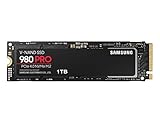
- Designed for hardcore gamers and tech-savvy users
- Offers high-performance bandwidth and throughput for heavy-duty applications in gaming, graphics, data analytics, and more
- NVMe SSD powered by V-NAND technology
- Designed with hardcore gamers and tech-savvy users in mind
Databases, virtual machines, and scratch disks
Database-style random I/O, virtual-machine storage, compilation trees, and scratch workloads can maintain a large, changing address working set and a high queue depth. These uses benefit more from predictable latency and strong firmware than from a label alone. A model with dedicated DRAM or unusually strong independent testing is easier to justify when tail latency, write amplification, and recovery time matter more than purchase price.
Free tools Windows power users keep installed
One-click scans. No signup required.
Why capacity, NAND, and firmware can outweigh the DRAM label
SSD specifications often vary by capacity. Larger models may have more NAND packages and controller channels available for parallelism, while smaller models can use fewer dies and deliver lower sustained performance. Rated sequential speed, random I/O, TBW, pseudo-SLC size, and even the NAND type can change between 500GB, 1TB, and 2TB versions sold under one family name.
NAND type is another major variable. TLC stores three bits per cell; QLC stores four. QLC can provide good density and value, but its native sustained-write behavior is generally more constrained once a temporary cache is filled. Controller firmware decides how aggressively to allocate that cache, when to fold data into its final format, and how to perform garbage collection. Two drives with the same DRAM or HMB description can therefore behave very differently.
Thermals add a further qualification. NVMe controllers can reduce speed to stay within a safe temperature range. A heatsink, airflow, laptop heat spreader, and the drive’s physical placement affect the result. A DRAM-equipped drive that throttles early is not automatically faster than a cool-running HMB model.
Concrete example: Samsung SSD 980 1TB
Samsung’s official SSD 980 specification documents a DRAM-less PCIe 3.0 x4 NVMe 1.4 drive that uses HMB cache memory. For the 1TB model, Samsung rates up to 3,500 MB/s sequential read and up to 3,000 MB/s sequential write, with a 600 TBW rating and a five-year limited warranty. Samsung also notes that performance varies with firmware and system configuration.
The Tool Desk
Outbyte PC Repair FREEClear out junk files and repair common Windows errorsFree Scan →Outbyte Driver Updater FREEFix the driver behind crashes, sound loss and screen glitchesFind Drivers →Rank #4

- GROUNDBREAKING READ/WRITE SPEEDS: The 990 EVO Plus features the latest NAND memory, boosting sequential read/write speeds up to 7,150/6,300MB/s*. Ideal for huge file transfers and finishing tasks faster than ever.
- LARGE STORAGE CAPACITY: Harness the full power of your drive with Intelligent TurboWrite2.0's enhanced large-file performance—now available in a 4TB capacity.
- EXCEPTIONAL THERMAL CONTROL: Keep your cool as you work—or play—without worrying about overheating or battery life. The efficiency-boosting nickel-coated controller allows the 990 EVO Plus to utilize less power while achieving similar performance.
- OPTIMIZED PERFORMANCE: Optimized to support the latest technology for SSDs—990 EVO Plus is compatible with PCIe 4.0 x4 and PCIe 5.0 x2. This means you get more bandwidth and higher data processing and performance.
- NEVER MISS AN UPDATE: Your 990 EVO Plus SSD performs like new with the always up-to-date Magician Software. Stay up to speed with the latest firmware updates, extra encryption, and continual monitoring of your drive health–it works like a charm.
Those figures are manufacturer ratings, not independent benchmark results. They show why “DRAM-less” should not be treated as synonymous with “slow”: the SSD 980 has high rated throughput despite using host memory rather than onboard DRAM. They do not prove that every workload will match the ratings, nor that its behavior after cache exhaustion equals that of a DRAM-equipped model.
How to choose between the two designs
- Define the dominant workload. Separate boot and gaming use from sustained recording, database activity, virtual machines, or scratch work.
- Check the exact capacity SKU. Record the NAND type, rated sequential and random performance, TBW, warranty period, and whether the model is single- or double-sided.
- Confirm the memory architecture. Look for dedicated DRAM, DRAM-less operation with HMB, or an undisclosed design. Do not infer architecture from a product family name.
- Verify host compatibility. HMB requires an NVMe path and appropriate platform support. A system with limited RAM, old firmware, or unusual storage virtualization may not deliver the intended behavior.
- Read sustained-write evidence. Find results after the pseudo-SLC cache is full, not only the first few seconds of a benchmark.
- Compare random I/O and latency. Queue-depth-one results and tail latency are more informative for operating systems and interactive applications than a single sequential-speed number.
- Check thermals and free space. Confirm the enclosure or laptop can cool the drive and avoid filling it to the last few percent, which leaves less room for background management.
- Match endurance to the workload. Use the TBW rating, warranty conditions, and capacity-specific documentation. Never infer endurance from DRAM presence.
Common mistakes and how to avoid them
- “HMB gives the SSD all of my RAM.” It does not. The controller receives an assigned region, and the amount and policy are implementation-dependent.
- “HMB is just a faster SLC cache.” It is not. HMB is host DRAM used primarily for controller metadata in the cited testing; pseudo-SLC is NAND reserved for temporary writes.
- “No DRAM means poor endurance.” Endurance is governed by NAND, capacity, write amplification, controller behavior, and warranty policy. Use TBW and workload evidence.
- “The advertised sequential speed is the everyday speed.” Burst ratings can fall after cache exhaustion or thermal throttling. Look for steady-state measurements.
- “Every capacity in a product family performs the same.” NAND layout and channel parallelism can change by SKU. Compare the exact model number.
- “A DRAM-equipped SSD is always faster.” Firmware, NAND, temperature, and free space can erase the expected advantage in a particular workload.
What to do when a DRAM-less drive performs poorly
Check HMB and platform support first
Confirm that the drive is installed in an NVMe-capable M.2 slot rather than a SATA-only slot, that the system firmware is current, and that the operating system is using the vendor’s supported NVMe driver path. If the platform cannot provide HMB, the drive may fall back to a less capable mode; consult the SSD and motherboard documentation for the supported behavior.
Separate cache exhaustion from a fault
If speed drops only after a large continuous transfer, measure the initial burst and the post-cache rate separately. That pattern is normally a cache-policy or NAND-bandwidth limit, not proof that the SSD is defective. Ensure adequate free space and airflow before drawing conclusions.
Investigate temperature and background work
Monitor controller temperature during the same workload and check whether the operating system, antivirus software, indexing, or garbage collection is active. Repeating a test immediately can produce different results because the drive may still be folding cached data or recovering free blocks.
Do these 3 things before closing this tab:
1Fix the driver behind crashes, sound loss and screen glitches2Repair Windows errors before they cause bigger problems3Scan for outdated or missing drivers - takes under a minuteUse the manufacturer’s current firmware and warranty process
Firmware can change mapping policy, power management, and error handling. Apply updates according to the manufacturer’s instructions, back up important data first, and retain the exact capacity and model information if a warranty claim becomes necessary.
Best Value

- Ideal for high speed, low power storage
- Gen 4x4 NVMe PCle performance
- Up to 6,000MB/s read, 4,000MB/s write
- Includes Acronis cloning software
- 5-year limited warranty
Bottom line for buyers
Dedicated DRAM gives an SSD controller fast local memory for FTL metadata and, on some designs, temporary data buffering. HMB lets a DRAM-less NVMe controller borrow an assigned portion of system DRAM, and the 2020 PLOS ONE testing indicates that its principal role is caching address-mapping entries. That makes HMB a useful compromise, not an equivalent replacement in every workload.
Choose a well-reviewed HMB model for ordinary desktop work, gaming, and many laptop upgrades when its capacity-specific performance, TBW, warranty, thermals, and host compatibility fit. Favor dedicated DRAM or stronger workload evidence when sustained writes, random write latency, or predictable tail performance are central. The informed comparison is never just “DRAM versus no DRAM”; it is controller plus firmware, NAND, capacity, cache behavior, cooling, host platform, endurance rating, and the work you will actually do.
Frequently Asked Questions
Can adding more system RAM make an HMB SSD faster?
Not necessarily. HMB availability and size are negotiated by the NVMe controller and host firmware. Extra unused RAM does not automatically enlarge the SSD’s HMB region or change its firmware policy.
Does cloning an operating-system drive change whether HMB works?
Cloning copies data and partitions, not the SSD’s memory architecture. HMB behavior depends on the replacement drive, NVMe platform, firmware, and operating-system support after installation.
Should a DRAM-less SSD be avoided in a computer with 8GB of RAM?
Not automatically. Check the system’s normal memory pressure and the SSD vendor’s HMB requirements. If the computer frequently swaps or runs memory-heavy applications, a drive that does not depend on host memory may be a safer fit.
Can a heatsink compensate for the lack of DRAM?
No. Cooling can reduce thermal throttling, but it cannot provide the controller’s missing local memory or change the mapping and buffering policy.
Quick Recap
Product prices and availability are accurate as of the date/time indicated and are subject to change. Any price and availability information displayed on Amazon at the time of purchase will apply.
What’s actually slowing this PC down?
Pick the symptom - the matching free tool is one click away.

