
Free tools Windows power users keep installed
One-click scans. No signup required.
iTechGuides is reader-supported. When you buy through links on our site, we may earn an affiliate commission. As an Amazon Associate I earn from qualifying purchases. Learn more
No. A newly detected SARS-CoV-2 variant is a reason to monitor and assess it, not proof that it is more dangerous. Health agencies look separately at how quickly a lineage spreads, whether it causes more severe disease, whether it can evade immunity, and whether vaccines, treatments, or tests still work against it.
In the latest variant-specific assessment cited here, the World Health Organization (WHO) rated the additional global public-health risk from PQ.16.1.1 as low on 27 July 2026. WHO reported no surveillance signal of increased clinical severity compared with other circulating variants, while noting that evidence for possible additional immune escape was limited. WHO’s PQ.16.1.1 risk evaluation
Why a new variant is not automatically a more dangerous one
“New” often means newly detected, newly named, or newly increasing in the samples being monitored. It does not necessarily mean the virus has just evolved, is spreading everywhere, or causes worse illness. A variant name or a striking mutation count is not itself a danger rating.
Crashes, No Sound, or Screen Glitches?
Random freezes, missing sound and display glitches usually trace back to one bad driver. Find and replace yours safely.Free scan · under a minutePC Slower Than It Used to Be?
A free scan shows the junk files, broken settings and background clutter dragging Windows down - then fixes them in one click.Free scan · Windows 10 & 11SARS-CoV-2 keeps changing. Some lineages fade; others spread and may replace lineages that were more common before. That pattern is why agencies monitor genetic sequences and combine them with laboratory, epidemiological, and clinical evidence. The CDC’s overview of variants and genomic surveillance
#1 Best Overall

- FDA Authorized 15-Minute Self-Test: The test is a 15-minute self-test to detect whether or not an individual has COVID-19. The test can be completed in the comfort of your own home without the need to ship your sample to a lab.
- Easy to Use with Zero Discomfort: Test can be done by inserting 1/2 to 3/4 inch of a simple non-invasive nasal swab. Step-by-step instructional videos are available in our app (Installation of app is optional).
- For Ages 2 and Above : The self-administered test is recommended for individuals aged 15 years and older. Adult-collection is required for testing children 2-14 years old.
- Manage Group Testing Via Mobile App: The iHealth Test app allows the administrator of a small group to monitor and track the group members’ test results as needed at school, work or an event.
- Independently-sealed packaging ensures safe and hygienic testing. The swabs and test cards of iHealth COVID-19 Antigen Rapid Test are sealed and independently packaged to ensure the safety and hygiene of the product.
What “threat” means: four questions, not one
Is it spreading more effectively?
Researchers examine whether a lineage’s share of detected infections is rising, and whether that pattern appears across more than one place and period. A rise in share can indicate a growth advantage, but it does not by itself show that the variant causes more severe illness. Early prevalence estimates can also be uncertain, especially when a lineage is uncommon or sampling is sparse. The CDC distinguishes observed sequence-based estimates from model-based nowcasts; projections can change as additional reports arrive. CDC variant surveillance
Does it cause more severe disease?
Severity requires comparative clinical evidence, not just a report that a variant was found in someone who was hospitalized. Comparisons need to account for factors such as age, underlying health, prior infection, vaccination, and the period when cases occurred. For example, the CDC said detections of BA.3.2 among a small series of hospitalized patients did not establish that the lineage causes more severe disease. CDC’s BA.3.2 surveillance report
Rank #2
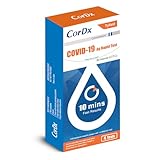
- Fast Results in 10 Minutes – Get reliable Covid-19 test results in as little as 10 minutes, perfect for quick checks before gatherings or travel.
- Easy to Use, No Lab Needed – Simple step-by-step instructions allow you to self-administer the test at home with no need for professional assistance.
- Detects All Major Variants – Effectively identifies all known Covid-19 variants, giving you confidence in the test’s ability to track evolving strains.
- Compact and Travel-Friendly – Conveniently sized for travel, this kit allows you to test anywhere, giving you the flexibility to stay safe on the go.
- Only 5 turns per nostril —why bother with 10? Get quick and reliable results with less effort, making testing easier for the whole family, Our Covid-19 test kit for home works for individuals ages 2+.
Can it partly evade immunity?
Mutations may lead scientists to investigate whether antibodies recognize a lineage less effectively. A predicted change or laboratory result is not the same as proof that vaccines no longer protect people from serious illness. WHO’s assessment of PQ.16.1.1 noted limited direct phenotypic evidence for possible additional immune escape, while expecting continued vaccine protection against severe disease. WHO’s PQ.16.1.1 evaluation
Do tests, treatments, or vaccines still work?
Agencies assess whether emerging variants affect available countermeasures using genomic and phenotypic evidence. A COVID-19 test can help detect an infection, but a positive result does not identify which variant caused it; variant identification requires specialized surveillance. The CDC’s discussion of countermeasure assessment applies to tests authorized or approved for use in the United States and should not be read as a claim about every product or jurisdiction. CDC variant and genomic surveillance information
Rank #3

- COVID TEST KITS: 4 BinaxNOW COVID-19 Rapid Test Kits includes 4 foam-tipped swabs, 4 test cards, and 4 dropper bottles with simple instructions
- HSA/FSA ELIGIBLE: Abbott’s BinaxNOW at-home COVID test kits are HSA/FSA eligible
- TRUSTED TECHNOLOGY: FDA authorized BinaxNOW COVID tests utilize the same technology doctors use to test for COVID-19; BinaxNOW rapid COVID tests detect multiple COVID-19 variants*
- FAST COVID-19 TEST RESULTS: Each COVID rapid test provides fast, reliable results in just 15 minutes—no appointment required
- FOR AGES 2 and ABOVE: COVID-19 tests are suitable for kids when administered by an adult; ages 15 and older are able to self-administer COVID home tests with easy-to-follow instructions
What the latest cited assessments say
WHO described PQ.16.1.1 as a descendant of NB.1.8.1 whose proportions were increasing globally, driven largely by detections in the Western Pacific, particularly Singapore. Its 27 July 2026 evaluation concluded that the lineage’s additional global public-health risk was low. WHO found no available surveillance indication of increased clinical severity versus other circulating variants and said evidence for possible additional immune escape remained limited. These findings apply to that lineage and assessment date; they are not a blanket forecast for later variants. WHO risk evaluation, 27 July 2026
WHO’s broader assessment said the risk evaluations for the variants it was then monitoring as variants of interest or variants under monitoring did not indicate additional public-health risk compared with other circulating lineages. Its observations also underline why conclusions can be provisional: it reported 33,929 sequences shared by 71 countries during January–June 2026, compared with 114,112 sequences shared by 103 countries during July–December 2025. Those are sequence-sharing counts, not case counts or direct measurements of danger. WHO cautioned that geographic representation was limited and that sequence sharing could be delayed. WHO’s global long-term COVID-19 risk assessment
Rank #4
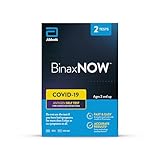
- #1 COVID-19 SELF TEST IN THE USA: Made with the same reliable technology used by doctors. Detects multiple COVID-19 variants, including Delta and Omicron*
- FAST RESULTS: At home test with results for you or your family in 15 minutes; no need for a prescription or sending to a lab
- TRUSTED TECHNOLOGY: Identical to the test used by professionals; intended for personal use with self-reported results and has Emergency Use Authorization from the FDA
- CONVENIENTLY TEST AT HOME: 2 nasal swab tests are included to detect active infection, with or without symptoms
- FSA/HSA ELIGIBLE: Test may be reimbursed, depending on coverage; contact your health insurance company to learn more
Why mutation counts and early headlines can mislead
A large number of genetic changes can be important for deciding what to study, but it cannot establish how sick people will become. The CDC described BA.3.2 as having approximately 70–75 spike-gene substitutions and deletions relative to JN.1 and LP.8.1, and reported potential for reduced protection from prior infection or vaccination. That genetic difference does not, by itself, demonstrate greater clinical severity. CDC’s BA.3.2 report
Likewise, an early estimate that a lineage is gaining share is a signal to investigate, not a final judgment about its effects. Surveillance depends on which infections are tested, sequenced, and shared. WHO has warned that low or unrepresentative sequencing, limited geographic coverage, and delays in sharing sequences make early detection and global assessment harder. A reassuring or concerning assessment should therefore be read with its geography, time period, and evidence base in mind. WHO’s assessment of genomic surveillance limitations
Best Value

- FDA Authorized 15-Minute Flu A&B, COVID Test Kit: Over-the-counter flu and COVID test for home use with rapid results in just 15 minutes.
- Made for Ages 2 and Above; Parents Can Stop Guessing: Quickly identify whether you or your kids are dealing with coronavirus or influenza A & B. Adult-collection is required for those aged 2-13 years, and self-collection by individuals aged 14 years and older.
- Same Ease-of-Use; Get 3 Results in 1 Test: Utilizing the familiar 4 user-friendly steps of at-home COVID tests, you can now get all 3 results for COVID-19 and Flu A & B at once with 5 drops of sample.
- Fast and Convenient COVID and Flu Tests for Home: Use this COVID and influenza rapid test kit in the comfort of your home. Bypass the need for a doctor's visit and protect your loved ones from potential exposure to contagious illnesses at school, work, or public gatherings.
- Compact Design for On-the-Go Testing: Stay safe wherever you go with our COVID-19, Flu A & B 3-in-1 self-test. Its compact design ensures easy storage and convenient portability for your travel bag.
How to judge a claim about a new COVID variant
- Check the date and location. A report about one region or an earlier sampling period may not describe the current situation elsewhere.
- Look for evidence of spread. Ask whether rising prevalence is seen across multiple settings and whether the estimates are based on enough representative samples.
- Separate spread from severity. More infections, or a larger share of infections, does not automatically mean more severe disease per infection.
- Distinguish immune-escape evidence from predictions. Mutations can prompt testing; direct laboratory or clinical evidence is needed to establish their implications.
- Look for countermeasure findings. Ask whether there is evidence of a change in vaccine protection against severe disease, treatment performance, or test performance—not merely a claim that a variant is “different.”
- Read hospitalization reports carefully. Detection among hospitalized patients alone does not show that a lineage caused their admission or is intrinsically more severe.
Variant classifications and prevalence can change as surveillance data accumulate. The WHO and CDC pages linked above provide context for the findings and methods described here; any claim about which lineage is currently dominant or its current risk category needs to be tied to an up-to-date, dated assessment.
Quick Recap
Product prices and availability are accurate as of the date/time indicated and are subject to change. Any price and availability information displayed on Amazon at the time of purchase will apply.

