
iTechGuides is reader-supported. When you buy through links on our site, we may earn an affiliate commission. As an Amazon Associate I earn from qualifying purchases. Learn more
Yes. A Prius needs regular engine-oil and oil-filter changes. A hybrid Prius still has a gasoline engine, and Toyota’s maintenance program includes lubricating-oil and filter replacement. The hybrid system changes how the engine operates, but it does not eliminate engine-oil maintenance.
There is no single interval, oil viscosity, or refill quantity that applies to every Prius. Your model year, generation, market, engine variant, oil certification, mileage, elapsed time, and driving conditions all matter. Use the Toyota owner manual and the vehicle-specific maintenance schedule before buying oil or booking service.
Why a hybrid Prius still needs an oil change
The gasoline engine in a Prius has moving internal parts that require engine oil for lubrication, cooling, cleaning, and corrosion protection. That engine may stop and start more often than the engine in a conventional car, but the presence of a hybrid motor and battery does not remove the need to maintain the gasoline engine.
What’s actually slowing this PC down?
Pick the symptom - the matching free tool is one click away.
Toyota’s maintenance documentation explicitly schedules engine-oil and oil-filter replacement for Prius vehicles. The oil service is separate from other hybrid-system checks. A battery, electric motor, regenerative-braking system, or hybrid control system cannot substitute for the engine oil that the gasoline engine requires.
#1 Best Overall
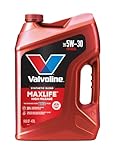
- Formulated for engines with 75,000 miles or more, Valvoline MaxLife High Mileage synthetic blend is formulated with seal conditioners to help prevent oil leaks and reduce oil consumption
- Delivers 20% better wear protection and 15% better sludge defense than industry standards to help prevent engine breakdown
- Extra detergents safeguard against friction, corrosion and deposits to keep high-mileage engines clean
- Advanced friction-fighting additives help maximize performance and improve fuel efficiency
- Provides performance benefits for high mileage, new and re-built engines alike
Do not decide that a Prius can skip oil changes because the engine sometimes shuts off while driving. The correct question is not whether the engine runs continuously; it is which schedule Toyota specifies for that particular vehicle and how the vehicle is used.
How often should you change Prius oil?
Toyota does not publish one universal Prius interval for every generation. The 2023 Prius Warranty & Maintenance Guide gives a normal interval of 10,000 miles or 12 months for vehicles certified for SAE 0W-16 when 0W-16 oil is used. The first limit reached controls: a car that has traveled 10,000 miles before a year is due by mileage, while a low-mileage car still reaches the time limit at 12 months.
The same guide specifies 5,000 miles or six months for owners who primarily drive under Toyota’s listed special operating conditions. That shorter requirement applies regardless of the oil used or the vehicle’s oil certification. Because the exact list and wording belong to the guide for your vehicle, read that section rather than assuming that every Prius owner qualifies for the longer interval.
Do these 3 things before closing this tab:
1Clear out junk files and repair common Windows errors2Scan for outdated or missing drivers - takes under a minute3Repair Windows errors before they cause bigger problems| Toyota schedule in the cited 2023 guide | When it applies | What to do |
|---|---|---|
| 10,000 miles or 12 months | Vehicles certified for 0W-16, when SAE 0W-16 is used | Replace the engine oil and filter at whichever limit comes first |
| 5,000 miles or six months | Owners who primarily operate under Toyota’s listed special operating conditions, regardless of oil or certification | Use the shorter oil-and-filter interval |
Toyota’s general maintenance-schedule page says many Toyota vehicles have service visits every 5,000 miles or six months, but it also says that the work varies by vehicle and milestone. That statement is not a universal Prius oil-change rule. Use Toyota’s personalized schedule lookup and the applicable owner manual to identify your actual due date.
Rank #2

- 6X better wear protection on critical engine parts than industry standards**
- 1.3X better sludge protection than industry standards*
- 3X Stronger against viscosity breakdown than leading full synthetic^
- Protection for 10,000 miles between oil changes
- Meets or exceeds the following specifications: API SP/SN PLUS/SN | ILSAC GF-6 | GM dexos1 Gen 3 | Meets Ford WSS-M2C947-B1 | Meets Ford WSS-M2C962-A1 |
What counts as a special operating condition?
For the 2023 Prius guide, the 5,000-mile/six-month schedule is tied to a list of special operating conditions. The guide’s qualification is important: it refers to customers who primarily operate under those conditions, not to an occasional unusual trip.
Do not replace Toyota’s list with a generic internet definition of severe service. Open the maintenance guide for your model and market, read the special-conditions section, and decide whether your normal use matches it. If it does, follow the shorter interval even when the vehicle is using the oil grade associated with the longer schedule.
If you cannot establish which schedule applies, a Toyota service adviser or a qualified independent technician can match your vehicle identification and usage to the correct guide. Keep the decision tied to the written Toyota schedule rather than to a blanket claim that every hybrid needs either 5,000-mile or 10,000-mile service.
Which oil should a Prius use?
Oil viscosity and specification are vehicle-specific. The cited recent Prius owner manual recommends SAE 0W-16 for its vehicle. It permits SAE 0W-20 when 0W-16 is unavailable, but says that 0W-16 must be used at the next oil change. That conditional substitution should not be extended to every Prius generation.
Rank #3

- 3X Stronger than the leading full synthetic*
- 10X Better high stress performance**
- 20,000 miles between oil changes***
- Viscosity breakdown as measured in Kurt Orbahn test on 5W-30 grade
- As measured in Seq IX test under high load/torque conditions vs. API SQ test limits
Older Prius models, other engine variants, and vehicles sold in different markets may have different requirements. The number printed on a bottle is not enough by itself; match the grade and performance specification in your own manual. Toyota’s cited guidance allows Toyota-approved oil or an equivalent that meets the stated grade and specification.
Do not assume that synthetic oil creates a longer interval. The Toyota schedule controls the interval for the vehicle and operating conditions. If a shop proposes a different oil grade or a longer period, ask it to identify the exact Toyota instruction that supports the change.
How much oil does a Prius take?
Oil capacity is also model-specific, and the amount on a manual page is a reference quantity rather than permission to pour in that amount without checking. The cited Toyota manual lists the following capacities for its applicable vehicle:
Outdated Drivers Are Slowing You Down
One free scan finds every outdated or missing driver and matches the right update for your exact hardware.Free scan · exact hardware matchPC Slower Than It Used to Be?
A free scan shows the junk files, broken settings and background clutter dragging Windows down - then fixes them in one click.Free scan · Windows 10 & 11| Service condition | Reference quantity | Qualification |
|---|---|---|
| With oil filter replacement | 4.5 US quarts (4.3 litres) | Value stated in the cited manual; confirm that the manual applies to your Prius |
| Without oil filter replacement | 4.2 US quarts (4.0 litres) | Value stated in the cited manual; confirm that the manual applies to your Prius |
After adding oil, Toyota instructs the owner to confirm the level on the dipstick. Add gradually, allow the oil to settle as directed by the manual, and recheck. The dipstick reading is the final check; a reference capacity cannot account for every last drop that remains in the engine or filter housing.
Rank #4

- 3X Stronger than the leading full synthetic*
- 10X Better high stress performance**
- 20,000 miles between oil changes***
- Viscosity breakdown as measured in Kurt Orbahn test on 5W-30 grade
- As measured in Seq IX test under high load/torque conditions vs. API SQ test limits
What an oil-change appointment should include
A complete appointment should be more than an unlabeled drain-and-fill. Ask for an itemized description that identifies the oil grade and specification, the filter, the mileage, and the date. The technician should replace the filter when the scheduled service calls for it, refill with the vehicle-appropriate oil, and verify the final dipstick level.
- Vehicle identification, model year, and mileage recorded on the work order.
- Oil viscosity and specification documented, such as SAE 0W-16 where your manual requires it.
- Engine-oil filter replacement when required by the maintenance schedule.
- Final oil-level verification after the refill.
- Next mileage and calendar due points written on the invoice or service record.
Toyota’s schedule is organized by mileage and time, so retain invoices and receipts. A complete record helps the next technician determine which interval is due and prevents confusion when the vehicle changes owners.
How to arrange the correct service
- Identify the exact vehicle. Note the model year, Prius generation, body style, market, and whether it is a Prius Prime. Do not rely on the word Prius alone.
- Open the applicable Toyota information. Use the owner manual and Toyota’s personalized maintenance-schedule lookup for that vehicle. The schedule page directs owners to those vehicle-specific resources.
- Choose the interval. Compare both mileage and elapsed time, then check whether Toyota’s listed special operating conditions require 5,000 miles or six months.
- Confirm the oil requirement. Verify viscosity and performance specification before purchasing oil or authorizing work. For the cited recent vehicle, that means 0W-16; the manual’s 0W-20 allowance is only a temporary substitution until the next oil change.
- Select a service provider. A Toyota dealer can look up the vehicle schedule, while a qualified independent shop can perform the work if it follows the same model-specific instructions. Ask either provider to document the oil-and-filter service.
- Check the finished job. Review the invoice, confirm the stated oil grade, and verify the final oil level as Toyota instructs. Record the next mileage and date.
Dealer or independent shop?
Both options can be appropriate when the technician follows the correct Toyota schedule. The meaningful comparison is not a generic claim about one type of shop; it is whether the provider identifies your Prius correctly and documents the work.
Free tools Windows power users keep installed
One-click scans. No signup required.
| What to compare | Toyota dealer | Qualified independent shop |
|---|---|---|
| Schedule lookup | Can use Toyota service systems and factory documentation | Should be able to consult the correct Toyota manual and schedule |
| Oil documentation | Should list the viscosity and specification on the repair order | Request the same documentation before authorizing the job |
| Filter service | Confirm that the quoted service includes the scheduled filter replacement | Confirm filter replacement and the part used on the invoice |
| Price or performance comparison | Not established by Toyota’s cited materials | Not established by Toyota’s cited materials; obtain an itemized quote |
There is no defensible universal price in the cited Toyota material. Labor rates, oil quantity, filter choice, taxes, and location change the total. Compare itemized quotes rather than choosing solely from an advertised interval or a low headline price.
Best Value

- Designed for vehicles with 75,000 miles or more, Valvoline MaxLife Full Synthetic High Mileage Motor Oil helps maximize engine life and performance for the many miles still ahead
- Formulated with seal conditioners to help prevent oil leaks, reduce oil consumption, and improve fuel economy
- Delivers 50% stronger wear protection than industry standards for superior defense against friction and wear
- Provides 20% stronger sludge defense than industry standards to protect against harmful buildup and deposits
- Offers 2.5X better heat protection than industry standards to safeguard engines in extreme conditions
Checking the oil level between services
Oil-level checks are part of general maintenance. Toyota’s 2024 Prius Prime general-maintenance page specifically directs owners to check the engine-oil level and to use the warranty information booklet or scheduled maintenance guide for the relevant intervals.
Use the procedure in your manual. In general, park on a level surface, switch the vehicle off, allow the oil to settle for the period Toyota specifies, remove and wipe the dipstick, reinsert it fully, and read the marked range. If the level is low, add only the specified oil in small amounts and recheck. Never use the reference capacity as a substitute for the dipstick reading.
A low level, visible leak, oil-pressure warning, unusual engine noise, or repeated need to add oil deserves prompt professional attention. Adding oil can protect the engine temporarily, but it does not explain or repair a leak or other fault.
The Tool Desk
Outbyte Driver Updater FREEFix the driver behind crashes, sound loss and screen glitchesFind Drivers →Outbyte PC Repair FREERepair Windows errors before they cause bigger problemsFix Now →Prius Prime follows the same model-specific principle
A Prius Prime is still covered by Toyota’s vehicle-specific maintenance documentation. Toyota’s 2024 Prius Prime general-maintenance information points owners to the warranty information booklet or scheduled maintenance guide for intervals and includes engine-oil-level checks.
That page does not establish one universal Prime oil-change interval for every market or model year. Use the Prime’s own guide, identify any listed special operating conditions, and confirm the specified oil before service. Do not transfer a regular Prius interval or oil capacity to a Prime without checking the applicable document.
Common mistakes to avoid
- Skipping oil service because the car is a hybrid. The gasoline engine still requires scheduled oil and filter replacement.
- Applying one interval to every Prius. Toyota’s 10,000-mile/12-month figure is tied to the cited 2023 vehicle and 0W-16 conditions; the 5,000-mile/six-month rule applies under listed special conditions.
- Assuming 0W-16 is universal. The cited manual’s viscosity recommendation is not a specification for every Prius generation.
- Treating 0W-20 as a permanent substitute. In the cited manual it is allowed when 0W-16 is unavailable, with 0W-16 required at the next change.
- Filling to a number without checking. The 4.5-quart and 4.2-quart figures are reference quantities for one cited vehicle; verify the dipstick level.
- Ignoring elapsed time. A low-mileage Prius can still reach its calendar limit before its mileage limit.
- Failing to document the work. Without the oil grade, filter replacement, mileage, and date, the next service decision becomes guesswork.
Bottom line for Prius owners
A Prius does need oil changes because it still uses a gasoline engine. Follow the Toyota schedule for the exact model year and market, use the specified oil grade, replace the filter when scheduled, and verify the final dipstick level. The cited 2023 guide uses 10,000 miles or 12 months for qualifying 0W-16 vehicles, but calls for 5,000 miles or six months under listed special operating conditions. Those figures should guide only the vehicles and circumstances Toyota identifies; your own manual remains the authority.
Quick Recap
Product prices and availability are accurate as of the date/time indicated and are subject to change. Any price and availability information displayed on Amazon at the time of purchase will apply.

