
The Tool Desk
Outbyte PC Repair FREEClear out junk files and repair common Windows errorsFree Scan →Outbyte Driver Updater FREEScan for outdated or missing drivers - takes under a minuteDriver Scan →iTechGuides is reader-supported. When you buy through links on our site, we may earn an affiliate commission. As an Amazon Associate I earn from qualifying purchases. Learn more
For most home users and small offices running one self-hosted document-management service, Docker Compose is the better starting point. Paperless-ngx identifies Compose as its easiest deployment method and publishes Compose-based setup material. Kubernetes becomes the better fit when you already operate a cluster, need its declarative controllers and rollout machinery, or are standardizing several services on one platform.
This is a fit decision, not a performance contest. There is no published, apples-to-apples benchmark showing that Compose or Kubernetes is faster for Paperless-ngx. Both can run the application, but neither orchestration layer solves storage design, document security, backups, or recovery testing for you.
What you are actually choosing
Docker Compose is a project-level tool for defining and running a group of containers on one Docker host. A Compose project can start Paperless-ngx together with its database, message broker, and optional parsing services from one configuration. It is easy to understand because the application, network, volumes, environment variables, and startup policy are described together.
Kubernetes is a cluster platform. You describe desired resources—such as Deployments, StatefulSets, Services, PersistentVolumeClaims, Secrets, and configuration objects—and controllers continually work toward that state across one or more nodes. Kubernetes can reschedule containers, expose services through cluster networking, perform controlled rollouts, and integrate with cluster storage and scaling systems.
#1 Best Overall

- FAST DOCUMENT SCANNING — Document scanner with feeder allows you to speed through stacks with a 50-sheet Auto Document Feeder (ADF); Efficient office scanner to help you scan more productively
- INTUITIVE, HIGH-SPEED SOFTWARE — Quickly scan with this desktop document scanner; Epson ScanSmart Software lets you easily preview scans, email files, upload to the cloud, and more; Plus, automatic file naming saves even more time
- SEAMLESS INTEGRATION — Easily incorporate your data into most document management software with the included TWAIN driver; Office document scanner integrates seamlessly with business workflows
- EASY SHARING — Duplex scanner allows you to scan straight to email or popular cloud storage2 services like Dropbox, Evernote, Google Drive, and OneDrive for simple storage and sharing
- SIMPLE FILE MANAGEMENT — Scanner allows the creation of searchable PDFs with Optical Character Recognition (OCR) and convert scans to editable Word or Excel files effortlessly; Designed for home and office document scanning
The practical distinction is scope. Compose answers, “How do I run this application stack on this host?” Kubernetes answers, “How do I operate containerized workloads as a platform?” A single document archive usually needs the first answer. A team that already has the second platform may reasonably deploy the archive there.
Paperless-ngx’s documented deployment path
Compose is the easiest official route
The Paperless-ngx project’s official repository describes Docker Compose as its easiest installation method and provides project-maintained Compose files and an installation script. That is direct evidence about the documented path, not proof that Kubernetes cannot run Paperless-ngx.
For a new installation, the current setup guidance recommends PostgreSQL. The application also uses a Redis-compatible message broker for scheduled work such as email fetching and maintenance. Tika and Gotenberg are optional services: they can help parse or convert Office documents and email files when those formats are part of your workflow.
The application is more than a web container
Whether you use Compose or Kubernetes, plan for the complete service composition:
- Paperless-ngx application and worker processes.
- PostgreSQL for the application database in a new deployment.
- A Redis-compatible broker for queued and scheduled tasks.
- Persistent document, media, export, and consume directories.
- Optional Tika and Gotenberg services for Office-format conversion and email-file parsing.
Running only the web container and treating everything else as an afterthought creates an incomplete installation. The database and document files have different failure and backup requirements, so map each one deliberately.
Docker Compose: when it is the practical default
Use Compose when one host is enough
Compose fits a home server, NAS-connected mini-server, or small-office host when the workload is modest and the operator wants a short path from installation to a working archive. It also fits environments where other household or office services already run as Compose projects. You can keep the configuration in version control, inspect it without learning a cluster API, and manage the stack with familiar Docker commands.
Crashes, No Sound, or Screen Glitches?
Random freezes, missing sound and display glitches usually trace back to one bad driver. Find and replace yours safely.Free scan · under a minuteWindows Errors? Fix Them Before They Spread
Repair common Windows errors and clear accumulated junk for a smoother, more stable PC - no reinstall needed.Free scan · no reinstallA typical Compose workflow
- Choose the host and storage. Use a host you control, with enough local disk for the database, originals, thumbnails, search indexes, and growth. Decide where incoming files, consumed files, media, exports, and database data will live before starting containers.
- Obtain the project’s current Compose files. Use the files and installation guidance maintained by the Paperless-ngx project rather than copying an old third-party example. Select the database variant recommended for a new installation, normally PostgreSQL.
- Set secrets and application paths. Configure the administrator account, database credentials, broker connection, timezone, host names, and the directories that Paperless-ngx will read and write. Keep secrets out of publicly readable configuration and backups.
- Add optional parsing services only when needed. Enable Tika and Gotenberg if your workflow requires Office-document conversion or email-file parsing. They add containers, configuration, and another set of logs to maintain.
- Start and verify the project. Run
docker compose up -dfrom the directory containing the project configuration. Confirm that the application, database, broker, and any optional services are healthy, then submit a test document and verify OCR, metadata, search, and export behavior. - Document the restore procedure. Record the Compose file version, environment settings, volume locations, database backup method, and the steps needed to restore to a clean host. A stack that starts successfully is not necessarily a recoverable stack.
What Compose does not provide automatically
Compose does not turn a single server into a highly available cluster. If that host, its disk, or its filesystem fails, every container on it can be unavailable at once. Compose also does not decide how often to back up the database, where to copy document originals, how to encrypt backup media, or how to test a restore. Those are operational responsibilities.
Rank #2

- OUR MOST ADVANCED SCANSNAP. Large touchscreen, fast 45ppm double-sided scanning, 100-sheet document feeder, Wi-Fi and USB connectivity, automatic optimizations, and support for cloud services. Upgraded replacement for the discontinued iX1600
- CUSTOMIZABLE. SHARABLE. Select personalized profiles from the touchscreen. Send to PC, Mac, mobile devices, and clouds. QUICK MENU lets you quickly scan-drag-drop to your favorite computer apps
- STABLE WIRELESS OR USB CONNECTION. Built-in Wi-Fi 6 for the fastest and most secure scanning. Connect to smart devices or cloud services without a computer. USB-C connection also available
- PHOTO AND DOCUMENT ORGANIZATION MADE EFFORTLESS. Easily manage, edit, and use scanned data from documents, receipts, photos, and business cards. Automatically optimize, name, and sort files
- AVOIDS PAPER JAMS AND DAMAGE. Features a brake roller system to feed paper smoothly, a multi-feed sensor that detects pages stuck together, and skew detection to prevent paper damage and data loss
Kubernetes: when the extra platform is justified
Choose Kubernetes when you already run it
Kubernetes is sensible when your organization already maintains a cluster, storage classes, ingress, monitoring, secrets management, and an upgrade process. In that situation, adding Paperless-ngx can be more consistent than creating a separate Docker host. The team may also need workload controllers, service discovery, policy enforcement, or standardized rollouts for many applications.
Kubernetes is harder to justify solely to run one document-management instance. You must operate the control plane or pay for a managed one, understand node scheduling, configure storage, maintain networking and ingress, monitor workloads, and keep cluster components patched. Those tasks can outweigh the convenience of a single Compose file.
Map the application to Kubernetes resources
A Kubernetes design normally separates the application into resources with different roles:
Free tools Windows power users keep installed
One-click scans. No signup required.
- A Deployment for stateless Paperless-ngx web and worker processes, with configuration and secrets supplied through Kubernetes objects.
- A StatefulSet or another carefully managed workload for a database that requires stable identity and persistent storage. The Kubernetes documentation describes StatefulSets as one solution for workloads needing persistent storage and stable identity.
- A Service for internal discovery between Paperless-ngx, PostgreSQL, the broker, and optional parsing services.
- PersistentVolumeClaims for document, media, export, consume, and database data.
- Ingress or another externally exposed service for the user interface, with TLS and access controls configured separately.
- Probes, resource requests, limits, and update strategies chosen for the actual workload rather than copied blindly from a generic chart.
This mapping is an architecture outline, not an official Paperless-ngx Kubernetes installation recipe. The reviewed Paperless-ngx material explicitly documents Compose and does not provide a Kubernetes deployment guide. Before adopting a chart or manifest set, inspect who maintains it, how releases track Paperless-ngx versions, how database migrations are handled, and how persistent data is backed up.
Compose and Kubernetes compared
| Decision area | Docker Compose | Kubernetes |
|---|---|---|
| Best starting point | One host, home lab, or small office running a contained stack | An existing, actively maintained cluster |
| Paperless-ngx documentation | Official project material identifies Compose as the easiest method and supplies Compose files | No official Kubernetes installation guide was identified in the reviewed Paperless-ngx material |
| Operational scope | Manages a project on a Docker host | Manages workloads and services across a cluster |
| Rollouts and reconciliation | Basic project updates; behavior depends on host and Compose configuration | Controllers can maintain desired state and perform controlled updates |
| Service discovery | Compose networks provide project-level service names | Cluster Services provide discovery across scheduled workloads |
| Persistent storage | Docker volumes or host paths; durability depends on the host and storage plan | PersistentVolumes and PersistentVolumeClaims abstract storage, subject to the cluster’s provisioner and StorageClass |
| Scaling | Limited to what the host and Compose arrangement support | Provides platform scaling mechanisms, but useful scaling still depends on application behavior and storage |
| Learning and maintenance burden | Lower for a single stack | Higher: cluster, networking, storage, security, upgrades, and observability |
| Measured Paperless-ngx speed advantage | Not stated; no apples-to-apples benchmark is available | Not stated; no apples-to-apples benchmark is available |
Storage is the deciding engineering problem
Separate database durability from document durability
Paperless-ngx has at least two kinds of valuable state: structured database records and the document/media files themselves. Back up both. A database dump without the original files is incomplete, while a directory copy without a consistent database backup may restore files without tags, correspondents, document types, or search-related state.
In Kubernetes, PersistentVolumes have a lifecycle independent of an individual Pod, and PersistentVolumeClaims request storage for workloads. A StorageClass can enable dynamic provisioning, but only when the cluster has a compatible provisioner configured. A PVC declaration does not automatically create reliable storage in every cluster.
Be careful with network filesystems
Paperless-ngx’s setup guidance notes that NFS does not provide the filesystem notifications used by the default consumer behavior. If your consume directory is on NFS, enable polling as directed by the project documentation and test ingestion under real network conditions. A generic volume declaration is not a complete production storage plan.
What’s actually slowing this PC down?
Pick the symptom - the matching free tool is one click away.
Rank #3

- Up to 255 customize favorite scan file setting with "Single Touch" , Support Windows 7/8/10
- Turn paper documents into searchable, editable files - save scans as searchable PDF files; OCR function included
- Info Barcode function - automatic categorization of complicate documentation and data with 1D or 2D Barcode page.
- Intelligent color and image adjustments — Auto Rotate, Crop, Deskew and blank page remove with Plustek Image Processing Technology
- Easy send scanned files to FTP server or personal NAS (FTP) with PDFs , Jpeg , TIFF or Png format. User can download scanner driver from Plustek website
Questions to answer before deployment
- Where are database files stored, and how are consistent backups produced?
- Where are originals, thumbnails, exports, and incoming files stored?
- What happens when a node, disk, volume, or network share disappears?
- Can you restore the complete archive to a different host or cluster?
- How much downtime is acceptable during a restore or migration?
- Who can read backup copies, and are those copies encrypted at rest?
Security and privacy are independent of orchestration
Paperless-ngx warns that documents are stored in clear text without encryption and cautions against running it on an untrusted host. The project’s stated safety guidance is: “The safest way to run paperless is on a local server in your own home with backups in place.” Treat that as a security requirement, not a reason to assume that a private network is automatically safe.
For either platform, restrict administrative access, use strong unique credentials, protect database and broker endpoints from the public internet, apply operating-system and container updates, and use encrypted transport when users connect remotely. In Kubernetes, also review namespace permissions, Secret handling, ingress exposure, service-account privileges, and network policies. In Compose, review host permissions, published ports, Docker socket access, and the account that owns mounted directories.
Neither a Kubernetes PersistentVolume nor a Docker volume is an independent backup. Neither platform encrypts sensitive documents simply because the files are mounted into a container.
Updates, migrations, and routine operations
Updating a Compose installation
The Paperless-ngx administration guidance describes updating a Compose installation by pulling newer images and bringing the Compose project up again. A typical sequence is:
- Read the Paperless-ngx release notes and check compatibility or migration requirements.
- Make and verify a backup of the database and document data.
- Pull the updated images with
docker compose pull. - Apply the updated project with
docker compose up -d. - Watch application, worker, database, and broker logs; then test login, search, upload, OCR, scheduled tasks, and export.
Do not treat replacing a container as a backup strategy. Keep version pinning, release-note review, database migrations, and tested restores as separate operational decisions.
Updating on Kubernetes
A Kubernetes update should be treated as a coordinated application change. Verify the image tag, configuration changes, database migration behavior, probes, resource limits, and persistent-volume compatibility before changing a Deployment or StatefulSet. Observe rollout status and application logs, and define a rollback procedure that does not destroy or downgrade the database incorrectly.
Kubernetes can perform controlled rollouts, but a successful rollout only proves that Pods reached their readiness conditions. It does not prove that documents are readable, OCR works, scheduled mail fetching succeeds, or a database restore is possible.
Quick wins for a faster PC:
Fix the driver behind crashes, sound loss and screen glitchesFind Drivers →Repair Windows errors before they cause bigger problemsFix Now →Scan for outdated or missing drivers - takes under a minuteDriver Scan →Rank #4
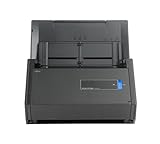
- One button searchable PDF creation
- Fast color, grayscale and monochrome scan speeds of up to 25 double-sided pages per minute
- Advanced paper feeding system with 50-page automatic document feeder (ADF)
- Scan wirelessly to Mac, PC, iOS or Android or via USB to Mac or PC
- Scan to cloud without a Computer or mobile device
Failure modes and fixes
The web interface loads but documents do not process
Check the worker container or workload, broker connectivity, consume-directory permissions, and available disk space. If the consume directory is on NFS, confirm that polling is enabled. Submit a small test file after correcting the issue and verify that it reaches the archive.
Search or metadata appears to have vanished
Do not immediately recreate the application. Confirm that the deployment is pointing to the intended database and media volumes. Compare the current configuration with the last known-good version, inspect database connection errors, and restore into a separate test environment before overwriting production data.
A Kubernetes Pod keeps restarting
Inspect events, container logs, readiness and liveness probes, resource limits, Secret references, and volume-mount errors. A restart loop can indicate a bad configuration, unavailable database, failed migration, insufficient memory, or storage that is not mounted where the application expects it.
An update breaks the archive
Stop making unrelated changes. Record the image versions and configuration, preserve the current data, and follow the project’s documented migration or rollback guidance. Restore a backup in an isolated environment to confirm that the backup is usable before attempting a production recovery.
Recommended Free Tools
A decision framework for home and small-office operators
Pick Docker Compose if most statements are true
- You have one reliable host and no requirement to move workloads between nodes.
- You want the shortest documented Paperless-ngx installation path.
- You already manage other services with Compose.
- Your team does not need cluster-wide scheduling, service discovery, or standardized rollout controls.
- You can design and test backups independently of Docker.
Pick Kubernetes if most statements are true
- Your organization already operates a healthy cluster and has people responsible for it.
- Cluster storage, ingress, monitoring, secrets, and upgrade procedures are established.
- You need declarative reconciliation, controlled rollouts, workload placement, or standardized policy across several services.
- You have a reviewed, maintained Paperless-ngx deployment definition and understand its database and storage behavior.
- You will test recovery rather than assuming replicas or persistent-volume claims equal backups.
Do not choose Kubernetes merely for “high availability”
A single Paperless-ngx replica with one database and one storage device can still fail in Kubernetes. More nodes do not automatically make a stateful archive highly available. Availability depends on application replicas, database design, storage redundancy, node health, probes, network paths, and an operational team that can respond to failures.
Digitizing paper before it reaches the archive
If your backlog is physical paper, a document scanner with an automatic document feeder can reduce manual intake. It is an optional workflow accessory, not a Compose or Kubernetes requirement. Readers who already have a scanner or receive digital files do not need another device. Prioritize reliable duplex feeding, searchable-output support, and a workflow that produces files Paperless-ngx can ingest; the orchestration choice does not determine scanner quality.
Bottom line
Start with Docker Compose for a new Paperless-ngx installation on a home or small-office server unless you have a concrete reason to operate it inside Kubernetes. Compose follows the project’s easiest documented path and keeps the operational surface small. Choose Kubernetes when an existing cluster, storage platform, and operations practice provide value that outweighs the added complexity. In both cases, the durable archive comes from sound storage, host security, independent backups, and a restore test—not from the name of the orchestrator.
Quick Recap
Product prices and availability are accurate as of the date/time indicated and are subject to change. Any price and availability information displayed on Amazon at the time of purchase will apply.

