
Free tools Windows power users keep installed
One-click scans. No signup required.
iTechGuides is reader-supported. When you buy through links on our site, we may earn an affiliate commission. As an Amazon Associate I earn from qualifying purchases. Learn more
No. A gaming headset is optional for horror games. It becomes worthwhile when you need privacy, stronger isolation from household noise, precise directional cues, or a microphone for voice chat. Speakers can be the better choice when you want to hear the room, dislike wearing headphones, or share the space with other people.
The right purchase depends less on a “surround” badge than on accurate imaging, comfort, low latency, microphone performance, and compatibility with your platform. Closed-back and open-back headphones create different trade-offs, and spatial-audio processing can help or hurt depending on the game mix and your ears.
When a headset is worth using for horror games
Horror games use quiet ambience, distant movement, room tone, sudden transients, and silence to build tension. A headset can make those details easier to hear because the drivers sit close to your ears and, in a closed design, reduce competing noise. That can make a whisper or footstep easier to locate, but it does not make a game automatically scarier or better.
Use a headset if one or more of these conditions applies:
#1 Best Overall

- REAL-TIME GAME AUDIO CONTROL — Pinpoint enemies with what GamingTrend calls “the biggest cheat code in the industry. 200+ game specific audio presets to choose from
- IMPROVED 50H+ BATTERY LIFE — Over 40% more charge than the previous generation, plus optimized USB-C Fast Charge
- SIMULTANEOUS 2.4GHZ + BLUETOOTH — Mix game and mobile audio
- PLUG-&-PLAY USB-C — Unlock 2.4GHz cross-platform gaming with the portable wireless dongle. USB-A adapter included
- NEODYMIUM MAGNETIC DRIVERS — Custom-designed high-fidelity audio drivers for clear audio. Set your sound quality to glorious with a deep and detailed soundscape and 360° Spatial Audio support.
- Your room is noisy. Traffic, a television, conversation, fans, or a mechanical keyboard can cover low-level ambience. Isolation helps you hear the game without turning the volume excessively high.
- You need privacy. A headset keeps game audio from disturbing people nearby and lets you play at a personal listening level.
- You rely on positional cues. Accurate left-right and front-back imaging can help identify where a sound originated, especially in games that mix directional audio carefully.
- You use voice chat. A built-in microphone, mute control, monitoring, and a game/chat balance control are useful for cooperative horror games or Discord calls.
- You play late or in shared accommodation. Headphones avoid speaker spill and make a consistent listening level easier to maintain.
Speakers may be preferable when you need to remain aware of people, pets, alarms, or other events in the room; when wearing headphones causes heat, clamp pressure, or discomfort; or when you simply prefer a sound field that is not sealed around your ears. A good pair of speakers in a quiet room can still present a convincing horror mix.
Why sound matters in horror games
Sound is one part of a horror game’s sensory design, not a substitute for the game itself. An exploratory arXiv study titled Decoding Fear: Exploring User Experiences in Virtual Reality Horror Games reported results from 23 subjects and found that visual restriction and ambient-sound-enhanced realism may intensify fear. The study focused on virtual reality and was small, so it supports the general importance of sound design without proving that every player needs headphones.
A headset can improve audibility and localization, but the game’s recording, mix, and implementation remain decisive. If a title has weak directional information, a more expensive headset cannot create reliable cues that were never present. Conversely, a modest headset with good imaging can outperform a heavily marketed model whose processing blurs details.
Recommended Free Tools
The features that matter most
Accurate imaging before “surround” branding
Imaging is your ability to judge where a sound is positioned. For horror, useful imaging means distinguishing left from right and estimating front, rear, above, or below when the game provides those cues. Tonal balance also matters: excessive bass can make impacts dramatic but may mask whispers and room ambience, while an overly bright tuning can make details obvious but fatiguing.
Look for independent listening measurements or reviews that discuss imaging and sound quality rather than relying on a label such as 7.1, 360-degree audio, or 3D. The same headset can image differently after equalization, console processing, or a virtual-surround mode is enabled.
Rank #2
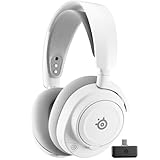
- REAL-TIME GAME AUDIO CONTROL — Pinpoint enemies with what GamingTrend calls “the biggest cheat code in the industry. 200+ game specific audio presets to choose from
- IMPROVED 50H+ BATTERY LIFE — Over 40% more charge than the previous generation, plus optimized USB-C Fast Charge
- SIMULTANEOUS 2.4GHZ + BLUETOOTH — Mix game and mobile audio
- PLUG-&-PLAY USB-C — Unlock 2.4GHz cross-platform gaming with the portable wireless dongle. USB-A adapter included
- NEODYMIUM MAGNETIC DRIVERS — Custom-designed high-fidelity audio drivers for clear audio. Set your sound quality to glorious with a deep and detailed soundscape and 360° Spatial Audio support.
Comfort for long sessions
Horror sessions often last for hours, so comfort is a first-order feature rather than a luxury. Check the following before buying:
- Ear-pad material, depth, and whether your ears touch the driver grille.
- Clamp pressure and whether the headband spreads weight across the top of your head.
- Total weight, especially if you are sensitive to neck fatigue.
- Glasses compatibility; rigid pads and strong clamp pressure can press on eyeglass arms.
- Heat retention, particularly with sealed synthetic-leather pads.
- Whether replacement pads are available, since worn pads change both comfort and isolation.
Comfort cannot be inferred from a product name. If possible, use a retailer’s return policy to test the headset for a complete session without exceeding the policy’s conditions.
Do these 3 things before closing this tab:
1Repair Windows errors before they cause bigger problems2Scan for outdated or missing drivers - takes under a minute3Clear out junk files and repair common Windows errorsLow latency
Latency is the delay between an event in the game and the sound reaching you. It is most noticeable when a visual cue and a sharp audio cue should occur together. Wired connections normally provide a simple, consistent path. Wireless is also suitable when it uses a low-latency connection designed for gaming rather than a mode intended mainly for music.
RTINGS identifies the SteelSeries Arctis Nova 7 Wireless as a current mid-range example using a low-latency USB dongle so game audio and video stay synchronized. Treat that as a characteristic of that connection method and model, not a guarantee for every wireless headset. Verify the included transmitter and its supported platforms before purchase.
Microphone and chat controls
A microphone matters for multiplayer horror, co-op sessions, and Discord. Check voice clarity, background-noise handling, sidetone or mic monitoring, mute behavior, and whether you can balance chat against game audio. A solo player who never speaks should not pay a comfort or sound-quality penalty for a microphone they will not use.
Rank #3
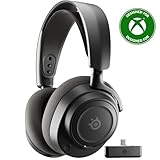
- REAL-TIME GAME AUDIO CONTROL — Pinpoint enemies with what GamingTrend calls “the biggest cheat code in the industry. 200+ game specific audio presets to choose from
- IMPROVED 50H+ BATTERY LIFE — Over 40% more charge than the previous generation, plus optimized USB-C Fast Charge
- SIMULTANEOUS 2.4GHZ + BLUETOOTH — Mix game and mobile audio
- PLUG-&-PLAY USB-C — Unlock 2.4GHz cross-platform gaming with the portable wireless dongle. USB-A adapter included
- NEODYMIUM MAGNETIC DRIVERS — Custom-designed high-fidelity audio drivers for clear audio. Set your sound quality to glorious with a deep and detailed soundscape and 360° Spatial Audio support.
Platform compatibility
Compatibility is more complicated than a “wireless” label. Confirm the exact edition and connection method for your device:
- PC: Check USB-dongle support, Bluetooth behavior, companion software requirements, and whether spatial modes require a separate application.
- PlayStation: Confirm that the dongle or wired connection works with your specific console generation and that the headset’s chat controls are supported. PlayStation provides its own spatial-audio options.
- Xbox: Xbox uses its own accessory and spatial-audio pathways. A USB transmitter made for PC or PlayStation may not work on Xbox unless the manufacturer explicitly lists it.
- Switch: Check handheld and docked behavior separately, including whether a USB adapter is needed and whether voice chat requires another device or application.
- Mobile: Verify the connector, Bluetooth profile, microphone behavior, and latency. A headset that works on a phone for music may not provide acceptable game synchronization.
“Multi-platform” can mean different things: one cable, a switchable dongle, Bluetooth plus USB, or separate platform variants. Read the compatibility list for the exact model and package.
Closed-back versus open-back for horror
Neither design is universally best. Choose according to your room and how you want the game to feel.
| Design | Strengths for horror | Trade-offs | Best fit |
|---|---|---|---|
| Closed-back | Reduces outside noise; keeps quiet ambience, whispers, and footsteps audible; limits sound leakage. | Can feel warmer; may create a more enclosed presentation; reduces awareness of the room. | Noisy rooms, late-night play, shared spaces, and players who want maximum isolation. |
| Open-back | Often sounds more spacious; lets air circulate; preserves awareness of people and events around you. | Leaks sound in both directions; provides little isolation; room noise can mask subtle cues. | Quiet private rooms, players who dislike sealed headphones, and anyone who values room awareness. |
Open-back headphones do not inherently produce better positional accuracy, and closed-back headphones do not inherently sound narrow. Construction, tuning, fit, and the game’s mix determine the result. If you live with others or play near a television, the leakage from an open design can be disruptive.
Wired versus wireless
| Priority | Wired choice | Wireless choice |
|---|---|---|
| Latency and simplicity | Usually the most straightforward path, with no battery or transmitter to configure. | Choose only a gaming-oriented low-latency mode and test synchronization. |
| Freedom of movement | A cable can catch on a chair or desk. | No cable across the desk; confirm range, interference behavior, and reconnection. |
| Maintenance | No charging cycle; the cable or connector is the main wear point. | Requires charging and eventually battery management; check charging method and whether play while charging is supported. |
| Platform coverage | Analog or USB may work across several devices, but connectors and controls vary. | Dongles, Bluetooth, and console support differ by model and platform. |
Choose wired when consistent latency, low complexity, and no charging matter most. Choose wireless when cable freedom changes how comfortably you play, then verify the connection type, latency behavior, battery operation, charging method, and exact platform support. No universal battery-life figure or stable price should be assumed without checking the current product listing.
The Tool Desk
Outbyte Driver Updater FREEFix the driver behind crashes, sound loss and screen glitchesFind Drivers →Outbyte PC Repair FREERepair Windows errors before they cause bigger problemsFix Now →Rank #4

- 100+ GAME AUDIO PRESETS — Unlock tailored audio presets for top games like GTA V, FIFA, Call of Duty, and more, with the Arctis Nova 5 Companion App
- 60-HOUR BATTERY — Play longer than ever with the next-gen battery. Go 8 hours a day all week; plus with USB-C Fast Charge get 6 hours of use in just 15 minutes
- QUICK-SWITCH WIRELESS — Toggle between 2.4GHz gaming and Bluetooth 5.3 with a tap of a button to take a call or listen to media; notification beeps keep you posted on incoming calls while gaming
- NEODYMIUM MAGNETIC DRIVERS — These drivers create an ultra-detailed soundscape of crystal clear highs, pinpoint mids, and deep bass for your space journey
- NEXT-GEN MIC — Our upgraded, fully retractable ClearCast 2.X microphone has 2X the clarity with a high-bandwidth chipset supporting 32KHz/16Bit audio
Does surround sound make horror games scarier?
Not automatically. “Surround” can refer to a game’s native multichannel mix, a console’s spatial-audio system, or software that transforms stereo or multichannel audio. These approaches can alter the apparent position and distance of sounds, but the result depends on the game, the processing algorithm, your headset, and your hearing preferences.
DTS describes Headphone:X as taking object-based or multichannel game audio and recreating it as immersive three-dimensional sound around the listener. Razer describes THX Spatial Audio as creating surround sound from stereo sources and offering profiles for supported games. Those are vendor descriptions, not independent proof that one mode is superior. SteelSeries support documentation also notes that available surround options depend on the system in use.
Use this practical test:
- Start with the game’s native stereo or headphone mix and disable extra processing.
- Play a repeatable scene containing movement from different directions, quiet ambience, and a sudden effect.
- Enable one spatial mode at a time, keeping the game and operating-system settings unchanged.
- Compare speech clarity, front-versus-rear placement, distance, bass control, and whether ambience becomes smeared or hollow.
- Keep the mode that sounds most natural and lets you locate cues reliably. If processing makes voices or room tone less clear, turn it off.
Avoid stacking multiple virtual-surround systems. For example, enabling a headset’s software surround, a console spatial mode, and a game-specific headphone profile at the same time can apply several transformations to the same signal. Use one processing path unless the game or platform documentation explicitly recommends another.
Independent reader supportYour contribution helps us test, update, and keep practical guides available for everyone.How to choose a headset step by step
- Define the room. Note whether you need isolation, whether sound leakage will disturb someone, and whether you must hear alarms or people nearby.
- Define the session. Estimate typical play length and decide how much heat, clamp pressure, or weight you can tolerate.
- Define communication needs. If you play alone, prioritize sound and comfort. If you use voice chat, add microphone clarity, monitoring, mute access, and chat/game balance to the requirements.
- Choose the connection. Select wired for simplicity or wireless for cable freedom, then check latency and charging behavior rather than assuming either is always better.
- Check the exact platform variant. Match the model, dongle, cable, and software to PC, PlayStation, Xbox, Switch, or mobile. Do not rely on a retailer title that omits the platform suffix.
- Compare imaging and comfort evidence. Read measurements or detailed listening reports that address imaging, tonal balance, pad fit, clamp, weight, and glasses use.
- Plan spatial audio. Treat DTS, THX, Dolby, or platform processing as optional. Confirm which software or console setting is required and test it against the game’s native mix.
- Check ownership details. Confirm warranty, replacement-pad availability, charging cable or dongle replacement, return conditions, and current price and stock at the time you buy.
Current example and what to verify
SteelSeries Arctis Nova 7 Wireless
RTINGS currently places the SteelSeries Arctis Nova 7 Wireless in its mid-range gaming-headset recommendations and highlights its low-latency USB dongle for keeping game audio and video synchronized. The cited guide also treats comfort, microphone performance, sound quality, and spatial-sound features as meaningful differences among models.
Outdated Drivers Are Slowing You Down
One free scan finds every outdated or missing driver and matches the right update for your exact hardware.Free scan · exact hardware matchPC Slower Than It Used to Be?
A free scan shows the junk files, broken settings and background clutter dragging Windows down - then fixes them in one click.Free scan · Windows 10 & 11Before buying this or any similarly named headset, verify the platform-specific version, included transmitter, supported software, console compatibility, microphone controls, and current price. A model name can cover different packages or regional listings, and no fixed price, stock position, or universal battery figure is established here.
Premium alternatives
A premium model such as the Razer BlackShark V3 Pro may appeal if you specifically want a higher-tier wireless feature set or spatial-audio tooling. Do not treat a premium price or a spatial-audio badge as evidence of better horror performance. Compare its imaging, comfort, microphone, latency, platform support, and return terms against a simpler wired or mid-range option.
Common problems and fixes
Quiet whispers or masked ambience
- Lower excessive bass or disable a bass-boost preset that is covering midrange detail.
- Reduce competing room noise or switch from open-back to closed-back if isolation is the issue.
- Check that the game is using its headphone mix rather than a speaker or home-theater profile.
- Keep volume at a safe level; louder is not a substitute for better imaging.
Audio and video are out of sync
- Switch from a general Bluetooth mode to the headset’s gaming dongle or wired connection.
- Reconnect the transmitter directly to the console or computer instead of through an unreliable hub.
- Close duplicate audio-processing applications and retest with one spatial mode enabled.
Directional cues sound wrong
- Disable layered surround processing and compare the game’s native headphone mix.
- Check left-right channel balance and fit the ear pads evenly.
- Test a scene you know well; if front and rear positions remain confused in every mode, prioritize a headset with better independent imaging evidence.
Microphone sounds muffled
- Position the microphone consistently near the corner of your mouth without touching it.
- Check the operating system or console input level and disable an aggressive noise gate that clips words.
- Confirm that the correct microphone, not a webcam or controller mic, is selected.
The headset becomes uncomfortable
- Loosen the fit slightly and reposition the headband so weight is distributed.
- Take short breaks during long sessions.
- Try different pad material or replacement pads only if the manufacturer supports them and the change will not compromise the fit.
- If heat, clamp, or glasses pressure persists, an open-back or lighter wired design may be a better solution than a more expensive closed headset.
A simple decision framework
| Your situation | Most sensible starting point | Reason |
|---|---|---|
| Noisy room and late-night play | Closed-back headset, wired or low-latency wireless | Isolation preserves quiet cues and limits leakage. |
| Quiet private room and need to hear the door | Open-back headphones or speakers | Room awareness and a spacious presentation matter more than isolation. |
| Competitive co-op horror with frequent chat | Comfortable headset with clear mic and chat/game controls | Communication is part of the play experience. |
| Solo player who dislikes headsets | Good speakers or comfortable headphones without a mic priority | A headset adds no required feature if privacy and chat are irrelevant. |
| Several platforms | Model with explicitly listed support for each device, or a simple wired option | Dongles and spatial features are not interchangeable across PC and consoles. |
Bottom line
You do not need a gaming headset for horror games. Buy one when isolation, privacy, positional clarity, voice chat, or cable-free play solves a problem in your room and routine. Prioritize imaging, comfort, latency, microphone quality, and platform fit. Choose closed-back for isolation, open-back for spaciousness and room awareness, and test spatial processing against the game’s native mix instead of assuming that a surround label will make the experience scarier.
Quick Recap
Product prices and availability are accurate as of the date/time indicated and are subject to change. Any price and availability information displayed on Amazon at the time of purchase will apply.

