
iTechGuides is reader-supported. When you buy through links on our site, we may earn an affiliate commission. As an Amazon Associate I earn from qualifying purchases. Learn more
Usually, no. FPGA consoles can work without Wi‑Fi, NFC, or a large preinstalled storage device. Whether any of those features matters depends on how the console loads games: from original cartridges, from a removable microSD card, from USB storage, or over a network.
Cartridge-focused systems such as Analogue Pocket and Super Nt do not make Wi‑Fi or NFC part of ordinary cartridge play. File-based systems such as MiSTer make storage essential, but their documentation describes several ways to provide it. The practical question is therefore not which features appear on a generic specification sheet, but which transfer method matches your library and setup.
What “need” means for an FPGA console
“Need” can mean three different things:
- Required for the console to start or play games: a true technical dependency.
- Required for your preferred setup: for example, loading a large library from a NAS instead of removing a card.
- Merely convenient: a feature that saves time but has a workable alternative.
Those categories are easy to confuse. A console may support network transfers without containing Wi‑Fi hardware. A device may include a microSD slot without requiring a large card. A dock may support wireless controllers without using Wi‑Fi at all.
Cartridge-first FPGA consoles generally do not need Wi‑Fi or NFC
Analogue Pocket
Analogue describes Pocket as a handheld that plays Game Boy, Game Boy Color, and Game Boy Advance cartridges, with additional handheld systems available through cartridge adapters. It also supports an openFPGA ecosystem and includes a microSD slot. Those capabilities create optional file and development workflows, but the basic cartridge use case does not establish Wi‑Fi or NFC as a requirement.
#1 Best Overall

- [Compatible with Various SOMs] Sipeed Tang Console FPGA development board enjoy powerful FPGA performance with configurations up to 60K/138K LUT4s, onboard Mega 138k/60K SOM CPU, 468Kbit SSRAM 2124Kbit BSRAM/1080Kbit SSRAM 6120Kbit BSRAM, 4Gbit 16bit DDR3 RAM/8Gbit 32bit DDR3 RAM. Ensuring smooth operation for your projects and games.
- Rich Expansion] Sipeed Tang Console FPGA Dev Board onboard PCIe Gen2/3 x 1 FPC connector, USB3 x 2 (Type-A, Device, 5Gbps or 10Gbps), USB2 x 2 (Type-A, Host, 1.5Mbps or 12Mbps), HDMI TX x 1 (1080P 30Hz/720P 60Hz), Soft-PHY USB2 x 1 (Typc-C, Device, 480Mbps), PMOD x 2 Standard Pitch Port, microSD slot x1 (Supports 4-bit SDIO/MMC or SPI mode). Support USB JTAG and UART.
- [High Performance] Sipeed Tang Console FPGA single board computer supports multiple Tang Core emulator cores,(NESTang/SNESTang/GBATang/MDTang/SMSTang), Onboard BL616 MCU, supports running TangCore firmware for BL616, which can be used as FPGA debugger. Able to meet different developers' needs.lts small size allows it to fit in a card box, making it highly portable and easy to integrate into any setup.
- [Multi-Mode Functionality] Sipeed Tang Console uses it as an FPGA development board, a RPi5 PCle FPC HAT, a retro gaming console, or a handheld device-endless possibilities in one versatile package. Equipped with dual PMOD and dual 40P interfaces, supports fast switching between emulator cores. The Tang Console offers strong expandability for your custom projects.
- [Gamestick HDMI Gaming Experience] Sipeed Tang Console FPGA Retro Game Console support 1080P HD HDMI output, suitable for different monitors, can be connected to TV/computer/TV set-top Box /PC/Laptop/Projector, perfect to meet your high resolution and game configuration needs. The retro game Console stick also support saving game progress, perfect for gaming at any time
Pocket’s Dock supports Bluetooth and 2.4 GHz controllers. That is a wireless-controller feature, not Wi‑Fi connectivity, and it should not be treated as evidence that the handheld needs a network connection to play cartridges.
Analogue’s support page lists firmware version 2.7 dated September 4, 2026, and a manual dated April 18, 2024. Firmware and package details can change, so check the current support page for the exact revision and accessories included with the unit you are buying.
Analogue Super Nt
Super Nt is described as an FPGA-based system compatible with SNES and Super Famicom cartridges. That is a cartridge-first design: your game media is the cartridge, not a network share or a bundled internal drive. Wi‑Fi, NFC, and high-capacity storage are therefore not prerequisites for its ordinary operation.
Free tools Windows power users keep installed
One-click scans. No signup required.
These examples do not prove that every FPGA console is cartridge-based or that every model lacks networking. They show why a universal feature checklist is misleading: the software and media workflow determines what is necessary.
File-based systems need storage, but not necessarily built-in Wi‑Fi
MiSTer’s documented transfer options
MiSTer FPGA Documentation states: “To play games on the MiSTer you will need to transfer them to your MicroSD.” The same documentation immediately describes alternatives, including loading over a NAS or using a USB drive. It also documents FTP and SSH transfers and Samba/SMB sharing.
In practical terms, MiSTer needs access to game files, but the files do not have to remain on one particular medium. A removable MicroSD card is one route; USB storage and network storage are others. The documentation’s core-path page lists USB paths, CIFS/network paths, and local-card paths, with USB and network locations ahead of the local MicroSD location in the described search order.
Rank #2

- 🎮 20,000+ Classic Games: This retro gaming console comes preloaded with over 40,000 classic games from your favorite retro consoles. Play instantly—no downloads, no internet needed!
- 📡 Dual Wireless Controllers: Enjoy smooth, lag-free gaming with two 2.4GHz wireless controllers. Play comfortably from anywhere without tangled wires, making multiplayer fun hassle-free.
- 🖥 4K HDMI Output: Connect the game stick to your TV, PC, or projector via HDMI and experience stunning 4K visuals for an immersive and crystal-clear gaming experience.
- 🔌 Plug & Play: Setup is super easy! Simply plug in the console, connect to your TV, and start playing immediately—no complicated installation required.
- 🎁 Perfect for All Ages: Whether you're introducing the next generation to classic entertainment or reliving nostalgic moments, this system makes an ideal gift for any occasion. Perfect for family gatherings, holidays, or just downtime fun.
That search order explains why network storage can be useful without making Wi‑Fi mandatory. A MiSTer setup may use a wired network connection, an adapter, or no network at all while still using the documented local-card or USB methods. The cited documentation does not establish that every MiSTer build has built-in wireless networking.
Quick wins for a faster PC:
Repair Windows errors before they cause bigger problemsFix Now →Fix the driver behind crashes, sound loss and screen glitchesFind Drivers →What storage is actually doing
Storage holds the files that the FPGA cores and front-end access. It is not the same as a console’s firmware or FPGA logic. A card can be the initial transfer target while a USB drive or network share becomes the day-to-day library location. Conversely, a user with a small library may keep everything on the local card and never configure networking.
Use game files you created from media you own or files obtained under applicable rights. The hardware workflow does not change the legal status of the files being transferred.
When Wi‑Fi is useful—and when it is unnecessary
Wi‑Fi is a convenience for network workflows
Wireless networking can reduce the need to remove a card or connect a cable when you regularly add files, maintain a NAS, or manage a console installed in a hard-to-reach location. FTP, SSH, and SMB-style sharing are especially useful when a computer can reach the console or the storage share from the same network.
That convenience matters most for a file-based library that changes frequently. If you add a title once and then play from cartridges, Wi‑Fi offers little practical benefit. If you keep a large collection on a computer or NAS and want several devices to access it, networking may become part of your preferred workflow.
Do these 3 things before closing this tab:
1Clear out junk files and repair common Windows errors2Fix the driver behind crashes, sound loss and screen glitches3Repair Windows errors before they cause bigger problemsWi‑Fi is not the same as “network support”
Before assuming that a product needs built-in Wi‑Fi, identify where the network connection comes from. The documentation reviewed for MiSTer describes network paths and protocols, not a universal wireless specification for every board or enclosure. A particular build may require a separate network adapter, use wired Ethernet, or rely on local USB and MicroSD storage.
Rank #3

- MASSIVE 20,000 CLASSIC GAMES: Built-in 20,000 classic video retro stick with 4k hdmi, games and 23 emulators console for retro gaming, game emulators support arcade, tv game, video gaming nostalgia.
- ULTRA 4K HD EXPERIENCE: Retro gaming console 4k hdmi video game, hdmi tv game console, retro gaming console for tv in classic white, 4k hd hdmi tv retro stick design for gaming and console nostalgia.
- DUAL 2.4G WIRELESS CONTROLLERS: Wireless controllers for game console, 2.4g wireless tv game console with low-latency response, play video game console for tv with family, no tangled cables.
- EASY PLUG & PLAY SETUP: Plug and play video games for tv via hdmi tv gaming console with 4k hdmi game experience, connect the retro game console to hd hdmi tv in seconds, ideal for all ages.
- WHAT YOU GET: Retro wireless gaming console stick video retro stick built-in, console stick with 23 emulators, dual 2.4g controllers, hdmi cable, user guide, compact white retro stick for travel.
Check the exact board, case, hub, and operating image in the current manual. Treat “supports NAS” or “supports SMB” as a statement about a usable transfer path, not proof of an integrated Wi‑Fi radio.
Questions to ask before paying for wireless capability
- Will you transfer files over a network more often than you will use a card reader or USB drive?
- Does the exact FPGA board provide Wi‑Fi, wired networking, or neither without an accessory?
- Is your storage device already connected to the network, such as a NAS or shared computer?
- Would a removable card be simpler and more reliable for your location?
NFC has no established requirement in these examples
NFC is not described as an essential workflow on the cited Analogue Pocket, Super Nt, or MiSTer pages. No reviewed setup requires tapping a phone, cartridge, or accessory over NFC to boot a core, transfer games, or play an original cartridge.
That conclusion is deliberately narrow. It means the reviewed examples do not establish a necessary NFC use case; it does not claim that no future FPGA product could use NFC for authentication, pairing, or another feature. For the consoles and workflows covered here, omitting NFC is not a functional deal-breaker.
Does an FPGA console need a large bundled storage card?
There is no universal capacity requirement
Pocket has a microSD slot, and MiSTer’s basic transfer instructions use MicroSD. However, the cited documentation does not provide a universal capacity recommendation, and it does not establish that a large card must be included in the retail package. Library size, file types, firmware packages, and whether you use USB or network storage determine the practical capacity you need.
A small personal collection and a cartridge library can require far less removable storage than a user who keeps many cores and game files locally. Someone using a NAS may prefer a modest local card for the system while storing the larger library elsewhere. Because the sources do not establish a minimum size, avoid treating a particular capacity as mandatory for every FPGA console.
How to choose storage without overbuying
- List the files that must be local. Include the operating system, core files, configuration, and any game files you intend to access without USB or network storage.
- Decide where the main library will live. Choose local MicroSD, USB storage, a NAS, or a combination based on your transfer habits.
- Leave working room. Do not size a card so tightly that updates or additional cores immediately force a replacement.
- Plan a backup. A second copy of configuration and legally obtained game files is more valuable than buying capacity you will never use.
The sensible purchase is a reliable microSD card sized for the files you actually intend to keep local. The evidence supports microSD as a relevant accessory for Pocket and MiSTer, but not a named model or a large-capacity minimum.
Rank #4
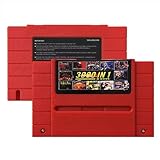
- Vast Retro Game Collection: Comes pre-loaded with thousands of classic 16-bit game ROMs on an 8GB mini SD card, offering instant access to an immense library right out of the box.
- Broad System Compatibility: Designed to be highly compatible with most original 16-bit Super Console systems (supports NTSC/PAL auto-switching), making it ideal for diverse retro gaming setups.
- Personalized Game Management: Easily add, delete, and rename your own game ROMs (supports up to 32GB TF cards, 8GB recommended for stability) with simple folder navigation for a truly customized experience.
- Reliable Battery-Free Saves: Features 32KB FRAM for automatic, persistent game progress saving, eliminating the need for internal batteries and ensuring your achievements are never lost.
- Authentic & Smooth Gameplay: Equipped with a low-latency FPGA chip that replicates original console performance, minimizing screen smearing and sound delays for a genuine, immersive retro gaming experience.
Workflow comparison
| Use case | Primary game source | Storage or transfer path | Role of Wi‑Fi | Role of NFC |
|---|---|---|---|---|
| Analogue Pocket cartridge play | Game Boy, Game Boy Color, Game Boy Advance, or adapter-supported cartridges | Cartridge; microSD slot also provided | Not listed as a requirement for cartridge play | No essential use established |
| Analogue Super Nt | SNES and Super Famicom cartridges | Cartridge-first operation | Not listed as a requirement | No essential use established |
| MiSTer local setup | Transferred game files and cores | MicroSD, with USB as an alternative | Optional | No essential use established |
| MiSTer network setup | Transferred game files and cores | NAS or other documented network paths using FTP, SSH, or SMB/CIFS | Useful when the hardware and network path support it | No essential use established |
A practical setup checklist
For a cartridge-focused console
- Confirm that your cartridge format is supported by the exact model or adapter.
- Check the current manual for firmware requirements and included accessories.
- Use the microSD slot only for the functions the manufacturer documents, such as supported openFPGA or system workflows.
- Do not buy a Wi‑Fi or NFC accessory solely because it appears on another console’s specification sheet.
For a MiSTer-style file workflow
- Read the current documentation for your specific board and image.
- Choose MicroSD, USB, network storage, or a combination.
- Transfer the system and game files using the documented removable-card, USB, FTP, SSH, SMB, or NAS method that your setup supports.
- Confirm that the files appear in the expected core paths. MiSTer’s documented path order can affect which copy is found first when the same file exists in more than one location.
- Test launching a small selection of cores before moving the entire library.
- Back up the card contents and configuration before changing storage devices or updating firmware.
Common buying mistakes and how to avoid them
Confusing Bluetooth controllers with Wi‑Fi
A dock’s Bluetooth or 2.4 GHz controller support concerns input devices. It does not mean the console needs Wi‑Fi for gameplay or that it can access network storage.
What’s actually slowing this PC down?
Pick the symptom - the matching free tool is one click away.
Assuming every FPGA console uses the same media model
Cartridge-compatible products and file-based platforms solve different problems. A cartridge-first console may need no large local library, while a MiSTer setup needs somewhere to keep transferred files even if that location is a NAS.
Buying capacity before choosing a workflow
Capacity is a consequence of what you store locally. Decide between card, USB, and network storage first; then select a card based on the resulting file set. The reviewed sources do not support a universal “large card” rule.
Assuming network documentation guarantees wireless hardware
Protocols and network paths describe how files can be reached. They do not, by themselves, identify the physical connection. Verify whether your exact build uses Wi‑Fi, Ethernet, or an adapter.
Bottom line for your purchase decision
Choose the console and accessories around your media workflow. For original-cartridge play on systems such as Pocket or Super Nt, Wi‑Fi and NFC are not established requirements, and a large bundled storage card is not the basis of the experience. For MiSTer, storage is necessary because game files must be available, but MicroSD, USB, and documented network or NAS paths provide alternatives. Wi‑Fi is valuable only when it makes your chosen file-transfer method easier; NFC has no necessary role in the reviewed examples.
Quick Recap
Product prices and availability are accurate as of the date/time indicated and are subject to change. Any price and availability information displayed on Amazon at the time of purchase will apply.

