
iTechGuides is reader-supported. When you buy through links on our site, we may earn an affiliate commission. As an Amazon Associate I earn from qualifying purchases. Learn more
AI sovereignty debates could shape the systems students use and the information they encounter, but the available evidence does not show that sovereignty policies have already caused documented harm to students. The real lesson may be about who gets to shape AI, what values and knowledge it reflects, and whether young people can question those choices.
What is AI sovereignty?
AI sovereignty is a country’s ability to influence or control important parts of AI in line with its interests. That can include data, computing infrastructure, models, rules and how systems are deployed. It does not necessarily mean building every component at home.



Chatham House describes sovereign AI as a country’s ability to influence, develop and deploy AI in line with national interests. The Harvard Kennedy School Misinformation Review similarly frames it around state control of AI development, regulation, infrastructure, data and cultural orientation within national borders. Both accounts describe degrees of influence, rather than a simple choice between total independence and having no control.
Complete independence is not a realistic baseline: AI depends on globally interconnected supply chains and key inputs, as Chatham House explains in its February 2026 introduction, updated in March. A country may develop domestic capacity while continuing to rely on foreign suppliers, platforms or infrastructure.
Why are countries debating sovereignty?
Governments want influence over technology that can affect security, economic competitiveness and social resilience. They may also seek greater control over data, infrastructure and the rules that govern AI. The opposing concern is that national approaches could fragment shared infrastructure and knowledge into separate model ecosystems, making collaboration harder.
The question, then, is not simply whether AI should be local or foreign. It is which parts of the system a country can influence, which dependencies it accepts, and what safeguards apply. National strategies differ: Chatham House reports that the UK AI Opportunities Action Plan prompted commitments for more than £14 billion in fresh inward investment. That is a reported commitment, not a total of investment already delivered.
How could AI sovereignty affect students?
Choices about AI infrastructure, data, language and governance may shape the systems students encounter and the kinds of information those systems make available. But that is a plausible connection, not a demonstrated student outcome: the sources reviewed do not establish that sovereignty policies have harmed students or caused a measurable change in learning.
What’s actually slowing this PC down?
Pick the symptom - the matching free tool is one click away.
AI governance reaches beyond model performance or regulation. A 2026 analysis from the University of Pennsylvania’s Annenberg School for Communication describes a field spanning chips, data centers, energy, labor, datasets, platforms, laws and geopolitical relationships. It argues that affected communities need a meaningful role in decisions about deployment: “They need the capacity to shape the terms of deployment itself.” Applied to education, that raises a practical question: can students and their communities understand and challenge the systems that influence their learning and information environments?
What are students already learning about AI and media?
There is evidence of student-facing education on these issues, distinct from evidence of harm caused by sovereignty politics. In a June 2026 account, the ARC Centre of Excellence for Automated Decision-Making and Society described activities with senior students in England covering automation and everyday AI, digital media literacy, data collection and categorization, political communication, misinformation, and critical examination of generative AI.
The account shows that students can engage with these topics through instruction and interactive activities. It does not measure the effect of national AI sovereignty policy on student outcomes. Professor Daniel Angus, an investigator at the centre, said: “Empowering young people with the knowledge and skills to critically navigate digital environments is likely to be far more effective than approaches that focus primarily on exclusion or restriction.”
Rank #4

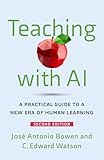
- Presents guiding principles and action steps that address both the issues and the opportunities that come with artificial intelligence
- Learn how to cultivate a schoolwide understanding of AI,
- Implement student-centered practices that support academic integrity
- Ensure that effective teaching and learning remain the school’s top priority
Should countries build their own AI models?
Domestic models or infrastructure may give a country more influence over some choices, including how systems reflect local language or context. But “build it at home” is not a complete test of sovereignty: countries remain connected to international supply chains, and the location of a model alone does not establish who controls its data, rules or deployment.
When assessing a national approach, consider these dimensions together. This is a practical framework drawn from the issues raised by Chatham House, the Harvard Kennedy School Misinformation Review and the Annenberg analysis—not a published ranking.
| Question | What to examine | Why it matters to students and communities |
|---|---|---|
| Which layers are controlled or influenced? | Data, computing capacity, models, infrastructure, rules and deployment | Control at one layer does not necessarily mean control over the systems students encounter. |
| Which dependencies remain? | Reliance on external suppliers, infrastructure or other inputs, and the risks or costs attached to that reliance | Dependencies can limit how much influence a country has when systems or services change. |
| Whose language and knowledge are reflected? | Whether local languages, knowledge and cultural context are represented | Students should be able to examine whose perspectives are represented and whose are missing. |
| What oversight and rights apply? | Independent scrutiny, protections and democratic accountability | Domestic control is not, on its own, proof that a system is accountable to the people it affects. |
| Can people understand and contest systems? | Whether students and affected communities can learn how systems work and raise objections to their use | Participation helps people question decisions rather than simply live with them. |
What is the painful lesson for students?
The painful lesson is a possibility, not a proven consequence: decisions about AI may be made in debates over national interests, infrastructure and power, while students experience the resulting systems without a clear say in how they are designed or used. The available evidence supports teaching students to examine AI, data practices, digital media and misinformation; it does not support claiming that sovereignty policies have already harmed them.
That distinction matters. Sovereignty can build national influence, yet it can also contribute to fragmented systems; domestic capacity does not automatically ensure representation, rights or public accountability. Education can help students ask who controls an AI system, what it depends on, whose knowledge it reflects and how people can challenge its use.
Quick Recap
Product prices and availability are accurate as of the date/time indicated and are subject to change. Any price and availability information displayed on Amazon at the time of purchase will apply.

