
iTechGuides is reader-supported. When you buy through links on our site, we may earn an affiliate commission. As an Amazon Associate I earn from qualifying purchases. Learn more
Choose Dead Cells if you want precise 2D platforming, branching paths, environmental discovery, and combat that rewards repeated practice. Choose Hades if you want top-down action, flexible Olympian boon builds, permanent upgrades, and a fully voiced story that keeps moving between runs.
Both games use the roguelike loop of entering a changing dungeon, fighting through a run, dying, and trying again. They feel substantially different because Dead Cells makes movement and route choice the main challenge, while Hades makes room-to-room combat, build synergy, and character progression the main attraction.
| # | Preview | Product | Price | |
|---|---|---|---|---|
| 1 |

|
Dead Cells: Return to Castlevania Edition Nintendo Switch | $28.40 | Buy on Amazon |
| 2 |

|
Dead Cells - Action Game of The Year - Nintendo Switch | $30.97 | Buy on Amazon |
| 3 |
![Dead Cells - Nintendo Switch [Digital Code]](https://m.media-amazon.com/images/I/51HXJorAjyL._SL160_.jpg)
|
Dead Cells - Nintendo Switch [Digital Code] | $24.99 | Buy on Amazon |
| 4 |
|
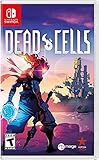
Dead Cells - Nintendo Switch | $34.95 | Buy on Amazon |
The short answer: Dead Cells for mechanics, Hades for story and progression
Dead Cells is a 2D side-scrolling Roguevania/action-platformer set in an ever-changing castle. Its identity comes from movement, branching routes, pattern-based combat, exploration, and the pressure of permadeath. You learn enemy behavior, improve your platforming, decide which route to take, and gradually unlock access to new areas across deaths.
Free tools Windows power users keep installed
One-click scans. No signup required.
Hades is a top-down rogue-like dungeon crawler about escaping the Underworld. Each attempt combines a weapon with randomized Olympian boons, and the game adds permanent upgrades, relationship progress, and new story events between runs. Its combat is fast and room-based, but the narrative gives every failed escape attempt a continuing context.
#1 Best Overall
- 17 Levels - Each one with its own atmosphere, foes and secrets to discover
- 5 Bosses - Made by the most sadistic of the devs, raised on the salt of the testers
- 150 or so weapons and skills - Spears, swords, bows, magic spells, shields, pets, frying pans etc; You name it, we got it
- Unlock the four original Dead Cells DLCs, giving you late-game content plus an entire new pathway to follow, with an alternative ending and tons of new enemies, weapons & outfits
- Battle through the corridors of Dracula’s Castle; Wield weapons against monsters to reach the throne room of the Dark Lord
There is no universal winner. Dead Cells is the stronger fit for a player who enjoys discovering routes and mastering execution. Hades is the stronger fit for someone who wants characters, voice acting, build experimentation, and a clear sense that every run advances a larger story.
Dead Cells and Hades compared at a glance
| Category | Dead Cells | Hades |
|---|---|---|
| View and movement | Side-scrolling 2D platforming with exploration and branching routes | Top-down, room-based movement through an Underworld escape structure |
| Combat emphasis | Pattern learning, dodge and roll timing, weapon and spell experimentation | Fast hack-and-slash combat shaped by weapon aspects and randomized Olympian boons |
| What carries between deaths | New levels and routes to unlock, plus the player’s growing mastery of movement and builds | Permanent upgrades, relationship progress, and continuing story events |
| Narrative style | Environmental and discovery-led; the run and route reveal much of the world | Fully voiced, character-driven narrative that continues between attempts |
| Best match | Players who value platforming, exploration, and demanding mechanical challenge | Players who value story, characters, build synergy, and a guided progression loop |
| Multiplayer | Not established as a focus in the cited official description | Designed as a solo experience; Supergiant Games says it has no plans to add multiplayer |
How the two games define a roguelike run
Dead Cells: a route through a changing castle
Dead Cells combines the run-based structure of a roguelike with the exploration and interconnected paths associated with a Roguevania. You start a new attempt, move through a castle whose layout and encounters change, collect equipment, and choose where to go next. A death ends that run, so progress comes from both permanent unlocks and knowledge gained by the player.
Motion Twin summarizes the design as “No checkpoints. Kill, die, learn, repeat.” That description is useful because it explains why the game can feel demanding even when you understand its systems: there is no checkpoint to erase the consequences of a mistake during a run. The official site also describes the combat as 2D “souls-lite” combat with the threat of permadeath always present.
The important decision is not simply which weapon to equip. It is how aggressively to explore, which branch to follow, and whether your movement skills are reliable enough for the next area. A player who enjoys reading a map, searching for alternate routes, and learning enemy patterns will find the run structure naturally motivating.
Hades: an escape attempt that develops between runs
Hades places you in a top-down sequence of combat rooms as you attempt to escape the Underworld. Supergiant Games describes it as a rogue-like dungeon crawler in which you defy the god of the dead and hack and slash your way out. The structure is more guided than Dead Cells: you advance through an escape route, clear rooms, and make choices that shape the tools available for that particular attempt.
The defining layer is the interaction between weapons and Olympian boons. A run can change direction when a boon alters how an attack, special move, or other part of your kit works. Because those offers are randomized, you learn to build around what appears rather than following one fixed loadout every time.
Death does not make the story stop. Returning to the hub between attempts gives you access to permanent upgrades, relationship development, and new conversations. The result is a loop in which a failed run still has narrative and mechanical value.
Recommended Free Tools
Combat: execution and pattern learning versus build synergy
Why Dead Cells feels mechanically demanding
Dead Cells puts your character’s movement directly inside the combat problem. Dodging, rolling, jumping, positioning, and recognizing attack patterns all matter at the same time. Enemies are not simply targets to hit; they are timing tests that punish a rushed approach and reward learning their tells.
Weapons and spells provide room for experimentation, but they do not remove the need to execute. A powerful combination is useful only when you can reach the correct position, avoid incoming attacks, and maintain control while the screen becomes more dangerous. This makes the game especially satisfying for players who enjoy turning a previously difficult encounter into a routine one through practice.
Rank #2
- Incredible 2D souls-lite action with more than 90 weapons and spells with nonlinear gameplay.
- Explore secret room, hidden passages, and charming landscapes. Stroll down towers and breath in that fresh sea mist infused air.
- Build your unique play style as you combat the adrenaline pumping threat of perm death in this unique game of the year!
Its side-on camera also makes vertical movement and platforming part of the fight. You are evaluating ledges, drops, doors, hazards, and enemy spacing rather than only circling opponents in an open arena. If you prefer a game in which movement is a skill to be practiced independently of damage numbers, Dead Cells has the clearer advantage.
Why Hades feels fast and expressive
Hades uses a top-down perspective and room-by-room encounters, so the immediate combat question is usually how to control space while combining attacks, specials, dashes, and the effects supplied by your current boons. The action is quick, but the build layer gives you a second way to express skill: you decide which offered effects work together and adapt when the run presents an unexpected option.
What’s actually slowing this PC down?
Pick the symptom - the matching free tool is one click away.
Weapon aspects and Olympian boons make two attempts with the same broad weapon choice play differently. One run may reward direct damage, while another may encourage a safer or more specialized pattern. The game therefore asks you to make tactical decisions during the escape rather than relying on one permanent solution.
Hades can be the better combat choice for players who like seeing a build take shape over the course of a run. Dead Cells is the better choice for players who want the controller input itself—movement timing, spacing, and reactions—to remain the dominant source of improvement.
Movement, camera, and exploration
Dead Cells is built around traversal
The side-scrolling view makes the castle feel like a place to navigate rather than a series of isolated arenas. Branches, alternate routes, and discoveries matter because the route you choose changes the challenges and the information you gain. Exploration is not just a way to find optional rewards; it is one of the principal ways the game teaches you its world.
This emphasis also creates a higher mechanical barrier. A player who is uncomfortable with platforming or who prefers a fixed camera may spend more time learning movement before combat starts to feel natural. Conversely, players who enjoy precise jumps, fast repositioning, and revisiting areas with better knowledge will find that Dead Cells keeps offering meaningful reasons to explore.
Hades keeps the route readable and the rooms focused
Hades’ top-down camera gives you a broad view of the current combat space. The room structure keeps the immediate objective clear: survive the encounter, choose the next reward or route option, and continue the escape. Exploration exists within that structure, but the game’s main focus is what happens in each room and how the rewards combine.
This makes Hades easier to parse for someone who wants to concentrate on fighting and decision-making without learning a platforming language. It also means that players seeking the feeling of getting lost in a changing environment may prefer Dead Cells’ more discovery-led design.
Progression: what death accomplishes in each game
Dead Cells rewards knowledge and access
When a run ends, you lose the immediate run state, but the attempt can still contribute to longer-term progress. New levels and routes become available over time, and each death teaches you more about movement, enemy patterns, and viable equipment combinations. The permanent reward is partly structural—more of the castle becomes reachable—and partly personal: you become better at reading the situations that previously ended your run.
Rank #3
- RogueVania: The progressive exploration of an interconnected world, with the replayability of a rogue-lite and the adrenaline pumping threat of permadeath.
- 2D Souls-lite Action: Tough but fair combat, the iconic dodge roll, more than 90 weapons and spells with unique gameplay… The unforgiving action wed to the absence of any kind of safety net makes for an adrenalin pumping ride each and every run.
- Nonlinear progression: Sewers, Ossuary or Ramparts? Once unlocked, special permanent abilities allow you to access new paths to reach your objective. Opt for the path that suits your current build, your play style, or just your mood.
- Exploration: Secret rooms, hidden passages, charming landscapes. Take a moment to stroll the towers and breath in that fresh sea mist infused air...
This model is ideal if you want progression to feel earned through mastery. It is less suitable if you need every failed attempt to produce a large, visible character upgrade. Dead Cells’ satisfaction often comes from recognizing that you can now survive or reach somewhere that was previously beyond your ability.
Hades combines permanent upgrades with narrative continuity
Hades makes the between-run layer more explicit. Permanent upgrades strengthen future attempts, while relationships and story events continue to develop. A death therefore has several possible outcomes: you may have learned a better combat approach, acquired resources for an upgrade, or triggered a new conversation when you return.
That structure is particularly welcoming when you dislike the feeling that a failed run was wasted. The immediate attempt still ends, but the broader game keeps moving. The trade-off is that the progression loop can feel more guided and less like an act of discovering a large, interconnected map.
Story and presentation
Dead Cells tells you about its world through discovery
Dead Cells uses environmental clues, route choices, and the act of exploring the castle to communicate its setting. The story is not the sole reason to begin another run; it sits alongside combat and discovery. Players who enjoy assembling context from places, encounters, and gradual revelations may prefer this approach.
Because the narrative is discovery-led, it asks you to pay attention to the environment and accept that not every question is answered immediately. If you want frequent dialogue scenes and a clearly voiced cast to pull you from one plot beat to the next, Hades is the more direct fit.
Do these 3 things before closing this tab:
1Scan for outdated or missing drivers - takes under a minute2Repair Windows errors before they cause bigger problems3Fix the driver behind crashes, sound loss and screen glitchesHades makes characters part of the run loop
Hades has a fully voiced, character-driven story that continues between escape attempts. Returning to the hub is not merely an inventory screen; it is where relationships develop and new story events appear. The narrative gives context to repeated attempts and makes the protagonist’s failures part of the fiction rather than an interruption to it.
That continuity is Hades’ strongest advantage for story-focused players. You can enjoy the combat on its own, but the game is deliberately structured so that conversations and character progress are reasons to keep playing after a run ends.
Which game is better for beginners?
“Beginner-friendly” depends on what you find difficult. Hades is usually the safer starting point for a player who wants visible long-term progression and does not want a failed run to halt the story. Permanent upgrades and continuing relationships provide clear reasons to try again, while the top-down room structure is straightforward to read.
Dead Cells may be the better beginner choice for someone who already enjoys 2D platformers or wants to learn through repetition. Its systems are understandable, but success depends heavily on movement, timing, route decisions, and recognizing patterns. The game expects you to improve your execution rather than relying only on permanent power increases.
Quick wins for a faster PC:
Clear out junk files and repair common Windows errorsFree Scan →Fix the driver behind crashes, sound loss and screen glitchesFind Drivers →Rank #4
- Roguevania: the progressive exploration of an interconnected world, with the Replay ability of a rogue-little and the adrenaline pumping threat of permadeath
- 2D souls-little action: tough but fair combat, the iconic dodge roll, more than 90 weapons and spells with unique gameplay
- Nonlinear progression: sewers, ossuary or ramparts? once unlocked, special permanent abilities allow you to access new paths to reach your objective
- Exploration: secret rooms, hidden passages, charming landscapes. Take a moment to stroll the towers and Breath in that fresh sea mist infused air
- Dead Cells is a brutally challenging 2D action-platformer with No checkpoints. you'll get better. Eventually
- Choose Hades first if you prefer guided goals, voiced characters, and upgrades that make future attempts feel different.
- Choose Dead Cells first if you enjoy platforming, exploration, and the satisfaction of mastering difficult encounters through practice.
- Choose based on camera preference: side-scrolling precision favors Dead Cells; a top-down combat view favors Hades.
Replayability: what keeps you coming back?
Dead Cells’ replayability comes from routes and mastery
Dead Cells remains fresh by changing the path through the castle and by giving you reasons to revisit areas with improved knowledge and new unlocks. The combination of branching routes, equipment experimentation, and pattern learning means replay value is tied closely to how much you enjoy refining your play.
If you like setting personal goals—reaching a different area, surviving an encounter without a mistake, or making an unfamiliar build work—the game can support a long learning curve. Its replayability is primarily mechanical and exploratory rather than dialogue-driven.
Hades’ replayability comes from builds and relationships
Hades varies runs through weapon choices and randomized boons, then adds a persistent layer of upgrades and character events. You are not only asking whether you can reach the end of an escape attempt; you are also seeing what a new combination does and what changes when you return to the hub.
This makes Hades a strong choice if you like experimentation with a clear narrative payoff. The game can motivate another run even when you are not specifically trying to improve a combat time or discover a route, because the next attempt may produce a different build or unlock another piece of a character’s story.
The Tool Desk
Outbyte Driver Updater FREEFix the driver behind crashes, sound loss and screen glitchesFind Drivers →Outbyte PC Repair FREEClear out junk files and repair common Windows errorsFree Scan →Platform and buying considerations
Nintendo Switch
Nintendo’s official store lists Dead Cells for Nintendo Switch. If Switch portability or handheld play is central to your decision, verify the regional store listing, current price, and the exact edition contents before purchasing. Store availability and sale status can change.
PlayStation 4 and PlayStation 5
PlayStation’s official listing includes Hades for PS4 and PS5. Check the listing for your region to confirm the edition, compatibility details, and current price. A listing can change after a sale, platform update, or edition revision, so treat the store page as the final authority at checkout.
Do not assume every edition is identical
Platform availability, regional pricing, promotional status, and included content can change. Before buying either game, check the official store for your console and confirm:
- That the listing is available in your country or account region.
- Which platform version you are purchasing.
- Whether the displayed price is a temporary sale price.
- What content is included in that specific edition.
- Whether your preferred control setup and display mode are supported by the platform version.
A decision guide by player type
| If this sounds like you | Better starting choice | Why |
|---|---|---|
| “I want to master dodges, jumps, and enemy patterns.” | Dead Cells | Movement and pattern-based 2D combat are the central skills. |
| “I want a story that continues after I die.” | Hades | Story events and relationships progress between escape attempts. |
| “I enjoy discovering alternate paths.” | Dead Cells | Branching routes and an ever-changing castle make exploration a core activity. |
| “I like making a build from random rewards.” | Hades | Weapon choices and Olympian boons shape each run. |
| “I prefer a top-down view and focused combat rooms.” | Hades | The Underworld escape is organized around readable room-to-room encounters. |
| “I want platforming to matter as much as fighting.” | Dead Cells | Traversal, positioning, and route choice are inseparable from combat. |
| “I need permanent upgrades to make repeated attempts feel productive.” | Hades | Its progression explicitly includes permanent upgrades and relationship development. |
| “I prefer to improve mainly through my own execution.” | Dead Cells | Mastery of movement and enemy patterns is a major source of progress. |
What each game does not provide
Dead Cells’ trade-offs
- The side-scrolling platforming can be demanding if you prefer less precise movement.
- Permadeath and the lack of checkpoints make mistakes during a run consequential.
- The environmental, discovery-led narrative is less direct than a fully voiced character story.
- Progress can feel more dependent on player mastery than on large permanent power increases.
Hades’ trade-offs
- The top-down, room-based structure may feel less exploratory than a branching castle.
- Build variation depends on the randomized boons and rewards offered during a run.
- The game is designed for solo play; Supergiant Games says there are no plans to add multiplayer.
- Players who want platforming and route discovery as the main challenge may find its combat focus narrower than Dead Cells.
Final recommendation
Buy Dead Cells if your priority is demanding 2D combat, platforming, branching exploration, and the long-term satisfaction of mastering a changing route. It is the more mechanically focused choice, and its best moments come when practice turns a dangerous encounter into a controlled one.
Windows Errors? Fix Them Before They Spread
Repair common Windows errors and clear accumulated junk for a smoother, more stable PC - no reinstall needed.Free scan · no reinstallCrashes, No Sound, or Screen Glitches?
Random freezes, missing sound and display glitches usually trace back to one bad driver. Find and replace yours safely.Free scan · under a minuteBuy Hades if your priority is a polished top-down action loop supported by flexible builds, permanent upgrades, voiced characters, and story progress between attempts. It is the more narrative-driven choice, and its best moments come from seeing combat, relationships, and plot develop together.
Both are strong solo roguelikes, but they reward different motivations. Dead Cells asks, “Can you execute this route better?” Hades asks, “What can this run become, and what will happen when you return?”
Quick Recap
Product prices and availability are accurate as of the date/time indicated and are subject to change. Any price and availability information displayed on Amazon at the time of purchase will apply.

