
The Tool Desk
Outbyte PC Repair FREERepair Windows errors before they cause bigger problemsFix Now →Outbyte Driver Updater FREEFix the driver behind crashes, sound loss and screen glitchesFind Drivers →iTechGuides is reader-supported. When you buy through links on our site, we may earn an affiliate commission. As an Amazon Associate I earn from qualifying purchases. Learn more
Choose Cult of the Lamb for a directed solo campaign that alternates fast dungeon runs with cult and settlement management. Choose Don’t Starve Together (DST) for an open-ended, multiplayer survival sandbox where preparation, teamwork and emergent disasters are the main story.
Both games involve gathering resources, building a home and confronting hostile worlds, but they create very different kinds of pressure. Cult of the Lamb gives you explicit objectives, unlocks and a growing flock. DST gives you systems, seasons and consequences that can continue indefinitely. The better choice depends less on which game is “more survival” and more on whether you want authored progression or a cooperative sandbox.
| # | Preview | Product | Price | |
|---|---|---|---|---|
| 1 |

|
Cult of the Lamb Standard Edition – Nintendo Switch | $19.93 | Buy on Amazon |
| 2 |

|
Cult of the Lamb - Definitive Edition - Nintendo Switch | $59.99 | Buy on Amazon |
| 3 |

|
Cult of the Lamb | $39.35 | Buy on Amazon |
| 4 |
|
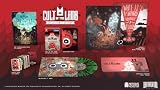
Cult of the Lamb Collector's Edition - Nintendo Switch | $149.99 | Buy on Amazon |
| 5 |
![Cult of the Lamb Standard - Nintendo Switch [Digital Code]](https://m.media-amazon.com/images/I/51W3aHdPZiL._SL160_.jpg)
|
Cult of the Lamb Standard - Nintendo Switch [Digital Code] | $24.99 | Buy on Amazon |
Quick verdict
| If you value | Pick | Why |
|---|---|---|
| Structured solo progression and settlement management | Cult of the Lamb | A directed cult-building and dungeon loop with visible base growth. |
| Online or local co-op survival | Don’t Starve Together | Multiplayer is central to its design, with team survival rules and a broad roster of survivors. |
| Harsh survival systems and emergent stories | Don’t Starve Together | Seasons, resource pressure, ghosts, revival and world-reset stakes shape every run. |
| A more approachable action-and-management blend | Cult of the Lamb | Combat and resource expeditions share time with follower needs, buildings and rituals. |
| New 2026 expansion content | Cult of the Lamb | Woolhaven adds winter survival, ranching, new dungeons and additional cult-building space. |
This is a design comparison, not a price or performance test. No synchronized current price comparison, independent benchmark, player-count statistic or review-score claim establishes a winner on those measures.
What’s actually slowing this PC down?
Pick the symptom - the matching free tool is one click away.
What each game actually is
Cult of the Lamb: a campaign built around a cult
Massive Monster describes the premise as follows: “Cult of the Lamb casts players in the role of a possessed lamb saved from annihilation by an ominous stranger, and must repay their debt by building a loyal following in his name.” You start a cult, recruit followers, expand the settlement and leave it for combat and resource runs. The official description condenses the objective to “Start your own cult, grow your flock, cleanse the non-believers.”
#1 Best Overall
- Start your own cult in a land of false prophets
- Venture out into diverse and mysterious regions to build a loyal community of woodland Followers
- Repay your debt by building a loyal following
- Spread your Word to become the one true cult!
The game released on 11 August 2022. Its structure is deliberately legible: an expedition advances your combat and resource goals, while returning home lets you solve follower problems, construct facilities, perform rituals and organize the settlement. The cult is not merely a decorative base; it is the management half of the campaign and the source of many decisions between runs.
Don’t Starve Together: a cooperative world that keeps changing
Klei calls DST “the cooperative companion to Klei’s cult survival classic” and describes it as “a living, multiplayer sandbox that Klei still updates today.” Its short version is: gather by day, hide from the dark by night, prepare for the next season before it arrives and try not to die.
That description captures the difference from Cult of the Lamb. DST is not organized around one finite campaign route. You gather, craft, build, explore, establish seasonal preparations and respond to threats that emerge from the world. Character abilities, recipes, bosses, ocean systems and late-game raid content give long-running worlds their own objectives. The world can become a shared story of mistakes and recoveries rather than a sequence of authored missions.
Core loop and progression
How progression works in Cult of the Lamb
- Leave the cult for an expedition. You enter combat-focused regions to fight, collect resources and advance the campaign.
- Return to the settlement. The materials and followers you bring back support construction and new decisions.
- Manage the flock. Followers have needs that compete with your time and available resources. Buildings, rituals and settlement organization determine how efficiently the cult functions.
- Unlock and expand. The settlement grows visibly, while campaign objectives provide a clear reason to attempt the next expedition.
This loop suits players who like a reliable rhythm: action in one phase, management in the next. You can make meaningful choices about the cult without having to invent your own long-term objective before the game gives you one.
How progression works in DST
DST asks you to establish priorities rather than follow a single campaign checklist. Early sessions revolve around finding food and basic materials, crafting tools and shelter, and learning how darkness and hostile creatures punish poor preparation. As the world develops, you may prioritize seasonal infrastructure, exploration, boss encounters, ocean travel or late-game raids.
The game’s systems interact in ways that create emergent objectives. A character’s abilities can change what a group considers safe; a coming season can force construction earlier than planned; and a failed expedition can consume resources needed for the next preparation. The result is less predictable than Cult of the Lamb, but also less guided. Players who enjoy planning their own projects will find more room to make a world their own.
Rank #2
- Build your flock: Collect and use resources to build new structures, perform dark rituals to appease the gods, and give sermons to reinforce the faith of your flock.
- Destroy the non-believers: Explore a sprawling, randomly generated world, fight off hordes of enemies and defeat rival cult leaders in order to absorb their power and assert your cult's dominance.
- Spread the word: Train your flock and embark on a quest to explore and discover the secrets of five mysterious regions. Cleanse the non-believers, spread enlightenment and perform mystical rituals on the journey to become the mighty lamb god.
Which game is better for solo play?
For most solo players, Cult of the Lamb is the easier recommendation. Its authored campaign tells you what to pursue, its settlement provides a clear home base and its combat-management split prevents the entire session from becoming a resource emergency. You can focus on improving the cult and mastering expeditions without first learning a large set of survival systems.
Recommended Free Tools
DST is viable alone, but solo play exposes more of its pressure. You must cover every role yourself: gathering, food production, construction, scouting, seasonal preparation and emergency recovery. The game’s systems do not become a guided campaign simply because you are playing alone. If you like setting personal goals and learning through failed worlds, that open structure can be the attraction. If you want a finite arc with explicit progress, it can feel directionless or demanding.
Choose Cult of the Lamb solo when you want
- A campaign with visible milestones and unlocks.
- A home base that grows as a direct result of your expeditions.
- Combat sessions separated by management and customization time.
- A survival-flavored game where follower and settlement decisions matter as much as hunger or weather systems.
Choose DST solo when you want
- A world that can continue without a fixed campaign endpoint.
- Self-directed projects such as building, exploration, boss preparation or ocean travel.
- High consequences for poor planning and the satisfaction of recovering from them.
- Character-specific abilities that change how you approach the same world.
Which game is better with a friend?
DST is the stronger choice when cooperation is the main reason you are buying. Klei designed it around multiplayer and documents dedicated multiplayer content, including its roster of survivors, bosses, ocean systems and late-game raid systems. The group can divide responsibilities, rescue a failed expedition and plan for threats that would be difficult to handle alone.
Its multiplayer structure also creates obligations. A group has to agree on where to build, which resources to reserve and how much danger to accept. One player’s mistake can consume shared supplies or trigger a recovery problem for everyone. That friction is part of the game’s identity, not a side effect.
Cult of the Lamb supports two-player co-op across the campaign through its Unholy Alliance-era content. The current implementation can vary by platform, so check the store listing and platform documentation for the edition you intend to use. Even with co-op available, its strongest identity remains a personal cult-management campaign: the group is helping operate one settlement and advance one directed progression path, rather than sharing an endlessly evolving survival world.
Pick DST for a recurring co-op group
DST is better suited to friends who plan to return to the same world, learn its seasonal cadence and build a long-term base. Its modes let a group adjust the consequences of failure, which is useful when one player is experienced and another is learning.
Rank #3
- BUILD YOUR FLOCK - Collect and use resources to build new structures, perform dark rituals to appease the gods, and give sermons to reinforce the faith of your flock
- DESTROY THE NON-BELIEVERS - Explore a sprawling, randomly generated world, fight off hordes of enemies and defeat rival cult leaders in order to absorb their power and assert your cult's dominance
- SPREAD YOUR WORD - Train your flock and embark on a quest to explore and discover the secrets
Pick Cult of the Lamb for a shorter shared campaign
Choose Cult of the Lamb if you and a friend want a more contained sequence of combat and settlement objectives. It provides a clearer sense of “what to do next,” while DST expects the group to supply more of its own goals.
Which game is harder?
There is no official cross-game difficulty rating, and the two games make different things difficult. DST is generally harsher because survival pressure is the center of every session. In Survival mode, death lowers maximum health and turns the player into a ghost until revival. If every survivor dies, the world ends and resets after a countdown. Those rules make preparation and rescue planning essential.
DST also offers Wilderness and Endless modes, which change the consequences of death and let players tune how punishing a world feels. A mode choice can therefore change your experience substantially; a new player in a more forgiving mode is not facing the same stakes as a group in Survival.
Quick wins for a faster PC:
Repair Windows errors before they cause bigger problemsFix Now →Fix the driver behind crashes, sound loss and screen glitchesFind Drivers →Cult of the Lamb still includes danger, resource management and combat, but it divides your time with follower needs, buildings and rituals. Its structured campaign and settlement loop make setbacks easier to understand and recover from. That makes it the more approachable option for players who want action and management without a survival sandbox controlling every minute.
DST difficulty comes from preparation
- Daily risk: gathering and exploring must be balanced against the approach of darkness.
- Seasonal risk: the group must prepare before a new season creates additional problems.
- Group risk: one player’s death can create a rescue task and consume shared resources.
- World risk: in Survival mode, a total-party death can end the world after the countdown.
Cult of the Lamb difficulty comes from trade-offs
- Time spent on an expedition is time not spent tending the cult.
- Follower needs and settlement facilities compete for resources.
- Combat progression and community management must advance together.
- The game asks you to make moral, ritual and organizational decisions rather than only survive the next night.
Content, replayability and the 2026 expansion picture
Why DST has unusually high replay value
DST’s replayability comes from systems rather than a single campaign. Procedural worlds, seasonal cycles, different survivors, bosses, ocean travel and continuing updates can produce a different set of priorities each time. The official feature information distinguishes Survival, Wilderness and Endless modes, so the same group can choose between severe consequences, altered survival rules and a more forgiving long-term world.
This is a good fit if you enjoy learning a game’s interactions over dozens of sessions. It is less suitable if you want every major objective introduced in a fixed order. DST can remain interesting for a long time, but it expects players to discover what they want to accomplish.
Rank #4
- Build your flock: Collect and use resources to build new structures, perform dark rituals to appease the gods, and give sermons to reinforce the faith of your flock.
- Destroy the non-believers: Explore a sprawling, randomly generated world, fight off hordes of enemies and defeat rival cult leaders in order to absorb their power and assert your cult's dominance.
- Spread the word: Train your flock and embark on a quest to explore and discover the secrets of five mysterious regions. Cleanse the non-believers, spread enlightenment and perform mystical rituals on the journey to become the mighty lamb god.
- Cult of the Lamb: Definitive Edition, Heretic Pack, Sinful Pack, Pilgrim Pack, Woolhaven DLC
- Oracle Deck, Exclusive Hardcover Artbook, Exclusive Collectible 7" Vinyl, Exclusive Double-sided ICONART metal poster, Exclusive SteelBook, The Pilgrim Comic Book, Premium Collector´s Outer Box
What Cult of the Lamb adds with Woolhaven
Woolhaven launched on 27 January 2026 for Steam, Nintendo Switch, PlayStation and Xbox. The expansion adds winter survival threats, structures that keep followers warm, ranching, new dungeons, new followers, decorations, weapons and a larger cult ground.
Those additions broaden the management side of the game without changing its central identity. Winter introduces another settlement concern; ranching gives the cult more to organize; and new dungeons and weapons expand the expedition side. If you finished the original campaign and want more reasons to develop the same cult, the expansion directly targets that need.
What the sales figure does and does not prove
Massive Monster reported more than 4.5 million units sold worldwide since the 2022 release in 2025. That is a studio-reported figure, not an independently audited market estimate. It indicates substantial reach, but it does not establish comparative quality, current player counts or how many owners are active today.
Independent reader supportYour contribution helps us test, update, and keep practical guides available for everyone.Platforms and choosing an edition
Cult of the Lamb
Massive Monster’s platform announcements place the game on PC/Steam, Nintendo Switch, PlayStation and Xbox. The Woolhaven announcement lists the same platform families for the expansion. Confirm that the base game and expansion are sold for the specific console generation and store region you use.
Don’t Starve Together
Klei’s support information lists DST on PC, PlayStation 4 and 5, Nintendo Switch, Xbox One, iOS and Android. Storefront availability, online-service requirements and edition details can differ by region and platform, so check the local listing before buying.
Windows Errors? Fix Them Before They Spread
Repair common Windows errors and clear accumulated junk for a smoother, more stable PC - no reinstall needed.Free scan · no reinstallCrashes, No Sound, or Screen Glitches?
Random freezes, missing sound and display glitches usually trace back to one bad driver. Find and replace yours safely.Free scan · under a minuteBuying on Nintendo Switch
If you are specifically shopping for the Switch version, the accurate search phrase is “Cult of the Lamb Nintendo Switch game.” Verify the current physical or digital format, edition, price, stock and territory on the retailer listing; those details are not fixed by the developer’s platform announcement.
Best Value
- SPREAD YOUR WORD
- Train your flock and embark on a quest to explore and discover the secrets of five mysterious regions. Cleanse the non-believers, spread enlightenment and perform mystical rituals on the journey to become the mighty lamb god.A Nintendo Switch Online membership may be required for online play. Please check the game detail page on Nintendo.com for membership requirements. Copyright Massive Monster 2022. All Rights Reserved.
A decision guide by player type
| Your priority | Better fit | Reason |
|---|---|---|
| “I want to play alone and always know my next objective.” | Cult of the Lamb | The campaign alternates expeditions and cult management with explicit progression. |
| “I want a game my group can keep playing for months.” | Don’t Starve Together | Procedural worlds, seasons, character differences and multiple modes support long-running saves. |
| “I enjoy decorating and optimizing a home base.” | Cult of the Lamb | The cult expands through buildings, rituals, decorations and follower organization. |
| “I want mistakes to create memorable stories.” | Don’t Starve Together | Deaths, failed preparations and recoveries affect the shared world and group plans. |
| “I want combat but not a pure survival game.” | Cult of the Lamb | Dungeon action is paired with management rather than continuous survival pressure. |
| “I want the most demanding survival rules.” | Don’t Starve Together | Survival mode imposes maximum-health loss, ghost states and world-reset stakes. |
| “I want new content available in 2026.” | Cult of the Lamb | Woolhaven adds winter, ranching, dungeons, followers, weapons and settlement space. |
What to expect in your first sessions
Your first hours in Cult of the Lamb
Expect a clear alternation between leaving the settlement and returning to it. Early decisions are about which facilities and follower needs deserve attention before the next expedition. Combat provides immediate objectives, while the settlement supplies the longer-term sense of ownership. If you prefer to learn through a chain of unlocks rather than a blank map, the opening structure is likely to feel comfortable.
Your first hours in DST
Expect to spend more time learning what not to postpone. Food, light, shelter, tools and the coming season all compete for attention. A first world may end because the group explored too far, ran out of supplies or failed to prepare for a predictable threat. That is normal for DST’s design: knowledge of the systems is itself a form of progression.
Bottom line: which one should you buy?
Buy Cult of the Lamb if you want a focused campaign, a personal settlement to improve and a manageable blend of combat and community decisions. Its 2026 Woolhaven expansion makes the cult-management side broader with winter systems, ranching and additional content.
Buy Don’t Starve Together if your priority is cooperative survival, high consequences and a world that can generate new objectives long after the opening hours. Its seasons, modes, survivor abilities, bosses and ocean systems reward groups that enjoy preparation and experimentation.
In one sentence: Cult of the Lamb is the better directed action-management game; Don’t Starve Together is the better multiplayer survival sandbox.
Quick Recap
Product prices and availability are accurate as of the date/time indicated and are subject to change. Any price and availability information displayed on Amazon at the time of purchase will apply.

