
Recommended Free Tools
iTechGuides is reader-supported. When you buy through links on our site, we may earn an affiliate commission. As an Amazon Associate I earn from qualifying purchases. Learn more
There is no safe, universal cross-country mileage or minutes-per-mile target. Your weekly running should match your age, experience, current conditioning, injury history, terrain, and coach’s plan. Run easy and long sessions by sustainable effort, use faster workouts for a clear purpose, choose footwear for the surface, and increase training conservatively. Recovery—sleep, food, fluids, and easy days—is part of the training, not time lost from it. Persistent or sudden pain needs qualified medical assessment.
What makes cross-country running different?
USA Track & Field defines cross country as “a sport in which teams and individuals run races on outdoor courses over natural terrain.” Courses commonly use open country, fields, parks, golf courses, and grasslands; paved-road running should be minimized. In the United States, the season is usually held in fall.
That setting changes how you judge training. Grass, mud, packed dirt, loose footing, sharp turns, and hills can make the same distance much harder than a flat road. Weather also changes the effort required. A pace that is comfortable on a firm path may be excessive on a soft, uneven course, while a downhill section can increase impact even when the watch shows a faster pace.
Do these 3 things before closing this tab:
1Fix the driver behind crashes, sound loss and screen glitches2Clear out junk files and repair common Windows errors3Scan for outdated or missing drivers - takes under a minuteFor that reason, a useful cross-country plan compares sessions by intended physiological load and recovery cost, not by minutes per mile alone. The most important questions are how much you currently run, how many demanding sessions you complete, how long your long run is, how much climbing and technical terrain you cover, and whether you have enough recovery between hard efforts.
#1 Best Overall

- VERSARUN cushioning keeps you moving in balanced comfort all day long.
- Grippy carbon-rubber lugs provide the best traction, so no matter what kind of terrain you cross, you’ll feel unstoppable.
- Fresh design details deliver the trail protection you need with a look that goes beyond the outdoors.
How many miles should I run for cross-country?
Your appropriate mileage is the amount you can absorb consistently while completing quality sessions, attending school or work, sleeping adequately, and remaining pain-free. It is not a fixed number that applies to every runner on a team. Age, biological development, training history, current fitness, injury history, terrain, and the coach’s periodized plan all change the answer.
Use your starting point, not an idealized target
A novice runner, an experienced athlete, and someone returning after an injury should not begin from the same weekly volume. Establish the distance you have actually tolerated over recent weeks, including easy runs, workouts, races, and warm-ups. If your recent running has been inconsistent, treat your sustainable average—not your best previous season—as the starting point.
When you are returning from injury or a long break, a qualified coach or clinician may replace some running with low-impact aerobic work and then reintroduce running gradually. Cross-training can preserve aerobic activity while reducing repetitive impact, but an injured athlete should obtain medical clearance before using it as part of a return plan.
Rank #2

- Lightweight mesh upper with 3-color digital print delivers complete breathability
- Durable leather overlays for stability & that locks in your midfoot
- EVA sockliner provides soft, step-in comfort
- Charged Cushioning midsole uses compression molded foam for ultimate responsiveness & durability
- Solid rubber outsole covers high impact zones for greater durability with less weight
The 10 percent rule is a conservative heuristic
The American Orthopaedic Society for Sports Medicine (AOSSM) describes a commonly used “10 percent rule”: limit an increase in weekly mileage or pace to about 10 percent per week. This is a cautious coaching heuristic, not a law, and it does not guarantee that an increase will be safe. A runner who is ill, underslept, racing frequently, or moving onto substantially hillier terrain may need no increase—or a reduction—even if the arithmetic is below 10 percent.
NCAA overuse guidance emphasizes periodization: training stress should rise and fall across an athlete’s development instead of climbing continuously. A week with a harder race, more hills, or a longer long run may already be a substantial load increase even when total mileage barely changes.
Compare plans by training load
| What to compare | Why it matters | Questions to ask |
|---|---|---|
| Current weekly volume | Determines how much additional running your tissues are prepared to handle. | What distance have I completed consistently in recent weeks? |
| Hard sessions | Workouts and races create more fatigue and mechanical stress than easy mileage. | How many demanding sessions are scheduled, and how close together? |
| Long-run length | A long aerobic run can be appropriate at one volume and excessive at another. | Is the long run proportionate to the rest of the week? |
| Terrain and hills | Soft ground, climbs, descents, and technical footing alter effort and impact. | Does the new route make the same distance materially harder? |
| Recovery days | Adaptation occurs when load is followed by recovery. | Are easy days truly easy, and is there a break after races? |
| Training status | Novices, experienced runners, and athletes returning from injury need different progressions. | Does this plan reflect my actual history rather than someone else’s? |
A practical mileage decision process
- Record a realistic baseline. Include all running, not only the distance shown for the main workout. Note hills, race efforts, and unusually hard surfaces.
- Check readiness. If fatigue, pain, illness, poor sleep, or academic and work stress is high, hold or reduce the load rather than forcing progression.
- Change one major stressor at a time. Avoid adding substantial mileage, hills, speed, and extra races in the same week.
- Progress conservatively. The AOSSM’s approximately 10 percent guideline can serve as an upper boundary for a stable runner, not a required weekly increase.
- Review the response. Look at how you feel during the next several days. A plan that repeatedly leaves you sore, limping, or unable to complete easy running is too demanding regardless of its mileage.
What pace should easy and long runs be?
On a cross-country course, effort comes first and pace comes second. Surface, turns, hills, wind, mud, and footing can make a fixed minutes-per-mile target misleading. An easy run should be sustainable enough to support recovery and leave you able to perform the next planned session. A long run should build aerobic durability without turning into an unplanned race.
Rank #3
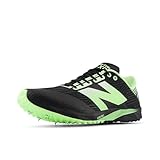
- FuelCell foam delivers a propulsive feel to help drive you forward
- Angular midsole design reduces weight
- Rubber outsole with 6 removable spike pins for traction in any condition
- Breathable mesh upper
- Lightweight synthetic material
Match each session to its purpose
| Session | Intended effort and purpose | What to monitor |
|---|---|---|
| Easy or recovery run | Comfortable, controlled running that supports recovery and routine aerobic volume. | Relaxed mechanics, manageable breathing, and no need to chase the watch on hills or soft ground. |
| Long aerobic run | Steady endurance work performed below race effort. | Whether you can finish with control rather than accumulating race-like fatigue. |
| Threshold or tempo work | Sustained, purposeful hard running that is controlled rather than an all-out effort. | Even effort and the ability to complete the planned duration without a late collapse. |
| Hill repetitions | Strength and power under climbing resistance, with recovery determined by the workout design. | Posture, footing, and consistent effort; uphill pace is not comparable with flat pace. |
| Intervals | Repeated faster segments separated by recovery to target a specific workout stimulus. | Mechanics and repeatability; stop or modify the session if fatigue causes form to deteriorate. |
| Race effort | Competition-specific intensity shaped by the course, weather, field, and tactics. | Effort relative to the course and competitors rather than a road-race pace. |
The American College of Sports Medicine advises runners to break up a run or use intervals when fatigue appears, because fatigue can degrade mechanics. Slowing, taking a brief recovery, or ending a session can be the technically correct choice when continuing would turn controlled training into compromised movement.
NCAA guidance frames performance around periodization, fueling, hydration, sleep, and recovery rather than one universal pace prescription. Use your watch as feedback, not as permission to force a number that does not fit the terrain or your readiness.
How to pace a hilly or technical course
- Run climbs by controlled effort; accept a slower split instead of sprinting the first hill.
- Use descents to regain rhythm without overstriding or braking aggressively.
- Keep your steps and posture stable on turns, mud, and uneven ground.
- Judge the whole session by how evenly you sustained the intended effort and how well you recover afterward.
Do I need cross-country spikes or regular running shoes?
Most runners need comfortable running-specific training shoes for ordinary mileage and reserve cross-country shoes or spikes for courses and races that call for them. USA Track & Field says running-specific shoes are vital for supporting and cushioning the knees and feet, and recommends telling a running-store expert which surfaces you typically use so the shoe can be matched to that need.
Rank #4

- Mesh on upper adds breathability.
- Foam midsole delivers a soft ride.
- Flex grooves create a cushioned effect for your run.
- Waffle outsole is a made of a durable, flexible material that helps keep you on the move.
- HM9594-001
Choose footwear by use and surface
| Use | Practical choice | Key considerations |
|---|---|---|
| Daily mileage and most workouts | Comfortable running shoes suited to your usual roads, paths, or grass. | Fit, cushioning, traction, and comfort over the surfaces you run most often. |
| Firm grass or a suitable race course | Cross-country racing shoes or spikes when permitted. | Course rules, spike length, traction, and whether your feet tolerate the shoe. |
| Very hard, rocky, paved, or mixed routes | Footwear designed for that surface rather than a spike chosen only for speed. | Protection, grip, and stability may matter more than the lightest possible shoe. |
Do not debut an unfamiliar spike in an important race. Practice in it first, check that it does not create hot spots or pain, and confirm the competition’s footwear rules. No shoe can compensate for an abrupt training increase, poor recovery, or deteriorating mechanics.
When should running shoes be replaced?
USATF describes a common consensus of about 300–500 miles before replacement. AOSSM gives a broader guideline of about 500–600 miles. These figures are inspection prompts, not warranties: runner weight, terrain, weather, shoe construction, and rotation change how quickly a pair loses useful cushioning and traction.
Free tools Windows power users keep installed
One-click scans. No signup required.
| Signal | What it can indicate | Action |
|---|---|---|
| Worn or uneven outsole | Reduced traction or altered loading. | Compare with a newer pair and replace if grip or stability is compromised. |
| Compressed or visibly creased foam | Loss of cushioning and resilience. | Retire the pair from regular running if comfort has clearly declined. |
| Comfort has disappeared | The shoe no longer protects or feels natural for its intended use. | Replace it even if the mileage estimate has not been reached. |
| New, recurring aches | Possible footwear contribution, though many other causes are possible. | Reduce load and seek professional assessment if discomfort persists. |
How do I recover between hard workouts and races?
Recovery is the combination of reduced training stress and the resources needed to adapt. NCAA guidance says performance and recovery are enhanced by the appropriate quantity, quality, and timing of food and fluids. Adequate hydration before, during, and after activity is critical; dehydration can compromise performance and increase exertional-heat-injury risk.
Best Value

- MULTI-USE OUTDOOR ADVENTURE VERSATILITY: Extend your range beyond pavement with lightweight trail running shoes engineered for diverse terrain; adapt from maintained trails to technical routes for reliable performance
- KEEP FEET FRESH AND DRY: Lock out storms and stay dry with advanced CLIMAPROOF technology that blocks external moisture while allowing sweat to escape; this wind-resistant yet breathable system ensures comfort when conditions deteriorate
- COMFORTABLE AND SUPPORTIVE: Softer LIGHTMOTION foam provides step-in plushness and sustained support across uneven ground; midsole stays responsive for efficient forward propulsion during uphill climbs and technical descents
- TRACTION FOR TRAIL SURFACES: Move confidently across all surfaces thanks to trusted TRAXION rubber compound for reliable multi-directional grip; aggressive lugged tread pattern bites into loose dirt, grips wet roots, and holds firm on rocky sections
- MADE TO LAST ON ROUGH TERRAIN: Durable upper reinforcements shield feet from trail hazards; Ortholite sockliner delivers comfortable cushioning, while the soft collar reduces friction; higher toe box balances protection with all-day wearability
Build recovery into the week
- Sleep: Protect a consistent opportunity for sleep, especially after races and demanding workouts.
- Food: Eat regular meals that provide enough energy and include carbohydrate, protein, and nutrient-dense foods rather than trying to train on chronically low intake.
- Fluids: Hydrate before, during, and after activity, adjusting for heat, humidity, duration, and sweat loss.
- Easy days: Keep recovery running genuinely easy or take rest when that is what your plan requires.
- Periodization: Alternate periods of loading with recovery instead of stacking hard sessions indefinitely.
- Monitoring: Track soreness, mood, sleep quality, performance, and willingness to run; a downward trend is a reason to tell your coach.
Use cross-training when running load needs to fall
AOSSM identifies cross-training as useful during recovery from injury or when starting a running program. Cycling, swimming, or elliptical exercise can maintain aerobic activity with less running impact. If you are injured, obtain medical clearance before using cross-training and stop if the alternative activity reproduces symptoms.
A flexible race-week pattern
The exact schedule belongs to your coach, but the principle is consistent: place demanding workouts and races where you can follow them with easier running or rest. Do not turn every easy day into a test. After a hard race, the next session should be chosen according to soreness, sleep, hydration, and the coach’s periodization—not merely the desire to restore a missed mileage number.
What should I do if my knee or shin hurts?
Pain is a training signal, not a challenge to ignore. First reduce or stop the activity that provokes it and note when it appears: during warm-up, only at faster effort, afterward, or while walking. Do not continue a workout when fatigue is causing your mechanics to deteriorate.
The Tool Desk
Outbyte PC Repair FREEClear out junk files and repair common Windows errorsFree Scan →Outbyte Driver Updater FREEScan for outdated or missing drivers - takes under a minuteDriver Scan →Use a conservative decision tree
- Stop the provoking session. Do not test a painful knee or shin with extra repetitions.
- Check severity and function. Inability to bear weight, rapidly increasing swelling, deformity, numbness, or sudden severe pain warrants prompt medical care.
- Modify training. Replace running with rest or medically appropriate low-impact exercise while symptoms are evaluated.
- Review recent changes. Look for abrupt mileage, pace, hill, surface, footwear, or race-load increases.
- Seek qualified assessment. USATF recommends that persistent discomfort be assessed by a physician or qualified professional.
- Return progressively. Resume only when daily movement and easy activity are tolerable, following the clinician’s or coach’s progression.
Cadence and mechanics
ACSM reports that interventions increasing cadence by approximately 5–30% reduced several impact-related mechanical measures in the studies it reviewed. That does not make a cadence change a guaranteed injury-prevention treatment, and it should not be forced while sprinting or running over unstable ground. A qualified coach or clinician can help determine whether a modest change improves your mechanics.
USATF also recommends strength and flexibility work, cross-training, running-specific shoes, and professional gait evaluation when needed. These are risk-reduction strategies, not promises that injury can be prevented. Persistent pain deserves an assessment rather than a new shoe, stretch, or gadget used as a substitute for diagnosis.
A simple checklist for your next training week
- Write down your recent sustainable mileage before adding distance.
- Count hard workouts, races, hills, and unusually technical surfaces as training stress.
- Set easy and long runs by controlled effort, not a rigid pace target.
- Keep most mileage in comfortable training shoes matched to your normal surface.
- Introduce spikes on practice days and follow the meet’s rules.
- Inspect shoes for outsole wear, compressed foam, lost comfort, and recurring aches.
- Plan sleep, meals, fluids, easy days, and cross-training before the week begins.
- Stop for deteriorating mechanics, persistent pain, or sudden severe symptoms and obtain appropriate professional help.
Bottom line
Successful cross-country training is individualized load management. Start from what you currently tolerate, progress conservatively, judge pace by purpose and effort, use footwear suited to the surface, and treat recovery as a required training component. The safest plan is the one that lets you complete the season healthy enough to train consistently.
Quick Recap
Product prices and availability are accurate as of the date/time indicated and are subject to change. Any price and availability information displayed on Amazon at the time of purchase will apply.

