
iTechGuides is reader-supported. When you buy through links on our site, we may earn an affiliate commission. As an Amazon Associate I earn from qualifying purchases. Learn more
Crimson Moon is a run-based gothic action RPG from ProbablyMonsters, set in the fallen medieval city of Gildenarch. You play a Nephilim—part human, part angel—through short missions that combine Souls-like melee combat with roguelite resets and permanent collection upgrades. The key rule is simple: Souls help you survive the current run, while Gold and Purified gear improve future runs.
The game launched on Steam on September 1, 2026. It supports solo play and online co-op for two players. A mission typically takes about 15–45 minutes, and there is no corpse run: when the shared life pool is exhausted, that run ends. You keep lasting progress when you successfully bring loot home and Purify it, so even an unsuccessful attempt can teach enemy patterns and improve your next loadout.
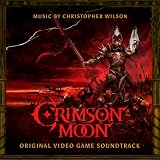


What kind of game is Crimson Moon?
Crimson Moon sits between two familiar formats. Its combat borrows the deliberate timing of a Souls-like, while its campaign structure is a roguelite built around repeatable missions, temporary run resources, randomised rewards and permanent unlocks. Crimson Moon Forge describes it accurately as “a roguelite with Souls-like combat, not a Souls campaign.”
Do these 3 things before closing this tab:
1Clear out junk files and repair common Windows errors2Fix the driver behind crashes, sound loss and screen glitches3Repair Windows errors before they cause bigger problemsThat distinction changes how you should play. You are not expected to clear one uninterrupted medieval world with a single character build and a conventional checkpoint route. Instead, you begin at the Sanctus Clypeus hub, select a ward from the War Table, fight through a sequence of encounters, collect resources and equipment, and decide how aggressively to push toward the boss. A failed run is not automatically wasted: knowledge, Purified equipment and permanent Gold upgrades can carry your account forward.
#1 Best Overall
| Question | Crimson Moon’s answer |
|---|---|
| Roguelite or Souls-like? | Both: roguelite progression and repeatable runs wrapped around Souls-like combat. |
| Is there a corpse run? | No. A run ends when its shared life pool is exhausted. |
| How long is a mission? | Approximately 15–45 minutes, according to the Crimson Moon Forge 2026 guide. |
| Can you play alone? | Yes. The complete game is playable solo. |
| Can you play with a friend? | Yes, through online co-op for a maximum of two players. |
| Are there character classes? | No traditional classes are documented. Your role comes from weapons, Weapon Arts, armor, trinkets, Boons and your Angel choice. |
Your first run: the complete loop
- Start at Sanctus Clypeus. Use the hub to review your collection, permanent upgrades and available services before leaving.
- Choose a ward at the War Table. The ward determines the district and the encounters you will learn during that attempt.
- Clear regular and elite encounters. Fight methodically, search side paths and open chests rather than sprinting directly toward the objective.
- Spend Souls during the run. Souls are temporary. Use them for consumables, temporary upgrades and extra Boons that make the current attempt stronger.
- Look for secrets and high-value rewards. Chests, elite enemies, bosses and secret areas can all provide loot.
- Prepare for the boss. Keep enough healing, mana support and a functioning Weapon Art plan for the final encounter instead of spending every resource on ordinary enemies.
- Return to the hub and Purify loot. Equipment only becomes part of your lasting collection after it is brought home and Purified.
- Use permanent services before the next mission. Spend Gold on collection gear upgrades, raise the rarity of Purified equipment with Gajov, and exchange Lore Scrolls with Mara for additional Boons.
The guide describes a three-mission and World-Boss structure. Treat each mission as a learning cycle: identify enemy telegraphs, discover which rewards are worth the risk, and refine a loadout that can survive the next district rather than chasing maximum damage immediately.
How combat works
Crimson Moon’s combat is built around stamina, positioning and readable enemy attacks. You have light and heavy attacks, charged attacks, sprint and dodge-roll attacks, blocks, parries and Weapon Arts. Stamina governs the physical actions, while Weapon Arts consume mana and operate on cooldowns. A strong beginner habit is to keep attacking when the enemy is recovering, then stop before your own stamina bar prevents a block or dodge.
Light, heavy and charged attacks
- Light attacks are your reliable part of a chain and are useful for maintaining pressure.
- Heavy attacks generally trade speed for greater impact and are valuable when an enemy is committed to a long animation.
- Charged attacks require preparation, so use them after a whiff, stagger or clear opening rather than trying to force them through incoming damage.
- Sprint and dodge-roll attacks let you convert movement into damage. They are especially useful for closing distance after an enemy’s signature attack.
Blocking, parrying and dodging
Do not treat every attack as a signal to roll away. The guide reports a generous stamina budget, which lets you combine pressure with defensive actions. Learn whether a district’s common attack is safest to block, parry or dodge, then reserve stamina for the next exchange. Blocking is a dependable answer while you are learning; parrying is more rewarding but demands tighter timing; rolling is best when an attack tracks your guard, covers a wide area or cannot be comfortably parried.
Quick wins for a faster PC:
Fix the driver behind crashes, sound loss and screen glitchesFind Drivers →Repair Windows errors before they cause bigger problemsFix Now →Scan for outdated or missing drivers - takes under a minuteDriver Scan →Enemy districts have recognisable signature attacks. Your first attempts should therefore be observation runs: watch the wind-up, identify the attack’s range and note the recovery window. Once you know the telegraph, you can punish rather than panic-roll.
Guard breaks and executions
Pressure an elite’s guard until it breaks, then use the opening for an execution. Guard breaking is one of the clearest ways to turn a defensive encounter into burst damage. Heavy attacks, charged attacks and well-timed Weapon Arts can help you reach that state, but do not spend all of your mana simply to force a break if the enemy is already close to dying.
Weapon Arts and mana management
Weapon Arts are cooldown abilities that consume mana. They are not free basic attacks, so a mana flask belongs in your overall damage plan. Use an Art when it accomplishes a specific job: interrupting a dangerous attack, pushing an elite toward a guard break, finishing a vulnerable target or creating breathing room in a crowded fight.
A common beginner mistake is to empty the mana bar on the first ordinary enemies and then reach the boss without a reliable burst or control option. Conversely, hoarding every charge can make a run harder than necessary. Spend mana when it prevents damage or shortens a dangerous engagement, and keep at least one meaningful option for an elite or boss phase.
Recommended Free Tools
Angel form and Angel Ascension
Your Angel choice is one of the build decisions that replaces a traditional character class. Angel Ascension transforms your combat profile and is best treated as a limited emergency or burst window, not as a button to press on cooldown.
When to activate Angel Ascension
- When a boss enters a dangerous phase and you need to survive or end it quickly.
- Against a high-health elite whose guard or damage pattern is consuming too many resources.
- When you are cornered and ordinary movement cannot create a safe escape.
Descriptions of Angel durability are inconsistent in the checked material. Plan around the developer-side interpretation that you can still die while transformed. Angel form is highly durable, not invulnerable. Continue watching telegraphs, avoid environmental traps and do not stand in damage simply because the transformation is active.
Souls, Gold and the economy of a run
Understanding the two currencies prevents the most expensive early mistakes.
| Resource | When it exists | What it buys | What happens at the end of a run |
|---|---|---|---|
| Souls | Temporary, run-focused currency | Consumables, temporary upgrades and additional Boons | They are not your permanent progression currency. |
| Gold | Permanent collection currency | Upgrades for gear in your collection | It supports future loadouts and is not tied to one mission. |
Spend Souls for immediate survival, not for an abstract future build. A healing item, mana flask or temporary defensive upgrade can be worth more than saving for a theoretical perfect purchase when the current district is already threatening to end the run.
Gold has the opposite priority. Use it on equipment you expect to keep using, especially once you understand whether your preferred setup depends on sustained stamina, frequent Weapon Arts, guard breaks or Angel timing. Do not confuse an attractive temporary run bonus with a permanent investment.
Loot, Purification and gear progression
Loot can come from chests, elites, bosses and secret areas. Finding an item is not the same as permanently owning it. You must bring the loot back to the hub and Purify it; only then is it added to your lasting collection.
What to keep during a run
- Equipment that fills a missing weapon or armor slot.
- Items that support the way you actually spend stamina and mana.
- Higher-rarity drops that can replace a weaker collection item after Purification.
- Trinkets, throwables and consumables that solve a specific weakness in the next encounter.
Rarity and Gajov
Gajov, the vampire blacksmith, raises the rarity of Purified gear. Because rarity improvements happen after an item reaches the collection, the sensible sequence is to secure the item, return safely, Purify it and then decide whether the Gold cost of improving it is justified. Do not risk an otherwise successful run for a single marginal drop when your life pool is low.
Build components
A build is assembled from several interacting parts rather than from a fixed class:
- Weapon sets: determine your basic attack rhythm and how comfortably you can pressure a guard.
- Weapon Arts: provide cooldown-based damage, control or burst and consume mana.
- Armor: contributes to the defensive profile of the loadout.
- Trinkets: add specialised utility or combat effects.
- Boons: alter the run and provide build-defining bonuses.
- Angel choice: shapes your transformation and emergency plan.
Boons and the 91-option build space
The guide documents 91 Boons. You will not need to understand all of them before starting. Pick bonuses that reinforce a clear plan instead of collecting effects that compete for different resources.
Rank #3

- Gamefound Success: Enjoy 60 minutes of magical potion-brewing strategy as your coven races to outshine your rivals, in a game that raised over $1.7 million on Gamefound.
- Brew Your Potion: Forage ingredients in the moonlit garden, barter with the mysterious Elder Witch, and arrange puzzles of Ingredients in your cauldron to prove your prowess.
- Outwit Your Rivals: Watch out for mischievous frogs and poisonous mushrooms as rivals try to snatch your ingredients or sabotage your brew before the moon completes its cycle.
- High-Quality Components: Includes 4 Witch's Huts, 30 Potion cards, 66 Basic and 14 Rare Ingredient tokens, Star Power tokens, 5 Garden tiles, a Witch's Hat, and a Rule Book.
- Great Gift for Strategy Fans:: A spellbinding mix of foraging, bartering, and puzzle-solving perfect for family game nights, ages 10 and up, with 2-4 players (2-6 with expansions).
A stamina-and-pressure plan
Choose effects that let you maintain light and heavy attack pressure, recover from exchanges or reach guard breaks without exhausting the stamina bar. This approach is forgiving in ordinary encounters because it relies on fundamentals you use every fight.
A mana-and-Weapon-Art plan
Choose Boons that make repeated Weapon Arts practical, then carry a mana flask and reserve enough mana for elites or bosses. This setup can deliver strong burst but punishes careless spending early in a mission.
A defensive solo plan
Prioritise survivability, reliable blocking and safe punish windows. Solo players cannot rely on a partner to draw aggro or revive a bad engagement, so a slightly slower build can be more efficient than a fragile damage setup.
A complementary co-op plan
Coordinate so both players do not consume the same resource or duplicate the same role. One player can focus on guard breaks and sustained melee pressure while the other brings control, ranged pressure through available Weapon Arts or emergency support. The exact pairing depends on the Boons and equipment offered in that run.
Mara converts Lore Scrolls into additional Boons. Use that service to widen your future options, but do not let the number 91 create analysis paralysis: begin with one combat identity, then adjust after you have seen which enemy attacks and resource costs actually cause failures.
Solo and two-player co-op
The full game can be played alone or online with one partner. Two players is the maximum group size. Co-op increases enemy count and difficulty, and both players share the same life pool.
What shared lives change
A partner does not create an unlimited safety net. If your companion dies, the shared run resource is reduced; repeated deaths can end the mission for both players. Reviving or rescuing a partner is therefore a strategic decision, not an automatic action. Clear nearby threats first when possible, communicate before spending a major cooldown and avoid splitting so far apart that one death becomes impossible to recover from.
Outdated Drivers Are Slowing You Down
One free scan finds every outdated or missing driver and matches the right update for your exact hardware.Free scan · exact hardware matchPC Slower Than It Used to Be?
A free scan shows the junk files, broken settings and background clutter dragging Windows down - then fixes them in one click.Free scan · Windows 10 & 11Co-op preparation
- Agree on who is comfortable initiating guard breaks and who will hold mana for control or burst.
- Do not both spend Angel Ascension on the first elite unless the encounter genuinely requires it.
- Call out boss phases and dangerous signature attacks rather than independently committing to long animations.
- Leave enough Souls for defensive supplies because the higher enemy count increases attrition.
Co-op adds build depth, but it does not remove the need to learn telegraphs or manage deaths. A disciplined solo player and a coordinated pair can both progress; an uncoordinated pair can lose a run faster than a careful solo attempt.
Rank #4

- Brand New in box. The product ships with all relevant accessories
Does Crimson Moon have crafting?
No checked source establishes a crafting station, recipe list, resource loop or beginner crafting priority. The documented progression systems are loot, Purification, rarity upgrades, Boons, Weapon Arts, trinkets, throwables and consumables.
That is a limit on what is currently verified, not proof that no crafting feature exists anywhere in the game. Until a first-party explanation or current in-game documentation confirms recipes and materials, do not plan a build around a supposed crafting tree or farm resources for an unverified station. Treat equipment drops and Purification as the confirmed gear path.
A practical beginner plan for the first several runs
Run one: learn the district
Use the first attempt to identify common enemy telegraphs, test the timing of block and dodge, and discover the safest route through the ward. Spend Souls on survival and try at least one Weapon Art so you understand its mana cost and cooldown. Do not chase every secret if doing so leaves you without healing before the boss.
The Tool Desk
Outbyte PC Repair FREERepair Windows errors before they cause bigger problemsFix Now →Outbyte Driver Updater FREEFix the driver behind crashes, sound loss and screen glitchesFind Drivers →Run two: establish a combat identity
Choose whether you prefer sustained melee pressure, guard-break burst, mana-driven Weapon Arts or a defensive solo approach. Select Boons and equipment that support that identity. Keep a mana flask if your plan depends on Weapon Arts, and practise one punish window against each elite type you meet.
Run three: optimise the return
Once the route is familiar, search more deliberately for chests and secret areas, but set a risk limit. If your life pool is low and your collection already has an adequate item for a slot, returning safely to Purify the loot is often better than gambling the entire run for a marginal upgrade. After returning, use Gold on the most relevant collection gear and consider Gajov’s rarity service.
Before a World Boss
- Carry healing and a mana flask appropriate to your build.
- Keep at least one strong Weapon Art available for a dangerous phase.
- Decide in advance when Angel Ascension will be used.
- In co-op, confirm who will draw pressure and how you will respond to a death.
- Do not assume Angel form makes you immune to lethal damage.
Common mistakes and how to correct them
Rolling through every attack
Problem: You spend stamina escaping attacks that could have been blocked or parried, then cannot attack or defend.
Correction: Learn one signature attack at a time. Block or parry attacks with predictable timing, and reserve rolls for tracking, area coverage or attacks that beat your guard.
Spending every Soul immediately
Problem: You buy a temporary advantage early and reach the elite or boss without healing, mana support or a useful Boon.
Correction: Budget Souls across the whole mission. Immediate survival comes first, but the final encounter is where unused resources have the highest value.
Saving every Weapon Art
Problem: You finish ordinary fights with a full mana bar but take avoidable damage because you refused to use control or burst.
Correction: Use an Art when it prevents damage, creates a guard-break opening or ends a dangerous engagement. Replace it before the boss when possible.
Free tools Windows power users keep installed
One-click scans. No signup required.
Confusing found loot with permanent gear
Problem: You assume an item is secured the moment it drops.
Correction: Bring it home and Purify it. Only then does it join the permanent collection and become a candidate for Gold upgrades or rarity improvement.
Activating Angel form too early
Problem: Ascension expires before a boss phase or leaves you without an emergency answer when cornered.
Correction: Save it for a dangerous boss phase, a high-health elite or a situation where ordinary movement cannot recover the fight.
What’s actually slowing this PC down?
Pick the symptom - the matching free tool is one click away.
Treating co-op deaths as free
Problem: The team assumes a fallen partner can repeatedly make risky plays because only that player is affected.
Correction: Remember that lives are shared. Coordinate revives, avoid unnecessary splits and preserve defensive resources for the encounters that threaten the whole run.
Quick decision guide
| If you are deciding… | Use this rule |
|---|---|
| Block or roll? | Block predictable attacks; roll attacks that track, cover a wide area or defeat your guard. |
| Spend Souls or save them? | Buy what keeps the current run alive, while reserving enough healing and mana support for elites and the boss. |
| Use a Weapon Art now? | Use it for control, a guard-break setup, burst or damage prevention; do not empty mana without a purpose. |
| Risk a secret area? | Take the detour when your life pool and supplies can absorb a mistake; return safely when the permanent loot is already valuable. |
| Upgrade with Gold? | Invest in collection gear that matches your chosen combat identity rather than every temporary drop. |
| Activate Angel Ascension? | Use it for a dangerous phase, a high-health elite or a cornered fight, and continue playing as if lethal damage is possible. |
| Play solo or co-op? | Choose solo for full control of the life pool; choose co-op for complementary builds, remembering that enemy difficulty and shared-life risk increase. |
Bottom line for new players
Approach Crimson Moon as a learning-focused roguelite, not as a one-time Souls campaign. Learn each ward’s telegraphs, manage stamina and mana together, spend Souls on the run in front of you, and protect valuable loot until you can return it for Purification. Use Gold and Gajov’s rarity service on equipment you genuinely understand, let Boons define a coherent plan, and time Angel Ascension around danger rather than impatience. Solo and two-player co-op are both viable, but every player must respect the shared life economy in co-op. Crafting recipes are not currently verified, so build around the confirmed loot-and-Purification loop instead.
Quick Recap
Product prices and availability are accurate as of the date/time indicated and are subject to change. Any price and availability information displayed on Amazon at the time of purchase will apply.

