
Free tools Windows power users keep installed
One-click scans. No signup required.
iTechGuides is reader-supported. When you buy through links on our site, we may earn an affiliate commission. As an Amazon Associate I earn from qualifying purchases. Learn more
Begin with the opening story until you understand the core systems and establish Greymane Camp. From there, alternate story missions with nearby exploration: unlock travel points, gather useful materials and Sealed Abyss Artifacts, complete convenient local quests, and invest in camp upgrades. This rhythm keeps progression moving without turning Pywel into either a checklist or a corridor.
What progression in Crimson Desert actually involves
Crimson Desert is an open-world action-adventure set on Pywel. Its central premise follows Kliff as he tries to reunite scattered Greymane comrades and rebuild the faction, so the main story is the clearest way to learn the world and unlock context for its systems. The official site does not prescribe one combat or exploration route. Pearl Abyss describes the game this way: “On the unforgiving battlefields of Crimson Desert, there is no single path to victory.” The same description emphasizes developing skills, weapons, and equipment according to how you want to play (Pearl Abyss).
| # | Preview | Product | Price | |
|---|---|---|---|---|
| 1 |

|
Crimson Desert: Standard Edition - PlayStation 5 | $62.99 | Buy on Amazon |
| 2 |
|
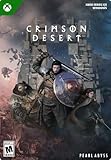
Crimson Desert | Standard Edition | XBOX Series X|S and Windows Digital | $69.99 | Buy on Amazon |
That flexibility is useful, but it can make the first hours feel unfocused. Think of progression as four connected activities rather than a single ladder:
Recommended Free Tools
- Main-story missions: establish Kliff’s situation, introduce mechanics, and provide the narrative reason to move between regions.
- Exploration: uncover the map, find Hidden Bells and Fast Travel Points, collect refinement materials, and discover local activities.
- Side and faction quests: add context and can improve practical conveniences, including inventory capacity according to guide recommendations.
- Greymane Camp: turns gathered resources and quest progress into a more useful base, including additional private storage.
There is no evidence of a universally correct percentage split between story and optional content. A good rule is to do useful nearby activities while you are already in an area, then return to the main quest when detours stop solving an immediate problem.
#1 Best Overall
- Join Kliff, captain of the Greymanes, and his comrades as they embark on a relentless journey to defend Pywel and fulfill their mission.
- Along your perilous path stands both dependable allies and countless foes who will stop at nothing to see your downfall.
- Face trials to uncover the truth of the catastrophe looming over Pywel and restore peace to the continent.
- Explore the mesmerizing landscapes of the continent where mystical beings, hidden treasures, and thrilling adventures await.
- Pre-order to receive the Khaled Shield (Pre Order Code on Receipt). PS5 Editions include the Grotevant Plate Set DLC as a PS5 exclusive bonus. (In Pack DLC Voucher). Bonus DLC Includes: Grotevan Plate Helm, Grotevan Plate Armor, along with Grotevan cloak, gloves, and boots!
Your first-session route, step by step
The following is a practical sequence, not an officially required order. It combines the game’s stated premise with route advice from guide publishers.
- Follow the opening story far enough to learn the basic loop. Pay attention to movement, combat, equipment, map reading, and whatever introductory systems the game presents before deliberately wandering away.
- Establish and inspect Greymane Camp. Treat the camp as part of progression, not merely a place to pass through. Note which services and upgrades are available and what materials they request.
- On the next story journey, take short local detours. Activate a travel point or Hidden Bell, gather materials you can use, and investigate a nearby activity rather than making a separate expedition for every icon.
- Accept convenient faction or side quests. Prefer objectives near your current route or ones that improve a capability you are already feeling the lack of, such as carrying capacity.
- Return to camp when an upgrade is affordable. Spend resources on useful infrastructure instead of hoarding everything for an unspecified future build.
- Resume the story when exploration becomes backtracking. Unlocking movement options and map information should reduce future travel; it should not force you to clear every marker before the next story mission.
Why the opening story should come first
Starting with the main quest gives you a controlled introduction to the game’s vocabulary and establishes why the Greymanes and Kliff are moving through Pywel. It also lets you recognize which systems are permanent tools and which are temporary tutorial constraints. Leaving immediately for a distant corner of the map can produce a lot of discoveries without giving you a useful way to organize them.
Continue until you understand how to fight ordinary enemies, manage equipment, read objectives, and use the camp. You do not need to rush every story objective after that point. The important threshold is familiarity: once you can travel, fight, collect, and return to camp without guessing what each interface is for, exploration becomes productive rather than confusing.
Exploring Pywel without losing your direction
Unlock travel infrastructure as you move
PowerPyx’s strategy-guide hub recommends activating Hidden Bells and Fast Travel Points while uncovering map information, then gathering upgrade materials and Sealed Abyss Artifacts before continuing the story (PowerPyx). Use that as a flexible field routine: when a marker is a short detour from your objective, claim it; when reaching it would send you far off course, mark it for a later trip.
Fast-travel points have two competing benefits. They reduce repeated rides and make camp visits or quest turn-ins less tedious, while physically traveling through an unexplored region exposes you to materials, discoverables, and local quests. The best choice changes with your purpose:
| Situation | Prefer | Reason |
|---|---|---|
| You are crossing familiar ground to hand in a quest or reach camp | Fast travel | It removes backtracking that no longer offers new information. |
| You are entering an unexplored area for the first time | Organic travel | You can reveal map information, collect materials, and notice local activities. |
| A nearby travel point is just off your current route | Detour to activate it | It creates a future shortcut at a low immediate cost. |
| The detour is sending you into a distant region with no current objective | Stay on course | Save the destination for a deliberate exploration run. |
What the published size and playtime estimates mean
PowerPyx describes Pywel as approximately 90 km² and estimates more than 300 hours of content. Those figures belong to PowerPyx’s 2026 guide hub, not to a methodology or measurement published by Pearl Abyss, so treat them as orientation rather than a guaranteed completion time or a promise that every square kilometre contains equal activity density. They do explain why a mixed rhythm is more sustainable than trying to clear every point of interest before advancing.
Carry the right kind of loot
Early exploration is most useful when it produces materials you can actually spend. Gather refinement and upgrade materials, note Sealed Abyss Artifacts, and return to camp when your inventory or upgrade requirements make a visit worthwhile. Do not interpret “collect useful materials” as “pick up everything forever”: if a trip is filling your inventory with items you cannot identify or use, advance the story until the relevant system is clearer.
The Tool Desk
Outbyte PC Repair FREEClear out junk files and repair common Windows errorsFree Scan →Outbyte Driver Updater FREEFix the driver behind crashes, sound loss and screen glitchesFind Drivers →Side quests, faction work, and inventory capacity
Side content is not automatically better than the story, and the story is not automatically better than side content. Choose optional objectives by proximity and practical payoff. PowerPyx specifically recommends pursuing faction quests as desired, including quests that can increase inventory size. That makes a nearby faction objective more valuable than a remote activity that offers only another marker on the map.
A simple decision test
- Take it now if the quest is in your current area, addresses a problem you are experiencing, or unlocks a convenience you will use repeatedly.
- Pin it for later if it requires a long diversion but has no immediate relevance to your equipment, carrying capacity, or route.
- Return to the story if several side objectives have accumulated and you no longer know why you are doing them.
Inventory upgrades have an outsized effect because they reduce the number of forced returns to storage or camp. Even when a quest does not improve combat statistics directly, a capacity increase can make every later gathering trip more efficient.
Greymane Camp and the storage payoff
Camp development is a concrete progression system, not just decoration. In Pearl Abyss’s version 1.02.00 notes, revised April 4, 2026, Greymane Camp has five expansion stages, and private storage scales from 240 slots to a maximum of 1,000 slots (Pearl Abyss patch notes). The note establishes the starting and maximum capacities and the existence of five stages; it does not state the capacity at each intermediate stage.
| Camp storage point | Capacity established in version 1.02.00 notes | Practical implication |
|---|---|---|
| Before expansion | 240 private-storage slots | Plan regular returns if you gather broadly. |
| Expansion stages 1–4 | Intermediate totals not stated in the cited notes | Check the in-game upgrade screen rather than assuming equal increases. |
| After the fifth expansion | Up to 1,000 private-storage slots | Long-term collecting becomes substantially less restrictive. |
Because these are patch-specific figures, verify later patch notes before treating them as the current maximum. The broader lesson remains valid: camp upgrades can solve logistical friction, so resources spent there are part of progression even when they do not raise attack power.
Choosing skills, weapons, and equipment
Do not chase a supposed “best early build” unless you have a current, build-specific source that explains its assumptions. Pearl Abyss’s official positioning is that players can grow skills, weapons, and equipment and decide how to use them. That supports experimentation rather than a mandatory sequence.
Build around problems you actually have
- If ordinary fights feel unsafe, prioritize options that improve your ability to control distance, interrupt threats, or recover from mistakes.
- If travel and gathering are your bottleneck, favor camp and inventory conveniences before marginal combat upgrades.
- If a weapon’s timing or range feels natural, invest in learning it instead of switching because a guide labels another option optimal.
- If a skill solves a recurring encounter problem, keep it even if a damage-focused list ranks it lower.
Compare choices by comfort, weapon preference, and the problem they solve. The available evidence does not establish a single stat priority, universal damage ranking, or officially optimal early loadout, so presenting one as mandatory would overstate what is known.
Movement controls: Basic versus Classic
Version 1.02.00, documented in Pearl Abyss’s April 4, 2026 patch notes, added a meaningful choice in how movement accelerates. The setting is available in the game’s controls or settings interface.
Rank #2
- A VAST, SEAMLESS WORLD — Explore the continent of Pywel as a fully seamless open world, where countless destinies unfold across uncharted lands filled with danger, beauty, and discovery.
- RELENTLESS ACTION, BRUTAL COMBAT — Fight for survival in fast‑paced, visceral battles using swords, spears, bows, elemental abilities, and powerful skills, where a single moment can determine victory or defeat.
- DAWNING FATE — Witness the fragile balance between rival factions shatter as Kliff and the Greymanes are drawn into a brutal conflict that reshapes the fate of the continent.
- THOSE WHO PROTECT AND THOSE WHO TORMENT — Confront the Black Bears and their ruthless leader Myurdin as allies fall, loyalties fracture, and Pywel descends further into chaos.
- THE BEGINNING OF A NEW JOURNEY — Set out to rebuild the Greymanes, reclaim a lost homeland, and pursue vengeance along a path that reveals deeper truths about power, war, and destiny.
| Movement style | How acceleration works | Mount-stamina note | Who may prefer it |
|---|---|---|---|
| Basic | Hold the sprint input to accelerate. | Mount stamina consumption differs from Classic. | Players who want a conventional hold-to-sprint behavior. |
| Classic | Press the sprint input repeatedly to accelerate. | Mount stamina consumption differs from Basic. | Players who prefer repeated inputs or the older-feeling behavior. |
The patch note confirms that mount stamina use differs between the two styles but does not provide a universal consumption table in the cited material. Test both in a safe area and keep the one that makes long rides and combat repositioning feel predictable.
Windows Errors? Fix Them Before They Spread
Repair common Windows errors and clear accumulated junk for a smoother, more stable PC - no reinstall needed.Free scan · no reinstallOutdated Drivers Are Slowing You Down
One free scan finds every outdated or missing driver and matches the right update for your exact hardware.Free scan · exact hardware matchIf keyboard and mouse control feels awkward, a controller is a reasonable alternative, but it is not a requirement. A PC Gamer author recommended controller play based on their own assessment of the controls; treat that as personal guidance rather than an objective performance rule (PC Gamer guide).
Independent reader supportYour contribution helps us test, update, and keep practical guides available for everyone.Abyss Nexus and movement-related restrictions
Pearl Abyss’s April 4, 2026 notes say Abyss Nexus use was improved for slight movement, while also stating that it remained unavailable in certain situations, including while mounted or using Flight at that time. If the interface refuses an activation, check whether you are currently mounted or using Flight before assuming the system is broken.
This is a dated mechanic note, not a guarantee that every later update preserves the same restrictions. For a current playthrough, consult newer official patch notes if the behavior differs from version 1.02.00.
A practical rhythm for repeat sessions
After the first session, use a repeatable loop rather than a rigid checklist:
What’s actually slowing this PC down?
Pick the symptom - the matching free tool is one click away.
- Choose one main-story objective as the session’s anchor.
- Travel toward it normally if the route is unexplored; activate a nearby travel point and collect relevant materials.
- Accept no more than the local side or faction work you can reasonably finish on that route.
- At camp, convert gathered resources into an upgrade, storage expansion, or equipment improvement when available.
- Use fast travel for the return journey if you have already uncovered the ground.
- Change your skill, weapon, or movement setting only when you can identify the problem the change is meant to solve.
This structure preserves discovery without allowing every new icon to become an obligation.
Common progression mistakes and fixes
Clearing the entire map before advancing
Symptom: You spend long stretches traveling without a clear objective. Fix: activate useful travel points and collect nearby resources, then move the story forward. Return later when you have a reason to revisit the region.
Rushing the story and ignoring camp
Symptom: inventory fills quickly and every return trip feels wasteful. Fix: inspect camp upgrades whenever you have gathered materials, and pursue a nearby faction quest if it improves carrying capacity or another recurring convenience.
Following a build list as law
Symptom: you use a weapon or skill that feels uncomfortable because it is labeled optimal. Fix: evaluate whether it solves your actual combat problem. Official messaging supports multiple combinations, and no single early build is established as mandatory.
Assuming every control issue is a bug
Symptom: sprint acceleration or mount stamina feels wrong. Fix: check whether Basic or Classic movement is selected, then test the alternative. Their acceleration inputs and mount-stamina behavior differ in version 1.02.00.
Trying to use Abyss Nexus while restricted
Symptom: activation is unavailable during mounted travel or Flight. Fix: dismount or leave Flight and try again, while remembering that later patches may change the restriction.
What to do when you feel lost
Open the map and ask three questions: What is my next story objective? Which nearby travel point would shorten a future trip? Which local activity solves a current problem? If you can answer those in order, you have enough direction to continue. You do not need to know every system, clear every marker, or settle on a permanent build before making progress.
Pywel is large enough that exploration will remain part of the game for a long time. PowerPyx’s estimates of approximately 90 km² and more than 300 hours describe the scale of the available experience, but they are not a completion requirement. The most sustainable approach is to let the story provide momentum, let nearby exploration provide resources and shortcuts, and let camp upgrades remove the friction that would otherwise make both activities feel like chores.
Quick Recap
Product prices and availability are accurate as of the date/time indicated and are subject to change. Any price and availability information displayed on Amazon at the time of purchase will apply.

