
Free tools Windows power users keep installed
One-click scans. No signup required.
iTechGuides is reader-supported. When you buy through links on our site, we may earn an affiliate commission. As an Amazon Associate I earn from qualifying purchases. Learn more
You can build a ball-by-ball cricket win-probability model in Python by reconstructing the match state after each delivery, estimating outcomes from historical matches, and evaluating probability quality on matches the model did not train on. This tutorial starts with a second-innings T20 chase, where the core state is runs required, legal balls remaining, and wickets in hand. Making the prediction update in real time requires a separate live data feed; an archive can train and test the model, but it does not provide a live score.
What a first working model should predict
Define the prediction narrowly: after a delivery in a second-innings T20 chase, estimate the batting side’s probability of winning. Use the state (balls_remaining, wickets_in_hand, runs_required). This captures the central constraints of a chase: how much scoring is needed, how many legal deliveries are left, and how many wickets remain.
For a first model, choose a coherent competition population, such as men’s T20 internationals or one T20 league, and state that scope alongside the result. Cricsheet covers men’s and women’s international and domestic cricket in Test, ODI, and T20 formats; its homepage reported 22,983 covered matches on 2026-10-07, a changing archive total. Broad coverage does not mean every subset is interchangeable: competition and player populations can differ, so mixing them without checking those differences can make a probability difficult to interpret. See Cricsheet’s archive.
The Tool Desk
Outbyte PC Repair FREEClear out junk files and repair common Windows errorsFree Scan →Outbyte Driver Updater FREEFix the driver behind crashes, sound loss and screen glitchesFind Drivers →Get ball-by-ball data and choose a format
Download historical matches from Cricsheet and use its documented format guide to choose a representation. Cricsheet recommends its Ashwin format to newcomers who want a straightforward structure; its JSON format exposes match metadata, innings and target information, delivery runs, and wickets. Use the format you can parse reliably, and keep its documentation close while implementing the parser: Cricsheet formats and the JSON format.
#1 Best Overall

- IT'S A LIGHT STRATEGY GAME WITH A TOUCH OF LUCK. Players take on the role of one of eight cricket teams competing in a championship. In each round, players bat and bowl one over using six dice. As the game progresses, players gain experience, allowing them to enhance their skills. The game lasts for five rounds (45-60 minutes) and offers four different ways to earn winning points.
- 2–5 PLAYERS, DESIGNED FOR ALL LEVELS OF EXPERIENCE. The game is made for both cricket fans and newcomers. No cricket knowledge is required to play, but the game can be a fun way to learn the basics! Its mechanics are easy to pick up while offering enough depth to keep things interesting across multiple plays.
- KICKSTARTED AND COMMUNITY-TESTED. The game was funded on Kickstarter by a global community of board gamers and cricket lovers. It’s been playtested across age groups and regions, with feedback helping refine gameplay into a smooth, balanced experience.
- HIGH REPLAYABILITY WITH MULTIPLE STRATEGIES. Will you go for high-risk sixes or a slow build-up with power cards? With each match playing out differently, no two games are ever the same. The more you play, the deeper your strategy gets.
The archive is historical data. It is suitable for training, simulation, and backtesting; it is not a current-score endpoint. A live application needs a separate data source and permission to use it.
Reconstruct the chase state correctly
Define the target and outcome
Read match type and outcome fields before creating labels. Keep only the population your model is intended to represent, and decide explicitly how to treat ties, no-results, D/L-curtailed matches, and awarded results. Do not silently label every record as a routine completed chase: unusual endings may require exclusion, a separate label, or a specific rule in evaluation.
Rank #2

- Cricket Showdown is a fast-paced, easy-to-learn cricket card game that brings the excitement of real cricket into quick, fun matches. Designed for kids, teens, and families, the game combines strategy, luck, and classic cricket moments like runs, wickets, and boundaries. Each round is quick and energetic, making it perfect for family game night, parties, classrooms, or travel. With simple rules and short playtime, Cricket Showdown is easy for beginners to learn while still engaging for experienced cricket fans.
Track runs, wickets, and legal balls
For each delivery, update the innings total using total runs, not batter runs alone. The schema distinguishes batter runs, extras, and total runs; extras count toward the team score. Treat wickets as structured events and apply your chosen wicket-counting rules to those events rather than inferring dismissals from a score field.
After each delivery, calculate runs required from the target and current total, wickets in hand from the available wickets and dismissals, and balls remaining from legal balls still available in the innings. Validate innings order and legal-ball counts. Extras can affect whether a delivery consumes a ball, so do not assume every recorded delivery uses one legal ball.
Rank #3
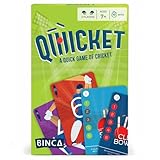
- FAST & FUN CRICKET CARD GAME: Bring the thrill of the sport to the table with a quick, fast card game that blends light strategy with head-to-head action - an easy pick for any cricket-themed game night.
- WHAT’S INSIDE THE BOX: Each box includes 18 batting cards, 18 bowling cards, 2 reference cards, 1 third umpire card, 1 out card, 1 not-out card, and a rules sheet.
- PERFECT FOR KIDS & FAMILY GAME NIGHTS: Designed for kids ages 7+ and grown-ups, it plays as a friendly social card game or a tense competitive card game - great game night cards for all ages.
- EASY TO LEARN, QUICK TO PLAY: Simple rules make it an easy card game you can teach in minutes; fast rounds keep everyone engaged and make it a nice intro to learning games for kids.
- TRAVEL-FRIENDLY & INDOOR SAFE: Pocket-sized, no setup, all cards - an ideal portable 2 player card game for holidays, cafes, classrooms, or rainy days.
Build a match-level dataset
Normalize match identifiers and team names, then create a row for each prediction point with at least the match ID, innings, competition, date or season, state variables, and the eventual outcome label. Keep event order intact. Split by match and preferably by time or season; never randomly divide individual delivery rows, since deliveries from the same match could otherwise appear in both training and test data.
Choose a modeling approach
| Approach | How it produces a probability | Strengths | Trade-offs |
|---|---|---|---|
| State-based dynamic program | Estimate next-delivery outcome probabilities for each state, then apply backward induction through the finite chase state space. | Transparent state transitions and easy-to-inspect assumptions; the state graph is acyclic because each legal delivery consumes a ball. | A compact state may omit meaningful delivery-to-delivery dependence, and its probabilities still need calibration checks. |
| Direct classifier | Train a classifier to estimate win probability from state features, such as required runs, balls remaining, and wickets in hand. | Direct prediction from engineered features; straightforward to add consistently available context. | Feature choices can introduce sparsity, leakage, and population drift. A probability output is not automatically calibrated. |
| Sequence model | Use a sequence of recent deliveries alongside the current state to estimate the outcome. | Can represent recent scoring patterns that a state-only model does not retain. | More implementation complexity and data needs; performance must be validated on held-out matches and later seasons. |
No single approach is established as best across calibration, interpretability, data demands, inference complexity, and robustness. A public Python/PyTorch implementation illustrates an LSTM using run state, wickets, balls remaining, target, and required rate, with an interactive Gradio interface: implementation example. Its reported data volume and accuracy are the project’s own claims, not independently verified results, so use it as a coding example rather than proof of performance.
Rank #4

- Ultimate gift for a cricket enthusiast. Detailed cricket field for immersive play.
- Perfect for cricket lovers of all ages
- Endless fun for all skill levels.
- Foldable design with storage bag for easy transport
- Safety prioritized with sticky balls, ideal for families
Build a transparent dynamic-programming baseline
A useful baseline estimates the conditional distribution of the next delivery’s outcome at each chase state, then calculates the chance of eventually winning from those outcomes. For each possible next event, determine the resulting state: add runs, adjust wickets, and reduce balls remaining only when the delivery is legal. Apply the event probabilities to the value of the resulting states, working backward from terminal states such as a successful chase, an all-out innings, or the end of the available balls.
Quick wins for a faster PC:
Scan for outdated or missing drivers - takes under a minuteDriver Scan →Repair Windows errors before they cause bigger problemsFix Now →Fix the driver behind crashes, sound loss and screen glitchesFind Drivers →Because a legal ball reduces the remaining-ball count, this formulation has no cycles among legal-ball transitions. Specify terminal outcomes carefully, including ties and any cases your selected competition permits. This approach follows the dynamic-programming formulation described in Devansh Mishra’s 2026 preprint, The Calibration-Leverage Tradeoff in Exactly Solvable Win-Probability Models. The paper is a preprint, not a universal guarantee for other datasets or model implementations.
Best Value

- Real-Time Cricket Game – CricSocial turns any T20 match into a thrilling card game. Score points based on real match action. Highest scorer wins!
- Strategy, Social Fun & Surprises – Outsmart rivals with bold plays, wild Impact Cards & “Let’s Get Social” prompts.
- Perfect Gift – Ideal for birthdays, Diwali & special occasions—fun for teens, adults & cricket lovers.
- Easy to Learn, Addictive Play – Learn in 5 mins, play in 15–30. Every match plays differently.
- Portable & Party-Ready – 112 premium cards in a sleek box.
Evaluate probability quality, not just hit rate
Use a chronological or season-held-out test set and keep every delivery from each match together. Report a proper probability score such as Brier score or log loss, inspect calibration with plots or bins, and include a discrimination measure. Accuracy after converting probabilities to a 0.5 win/loss cutoff does not tell you whether predictions shown as 70% win about seven times in ten.
This distinction matters even for a coherent model. Mishra’s 2026 preprint reports systematic miscalibration in a compact state-conditioned model despite per-ball outcome distributions matching empirical outcomes to total variation at most 0.02 at every required run rate. The author attributes remaining error in part to short-range sequential scoring dependence. In that preprint, a block-bootstrap simulator that injected measured dependence while holding marginal outcomes fixed closed “26% of the calibration gap”; the paper describes persistence over roughly “3-5 balls” and attributes “about 18%” in its decomposition to innings-level heterogeneity. These are findings reported by one recent preprint, not constants that can be assumed for every competition or model.
When comparing a state-based model with a classifier or sequence model, use the same held-out matches and compare proper scores, calibration, discrimination, debugging clarity, inference cost, and robustness across seasons and interruptions. Add player, venue, toss, or recent-form features only when they are available at prediction time and improve genuinely held-out results. They can add context, but they can also make the model sparse, leak future information, or weaken as the population changes.
What’s actually slowing this PC down?
Pick the symptom - the matching free tool is one click away.
Turn historical predictions into a live update
A live system has two separate jobs: infer probability from the current match state, and obtain a correct current state. Define a feed contract that supplies match and innings identity, score, wickets, target, over-and-ball state, and event corrections. Recompute after each delivery, and make the update logic tolerate delayed, duplicated, corrected, interrupted, or abandoned events. In particular, corrections should revise the reconstructed state rather than be treated as an additional delivery.
Cricsheet can support historical training and backtesting, but a deployed application needs a separate live cricket data feed. Before relying on one, verify its competition coverage, latency, usage rights, correction behavior, and cost directly with the provider. No specific live-data provider or commercial terms are established here.
Quick Recap
What to build first
- Fix the scope: choose a single T20 competition or population, second-innings chases, an explicit result-label policy, and a date range.
- Parse and validate: use a documented Cricsheet format, include extras in total runs, process wickets as events, and check innings order and legal balls.
- Construct state rows: record runs required, legal balls remaining, wickets in hand, and the final outcome after every delivery.
- Separate matches and time: train on earlier matches and evaluate on held-out matches from a later period or season.
- Fit a baseline: implement backward induction from next-delivery outcome distributions, or train a direct classifier on the same state variables.
- Check probability reliability: review Brier score or log loss, calibration, and discrimination before displaying live percentages.
- Add live inference only after state logic works: connect a suitably licensed current-match feed, reconcile event corrections, and test update handling separately from model quality.
Product prices and availability are accurate as of the date/time indicated and are subject to change. Any price and availability information displayed on Amazon at the time of purchase will apply.

