
iTechGuides is reader-supported. When you buy through links on our site, we may earn an affiliate commission. As an Amazon Associate I earn from qualifying purchases. Learn more
A Coriolis vibratory gyroscope (CVG) measures angular velocity by vibrating a mechanical structure and detecting the secondary motion that rotation produces through the Coriolis effect. It reports how quickly the device is rotating—not its absolute orientation. To estimate an angle, a system must integrate the rate signal over time.
How a Coriolis vibratory gyroscope works
A CVG sustains vibration along a primary, or drive, axis. If the sensor rotates about its sensitive axis while the structure is moving, the rotation produces a Coriolis response perpendicular to both the structure’s velocity and the rotation axis. This response appears as secondary vibration, often called sense motion. Electronics detect and process that motion to produce an angular-rate output.
In short: drive motion plus rotation creates detectable sense motion. The Coriolis effect here explains the rotation-related response in the sensor’s frame; it is not a contact force from an outside object. The structure oscillates rather than relying on a freely spinning wheel. Murata’s MEMS gyro overview describes primary and secondary oscillation and capacitive detection; Zurich Instruments’ MEMS gyroscope page explains drive and sense modes.
What’s actually slowing this PC down?
Pick the symptom - the matching free tool is one click away.
What does a CVG measure: angle or angular velocity?
The direct measurement is angular velocity, also called angular rate: rotation per unit time. The rate signal can be integrated to estimate a change in angle, but integration accumulates sensor error over time. A CVG’s rate output by itself does not establish absolute heading or orientation; that generally requires an external reference or additional system information. Tamagawa Seiki’s gyro explanation distinguishes angular-rate sensing from the angle estimated by integration.
#1 Best Overall

- MPU-6050 MPU6050 6-axis Accelerometer Gyroscope Sensor
- Communication mode: standard IIC communication protocol
- Chip built-in 16bit AD converter, 16bit data output
- Gyroscopes range: +/- 250 500 1000 2000 degree/sec
- Acceleration range: ±2 ±4 ±8 ±16g
CVGs use different mechanical designs
“Coriolis vibratory gyroscope” names a family of sensors, not one particular geometry or set of electronics. Implementations described by technical sources include MEMS proof-mass or beam structures, tuning forks, and ring resonators. Detection may be capacitive or use another transduction method; the details depend on the design. PASCO’s operating-principle explanation describes vibrating silicon beams, while Sumitomo Precision Products’ FAQ describes a silicon ring resonator.
How to compare actual gyroscope sensors
The CVG label alone does not tell you whether a sensor is suitable for a project. Check the specific model’s published specifications against the motion, environment, and accuracy the application requires.
Rank #2

- MPU-6050 MPU6050 Module: adopts the standard IIC communication for communication and is powered by 3V-5V for sustainable use.
- 3 Axis Accelerometer Gyroscope Module: Gyroscope range: ± 250 500 1000 2000 ° / s; Acceleration range: ± 2 ± 4 ± 8 ± 16 g; Transmission can pass I2C up to 400kHz or SPI up to 20MHz.
- MPU 6050 Chip built-in: with three 16-bit analog-to-digital converters (ADCs) for digitizing the gyroscope outputs and another three ones for digitizing the accelerometer outputs.
- Universally Compatible: This sensor is easy to use with just about any microcontroller that has an I2C interface, for Raspberry Pi and ESP32 models.
- What You Will Get: 3pcs Pre-Soldered GY-521 mpu-6050 mpu6050 3 axis accelerometer sensor. Ready to plug in and go.
- Angular-rate range: the maximum rotation rate the sensor can measure.
- Noise or resolution: how small a rate change can be distinguished from measurement noise.
- Bias stability and drift: how the zero-rate output behaves over time, affecting integrated angle estimates.
- Temperature range: the conditions under which the stated performance applies.
- Vibration and shock response: important where external motion can disturb the sensing structure.
- Size, power, and sensing axes: practical constraints that vary by device.
For context, Fraunhofer ENAS lists typical parameters for the sensors it describes: a ±450 °/s rate range, 5 °/h resolution (also given as 14 mdps), in-run bias stability below 1 °/h, angle random walk below 0.03 °/√h, and an operating range of −40 °C to 85 °C. These are figures for those described sensors, not specifications for CVGs generally. A separate commercial example is Analog Devices’ ADXRS300 angular-rate sensor; its model-specific datasheet and product information should be consulted for its own range and operating conditions.
Do these 3 things before closing this tab:
1Fix the driver behind crashes, sound loss and screen glitches2Clear out junk files and repair common Windows errors3Scan for outdated or missing drivers - takes under a minuteWhere Coriolis vibratory gyroscopes are used
Technical and manufacturer sources describe CVG use in automotive motion sensing, inertial measurement, platform stabilization, navigation-related systems, and consumer devices. These are application categories, not guarantees that any sensor bearing the CVG label meets the performance, reliability, or qualification requirements of a particular system. For example, Fraunhofer ENAS describes a gyrocompass application for its sensor system; that does not make every CVG a gyrocompass.
Rank #3
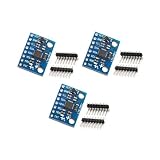
- Sensor: MPU-6050 6-axis accelerometer gyro sensor.
- Communication: Standard IIC protocol.
- Chip Feature: 16-bit AD converter, 16-bit data output.
- Gyroscope Range: ±250 500 1000 2000 degrees/second.
- Acceleration Range: ±2 ±4 ±8 ±16 grams.
Key distinction from a spinning-wheel gyroscope
A conventional spinning-wheel gyroscope relies on the behavior of a rotating mass. A CVG instead drives a structure into vibration and senses the rotation-induced secondary motion. Although both are gyroscopes used to sense rotation, their operating mechanisms differ. The word “gyroscope” alone does not imply a freely spinning wheel.
Quick Recap
Product prices and availability are accurate as of the date/time indicated and are subject to change. Any price and availability information displayed on Amazon at the time of purchase will apply.

