
iTechGuides is reader-supported. When you buy through links on our site, we may earn an affiliate commission. As an Amazon Associate I earn from qualifying purchases. Learn more
No—not universally. In electrochemical carbon dioxide reduction, copper is notable for making products with carbon–carbon bonds, including ethylene and alcohols. Gold is often used to produce carbon monoxide, which copper can then convert further in a combined catalyst. The better choice depends on the product, reaction conditions, and stability required.
What does “copper as a catalyst” mean here?
A catalyst helps a chemical reaction proceed without being consumed as the overall product. In electrochemical CO₂ reduction, electricity drives reactions at an electrode, converting carbon dioxide into products that can include carbon monoxide, hydrocarbons, and alcohols.
The comparison here is about this particular reaction—not a claim that copper has replaced gold across catalysis. A catalyst’s usefulness depends on the reaction and desired product.
Recommended Free Tools
What can copper and gold make from CO₂?
| Catalyst approach | Role in the cited CO₂-reduction work | Important qualification |
|---|---|---|
| Copper | Can produce products with carbon–carbon bonds, including ethylene and alcohols; reported copper systems also form C₂ and C₃ products. | The product distribution varies with catalyst structure and operating conditions. |
| Gold | Often used to produce carbon monoxide (CO), which can be an intermediate for further conversion. | This is a different target from directly comparing copper’s multicarbon-product performance. |
| Gold on copper | Gold can make CO near copper sites, where it may be converted further into products containing carbon–carbon bonds. | Performance depends on the specific design and experimental conditions. |
CO₂ reduction products are often described by the number of carbon atoms: C₂ products contain two, and C₃ products contain three. Joining carbon atoms is one reason copper is valuable in this chemistry.
#1 Best Overall

- GUIFANG Pure 99.9% Copper Grain Granules Metal Cu For Jewelry Casting Plating Anodes
Why combine gold and copper?
A tandem catalyst assigns different reaction steps to nearby materials: gold produces CO, and copper can use that intermediate to form other products. In a 2018 study, Morales-Guio and colleagues reported that their gold-on-copper catalyst was “over 100 times more selective” for products containing carbon–carbon bonds than for methane or methanol at low overpotentials. That is the study’s comparison under its experimental conditions, not a universal performance ratio for gold-on-copper catalysts.
The result illustrates why “which metal is better?” is usually the wrong question. A useful comparison asks which catalyst makes the target product selectively and efficiently under the intended operating conditions.
Rank #2

- We are providing 10 grams (~0.352 oz) net weight pure copper metal particles, pellets, granules. Approx 54 pieces 3mm x 3mm granules per 10 grams;
- Purity higher than 99.9999%; Unit Size: 3mm diameter x 3mm height,
- This item will be vacuum packed when posting in order to maintain original appearance and avoid oxidation;
- It's great for LED packaging vacuum coating evaporation material and laboratory science research experiments purpose using;
- Attention: The products in photo attached is much more than 10 grams. That's just for demonstration. We will only send you 10 grams net weight copper granules when you order one quantity. Please understand and thanks!
Why can copper produce different products?
The surface and operating conditions matter
“Copper catalyst” does not describe one fixed surface. Catalyst structure, applied potential or current, and electrolyte composition can affect which reaction pathways dominate. Ren, Fong, and Yeo’s 2018 study examined how current and potential relate to product selectivity on copper. Results from one operating window should not be assumed to hold at another.
Electrolyte composition can change the reaction
In a 2021 study, Monteiro and colleagues found no CO₂ reduction on copper, gold, or silver electrodes without added metal cations under the particular conditions they tested. They attributed the effect to cations stabilizing a reaction intermediate. This is evidence that electrolyte composition can matter in that setup, not proof that metal cations are required in every CO₂-reduction system.
Rank #3
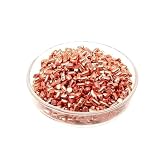
- Copper Cu metal pellets purity 99.999%
Active sites can be difficult to identify
Lum and Ager’s work identified different active-site types associated with the formation of ethanol and acetate, ethylene, and 1-propanol on oxide-derived copper catalysts. In another area of research, commentary on copper single-atom catalysts cautions that transient copper clusters may account for some C₂+ products. That possibility makes it important to study catalysts under operating conditions rather than infer the active structure from a material’s starting description alone.
What limits copper’s practical use?
Laboratory results do not by themselves establish industrial readiness. Copper can reconstruct during CO₂ electrolysis, and maintaining its activity—especially for C₂ products—is a recognized challenge. Stability over time is therefore as important as initial product selectivity.
Rank #4

- We are providing 100 grams (~3.52 oz) net weight pure copper metal particles, pellets, granules.
- Purity higher than 99.9999%; Unit Size: 6mm diameter x 6mm height;
- This item will be vacuum packed when posting in order to maintain original appearance and avoid oxidation;
- It's great for LED packaging vacuum coating evaporation material and laboratory science research experiments purpose using;
- Attention: The products in photo attached is much more than 100 grams. That's just for demonstration. We will only send you 100 grams net weight copper granules when you order one quantity. Please understand and thanks!
Scale also changes the engineering problem. A 2026 review by Moon and colleagues describes square-metre-scale electrodes and more than 10 grams of catalyst per electrolyser as requirements associated with industrial implementation of CO₂ or CO reduction to multicarbon products. Those figures describe scale-up requirements, not a demonstration that a particular copper design has met them.
The Tool Desk
Outbyte PC Repair FREERepair Windows errors before they cause bigger problemsFix Now →Outbyte Driver Updater FREEFix the driver behind crashes, sound loss and screen glitchesFind Drivers →How should you compare copper, gold, and a tandem catalyst?
Compare systems that target the same product and report their conditions. A CO-producing gold electrode and a copper electrode designed for multicarbon products are not directly interchangeable options.
- Target product: Is the goal CO, ethylene, an alcohol, or another product?
- Selectivity and activity: What product distribution and reaction rate were measured, and at what potential or current?
- Electrolyte: What solution composition and other operating conditions were used?
- Durability: Does the catalyst retain its activity and structure over time?
- Scale: Was performance shown on a laboratory electrode, or at a scale relevant to practical equipment?
So, is copper the new gold?
Copper is not a universal replacement for gold. It has a distinctive role in CO₂ electroreduction because some copper catalysts can form carbon–carbon bonds and a range of multicarbon products. Gold can serve a different purpose by producing CO, and pairing the two can make use of both roles. The meaningful choice is the catalyst design that delivers the desired product under the required conditions and remains stable at the scale needed.
Quick Recap
Product prices and availability are accurate as of the date/time indicated and are subject to change. Any price and availability information displayed on Amazon at the time of purchase will apply.

