
What’s actually slowing this PC down?
Pick the symptom - the matching free tool is one click away.
iTechGuides is reader-supported. When you buy through links on our site, we may earn an affiliate commission. As an Amazon Associate I earn from qualifying purchases. Learn more
Control and Devil May Cry are built around different definitions of action. Control is a ranged, ability-driven system in which Jesse combines a transforming Service Weapon, telekinetic powers and the surrounding arena. Devil May Cry is melee-first character action: its depth comes from launchers, air combos, weapon changes, style switching and precise execution.
Choose Control if you want to improvise with objects, powers and enemy positioning in an open combat space. Choose Devil May Cry if you want to learn move properties, maintain aerial strings and route expressive combos through multiple weapons and styles. Neither system is simply “deeper”; they ask for different skills and reward different kinds of mastery.
| # | Preview | Product | Price | |
|---|---|---|---|---|
| 1 |

|
CONTROL Ultimate Edition - PlayStation 5 | Buy on Amazon | |
| 2 |

|
Control Ultimate Edition (PS5) | $49.99 | Buy on Amazon |
| 3 |
|
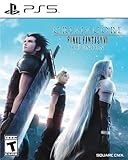
Crisis Core: Final Fantasy VII Reunion - PlayStation 5 | $24.99 | Buy on Amazon |
Control and Devil May Cry at a glance
| Combat question | Control | Devil May Cry |
|---|---|---|
| Typical distance | Usually ranged, with powers shaping a wider arena | Frequently close-range, with melee strings, launchers and juggles |
| Main source of variety | Five Service Weapon forms, supernatural abilities, upgrades, mods and environmental objects | Character-specific weapon movesets, launchers, air control, Devil Trigger, styles and weapon changes |
| Core skill | Spatial awareness, target priority and improvisation | Move knowledge, timing, cancels, aerial control and combo routing |
| Mobility | Movement powers, including Levitate, help reposition around the arena | Launchers, air movement, grapples and style techniques help control enemy placement |
| Resource pressure | Alternates firearm ammunition or recovery with ability resources | Uses gauges, Devil Trigger, charge timing and style-specific opportunities |
| Learning curve | The basic loop is readable quickly; experimentation adds depth | The fundamentals are accessible, but depth expands sharply as you learn properties, timing and style interactions |
The practical distinction is simple: Control asks, “What can I throw, shoot or manipulate in this space?” Devil May Cry asks, “Which move, weapon, style and timing will extend this combo?”
Recommended Free Tools
How Control’s combat system works
The Service Weapon makes shooting modular
Jesse’s Service Weapon transforms into five forms. Each form has different strengths, so changing forms is a tactical response to the enemy and the situation rather than a cosmetic choice. A form suited to one target or distance may be less useful against another, which makes weapon selection part of the encounter’s decision-making.
#1 Best Overall
- Uncover the mysteries - Can you handle the bureau’s dark secrets? Unfold an epic supernatural struggle, filled with unexpected characters and bizarre events, as you search for your missing brother, and discover the truth that has brought you here.
- Everything is your weapon - Unleash destruction through transforming weaponry and telekinetic powers. Discover new ways to annihilate your enemies as you harness powerful abilities to turn everything around you into a lethal weapon.
- Explore a hidden world - Delve deep into the ominous expanses of a secretive government agency. Explore the Bureau’s shifting environments only to discover that there is always more than meets the eye…
- Fight for control - Battle a relentless enemy through exciting missions and challenging boss fights to earn powerful upgrades that maximize abilities and customize your weaponry.
This creates a firearm loop with more decisions than simply aiming and firing. You identify the threat, select the form that fits the engagement, spend its ammunition or recovery window, then use Jesse’s abilities while the weapon becomes available again. Weapon upgrades and mods can improve damage or reload time, allowing the same basic arsenal to be tuned toward different priorities.
Abilities turn the room into part of the moveset
Control’s signature variety comes from combining the Service Weapon with supernatural abilities:
- Launch: Jesse lifts objects and throws them at enemies, converting nearby debris into ammunition.
- Shield: She forms a barrier from debris, giving her a way to survive incoming fire while holding a position.
- Seize: A weakened enemy can be turned into an ally, changing the number and direction of threats in the room.
- Levitate: Jesse can reposition vertically and approach the arena from a different angle.
These powers do not function as an isolated spell list. Their value changes with the room. A launch target must exist, a shield benefits from available debris, Seize requires an enemy to be sufficiently weakened, and Levitate changes the lines from which you can attack or escape. The result is a combat system that rewards reading the space as much as reading an enemy.
Free tools Windows power users keep installed
One-click scans. No signup required.
Improvisation is the central expression
Control’s encounters are built around maintaining a flow between shooting, powers and movement. You might open with a Service Weapon form, throw a loose object when a target exposes itself, raise a debris shield while fire comes in, then seize a weakened opponent and levitate to a safer angle. The important decision is not a memorized sequence; it is recognizing which available action solves the immediate problem.
That makes target priority especially important. A weakened enemy may be more valuable as a Seize candidate than as the next target to eliminate. A dangerous shooter may justify a shield or a rapid reposition. A crowded room may provide more launch opportunities than an empty corridor. The arena supplies options, and your effectiveness depends on noticing them before the situation closes down.
Upgrades and mods broaden the same core loop
Control lets you upgrade powers and weapon forms, while mods can improve damage, reload time, health or ability performance. These systems adjust how forgiving or aggressive your preferred loop feels. Damage and reload improvements support a firearm-led approach; health and ability-performance improvements support longer periods of power use and repositioning.
The key distinction is that upgrades enlarge the number of viable responses rather than replacing the basic controls. You still solve encounters by combining weapon forms, abilities and space. Progression gives those tools more reach, resilience or efficiency.
What Control tests
Control’s primary skill test is situational management. You must track enemy threats, available objects, your current weapon state, ability resources and safe movement routes at the same time. Mechanical precision matters, but the system’s highest payoff comes from keeping several options alive and switching before one approach stops working.
How Devil May Cry’s combat system works
A series designed around expressive melee action
Devil May Cry’s identity is melee-first. Its defining actions include launchers, air combos, weapon changes and style-based techniques. Ranged attacks support the kit, but the system repeatedly rewards closing distance, controlling an enemy in the air and extending a sequence without losing its rhythm.
Capcom producer Matt Walker described the first Devil May Cry as establishing air combos and launchers, along with Devil Trigger and Style Rank. He also said the game established a template for stage-based 3D action games by translating the appeal of side-scrolling 2D action into three dimensions. Later entries expanded the number of decisions available during a fight.
How each major entry added a layer
- Devil May Cry: Established launchers, air combos, Devil Trigger and Style Rank as central parts of the formula.
- Devil May Cry 2: Added on-the-fly weapon changes, making the active weapon a real-time decision.
- Devil May Cry 3: Added fighting-game-like styles, giving the player distinct ways to approach movement, offense and defense.
- Devil May Cry 4: Added Nero’s pull-in and throw mechanics and real-time style switching, increasing the number of decisions available inside a sequence.
This history explains why DMC combat can feel denser than its basic attack buttons suggest. The system is layered: a launcher leads to air control, weapon choice affects the next hit, a style changes the available response, and timing determines whether the sequence continues.
Nero: charge timing and Devil Breakers
In Devil May Cry 5, Nero manages the chargeable Blue Rose gun and the Red Queen sword. He also uses Devil Breakers, which add another set of choices to his normal attacks. Red Queen’s MAX Act rewards timing a charge during sword swings, turning an ordinary attack into a more demanding execution check.
Nero therefore combines straightforward inputs with timing-sensitive optimization. You can attack without MAX Act, but precise timing improves the payoff of the same sword action. Blue Rose adds a charge decision at range, while Devil Breakers offer situational tools that must be selected and used without breaking the momentum of the fight.
Rank #2
- Uncover the mysteries. Can you handle the bureau's dark secrets? Unfold an epic supernatural struggle, filled with unexpected characters and bizarre events, as you search for your missing brother, and discover the truth that has brought you here
- everything is your weapon. Unleash destruction through transforming weaponry and telekinetic powers. Discover New ways to annihilate your enemies as you harness powerful abilities to turn everything around you into a lethal weapon
- explore a hidden world. Delve deep into the Ominous expanses of a secretive government Agency. Explore the bureau's shifting environments only to discover that there is always more than meets the eye
- fight for control. Battle a relentless enemy through exciting missions and challenging boss fights to earn powerful upgrades that maximize abilities and customize your weaponry
- experience true next-generation gaming with increased visual fidelity through 4K graphics, ray-tracing and a 60FPS performance mode
V: directing a multi-part attack
V attacks through his familiars, Griffon and Shadow. This changes the relationship between the player character and the damage source: V’s position, the familiars’ attacks and the opportunity to finish an enemy all have to be managed together.
Compared with a conventional single-weapon string, V’s kit asks you to coordinate separate attack functions and choose when to convert pressure into a decisive finish. His combat still belongs to the same style-focused system, but its expression comes from directing multiple entities rather than chaining only Dante’s or Nero’s weapons.
Dante: four styles and a large weapon vocabulary
Dante combines multiple guns and melee weapons with four styles:
- Trickster: A movement-oriented style for repositioning and evasion.
- Swordmaster: Adds melee-focused techniques to expand close-range offense.
- Gunslinger: Expands gun-based attacks and gives ranged options a larger role in a combo.
- Royal Guard: Rewards defensive timing and turns well-timed guarding into an offensive opportunity.
The important point is not merely that Dante has many options. It is that the player can select a style and weapon response in real time, then change the route of the combo accordingly. The same enemy opening can be answered with movement, a melee extension, a gun technique or a defensive counter, depending on the style currently selected and the timing of the player’s input.
Style Rank turns execution into a visible goal
Devil May Cry’s Style Rank encourages variety and continuity. A sequence becomes more expressive when you alternate moves, keep an enemy controlled in the air, change weapons at the right moment and avoid interruption. The system therefore evaluates more than damage dealt: it rewards how creatively and consistently you maintain the action.
Matt Walker summarized the design goal for Devil May Cry 5 as a return to “pure action,” centered on facing a good challenge and feeling immense accomplishment after overcoming it. That framing helps explain the series’ learning curve. The game is not only asking whether an attack succeeds; it is asking whether you can execute a deliberate plan under pressure.
The biggest differences, axis by axis
Combat distance
Control is usually ranged and arena-oriented. Jesse can attack with the Service Weapon, throw objects and use abilities while moving through the space. Closing distance is sometimes useful, but it is not the defining requirement of the system.
Devil May Cry repeatedly brings you into melee range. Launchers and air combos depend on controlling an enemy’s position near your character, and many of the game’s most expressive routes require staying close enough to continue the string. Ranged weapons are part of the vocabulary, but they commonly support or extend melee rather than replacing it.
Where variety comes from
Control layers three sources of variation: five weapon forms, supernatural powers and whatever the arena provides. Its variety is contextual. The same ability can be more or less useful depending on enemy state, cover, debris and vertical space.
Devil May Cry layers weapon movesets, character-specific kits, styles and execution timing. Its variety is authored into the move list. The challenge is learning what each option does, then selecting and connecting those options in a sequence that fits the enemy and your chosen style.
Quick wins for a faster PC:
Fix the driver behind crashes, sound loss and screen glitchesFind Drivers →Clear out junk files and repair common Windows errorsFree Scan →Resource pressure
Control alternates firearm ammunition or recovery with ability resources. Spending one part of the kit encourages you to use another, so the strongest response is often a rotation rather than repeated firing. Upgrades and mods can improve damage, reload time, health or ability performance, changing how long you can sustain that rotation.
Devil May Cry manages gauges, Devil Trigger, charge timing and style-specific opportunities. A player may hold a charge, build toward a powered state, spend a style resource or wait for the precise moment that makes a technique worthwhile. The pressure is less about finding a replacement object in the room and more about converting timing and meter into a longer, stronger sequence.
Mobility and enemy placement
Control uses Levitate and movement powers to change position around an arena. Movement is primarily about finding a safer or more advantageous angle, escaping pressure and keeping access to targets and objects.
Rank #3
- All graphics fully remastered in HD, bringing the game to the latest console generation
- Renewed 3D models, including characters and backgrounds, enriching the visual experience
- Improved battle system providing a vastly smoother gameplay experience
- Fully voiced dialogue in both English and Japanese
- A newly arranged soundtrack from the original composer, Takeharu Ishimoto
Devil May Cry uses launchers, air movement, grapples and style techniques to control where enemies are relative to the player. Mobility is part of the combo itself: an enemy’s height, distance and direction determine which move can follow.
Outdated Drivers Are Slowing You Down
One free scan finds every outdated or missing driver and matches the right update for your exact hardware.Free scan · exact hardware matchWindows Errors? Fix Them Before They Spread
Repair common Windows errors and clear accumulated junk for a smoother, more stable PC - no reinstall needed.Free scan · no reinstallPlayer expression
Control rewards improvisation. You make decisions from the materials in front of you: a usable object, a vulnerable enemy, a line of fire or a vertical route. Two successful encounters may look different because the rooms and enemy arrangements produce different opportunities.
Devil May Cry rewards deliberate execution. Players express themselves through chosen weapons, style switches, timing, cancels, aerial control and the order in which they route attacks. The space matters, but the move properties and the player’s ability to execute them are usually the dominant variables.
Independent reader supportYour contribution helps us test, update, and keep practical guides available for everyone.Which game has deeper combat?
If “deep” means the number of interacting mechanics available during an encounter, both games qualify in different ways. Control combines weapon forms, powers, environmental objects, upgrades and enemy states. Its depth appears when you stop treating those systems separately and begin using them as one flowing response to the arena.
If “deep” means a demanding execution ceiling, Devil May Cry generally goes further. Its move lists, launchers, air routes, weapon changes, style interactions, charge timing and resource gauges create more room for optimization. A player can understand the basic attack loop quickly and still spend a long time learning how to make a sequence cleaner, longer and more stylish.
Do these 3 things before closing this tab:
1Scan for outdated or missing drivers - takes under a minute2Clear out junk files and repair common Windows errors3Fix the driver behind crashes, sound loss and screen glitchesThe difference is therefore not that Control lacks depth or that DMC is inaccessible. Control front-loads readable powers and lets the environment provide new answers. DMC exposes more of its depth only after you study move properties, practice timing and learn how to keep enemies in the position your next attack requires.
How to choose between them
Choose Control if you want spatial improvisation
- You prefer ranged combat with the option to switch weapon forms according to the target.
- You enjoy turning objects and debris into offensive or defensive tools.
- You want abilities such as Launch, Shield, Seize and Levitate to alter the shape of an encounter.
- You would rather prioritize threats and manage a room than memorize a long combo route.
- You like upgrades and mods that improve damage, reload time, health or ability performance.
Choose Devil May Cry if you want execution and combo mastery
- You want melee strings, launchers and aerial control to sit at the center of every fight.
- You enjoy learning distinct weapon movesets and changing weapons during a sequence.
- You want styles, Devil Trigger, charge timing and gauges to reward deliberate practice.
- You find satisfaction in maintaining a stylish sequence under pressure.
- You are willing to study timing, cancels, enemy placement and character-specific mechanics.
Choose based on the kind of practice you enjoy
Control practice is about awareness. After an encounter, the useful question is whether you noticed the best object, vulnerable enemy or movement route soon enough. Improvement comes from recognizing more options in the same room and switching tools before a threat becomes overwhelming.
Devil May Cry practice is about execution. You work on a launcher, an air continuation, a weapon change, a style response or a charge window until it can be performed reliably. Improvement comes from turning a sequence you can sometimes perform into one you can choose and repeat under pressure.
A practical decision framework
- Decide your preferred distance. If you want to solve most problems from range, start with Control. If you want to remain close and manipulate enemies through strings, start with Devil May Cry.
- Identify your source of variety. Choose Control for powers plus physical space. Choose DMC for authored movesets, weapons and styles.
- Assess your tolerance for execution practice. Control’s core loop becomes readable quickly. DMC’s deeper rewards arrive as timing and move knowledge improve.
- Consider what “freedom” means to you. Control offers freedom to improvise with the room. DMC offers freedom to route the same enemy encounter through many deliberate combinations.
- Match the resource system to your habits. Control asks you to rotate firearm use and abilities. DMC asks you to manage gauges, Devil Trigger, charge timing and style opportunities while continuing the sequence.
The design philosophy behind the contrast
Control treats the arena as an active combat instrument. Its powers make ordinary objects tactically relevant, and its movement tools let you change the geometry of the fight. The player’s expression comes from adapting a toolkit to the room.
The Tool Desk
Outbyte Driver Updater FREEFix the driver behind crashes, sound loss and screen glitchesFind Drivers →Outbyte PC Repair FREERepair Windows errors before they cause bigger problemsFix Now →Devil May Cry treats the character’s moveset as the instrument. Its history shows a steady expansion from launchers and air combos to weapon changes, styles, Nero’s pull-in and throw mechanics, and real-time style switching. The player’s expression comes from choosing a route and executing it with precision.
Capcom’s corporate overview describes Devil May Cry 5’s movement as being built from motion capture and combined through the RE ENGINE to express detailed character action. That emphasis on movement reinforces the series’ focus: the feel of each attack, transition and response is part of the reward, not merely a way to deliver damage.
Bottom line: different kinds of combat depth
Control is the better fit for telekinetic, environment-aware ranged improvisation. Its five Service Weapon forms, Launch, Shield, Seize, Levitate, upgrades and mods create a flexible loop in which the room constantly changes your best option.
Devil May Cry is the better fit for melee mastery, style switching and combo depth. Its launchers, air combos, weapon changes, Devil Trigger, character-specific kits and timing demands make execution the central form of expression.
Pick the game whose practice sounds rewarding: reading a space and improvising with it, or learning a moveset deeply enough to control every beat of a stylish sequence.
Quick Recap
Product prices and availability are accurate as of the date/time indicated and are subject to change. Any price and availability information displayed on Amazon at the time of purchase will apply.

