
iTechGuides is reader-supported. When you buy through links on our site, we may earn an affiliate commission. As an Amazon Associate I earn from qualifying purchases. Learn more
Short answer: A continuous glucose monitor (CGM) is usually the more informative option when you need glucose trends, overnight or high/low alerts, fewer routine finger-sticks, or data sharing. A finger-stick blood glucose meter is often simpler when you want occasional, point-in-time checks, do not want to wear a sensor, cannot obtain a CGM, or need a dependable backup. The right choice depends on your treatment, symptoms, comfort, phone or receiver compatibility, access and coverage. Discuss it with your diabetes care team.
These devices do not measure the same sample. A CGM estimates glucose in interstitial fluid, while a meter analyzes a drop of blood. That distinction explains why their numbers can differ, especially when glucose is changing quickly.
The practical answer
Choose the system that answers the question you actually need to ask. If you need to know how glucose is moving between checks, a CGM can provide a continuous record, trend arrows and, on compatible models, high or low alerts and sharing. If you mainly need to know your glucose at a selected moment, a meter gives a direct blood reading in seconds after a finger-stick.
PC Slower Than It Used to Be?
A free scan shows the junk files, broken settings and background clutter dragging Windows down - then fixes them in one click.Free scan · Windows 10 & 11Outdated Drivers Are Slowing You Down
One free scan finds every outdated or missing driver and matches the right update for your exact hardware.Free scan · exact hardware matchNeither category is automatically safer or medically superior for every person. Diabetes type, medicines, hypoglycemia risk, ability to respond to alarms, skin tolerance, dexterity, vision, device availability and insurance rules all affect the decision. A clinician or diabetes educator can match a device to your treatment plan and teach you how to act on its readings.
#1 Best Overall
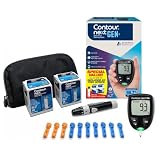
- CLINICALLY PROVEN ACCURACY: Track and manage your diabetes confidently with our reliable blood glucose monitoring system. Readings that are personalized, HI/LO target ranges, and easy-to-understand summaries of your blood sugar test results (1)
- BLUETOOTH CONNECTIVITY: Sync your glucose monitor kit and get readings automatically to a free app via Bluetooth for seamless tracking and data sharing with our blood sugar testing kit
- EASY TO USE: SmartLIGHT target range indicator (2) instantly shows if blood sugar levels are above, below, or within target range for quick, clear feedback
- SECOND-CHANCE SAMPLING (3): Apply additional blood to the same test strip within 60 seconds to help reduce strip waste, avoid unnecessary retesting, and save money over time with our blood sugar testing kit
- NO CODING REQUIRED: Get fast, accurate results without the hassle of manual coding, reducing the risk of user error and making testing simpler, quicker, and more reliable
The American Diabetes Association’s 2026 Standards of Care recommend CGM for adults using insulin, using non-insulin therapies that can cause hypoglycemia, or using any diabetes treatment where CGM helps management. The recommendation supports a discussion; it does not guarantee that a particular insurer will pay or that one model is appropriate for you. Read the ADA 2026 Standards of Care.
They measure different body fluids
What a CGM measures
A small sensor sits under the skin and estimates glucose in interstitial fluid—the fluid between cells. A transmitter sends readings to a receiver, phone or compatible pump, depending on the system. Because the sensor is not sampling blood directly, its displayed value can trail a blood value when glucose is rising or falling rapidly. The size and timing of that difference vary with the device and the rate of change; there is no single lag number that applies to every CGM.
CGM systems differ in how data reaches you. Some send readings automatically at intervals; others require you to scan the sensor with a reader or phone. Features such as trend arrows, high and low alarms, sharing with another person, calibration requirements and wear time are model-specific. Confirm those details in the current device instructions rather than assuming that one CGM works like another. The National Institute of Diabetes and Digestive and Kidney Diseases (NIDDK) overview and the ADA CGM guide explain the general technology.
Recommended Free Tools
What a finger-stick meter measures
A meter uses a lancet to obtain a drop of capillary blood, places that drop on a compatible test strip and displays the glucose result. The ADA says results appear in seconds. Each test is a separate snapshot: the device does not show what happened between tests unless its software stores and later downloads the readings.
The meter, its exact strips and lancets are a system. Strips must match the meter, be stored as directed and be within their expiration date. The U.S. Food and Drug Administration warns that strip performance can weaken after expiration. Follow the meter manual for hand washing, sample size, control checks and storage; see the FDA meter guidance.
Rank #2

- Advanced Blood Glucose Meter Kit: The Metene TD-4116 diabetes testing kit utilizes advanced technology to provide more accurate and reliable test results, helping you better control your blood sugar levels. After opening the test strip, it is valid for 6 months. Please refer to the test strip storage instructions in the user manual.
- Easy to Use: The blood glucose monitor is with code-free design, ready for testing once insert the strip correctly; the quick guide inside the package lists the steps to do a test clearly, easy to follow; any problem about operation, we are here ready to answer and provide glucose monitoring system instructional videos
- 7 Seconds And 0.7µl Blood: This blood glucose meter kit just needs 0.7 microliter blood sample and 7 seconds to get you blood glucose value; Fast, minimizes wound and less painful
- More Clearly Glucose Trend: 4 modes to record your glucose value according to different time, shows your glucose trend more clearly; 450 blood sugar values storage, continuous 14/21/28/60/90 day average, which brings more convenient Diabetes management for you and your health provider
- User-friendly for The Aged: 4 reminder alarms could be set everyday to remind the aged to do a test in time, considerate; the display is larger than most glucose monitors, showing the results more clearly, easier to read for the aged
CGM and meter compared
| Decision point | CGM | Finger-stick meter |
|---|---|---|
| Sample | Estimates interstitial-fluid glucose; can differ from blood during rapid changes. | Measures glucose in a blood sample taken at the test time. |
| Time information | Ongoing readings and trends while the sensor is worn; data may be automatic or scan-based. | One result each time you perform a test. |
| Alerts and sharing | Some models offer high/low alarms, trend information and sharing; verify the model. | Basic meters display a result; some store or export readings, but they do not generally provide CGM-style continuous alerts. |
| Daily tasks | Apply and replace a sensor as directed; some systems also require scanning or calibration. | Use a lancet, a compatible strip and the meter for every check. |
| Backup use | A meter can provide a comparison when the device instructions, symptoms, an alert or the care plan call for it. | Can be the primary method or a backup for a CGM. |
| Access questions | Check prescription rules, sensor and receiver or phone compatibility, replacement schedule and coverage. | Check meter and strip coverage, recurring strip and lancet costs and strip compatibility. |
These are category-level differences. A specific model may add or omit features, so use its labeling and instructions when making a final choice. The comparison reflects guidance from NIDDK, the ADA CGM guide and the ADA meter guidance.
When a CGM is worth discussing
You need patterns, not isolated numbers
A sequence of readings can show whether glucose is generally rising, falling or staying level between meals, exercise, sleep and medication doses. That context can help your care team identify patterns that a few manually timed checks could miss. It is particularly useful when your readings look acceptable at appointment times but you suspect overnight or post-meal excursions.
What’s actually slowing this PC down?
Pick the symptom - the matching free tool is one click away.
You have hypoglycemia concerns
Some CGMs can warn about a low or high and, on compatible systems, share readings with a caregiver. Alerts only help if the device is worn correctly, the alarm is enabled, you can hear or see it and you have an agreed response plan. An alarm is not a diagnosis or permission to change medication outside your prescribed instructions.
You use insulin or another treatment that can cause lows
The ADA’s 2026 recommendation includes adults using insulin and adults using non-insulin therapies that can cause hypoglycemia. Bring your current medicines, typical glucose patterns and treatment goals to the appointment so the clinician can decide whether CGM data would change management.
You want fewer routine finger-sticks
A CGM can reduce the need for scheduled finger-sticks for many users, but it does not eliminate every blood check. Sensor failures, symptoms that do not match the display, a warning alert or a treatment decision may require a meter comparison. Whether a particular device can replace routine meter checks depends on its labeling and your care plan.
Rank #3

- 【Stable & Accurate for Testing】: The Microtech Blood Glucose Meter (BGM) has undergone rigorous clinical and laboratory tests based on strict standards to ensure it meets the highest accuracy criteria. The test strip interface with a double layer 9 electrode and the test strips using a new type of glucose dehydrogenase ensure better stability and anti-interference capabilities. It has obtained certifications such as FDA, CE, GMP, and ISO 15197:2015. It is a reliable and precise choice in blood sugar monitoring.
- 【Get a quick and gentle test in 5 seconds】: The Microtech blood sugar test kit is designed for comfort. The high precision blood sugar detection system only requires a tiny 0.5µl blood sample and can give accurate results in 5 seconds. The adjustable depth lancet device offers a nearly painless testing experience, minimizing pain and providing fast and reliable results every time.
- 【Wider Use for Your Family's Health】: Personalized Alerts + Broader Applicable Population. The Microtech blood sugar test kit has improved accuracy with the HCT range expanded to 10% - 70%. This means it is suitable for a wider range of people, including infants, pregnant women, frail people, and obese people. By setting personalized warning values, the blood sugar concentration limit can be set according to the doctor's advice. Therefore, it is the best choice for your whole family for daily health check-ups and blood sugar control.
- 【Easy to Track】: Our blood glucose test kit can store up to 500 test results, providing 7/14/30/60/90 average blood glucose test values, easily tracking daily blood sugar levels, and better managing your diabetes treatment.
- 【ALL IN ONE】: 1 x Gocheck2 Blood Glucose Monitor, 100 x Blood Test Strips, 100 x 30 gauge Lancets, 1 x control solution, 1 x Lancing device, 1 x Meter User Guide, 1 x Test Strip User Guide, Our Exclusive Lifetime Warranty and Technical Support. Tips: This product doesn't need to use or purchase a control solution for calibration.
When a finger-stick meter may be the better fit
You prefer occasional, deliberate checks
If you need readings at selected times—such as before a meal, after exercise or when you feel unwell—a meter avoids wearing a sensor and managing alarms. Your clinician can set a testing schedule and explain what action each result should prompt.
You do not want a device on your body
Some people find sensor insertion, adhesive, visibility or replacement routines unacceptable. A meter requires a blood sample but leaves no sensor in place between checks. Skin reactions, dexterity and vision should be discussed so the equipment and technique can be adapted safely.
CGM access is uncertain
A meter may be the immediately available option when a CGM prescription, phone, receiver or supplies are delayed. It can also provide continuity during a sensor gap. A clinician or pharmacist can help identify a meter and strips that are covered and consistently available in your area.
You need an approved comparison device
Even people who choose a CGM often keep a meter. NIDDK says comparison may be appropriate when you doubt a CGM reading, are changing an insulin dose or receive a warning alert. Follow the exact CGM instructions and your individual treatment plan; do not substitute a random meter or expired strips. NIDDK explains when a meter comparison may be needed.
Why CGM and meter numbers can disagree
The devices may be sampling at different times and in different fluids. After food, exercise, insulin or another rapid change, blood glucose can move before the interstitial-fluid estimate catches up. A difference does not automatically mean that either device is broken.
Rank #4

- [Complete Starter Kit] The CareSens N Feliz Blood Glucose Monitoring Kit includes 1 blood glucose meter, 100 blood sugar test strips, 100 sterile lancets, 1 lancing device, 1 control solution, and a travel case for convenient blood glucose testing. The meter stores up to 1,000 test results, and the included battery supports approximately 2,000 tests under normal use.
- [Simple and Reliable Testing] The CareSens N Feliz Blood Glucose Monitoring System meets ISO 15197:2013 accuracy requirements. The CareSens N Feliz Meter is designed for convenient self-monitoring of blood glucose. It features automatic strip recognition and provides clear, easy-to-read results to support your daily testing routine.
- [100 Test Strips Included] - This kit includes a total of 100 test strips: - 50 strips are packed inside the carrying case. - The remaining 50 test strips are packaged separately inside the product box. Please check both locations before contacting customer support regarding missing test strips.
- [Small Sample & Fast Results] Only a 0.5 μL blood sample is required, and test results are displayed in approximately 5 seconds. CareSens N test strips are automatically recognized by the meter for quick and convenient testing.
- [Easy to use] Designed with simplicity in mind, the CareSens N Feliz Blood Glucose Monitoring Kit is suitable for everyday personal use. The lightweight meter and portable carrying case make testing convenient whether at home or while traveling.
First check the context: note the trend arrow, whether glucose is changing quickly, the time of the last meal or dose and whether the sensor is newly applied or showing an error. If your symptoms do not fit the CGM value, use a meter according to the device instructions and care plan. Treat urgent symptoms as urgent; do not delay help while repeatedly testing.
Use the same meter and compatible, unexpired strips for comparisons. Wash and dry your hands, obtain an adequate sample and follow the meter’s instructions. If readings remain implausible, contact the device manufacturer or your diabetes team rather than making repeated unsupervised dose changes.
How to use each method safely
CGM setup and routine
- Confirm compatibility. Check whether your phone operating system, receiver or insulin pump is listed for the model and whether the required app is available in your region.
- Read the labeling before insertion. Follow the approved insertion site, preparation, warm-up, wear time and replacement schedule. Do not improvise sensor placement.
- Configure notifications with your care team. Set high, low, urgent-low and signal-loss alerts as directed. Decide who, if anyone, should receive shared readings and what action follows an alert.
- Learn the display. A number is only part of the information; trend arrows, recent history and signal status affect interpretation. Keep the receiver or phone charged and within the system’s communication range.
- Keep a meter available. Store a working meter, compatible strips and lancets where you can reach them. Use it when the CGM instructions, symptoms, an alert or your clinician’s plan calls for confirmation.
Finger-stick meter routine
- Gather the complete kit. You need the meter, the exact matching strips, a lancing device and lancets. Check expiration dates and storage conditions before testing.
- Prepare your hands. Wash with soap and water and dry completely. Residue from food or sanitizer can affect a sample.
- Follow the meter’s sampling instructions. Use the recommended finger or alternate site, depth and blood volume. Do not squeeze aggressively or add blood after the meter has timed out unless the manual specifically allows it.
- Record useful context. Log the time, relation to food or exercise, medicines and symptoms if your care plan uses those details. Stored readings are more useful when their circumstances are known.
- Dispose of sharps safely. Use a sharps container or the disposal method recommended where you live. Replace lancets as directed and never share lancing devices.
The ADA’s technology guide describes the meter, strip and lancing workflow.
Independent reader supportYour contribution helps us test, update, and keep practical guides available for everyone.Coverage, supplies and real-world cost
Do not assume that a prescription or a general clinical recommendation means your plan will pay. Ask the insurer which CGM models, sensors, receivers, phone systems, meters, strips and lancets are covered, what quantity limits apply and whether prior authorization is required. Ask the pharmacy or supplier about recurring replacement timing and what happens if a sensor fails.
Do these 3 things before closing this tab:
1Clear out junk files and repair common Windows errors2Scan for outdated or missing drivers - takes under a minute3Repair Windows errors before they cause bigger problemsFor Medicare, the Centers for Medicare & Medicaid Services February 2026 fact sheet lists CGM coverage criteria that include a prescription consistent with FDA indications, insulin treatment or a history of problematic hypoglycemia, and a clinician visit within six months before ordering. The fact sheet is a summary, not a determination for every beneficiary; eligibility and billing details still need to be checked with the clinician and plan. See CMS’s February 2026 Medicare coverage summary.
Best Value

- HSA/FSA eligible. No prescription needed.
- 24/7 GLUCOSE TRACKING. See your glucose response to food, exercise, sleep, and other lifestyle factors via the Lingo app.
- OPTIMIZE YOUR NUTRITION. Discover which foods work for you and those that don't. The Lingo app shows you how specific meals and other factors impact your glucose, so you can learn from your insights and build healthier habits.
- NAVIGATE PREDIABETES WITH A NEW VIEW OF YOU. More time in healthy glucose range is linked to lower diabetes risk. Three out of four users with prediabetes say Lingo was effective in helping to achieve their health goals¹.
- HEALTHY GLUCOSE SUPPORTS HEART HEALTH. What you eat matters to your glucose and your heart. Keeping your glucose in a healthy range (70–140 mg/dL) more often can help protect your heart from heart disease²⁻⁴.
Private insurance policies, public programs outside the United States, retail prices and supply costs differ. Compare the recurring cost of sensors or strips—not only the first device—and confirm that replacements remain available. Product models, FDA indications and payer policies change, so verify current information before ordering.
A decision checklist for your appointment
Bring this information to your diabetes care team:
- Your diabetes type, current medicines and whether any dose changes are planned.
- Recent low or high events, especially overnight episodes or events requiring another person’s help.
- How often you currently test and which readings you still need to capture.
- Whether you can wear an adhesive sensor, operate a phone or receiver and respond promptly to alarms.
- Your preferred testing locations, work or school restrictions, exercise routine and travel needs.
- Your insurance details, approved suppliers and any limits on sensors, strips or lancets.
- Whether another person should receive shared alerts and what that person should do.
Ask which device is approved for your treatment, how often it must be replaced, when a meter check is required, how to handle a failed sensor or strip and whom to call after hours.
Common problems and what to do
“The CGM value does not match how I feel.”
Do not ignore significant symptoms. Follow the CGM’s instructions and your care plan for a meter comparison, then contact your clinician if the discrepancy persists. If symptoms are severe or you may be dangerously low or high, seek urgent medical help.
“The meter result seems impossible.”
Repeat the test only after checking hand cleanliness, strip expiration, strip storage, coding or setup requirements and sample size. Use control solution if the manual calls for it. Persistent errors or implausible values warrant a call to the manufacturer or care team.
“I cannot receive alerts.”
Check sensor session status, phone or receiver compatibility, notification permissions, sound or vibration settings, battery level and communication range. Signal loss does not prove that glucose is normal; use the backup plan supplied with the device.
“I want to change insulin because of one reading.”
Use only the dosing rules prescribed for you. A single CGM estimate, a single meter result or a mismatch between them is not a reason to invent a new dose. Ask your clinician for written instructions covering meals, exercise, illness, alerts and confirmation checks.
Making the choice
A CGM is the stronger candidate when trend information, alerts or sharing would materially improve your daily decisions and you can manage sensor wear, connectivity and replacement supplies. A meter is the stronger candidate when you want a straightforward, direct reading at chosen times, cannot use a sensor or need an economical and reliable backup. Many people use both: the CGM for context and the meter for confirmation when the device instructions or clinical plan require it.
The Tool Desk
Outbyte Driver Updater FREEFix the driver behind crashes, sound loss and screen glitchesFind Drivers →Outbyte PC Repair FREERepair Windows errors before they cause bigger problemsFix Now →Start with the treatment decisions you need to make, then select the technology your care team can support and your coverage can sustain. Recheck current device instructions, FDA indications and payer rules because those details change.
Quick Recap
Product prices and availability are accurate as of the date/time indicated and are subject to change. Any price and availability information displayed on Amazon at the time of purchase will apply.

