
The Tool Desk
Outbyte Driver Updater FREEFix the driver behind crashes, sound loss and screen glitchesFind Drivers →Outbyte PC Repair FREEClear out junk files and repair common Windows errorsFree Scan →iTechGuides is reader-supported. When you buy through links on our site, we may earn an affiliate commission. As an Amazon Associate I earn from qualifying purchases. Learn more
Street food is not automatically unsafe, and a spotless-looking stall is not proof that a meal is safe. The practical question is whether the vendor controls the main hazards: contaminated water, poor hand and utensil hygiene, contact between raw and cooked food, unsafe temperatures, dust and insects, and improperly stored leftovers.
WHO and FAO guidance for street vending recommends potable water, separation of raw and cooked ingredients, thorough cooking to at least 70°C, hot holding above 60°C, cold holding below 5°C, and reheating at 70°C for two minutes. These are international safety recommendations, not a guarantee about any individual stall or a substitute for local regulations.
WHO’s familiar Five Keys approach summarizes the same logic: keep clean; separate raw and cooked; cook thoroughly; keep food at safe temperatures; and use safe water and raw materials. Whether you are eating at a market, festival, roadside cart or night bazaar, look for those controls rather than relying on a stall’s appearance, popularity or price.
What makes street-stall food risky?
Food can become contaminated at several points between preparation and eating. Unsafe water may enter food, drinks or ice. Unwashed hands can transfer microorganisms to ready-to-eat items. Dirty knives, cutting boards, wiping cloths and serving utensils can spread contamination from one food to another. Raw meat, poultry, seafood, eggs or their juices can contaminate cooked food that will not receive another cooking step.
#1 Best Overall

- Instant Read Meat Thermometer | Our instant read thermometer features a temperature probe and advanced, highly accurate technology with a 1-2 second response time. Our instant read food thermometer comes pre-calibrated with instructions and a meat temperature chart, plus a recalibration feature if needed.
- Multi-Use | From bbq thermometer to baking thermometer, our digital food thermometer for cooking is perfect for meats, liquids, deep frying and candy making. For air fryer, oven, grill, BBQ, griddle, smoker, kitchen and outdoors.
- Easy-Read Digital Thermometer For Cooking | Large instant thermometer dial with bright blue backlight means you can always read the temperature, whether you are grilling in the dark or baking in your kitchen. Perfect must have grilling accessory for kitchen essentials.
- Waterproof (IP67) | Perfect digital cooking thermometer for meat, our digital meat thermometer for food of any kind is waterproof IP67 rated and can be washed and cleaned under running water. A must-have among your grilling and kitchen accessories.
- Stocking Stuffers for Men | Our meat thermometer for cooking and grilling arrives in an elegant gift box, making it an ideal Christmas gifts for men, mens gifts, mens stocking stuffers, and stocking stuffers for adults. Perfect gifts for dad, husband, him, white elephant gifts or a secret santa favorite.
Ready-to-eat food deserves particular caution because it is served without a final kill step. Chopped fruit, salads, sauces, bread, cooked rice, garnishes and foods assembled after cooking can pick up contamination from a hand, cloth, board or utensil. A vendor may cook one ingredient safely and still contaminate it during slicing or plating.
Time and temperature matter too. Cooking can destroy many hazards, but food can become contaminated again afterward or support microbial growth if it sits in the lukewarm range for too long. A covered display, clean equipment and a busy stall are useful signs, yet none proves that water, ingredients or earlier handling were safe. Conversely, a simple-looking cart can be following sound controls; appearance alone is a poor test.
The scale of the general problem is substantial: the World Health Organization reports that one in nine people became ill from unsafe food in 2021 and that unsafe food can cause more than 200 types of disease. Those figures are global food-safety statistics, not estimates of illness caused specifically by street stalls.
Quick wins for a faster PC:
Fix the driver behind crashes, sound loss and screen glitchesFind Drivers →Repair Windows errors before they cause bigger problemsFix Now →Scan for outdated or missing drivers - takes under a minuteDriver Scan →The main hazards and the controls that reduce them
| Hazard | How contamination or growth occurs | Safer practice to look for |
|---|---|---|
| Unsafe water or ice | Non-potable water contaminates ingredients, drinks, ice, hands or equipment. | Potable water is used for drinking, cooking, washing food and making ice; wash water is not reused. |
| Dirty hands | Hands transfer microorganisms to ready-to-eat food, especially after handling raw ingredients or money. | Hands are washed with soap and clean water, and ready-to-eat food is handled with clean utensils or barriers. |
| Dirty utensils and surfaces | Knives, boards, counters or cloths carry contamination from one item to another. | Equipment is cleaned, surfaces are sanitized, and utensils are kept clean and covered when not in use. |
| Raw-to-cooked cross-contamination | Raw meat, poultry, seafood, eggs or their juices contact cooked food or garnishes. | Raw and cooked foods have separate storage, preparation areas or utensils. |
| Inadequate cooking | The center of a food may not reach a temperature that destroys hazards. | Food is cooked thoroughly; WHO/FAO street-vending guidance uses at least 70°C. |
| Unsafe holding temperatures | Cooked food supports growth when held lukewarm; chilled food warms above safe refrigeration temperatures. | Prepared hot food stays above 60°C and prepared cold food stays below 5°C. |
| Dust, insects and consumer contact | Open food is exposed to the environment or touched by customers. | Food is covered, protected from dust and reach, and displayed for as short a time as practical. |
| Leftovers | Food retained without reliable refrigeration can support growth or be repeatedly contaminated. | Perishable leftovers are not carried into the next day when cold storage is unavailable. |
How to assess a stall before ordering
Use observations as risk indicators, not as a pass-or-fail certificate. A vendor may have a clean counter while using unsafe water, and a busy stall may still mishandle food. Check the complete chain you can see, and remember that hidden preparation and storage conditions cannot be verified from the customer side.
1. Watch the water and ice
- Ask, when relevant, whether drinking water and ice come from a potable source.
- Look for separate, clean water for handwashing and utensil washing rather than one visibly dirty container used repeatedly.
- Be cautious when ice is handled with bare hands or stored in an uncovered container exposed to dust and customers.
- Water used to rinse food, mix a drink or make ice matters just as much as water offered in a cup.
2. Check hand and utensil hygiene
- Look for handwashing with soap and clean water, particularly after handling raw ingredients, waste or cash.
- Ready-to-eat foods such as chopped fruit, salads, cooked rice, bread or garnishes should be served with clean utensils, tongs, paper or another barrier.
- Notice whether the same knife, board or cloth moves between raw and cooked foods without cleaning.
- Gloves are not a substitute for clean hands: a glove that touches money, a phone or raw food can transfer contamination just like a bare hand.
3. Look for separation
Raw meat, poultry, seafood and eggs should not touch cooked food or foods served without another cooking step. Separate containers, boards and utensils are stronger evidence than simply placing foods in different sections of the same crowded tray. Raw juices should not drip onto cooked items or garnishes. Watch the sequence as well as the layout: moving from raw preparation to serving without cleaning creates a transfer route even when containers appear separate.
4. Inspect protection from the environment
Prefer food that is covered or enclosed. Open trays beside traffic, dust, flies, smoke or frequent customer touching have more exposure than protected containers. Food should be shielded from reach, and serving utensils should not lie directly on dirty surfaces. Clean, covered equipment also reduces the chance that a gust of dust or a passing hand contaminates food between servings.
5. Observe turnover and holding
Food made to order and served immediately generally has less display time than a large batch sitting for hours. For prepared dishes, ask whether hot food is kept genuinely hot and cold food genuinely cold. A dish that is merely warm is not evidence of safe holding. A vendor who replenishes from protected containers and limits the amount on display has more control than one who continually tops up a single exposed tray.
Do these 3 things before closing this tab:
1Scan for outdated or missing drivers - takes under a minute2Repair Windows errors before they cause bigger problems3Fix the driver behind crashes, sound loss and screen glitchesRank #2

- 【8X Faster + 4X More Precise】: Upgraded with an industrial-leading professional thermocouple sensor, Themomonster meat thermometer digital with NIST certified ±0.5℉ precision provides you the accurate temperature of your food in just 0.5 Seconds.
- 【Temperature Lock & Long Probe】: With a 4 inch long probe and the temperature lock, you can easily measure and read the temperature away from the heat.
- 【Auto Flip Large LCD Display】: Features an innovative auto flip large LCD screen with exceptional brightness, this food thermometer is perfect for both left and right hand users outdoors and at night.
- 【100% Waterproof】: With upgraded 100% waterproof design, you can easily wash and clean your thermometer under running water.
- 【Motion Sensing Sleep/Wake】: Features a responsive motion-sensing mechanism, the thermometer will wake up instantly when you pick it up and auto-sleep after seconds if no operation were made for energy-saving.
6. Consider the final cooking step
Foods cooked thoroughly after ordering provide a final opportunity to reduce hazards. With foods that are only assembled or reheated briefly, the safety of earlier handling becomes more important. Do not assume that a quick flame, torch or surface sear heats the entire item. Thick pieces need heat through the center, and a hot exterior does not demonstrate that the inside reached the recommended target.
Temperature rules from WHO and FAO
The WHO/FAO leaflet Food safety is everyone’s business in street food vending, published on 20 May 2022, gives these specific targets:
| Control point | Guidance value | What it means in practice |
|---|---|---|
| Cooking | At least 70°C | The thickest part of the food should reach the target, not just the surface. |
| Hot holding | Above 60°C | Keep prepared hot food steaming hot while it is displayed or waiting to be served. |
| Cold holding | Below 5°C | Keep prepared cold food properly chilled rather than at room temperature. |
| Reheating | 70°C for two minutes | Reheat thoroughly and hold at the target for the stated period before serving. |
These figures are guidance from that 2022 international leaflet. Local health codes may set different or additional requirements for particular foods, equipment and regions. WHO’s older healthy-market guide also advises keeping cooked food steaming hot above 60°C and promptly refrigerating cooked and perishable food, preferably below 5°C. It notes that some organisms can still grow below 5°C on certain foods, so chilling is a control, not an absolute guarantee.
Temperature is a continuous control, not a one-time test. Food that reaches 70°C during cooking can later become unsafe if it cools and sits exposed, while food that is cold at the moment you look may have spent hours warm beforehand. A reading cannot reveal the entire history of a batch.
A digital instant-read thermometer can help a vendor or home cook check cooking and reheating targets. It cannot test water quality, stop cross-contamination or prove that food was safely held before the measurement. The probe itself must also be kept clean so that checking one item does not contaminate another.
Safer operating procedure for vendors
Vendors can reduce several risks with a small set of repeatable controls. The sequence matters because cleaning a surface after raw food has already touched a ready-to-eat garnish does not undo the transfer.
Use safe water throughout the stall
- Use potable water for drinking, cooking, washing ingredients and making ice.
- Store water in clean, covered containers.
- Do not reuse water that has already been used to wash hands, food or utensils.
- Replace visibly dirty wash water and keep handwashing supplies available.
- Plan enough potable water for the entire service period rather than assuming a small initial supply will remain clean.
Control hands, clothing and contact points
- Wash hands with soap and clean water before preparing food and after handling raw food, waste, money or a phone.
- Keep ready-to-eat food away from bare hands by using clean tongs, spoons, paper or gloves used correctly.
- Change or clean wiping cloths rather than moving a contaminated cloth across every surface.
- Keep food-contact surfaces smooth, clean and protected when not in use.
- Organize payment and food service so the same contaminated hand does not move directly from cash or waste to a garnish.
Separate raw and cooked work
- Use different boards, knives and containers for raw ingredients and cooked or ready-to-eat food whenever possible.
- Store raw meat, poultry and seafood so their juices cannot drip onto cooked food.
- Clean and sanitize equipment before it is used for a different food category.
- Keep garnishes and serving utensils away from raw-preparation areas.
- Handle cooked food only after the raw preparation step is complete or after hands and equipment have been cleaned.
Cook, hold and reheat deliberately
- Cook food thoroughly to at least 70°C, checking the center of thick items rather than relying only on color.
- Keep prepared hot food above 60°C during service.
- Keep prepared cold food below 5°C.
- Reheat food to 70°C for two minutes before service.
- Use the shortest practical display time and discard food whose handling history or temperature cannot be established.
Protect display and manage leftovers
- Cover food to reduce exposure to dust, insects and customer contact.
- Use clean, covered utensils and equipment.
- Reduce the amount of food sitting on display; replenish from protected containers rather than topping up an old batch indefinitely.
- If reliable cold storage is unavailable, do not keep leftovers until the next day.
- When in doubt about a batch’s time or temperature, separate it from fresh food instead of mixing it into a new batch.
Choosing between two stalls
When several stalls sell similar food, compare practices rather than appearance, popularity or price. Give more weight to controls that prevent contamination and control temperature.
Rank #3

- 【Fast & Accurate】Our meat thermometer digital delivers accurate readings within ±1°F in just 1–2 seconds, with a wide temperature range of -58°F to 572°F (-50°C to 300°C). No more waiting over the heat - know your food's exact temperature instantly.
- 【Rugged & Waterproof 】Fully sealed with an IP67 rating, so you can rinse it under running water without worry. Durable ABS housing withstands drops and impacts, built to last through years of indoor cooking and outdoor grilling.
- 【Easy-to-Read Display】Large bright LCD with backlight for clear readings day or night. Simple °C/°F switch and easy calibration.
- 【Multi-use & Gift for Grill Lovers】Great for grilling, bbq, smoking, air frying, baking, candy making and liquids. Packaged in an elegant box, it’s a fantastic birthday gift for men, great stocking stuffer and ideal present for husbands and grill enthusiasts.
- 【4000+ Hour Battery Life】Auto-sleep and motion-activated wake mean no constant battery changes - just grab and go for marathon cookouts.
- Water: Is potable water used for food, drinks and ice?
- Hands: Is there soap and clean water, and are ready-to-eat foods handled with utensils?
- Separation: Are raw and cooked ingredients kept apart?
- Cooking: Is food cooked thoroughly, including the center of thick pieces?
- Holding: Are hot foods kept hot and cold foods kept cold?
- Protection: Are food and utensils covered and shielded from dust and reach?
- Turnover: Is food prepared or replenished in a way that limits long display times?
These observations can help you choose the lower-risk option among visible alternatives. They cannot establish that a stall is safe, identify hidden contamination or replace an official inspection. If two stalls look equally clean, prefer the one that can explain its water source, keeps raw and cooked work visibly separate and serves food at a controlled temperature.
Free tools Windows power users keep installed
One-click scans. No signup required.
Common assumptions that fail
“The stall is busy, so it must be safe.”
High turnover may reduce display time, but popularity does not show whether water, hands or raw ingredients were handled safely. A busy queue can also increase rushed handling and contact between money and food.
“A clean uniform proves good hygiene.”
Clothing and appearance are only one visible detail. Unsafe water, dirty utensils or raw juices can still contaminate food.
“Boiling or frying fixes everything.”
Thorough cooking can reduce hazards in the portion heated, but food can be contaminated afterward by hands, utensils, surfaces or garnishes. Cooking also does not repair unsafe holding or handling of foods that are eaten raw.
“Cold means safe.”
Cold holding below 5°C slows growth but does not make contaminated food safe. Some organisms may still grow below 5°C on certain foods, as noted in WHO’s healthy-market guidance.
“A quick reheat is enough.”
Surface warmth is not the same as reaching 70°C for two minutes throughout the food. Thick or dense portions need particular attention.
“A covered tray guarantees safety.”
A cover limits dust, insects and customer contact, but it cannot correct contaminated water, dirty utensils, raw-food drips or an unsafe temperature. Protection works best as one part of a complete control system.
Rank #4

- Fast & Accurate: Get precise readings in just 1 second with ±0.9°F accuracy. NSF Certified for trusted food safety, this digital food thermometer features a 4.3 inches food-grade stainless steel meat probe, perfect for grilling, frying, baking, making candy and more
- 2.0" Large Auto-Rotating Backlit Display: A large 2.0-inch backlit display with 180° auto-rotation keeps readings facing you for effortless viewing. This meat thermometer digital is easy to use for both left- and right-handed users, even in low-light conditions
- Motion sensing sleep/wake: The cooking thermometer, one of the kitchen essentials, automatically powers on when the probe opens and off when closed. It wakes instantly when picked up and enters sleep mode after inactivity to save battery. Includes 1 AAA battery for up to 3,000 hours of use
- IP65 Waterproof & Convenient Storage: Quickly and easily clean the grill kitchen thermometer under running water; A magnetic back allows for placement on any metal surface, and the hang hole allows for easy hanging on hooks
- Lock and Calibration: This candy thermometer features lock function to lock the temperature on the display, so you can read temp away from the heat; The calibration function keeps the temperature probe accurate, making it easy to check the temperature of foods cooked with various kitchen appliances
Advice for travelers and diners with higher consequences from illness
Travelers should apply the same controls while allowing for unfamiliar water systems, language and local practices. Ask simple questions about water, ice and ingredients when needed, and choose food that is cooked thoroughly and served hot rather than relying on assumptions about local custom. If you cannot communicate about a key control, choose an item whose cooking and handling are visible.
People who could face more serious consequences from foodborne illness should be especially conservative about foods that are raw, uncovered, held at uncertain temperatures or prepared with questionable water. If you cannot assess the handling history, choosing a different item or stall is a reasonable risk-reduction decision. No visual checklist can eliminate risk entirely.
What’s actually slowing this PC down?
Pick the symptom - the matching free tool is one click away.
When a stall’s practices concern you
You do not need to prove a violation to decline food. Move on if you see raw and cooked foods sharing a visibly dirty utensil, food exposed to repeated touching, questionable ice or water, or cooked food sitting lukewarm for an unknown period. If a local authority provides a reporting channel for suspected food-safety problems, use that channel with the location, date and specific observation.
For vendors, the corrective response is to stop the unsafe step, separate affected food, clean and sanitize contact surfaces, replace contaminated water, and discard food that cannot be shown to have been safely handled. Do not carry uncertain leftovers into the next day when refrigeration is unavailable. Cleaning and sanitizing should happen before the surface or utensil returns to ready-to-eat work.
Bottom line for safer street-food choices
Street food safety depends less on whether a stall looks polished than on whether it controls water, hands, utensils, separation, temperature, display exposure and leftovers. As a diner, favor food that is thoroughly cooked, served hot or kept properly cold, protected from dust and reach, and handled with clean utensils. As a vendor, build those controls into every batch and service cycle. The WHO/FAO targets—70°C for cooking, above 60°C for hot holding, below 5°C for cold holding, and 70°C for two minutes when reheating—provide a practical international baseline, while local rules remain authoritative.
Frequently Asked Questions
Is street food safe to eat?
It can be, but no stall is guaranteed safe by appearance alone. Look for potable water, clean hands and utensils, separation of raw and cooked foods, thorough cooking, controlled hot or cold holding, covered displays and limited display time. These observations indicate safer practices rather than proving that a meal is free of contamination.
PC Slower Than It Used to Be?
A free scan shows the junk files, broken settings and background clutter dragging Windows down - then fixes them in one click.Free scan · Windows 10 & 11Outdated Drivers Are Slowing You Down
One free scan finds every outdated or missing driver and matches the right update for your exact hardware.Free scan · exact hardware matchHow can I tell if a street food stall is hygienic?
Watch the whole process: whether water and ice are potable, hands are washed with soap and clean water, raw and cooked foods use separate utensils or areas, ready-to-eat food is protected, and hot food stays hot or cold food stays cold. A clean-looking counter by itself is not enough.
Best Value
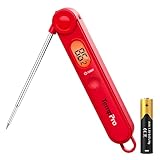
- 【Easy to Use】Easily release the meat probe at the push of a button, and control the backlight or power with another button. With TempPro, cooking becomes a seamless, stress-free experience
- 【More Accurate Readout in 1 Second】Get accurate temperature readings with an impressive +/-0.9°F precision, this cooking thermometer ensuring your food is cooked to perfection. The quick readout helps you stay efficient and in control of time-sensitive tasks
- 【Easy to Read】The large, easy-to-read numbers and bright backlit display make this grill thermometer simple to check your cooking progress whether you're indoors or grilling outdoors, at any time of day
- 【User-Friendly Design】Foldable probe and compact design make this BBQ thermometer portable and easy to store; Use the built-in magnet or hook to keep it handy on your fridge or hanging nearby for quick access
- 【Exceptional Value】Includes 1 AAA battery instead of a button cell; this digital thermometer lasts twice as long and makes battery replacement easier. Wide measuring range of -58-572°F allows for multiple uses such as checking meat, water, milk, candy, fried foods
What temperatures does WHO and FAO recommend for street food?
The 2022 WHO/FAO street-vending leaflet recommends cooking to at least 70°C, keeping prepared hot food above 60°C, keeping prepared cold food below 5°C, and reheating to 70°C for two minutes. Local requirements may add or vary by food and location.
Does boiling or frying make street food safe?
Thorough cooking can reduce hazards in the part that reaches the target, but food can be contaminated afterward by hands, utensils, raw-food juices or garnishes. Cooking also does not make raw foods, unsafe water or improperly held leftovers safe.
Should I eat food that is only lukewarm?
Lukewarm food is not evidence of safe holding. WHO/FAO guidance calls for prepared hot food to remain above 60°C. If the food’s time and temperature history are unknown, choosing freshly cooked food or another stall reduces risk.
Can cold food still be unsafe?
Yes. Prepared cold food should be kept below 5°C, but chilling does not remove existing contamination, and WHO’s healthy-market guidance notes that some organisms can still grow below 5°C on certain foods.
What should vendors do with food left at closing?
If reliable cold storage is unavailable, do not keep leftovers until the next day. Food with an uncertain handling or temperature history should be discarded rather than mixed into a fresh batch.
Is a food thermometer necessary for diners?
No. A digital instant-read thermometer is an optional tool for vendors or home cooks checking cooking and reheating targets. It cannot test water quality, prevent cross-contamination or prove that food was safely handled before the measurement.
The Bottom Line
Choose stalls that use potable water, separate raw and cooked foods, protect ready-to-eat items, cook thoroughly, control holding temperatures and avoid carrying unrefrigerated leftovers into the next day. These practices lower risk, but no visual check guarantees safety.
Quick Recap
Product prices and availability are accurate as of the date/time indicated and are subject to change. Any price and availability information displayed on Amazon at the time of purchase will apply.

