
The Tool Desk
Outbyte PC Repair FREEClear out junk files and repair common Windows errorsFree Scan →Outbyte Driver Updater FREEFix the driver behind crashes, sound loss and screen glitchesFind Drivers →iTechGuides is reader-supported. When you buy through links on our site, we may earn an affiliate commission. As an Amazon Associate I earn from qualifying purchases. Learn more
No Yu-Gi-Oh! card has a literal permanent-ban guarantee: Konami can revise the Forbidden & Limited List at any time. However, Pot of Greed, Graceful Charity, Delinquent Duo, Painful Choice, Last Turn, Victory Dragon, and Mystic Mine are among the safest bets to remain Forbidden because their effects create generic card advantage, deterministic graveyard setup, interaction locks, or unusual win conditions that modern design has little room to accommodate.
The ranking below is a forecast based on card mechanics and current legality, not an official “never unban” designation.


Why “never” is a prediction, not a Konami ruling
Konami’s Forbidden & Limited List controls eligibility for official Yu-Gi-Oh! Trading Card Game tournaments. A Forbidden card cannot be included in a player’s Main Deck, Extra Deck, or Side Deck; it may still be legally owned, traded, displayed, or collected.
Do these 3 things before closing this tab:
1Scan for outdated or missing drivers - takes under a minute2Clear out junk files and repair common Windows errors3Fix the driver behind crashes, sound loss and screen glitchesThe official Neuron list was updated on September 21, 2026 and showed 122 Forbidden cards, 95 Limited cards, eight Semi-Limited cards, and 10 cards removed from the list at that point. On October 16, 2026, GamesRadar reported that Konami had announced an emergency update with 34 newly Forbidden cards and eight Limited cards. Those changes illustrate why “permanent” should be read as “high-confidence permanence bet,” not a promise about a future list.
#1 Best Overall
The seven safest permanence bets
1. Pot of Greed
Pot of Greed is the clearest example of unconditional card advantage: a Spell that costs nothing and simply draws two cards. It has no archetype restriction, activation condition, or meaningful trade-off, so every strategy would begin by asking whether it could play three copies.
Modern decks also make a larger hand more valuable than early-era decks did. Extra cards can represent combo pieces, interaction, or follow-up, and Pot of Greed supplies that advantage without consuming a specialized slot. An errata-free return would improve almost every deck simultaneously, making it the strongest permanence bet on this list.
2. Graceful Charity
Graceful Charity draws three cards and then requires two discards. That looks like a cost until the Graveyard becomes part of a deck’s engine. Discarded monsters can become revival targets, and discarded Spells or Traps can be retrieved or converted into effects by later cards.
Free tools Windows power users keep installed
One-click scans. No signup required.
The result is both selection and setup: a player sees more cards, keeps the best ones, and places chosen resources exactly where modern strategies often want them. Its generic effect scales with the entire card pool rather than with one archetype, and it is currently Forbidden.
Rank #2

- 1 pack of Legend of Blue-Eyes White Dragon, 1 pack of Metal Raiders, 1 pack of Spell Ruler, 1 pack of Pharaoh’s Servant
- 1 pack of Dark Crisis, 1 pack of Invasion of Chaos, 1 Ultra Rare Obelisk the Tormentor card, 1 Ultra Rare Slifer the Sky
- Dragon card, 1 Ultra Rare The Winged Dragon of Ra card, 1 Ultra Rare Blue-Eyes White Dragon card, 1 Ultra Rare Dark
- Magician card, 1 Ultra Rare Red-Eyes Black Dragon card, and 1 Quarter Century Secret Rare version of 1 of the 6 a forementioned cards (random
3. Delinquent Duo
Delinquent Duo removes cards from the opponent’s hand while also dealing Life Point damage. Hand destruction is most punishing before the opponent has developed a field, because each discarded card can represent an unanswered starter, extender, or defensive piece.
Unlike modern hand-disruption cards that are tied to timing windows or specific conditions, Delinquent Duo is broadly usable and compounds with other forms of advantage. Konami currently lists it as Forbidden, and returning it unchanged would make early-game variance and non-games much more likely.
4. Painful Choice
Painful Choice asks a player to reveal five cards and let the opponent choose one to add to the hand, sending the rest to the Graveyard. The opponent controls the final selection, but the caster controls which five cards become available and which four are placed in the Graveyard.
That exchange is far more dangerous in a card pool where the Graveyard functions as an active resource. A single activation can assemble a needed card in hand while loading several revival, banish, or recursion effects. Its deterministic setup potential keeps it on the current Forbidden list.
Rank #3
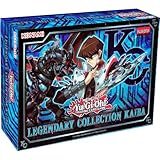
- 2025 Reprint 3 Packs included Mega Packs contains 4 Secret Rares and 6 Ultra Rares for a total of 10 foil cards per pack (that’s 30 cards per box)
5. Last Turn
Last Turn creates a special endgame rather than participating in an ordinary battle phase. It can force a narrow sequence in which normal field development, interaction, and life-point management stop being the main determinants of the result.
Cards that produce unusual timing windows or highly deterministic outcomes are difficult to balance with ordinary restrictions. Even if a particular combo is removed, the underlying rules problem remains. Last Turn is currently Forbidden and would be a poor candidate for an unerrataed return.
6. Mystic Mine
Mystic Mine is newer than the earliest classic staples, but it belongs in this discussion because it attacks the game’s central combat loop. When its conditions are met, it can prevent monster-based interaction and encourage players to pass turns, remove the Field Spell, or wait for a forced resolution.
That creates long stall positions and shifts games away from normal monster combat. Because the effect is generic and suppresses interaction directly, an unrestricted return would risk warping entire formats even though the card is not from Yu-Gi-Oh!’s earliest era. It is currently Forbidden.
Rank #4
7. Victory Dragon
Victory Dragon’s problem is structural rather than merely numerical. Its win condition operates at the match level, so a successful attack can affect the result of an entire tournament match instead of only the current Duel.
Match-level effects create complications involving concessions, reporting results, side decking, and tournament procedure that ordinary monsters do not. That rules interaction is a strong permanence signal, and Victory Dragon remains Forbidden.
How to evaluate a card’s chance of staying Forbidden
These six tests explain why the seven cards above are stronger permanence bets than ordinary power cards:
PC Slower Than It Used to Be?
A free scan shows the junk files, broken settings and background clutter dragging Windows down - then fixes them in one click.Free scan · Windows 10 & 11Outdated Drivers Are Slowing You Down
One free scan finds every outdated or missing driver and matches the right update for your exact hardware.Free scan · exact hardware match| Test | What to ask | Why it matters |
|---|---|---|
| Universality | Would almost every deck improve by playing the card? | Universal staples are difficult to balance through archetype design or deck-building restrictions. |
| Resource swing | Does it draw cards, remove opposing cards, or create extra bodies? | Large generic swings compress strategy diversity and increase the payoff for opening the card. |
| Graveyard exploitation | Does a discard or destruction clause become an advantage in modern decks? | Effects that were once costs can now function as searching, revival, or combo setup. |
| Interaction denial | Does it stop normal monster, Spell, Trap, or battle interaction? | Lock effects can produce stalled games and reduce meaningful decisions for both players. |
| Rules complexity | Does it create unusual win, match, or timing states? | Rules problems are harder to solve with a simple copy limit. |
| Errata requirement | Could it return unchanged, or would its function need to be rewritten? | If the original text is fundamentally unsafe, an unchanged return is unlikely. |
Could any of these cards come back?
Yes, in the literal sense. Konami can change a card’s status, and the list has removed cards in the past. A return could also involve errata that changes the card’s function, adds a severe condition, or limits when it can be used.
Best Value
That possibility does not make an unchanged return equally plausible for every card. Pot of Greed and Graceful Charity would need their generic resource engines fundamentally reduced. Last Turn and Victory Dragon would need their special win procedures addressed. Mystic Mine would need safeguards against broad interaction suppression. Those are functional rewrites, not ordinary movement from Forbidden to Limited.
What Forbidden means for owners and collectors
Forbidden status applies to tournament deck construction, not ownership. You can keep these cards in a binder, trade them, display them, or collect different printings even when none can be used in the current Advanced Format.
Sealed Yu-Gi-Oh! TCG packs and boxes offer the broadest physical-product experience, but sealed products cannot guarantee a specific Pot of Greed, Graceful Charity, or Victory Dragon. If the goal is one named card, a single card is the direct purchase. Graded copies may suit collectors who value condition, certification, and presentation, while raw singles are generally the practical choice for comparing printings or building a themed collection.
Before buying, verify the exact set, language, rarity, edition, and condition. A card’s ban status does not by itself establish scarcity or value; those factors depend on the specific printing and the collector market.
The practical answer for players and collectors
For tournament players, treat all seven cards as unavailable unless the current official list says otherwise. For collectors, their lasting appeal comes from design history: Pot of Greed and Graceful Charity represent unmatched generic advantage, Delinquent Duo and Painful Choice show how hand and Graveyard mechanics scale, and Last Turn, Victory Dragon, and Mystic Mine demonstrate how alternate wins or interaction locks can challenge the game’s normal structure.
The safest conclusion is therefore not that Konami has promised a permanent ban. It is that these cards combine the exact properties—universal power, scalable resource generation, deterministic setup, interaction denial, or rules-breaking win conditions—that make an unchanged return exceptionally unlikely.
Quick Recap
Product prices and availability are accurate as of the date/time indicated and are subject to change. Any price and availability information displayed on Amazon at the time of purchase will apply.
Quick wins for a faster PC:
Fix the driver behind crashes, sound loss and screen glitchesFind Drivers →Repair Windows errors before they cause bigger problemsFix Now →
