
iTechGuides is reader-supported. When you buy through links on our site, we may earn an affiliate commission. As an Amazon Associate I earn from qualifying purchases. Learn more
Start by testing whether a managed serverless runtime fits the workload; move to containers, Kubernetes, or virtual machines only when a specific need—such as longer execution, persistent processes, Kubernetes APIs, or deeper infrastructure control—rules it out. Serverless-first is a way to prioritize options, not a requirement to run every component serverlessly.
What “serverless-first” means
AWS defines a serverless-first strategy as prioritizing serverless principles in application development and operations. Those principles include avoiding server management, paying for value delivered, scaling continuously, and using built-in fault tolerance. AWS also says non-serverless technologies can be supporting architecture when needed. AWS Serverless Compute FAQs
In practice, begin with the most-managed runtime that appears to fit, then identify concrete requirements it cannot meet. The result may be a mix: AWS notes that one workload can use multiple compute solutions. The ladder is a decision aid, not a one-way migration path. AWS compute service decision guide
Do these 3 things before closing this tab:
1Clear out junk files and repair common Windows errors2Fix the driver behind crashes, sound loss and screen glitches3Repair Windows errors before they cause bigger problemsWhich compute option fits the workload?
| Option | Start here when | Step down when |
|---|---|---|
| Functions | Work is triggered by events, arrives unpredictably, and fits the function runtime’s limits. AWS gives file processing, HTTP requests, scheduled tasks, and stream processing as Lambda examples. | The invocation duration, runtime constraints, persistent-process needs, or resource requirements exceed the fit. |
| Managed serverless containers | You need a containerized application, long-running process, microservice, or batch workload but want to avoid managing servers. | You need Kubernetes APIs, more environment control, specialized scheduling, or platform capabilities the managed container service does not offer. |
| Managed Kubernetes | Kubernetes is a direct workload or organizational requirement, or a simpler managed runtime is unsuitable. | You need more infrastructure, operating-system, or hardware control than the managed cluster provides. The cited decision guides do not define a universal threshold. |
| Virtual machines | You need virtual servers and the configuration choices that come with managing them. | Reconsider managed options if reducing server operations matters more than VM-level control. |
AWS identifies Lambda as serverless code execution, Fargate as managed container compute, ECS and EKS as container options, EC2 as virtual servers, and Batch for parallel data workloads. Google recommends a managed runtime such as Cloud Run when the workload fits one, and suggests Kubernetes Autopilot when Kubernetes is needed or serverless is a poor fit. AWS compute service decision guide · Google Cloud managed container runtime guide
#1 Best Overall

- Next-Gen Processing Power: Powered by the AMD Ryzen 7 8845HS processor (8 Cores, 16 Threads, Zen 4 architecture) and Radeon 780M graphics. Effortlessly handles fluid 4K/8K real-time media transcoding, multiple operating system virtualizations (PVE/ESXi), and simultaneous background tasks without a stutter.
- Secure Local AI & Privacy: Features an integrated Ryzen AI NPU delivering up to 38 TOPS of total processing power. Deploy 8B/14B Large Language Models (LLM) locally, run automated programming assistants, and enjoy lightning-fast AI photo recognition—all completely offline, keeping your sensitive data 100% secure.
- Pro-Studio Collaboration: Engineered with dual 2.5GbE network ports and optimized high-speed architecture. Eliminate transmission bottlenecks so multiple video editors, photographers, or 3D designers can collaborate, render, and share heavy assets directly from the NAS in real time.
- Massive Docker Ecosystem: Seamlessly deploy and run over 20+ Docker containers simultaneously. Perfect for hosting your home assistant, private web servers, automated downloaders, and personal databases with enterprise-level stability.
- Futuristic Heat Dissipation: Designed with an advanced cooling system tailored for continuous, high-load hardware operation. Enjoy high-speed read and write speeds across multiple drive bays while maintaining whisper-quiet operation in your home or studio.
When are functions the right starting point?
Functions are a strong first candidate for discrete work that starts in response to an event or request and completes within the provider’s invocation model. In AWS’s comparison, Lambda handles the underlying compute administration and is aimed at event-driven tasks, while Fargate is aimed at containerized applications and persistent processes. AWS Fargate or AWS Lambda?
Duration is a decisive constraint, not a minor implementation detail. The AWS guide states that a Lambda invocation has a 15-minute maximum; it separately describes durable functions for workflows of up to one year. These are distinct execution models, so a long workflow should not be assumed to run as one ordinary Lambda invocation. AWS describes Fargate containers as having no hard execution-time limit. Check current service limits before choosing, since provider limits can change. AWS Fargate or AWS Lambda?
Rank #2

- 【IMPORTANT NOTE: BAREBONE VERSION】This product is a barebone system version. NO RAM, NO SSD/HDD STORAGE DEVICES ARE INCLUDED in the package. Customers need to independently purchase and install compatible DDR4 memory sticks and M.2 NVMe/SATA hard drives according to their usage needs before use. Please confirm the configuration requirements before purchasing.
- 【Linux Compatibility Note】Under sustained heavy‑load in Linux, SATA link power management may cause speed reduction or CRC errors on certain drive bays. This is system‑level power‑management behavior, not hardware defect. A simple udev‑rule configuration can lock full 6Gbps SATA performance for all bays; please check product description for the full setup steps.
- 【Powerful CPU, Smooth Multitasking】Mini PC NAS equips AMD Ryzen 7 5825U 8C/16T processor with 7nm Zen 3 design. It runs at 2.0GHz base clock and peaks 4.5GHz, matched with 2000MHz Radeon Vega graphics. Strong computing and graphic power ensures smooth gaming, video playback and design work. The robust chip handles multiple tasks simultaneously, offering stable and efficient performance for daily use and professional work.
- 【Large Expandable Storage, Flexible Layout】Aoostar NAS storage features 4+2 bay design, supporting 4 SATA drives and 2 M.2 NVMe slots with max 96TB storage. Dual DDR4 slots allow memory upgrade up to 64GB. Multiple RAID options secure data and enhance read-write speed, ideal for mass file storage and backup.
- 【Triple-screen 4K Output, Boost Working Efficiency】Mini NAS realizes triple 4K display output via DP 1.4, HDMI and Type-C interfaces. Users can connect multiple monitors at one time to split work content reasonably. Multi-screen working mode cuts down frequent window switching, greatly elevates operational efficiency. It adapts to office processing, video editing, media creation and online gaming, creating panoramic and efficient visual operating environment for different usage needs.
When should you use managed containers?
Choose a managed container runtime when the application is already containerized, needs a persistent process, or depends on a container-specific runtime. AWS describes Fargate as a serverless container compute engine, primarily used with ECS, for long-running container applications, microservices, and batch processing. It avoids server management without imposing a hard execution-time limit in the cited comparison. AWS Fargate or AWS Lambda?
Managed containers can be a useful middle ground: they retain the container packaging model and support longer-lived services while leaving more infrastructure operation to the provider. They do not automatically provide every capability of a Kubernetes environment, so check whether the workload depends on Kubernetes APIs, cluster-level scheduling, or other platform features before settling on a managed container service.
Rank #3

- 【AMD Ryzen 5 3501U Mini PC For Enhanced Daily Performance】Powered by AMD Ryzen 5 3501U processor with 4 cores and 8 threads, this mini pc provides responsive performance for office applications, home entertainment, online learning, media playback, and everyday computing.
- 【16GB Memory & 512GB Storage With Expansion Options】Built with 16GB DDR4 RAM and 512GB PCIe 3.0 NVMe SSD, this mini computer provides more space for applications, files, videos, and daily content. Upgrade memory up to 32GB, expand SSD storage up to 2TB, or add a 2.5-inch HDD.
- 【Flexible Small Desktop Computer For Home Applications】This small desktop computer is designed for home office, streaming, personal server setups, digital entertainment, and light gaming. The upgraded memory helps support smoother operation when using more applications.
- 【Triple Display Setup & Flexible Connectivity】Dual HDMI ports and a full-function USB-C port support up to three displays. This micro pc offers convenient connectivity with WiFi 6, Bluetooth 5.3, Gigabit Ethernet, and multiple USB ports.
- 【Compact Mini Desktop With Space-Saving Design】Measuring only 5.0 × 4.4 × 1.6 inches, this small pc saves valuable desk space. VESA mount support allows installation behind compatible monitors, making it suitable for home offices and compact workspaces.
When does Kubernetes justify its complexity?
Kubernetes is worth considering when its APIs and ecosystem are requirements, or when the workload needs controls that a simpler managed runtime cannot supply. Google’s decision guide asks teams to weigh control, networking and routing, scaling, state, CPU architecture, accelerators, resource capacity, multi-tenancy, and task duration. It recommends considering Cloud Run for suitable managed-platform workloads and Kubernetes Autopilot when Kubernetes is needed or serverless is a poor fit. Google Cloud managed container runtime guide
Kubernetes adds operational and conceptual complexity. That cost may be justified by specific platform requirements, but “we use containers” alone does not establish a need for Kubernetes: managed container services also run containers. Match the platform to capabilities the application actually needs and the team can operate.
Rank #4

- Server-Class Home Server Built for 24/7 Workloads - Designed as a purpose-built home server rather than general-purpose SBCs, Mini PCs, entry NAS systems, or routing-only devices. As a compact, pocket-sized single board server platform, ZimaBoard 2 832 combines x86 architecture, quad-core performance up to 3.6GHz, 8GB DDR5 memory, and 32GB eMMC storage for reliable always-on home servers, homelabs, and self-hosted workloads.
- PCIe 3.0 x4 Expansion for Real Server Builds - Built as a server-class platform with native PCIe expansion, ZimaBoard 2 features a full PCIe 3.0 x4 slot for high-speed, low-latency upgrades beyond USB-based limitations. Supports 10GbE NICs, NVMe adapters, GPUs, and AI accelerators to build scalable home servers, homelabs, and advanced self-hosted systems—offering greater expansion flexibility than typical SBCs, Mini PCs, and entry-level NAS devices.
- Native Dual SATA & Dual 2.5GbE Networking - Built with server-class storage and networking I/O, ZimaBoard 2 integrates dual SATA ports for direct HDD/SSD connectivity and dual 2.5GbE Ethernet for high-throughput, low-latency networking. This architecture enables reliable DIY NAS, fast storage, routing, and multi-service home server deployments—while avoiding USB-based performance constraints common in ARM SBCs, Raspberry Pi–based setups, Mini PCs, and entry-level NAS devices.
- ZimaOS Preinstalled + Wide OS Compatibility - Comes preinstalled with ZimaOS for a clean, ad-free private cloud experience—centralized file dashboard, automatic backups, P2P downloads, private photo/video sharing, 500+ plug-ins, and secure on-device AI that keeps your data at home. Also supports TrueNAS, Proxmox, Debian, Ubuntu Server, pfSense, OpenWrt, and Linux containers, making it perfect for Plex media servers, Pi-hole, firewalls, backups, Docker labs, home-cloud services, and multi-service deployments.
- All-in-One NAS, Router, Docker & Homelab Server - Replace multiple devices with one low-power, fanless system. ZimaBoard 2 can serve as a NAS, router, Docker host, firewall, media server, or homelab node—delivering a flexible, open alternative to ARM SBCs, Mini PCs, and entry-level NAS systems.
When are virtual machines the better fit?
Use virtual machines when you need to launch and manage virtual servers or require the broader configuration options available at that level. AWS lists EC2 as its virtual-server option. VMs sit lower on this ladder because they place more infrastructure responsibility with the user; that additional control is valuable only when the workload or operating model calls for it. AWS compute service decision guide
Recommended Free Tools
How to make the choice for a real workload
- Describe the work. Identify what triggers it, whether traffic is steady or bursty, and whether it is a short task, a persistent service, or a batch job.
- Check execution and state. Estimate the longest run, and note persistent connections, state, or processes that must stay alive. Compare those needs with the current runtime limits.
- List required resources and controls. Record CPU and memory needs, architecture, accelerators, networking and routing requirements, scheduling needs, and any Kubernetes API dependency.
- Assess operational capacity. Decide how much server, cluster, and operating-system management the team can reasonably take on, and whether that work buys a capability the workload requires.
- Compare provider pricing for the actual pattern. Include the expected duration, scale, and resource profile. The decision guides establish trade-offs, not a universal cheapest-to-most-expensive ranking.
- Choose the highest-level fit, then validate it. Start with a function or managed container if it meets the requirements. Move to Kubernetes or VMs only when a concrete constraint or capability makes the simpler option unsuitable.
These checks overlap with the criteria AWS and Google use in their compute decision guidance. For Azure, Microsoft provides separate guides for compute, microservices, and container-service choices; its overview is a route to workload-specific guidance rather than a basis for detailed service-by-service comparison. Microsoft Azure technology choices overview
Quick Recap
Best Value
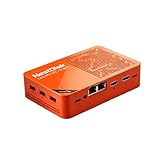
- [Plug and Play Private Cloud Experience] YOUYEETOO Nest Disk NAS Mini PC is a pre-installed with the OpenMediaVault system, requiring no complex configuration. Simply power it on and connect to the network to activate full NAS functionality. It supports multi-language operating systems, including Windows 11, Ubuntu, and Linux. Its plug-and-play capability enables use as private cloud storage, easily transforming into an HTPC (Home Theatre PC) or software-defined router to meet diverse needs for home entertainment, light office work, and network management.
- [Four-Bay NVMe Storage Architecture] YOUYEETOO Nest Disk NAS Mini PC Network Attached Storage NAS Kit supports up to four NVMe SSDs, delivering high-speed, stable and massive storage capacity. It ensures rapid internal network transfers and multi-device access speeds. Users can establish team project repositories, complemented by Wi-Fi 6 and Bluetooth 5.2 wireless connectivity, enabling efficient data sharing and multi-device synchronisation.
- [12GB DDR5 Multitasking Engine] YOUYEETOO Nest Disk Mini PC NAS Kit features 12GB of DDR5 RAM memory, leveraging its high bandwidth and low latency to effortlessly handle multiple concurrent tasks. It not only manages multitasking and virtual machine operations with ease but also supports light gaming and 4K video streaming. Consequently, it fulfils the entertainment and work requirements of home office professionals.
- [Compact All-in-One Office Mini PC] YOUYEETOO Nest Disk NAS mini computer features an ultra-compact design measuring just 146×97.5×32 millimetres, allowing it to be discreetly positioned behind a monitor. Once connected to a keyboard, mouse and display, it transforms into a fully functional office computer—ideal for document editing, online learning and other daily tasks. This makes it the perfect mobile office solution for space-constrained environments.
- [Triple 4K Collaborative Workspace] YOUYEETOO Nest Disk NAS Supports triple 4K 60Hz signal output via dual HDMI & Type-C ports, compatible with 4K monitors for multi-screen productivity and entertainment. Operates as a Theatre Media Centre for seamless playback of high-definition content, catering to financial multi-screen operations, audio-visual editing, and multilingual interface requirements. An efficient assistant for creative professionals and office users alike.
Product prices and availability are accurate as of the date/time indicated and are subject to change. Any price and availability information displayed on Amazon at the time of purchase will apply.

