
Quick wins for a faster PC:
Scan for outdated or missing drivers - takes under a minuteDriver Scan →Repair Windows errors before they cause bigger problemsFix Now →iTechGuides is reader-supported. When you buy through links on our site, we may earn an affiliate commission. As an Amazon Associate I earn from qualifying purchases. Learn more
Strong Chinese AI models are not, by themselves, proof that China has surpassed the United States across AI. In an October 6, 2026, Just Security commentary, Ben Vagle argues that treating China’s capabilities as an imminent, decisive lead risks repeating the logic of the Cold War “missile gap”: a perception of a rival’s advantage can fuel an arms race even when the underlying picture is more complicated. His proposed alternative is to assess compute, algorithms and data separately—and to take the possibility of losing control of rapidly improving AI seriously in both countries.
What does the “missile gap” analogy mean?
Vagle uses the late-1950s U.S. fear that the Soviet Union was building a larger missile arsenal as a warning about how threat perceptions can shape policy. In his historical framing, U.S. officials later found the Soviet arsenal was far smaller than feared, but the belief in a gap helped justify an arms race. He sees a comparable risk in arguments that the United States must accelerate AI development at any cost to avoid falling behind China.
The analogy is about the possible effects of a mistaken perception, not proof that today’s AI estimates are wrong or that the two eras are identical. It also does not establish that China lacks important capabilities. Vagle’s narrower point is that fear of a rival’s lead can become a reason to escalate before policymakers have a sufficiently broad picture of what “lead” means.
What should count as AI leadership?
A model leaderboard captures only one part of a much larger system. Vagle organizes national AI capability around three pillars: computing power, algorithms and data. Each supports a different question, and none alone measures the economic or military consequences of AI.
#1 Best Overall

- Experience the legendary F-14 Tomcat through a highly detailed model designed for aviation collectors and hobby enthusiasts. The finished model becomes a striking desktop or showcase centerpiece.
- This 3D puzzle is designed for beginner-level assembly enthusiasts, offering an immersive hands-on building experience that helps cultivate patience, concentration, and mechanical problem-solving skills.
- This product is manufactured using high-quality, environmentally friendly plastic and employs an ultra-fine etching process to ensure durability, structural precision, and realistic aircraft details.
- Encourages understanding of aircraft engineering concepts while improving hand-eye coordination and spatial thinking through engaging mechanical assembly.
- Ideal gift for childs, engineers, collectors, model builders, and puzzle lovers for birthdays, Children’s Day, Christmas, or special hobby occasions.
| Dimension | What it helps assess | What Vagle argues |
|---|---|---|
| Computing power | Resources available to train and run models, including chips and the scale of deployment. | The United States has stronger chips and more total compute. A RAND commentary dated May 2, 2025, is cited for a rough estimate that U.S. aggregate compute was about ten times China’s. That is a dated estimate, not a permanent ratio or a direct measure of every model’s capabilities. |
| Algorithms and talent | Research methods, technical expertise and the ability to attract and retain skilled researchers. | Vagle argues that U.S. labs compete with or outperform Chinese counterparts, and that U.S. institutions attract highly skilled Chinese researchers. These are his assessments, not a comprehensive, independently validated score of research strength. |
| Data | Access to information and the ability to use it effectively in developing and deploying AI. | Vagle acknowledges that China may be able to compel access to large pools of data, while arguing that this has not so far produced a clear overall lead. Access alone does not establish how useful data is for a particular task or model. |
The compute estimate matters, but it should not be mistaken for a universal measure of national AI power. Total capacity, access to chips and manufacturing infrastructure, efficiency, and the ability to deploy systems at scale all bear on the picture. A benchmark result, meanwhile, may say little about the cost of producing it, how well a system performs in a particular setting or whether it changes military or economic outcomes.
Why have Chinese models performed so well?
Vagle’s explanation is that Chinese firms can build on advances made by frontier models developed in the U.S. ecosystem while competing from a position he describes as second across the three pillars. One method he discusses is distillation: training a less capable model using outputs from a more capable one. He says evidence from governments, AI labs and outside observers supports this account, but it should not be treated as a complete explanation of how Chinese models are developed.
Rank #2
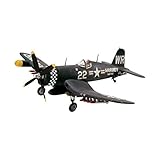
- Revell Plastic Model Airplane Kit #85-5248 is skill level 4 and contains 75 parts. Recommended for ages 12 and up.
- 1:48 scale model, Length 8", Wingspan 10-1/2"
- Fold-out wings, retractable landing gear and retractable doors.
- Paint and glue not included.
- Includes decals for VMF-214 "Black Sheep" Squadron USS Sicily 1951 and VMA-332 USS Bairoko 1953.
Vagle also cites an Epoch AI comparison estimating that Chinese models have lagged the best U.S. models by roughly seven months on average since 2023. That figure describes a particular comparison and time window; it is not a prediction of future performance or a complete account of capability. Rankings and evaluation methods change, and a gap in benchmark performance does not by itself settle differences in deployment, cost, performance on specific tasks or strategic effect.
Do these 3 things before closing this tab:
1Clear out junk files and repair common Windows errors2Scan for outdated or missing drivers - takes under a minute3Repair Windows errors before they cause bigger problemsDoes a model lead automatically translate into national advantage?
Vagle argues that a small or temporary lead in model quality has not been shown, by itself, to produce a decisive economic or military advantage. Whether a system matters depends on how it is deployed and on the setting in which it is used. That leaves room for serious competition without assuming that the first country to reach a particular benchmark has necessarily won.
Rank #3

- IFF antenna array in front of the cockpit distinguishes this CCIP-equipped model from other F-16s.
- Curved form of the F-16 accurately reproduced with trademark Tamiya precision.
- Moveable horizontal stabilizers. "Flaperons" can be modelled in the up or down positions.
- Full ordnance load including AGM-88 HARM, AIM-120C AMRAAM, AIM-9M/X Sidewinder, ECM pod, and fuel tanks included.
- Centerline and inner wing pylons as well as tail assembly feature polycaps to allow easy detachment for storage.
This distinction helps explain why competing claims about a “race” can be misleading. A country could produce a strong model without having more computing capacity overall; another might have substantial compute but fail to turn it into useful systems or outcomes. No single measure in Vagle’s framework resolves all those questions.
What risk does Vagle consider more serious?
Vagle directs attention toward the possibility that AI systems could improve themselves rapidly and become difficult to control. He relays Anthropic chief executive Dario Amodei’s assessment that recursive self-improvement “is starting to happen across the industry.” That is Amodei’s assessment as reported by Vagle, not an independently established finding in the commentary.
Rank #4
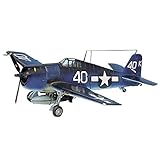
- 1/72nd scale
- Highly detailed cockpit interior and landing gear
- Authentic markings available for two versions
- Optional part to build as -3 or -5 version included
- Paint and glue not included
Vagle treats loss of control as a shared potential risk rather than a simple contest in which one nation’s gain is necessarily the other’s loss. If increasingly capable systems become hard to govern, the danger would not be limited to the country that developed them first. This is a policy argument about where attention should go, not a claim that such an outcome is certain.
Is Vagle arguing for a full AI pause?
No. His conclusion is more qualified: a full pause may not be wise, but fear of China should not blind U.S. policymakers to risks or to the strengths of the U.S. and allied AI ecosystem. He warns against competing “to the point of blindness,” not against every effort to develop AI.
Best Value
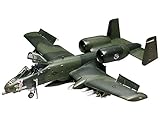
- Revell Plastic Model Airplane Kit #85-5521 is skill level 4 and contains 165 parts. Recommended for ages 12 and up.
- Highly detailed cockpit with boarding ladder and clear canopy
- Pilot figure with realistic uniform details
- Model Scale 1:48
- Illustrated assembly instructions
The public debate includes stark statements. Vagle cites Nvidia chief executive Jensen Huang saying, “China is going to win the AI race,” and quotes Senator Bernie Sanders telling AI company executives, “It is not too late to avoid disaster.” These remarks illustrate different concerns and emphases; they are not measurements of which country leads or evidence that a particular policy will work.
How to read claims that one country is “winning”
Ask what the claim measures before treating it as an overall verdict. The following questions separate dimensions that are often compressed into a single headline:
- Frontier capability: Which models are being compared, on what evaluations and over what dates?
- Compute: Does the estimate cover capacity for research, training and deployment, and when was it made?
- Chips and infrastructure: Does it account for performance, efficiency, supply and access to manufacturing?
- Research strength: Is the claim about an individual model, research output, talent or the ability to retain expertise?
- Data: Does it distinguish access from the ability to use data effectively?
- Practical effect: Is there evidence of an economic or military advantage in a specific context, rather than an inference from a benchmark?
- Safety and control: Does the comparison consider risks from systems that could become difficult to govern?
These questions are a way to examine Vagle’s argument, not a validated scorecard that settles the U.S.–China competition. The estimates he cites are useful context, but they do not support a timeless declaration that either country has won—or that one cannot catch up.
The Tool Desk
Outbyte Driver Updater FREEScan for outdated or missing drivers - takes under a minuteDriver Scan →Outbyte PC Repair FREEClear out junk files and repair common Windows errorsFree Scan →Quick Recap
Product prices and availability are accurate as of the date/time indicated and are subject to change. Any price and availability information displayed on Amazon at the time of purchase will apply.

