
Quick wins for a faster PC:
Scan for outdated or missing drivers - takes under a minuteDriver Scan →Clear out junk files and repair common Windows errorsFree Scan →Fix the driver behind crashes, sound loss and screen glitchesFind Drivers →iTechGuides is reader-supported. When you buy through links on our site, we may earn an affiliate commission. As an Amazon Associate I earn from qualifying purchases. Learn more
For a small Node.js SaaS, the cheapest useful way to explain a scheduled job is usually to record its business-level lifecycle in structured application logs, then add a scheduler or monitoring service only for gaps it actually fills. Compare total cost against your monthly run or log volume and retention needs—not a scheduler’s per-run price against a general logging platform. A scheduler’s run history can show whether an HTTP call happened and what response came back; it does not automatically explain what happened to the underlying business job.
What evidence should a scheduled job leave behind?
Keep a compact, structured history for each business job rather than relying on a lone message such as “worker failed.” One practical event chain is scheduled, enqueued, claimed, completed or failed, and, where relevant, delivered. This is a design recommendation from the title-matched article, not a standard mandated by the product documentation cited here.
Join those events with a durable job ID and an attempt-independent idempotency key. Include the attempt number, timestamp, transition or outcome, a bounded error class, and a downstream receipt ID when available. That lets you tell a retry from a duplicate side effect and follow one job across scheduling, enqueueing, processing and delivery.
Do these 3 things before closing this tab:
1Scan for outdated or missing drivers - takes under a minute2Clear out junk files and repair common Windows errors3Fix the driver behind crashes, sound loss and screen glitchesKeep secrets and sensitive payloads out of routine logs. Prefer opaque internal identifiers over email addresses or other personal details, and bounded error classes over unrestricted error bodies or full request content. Resolve sensitive records through the system of record when needed.
#1 Best Overall

- [CPU] AMD Ryzen 7 5700G Processor (8 Cores, 16 Threads, 3.8 GHz Base Clock Speed up to 4.6 GHz Max Boost Clock Speed) for Gaming and Content Creation with 7nm Leading Edge Technology | [STORAGE] 1TB PCIe NVMe M.2 SSD - Experience Hyper-Fast Bootup and Data Transfer thats up to 30x Faster Performance than a Traditional Hard Drive.
- Graphics: Integrated AMD Radeon Graphics | [RAM] 32GB DDR4 RAM 3200 Gaming Memory for Seamless Multitasking from Multiple Web Pages to Playing Games Online Simultaneously | [OS] Windows 11 Pro x64
- 2x 3.5" Drive Bays | 4x Expansion Slots | mATX Motherboard | ATX PSU
- [BUY WITH CONFIDENCE] Empowered PCs are Assembled in the USA, Rigorously Stress-Tested Before Shipping, and Supported with Lifetime Technical and Diagnostic Support and 3-Year Limited Hardware Warranty.
Which low-cost options cover which part of the job?
These options overlap, but they are not interchangeable. A scheduler records scheduled executions; an application logger records what your code did; an observability product may combine logs with other signals. The figures below are vendor statements reported on pages accessed October 7, 2026; verify current terms and limits before choosing.
| Option | What the cited source says it covers | Published cost or allowance | Key qualification |
|---|---|---|---|
| ClearCron | Scheduled HTTP jobs, run status and timing, response-body logs, and email, Slack or webhook alerts | Advertised starting meter: $0.00003 per run; advertised starting credit: $10 | Its page says run logs are searchable for 30 days. The page also describes lower marginal rates at higher monthly volumes, so the starting meter alone is not a workload quote. This is scheduler and execution evidence, not a general log-ingestion service. ClearCron |
| Central Logging | Self-hosted application logs, alerts, cron monitoring and uptime checks; local SQLite storage with operator-chosen retention | Advertised free tier: 10,000 logs per day; advertised unlimited one-time license: $187 | These are vendor claims. The page also displays a crossed-out $299 figure; the $187 amount is the stated current offer, not an independently verified checkout price. Self-hosting shifts cost into server capacity, backups, updates and availability work. Central Logging |
| Tindra | Errors, structured logs, traces, profiles, uptime and cron monitoring; described as available self-hosted or managed in the EU | Advertised 14-day trial without a credit card; logs, cron check-ins and profiles described as free within instance-wide storage limits | Feature and plan details are vendor-reported; confirm current storage, retention and billing limits. Its page reports release v1.0.3 on September 17, 2026 and says its feature comparison was verified in July 2026. Tindra |
| node-cron with an application logger | Application-level scheduling; the v4 documentation describes cron schedules, overlap prevention, distributed coordination and routing node-cron output through a logger | Not stated in the cited documentation | The library’s direct cost does not establish infrastructure cost or how a particular deployment behaves. Check your installed package version and the exact options used. node-cron |
| Heroku Scheduler | Platform-managed scheduled tasks | The Dev Center labels the add-on free; each scheduled task uses a one-off dyno counted toward monthly usage | Heroku documents occasional missed or duplicate executions and recommends a custom clock process for critical tasks. This caveat is specific to Heroku Scheduler. Heroku Dev Center |
How should you compare real cost?
First estimate the workload. Count scheduled runs and expected log events per month, estimate data volume, and decide how much history must remain searchable. Then price the whole setup: ingestion or run charges, storage and retention, worker or one-off dyno time, hosting for self-managed services, and any export or alerting features you need.
Rank #2

- 【Powerful Load-bearing】12U Network Rack Open Frame is constructed from durable cold rolled steel; Rack shelf supports enhance stability, wall-mounted capacity of 130lbs, the ground-mounted up to 260lbs
- 【Considerate Designs】Open-frame layout, including a top panel adding space, anti-slip shelf stops fixing devices and compatible racks for stack and expansion to meet requirements of home server rack
- 【Complete Accessories】A 12U open frame server rack, two ventilated shelves, four shelf stops, four velcro straps and a set of equipment mounting screws
- 【Versatile Application】Ideal for space-efficient multi-device setups in warehouses, retail, classrooms, offices and more; Excellent choices as AV Rack/IT Rack
- 【Effortless Setup】 Network Rack includes hardware, a comprehensive manual, mounting hole drilling template and an online assembly video to simplify setup
Keep the units and product scopes separate. A per-run scheduler rate is not directly comparable to a log allowance or a one-time self-hosting license. The cited pages expose different scopes and billing units, so they do not establish one universally cheapest choice for small Node.js SaaS applications.
What’s actually slowing this PC down?
Pick the symptom - the matching free tool is one click away.
- Search and retention: Check how long history remains searchable, what happens at capacity, and whether you can export it. ClearCron states 30 days for run logs; Central Logging says operators choose local retention. Verify current limits with each provider.
- Operating burden: A self-hosted license may reduce vendor ingestion charges, but you remain responsible for server capacity, storage growth, updates, backups and availability. Central Logging describes a one-executable deployment and local SQLite storage; those are vendor statements, not an independent operational assessment.
- Failure visibility: Decide how you will detect a late or missed schedule, a failed attempt, and a downstream delivery failure. Confirm alerting and manual recovery paths rather than assuming a run log covers every stage.
- Export and support: Check whether records can be extracted in a usable format, and whether the support level and response expectations fit the job’s importance.
- Labor: Include the time required to operate a self-hosted system or maintain application-owned scheduling alongside any subscription or usage fees.
What scheduler behavior matters for critical work?
Scheduling a task is not the same as guaranteeing its business effect. Heroku’s Dev Center states, “Scheduler job execution is expected but not guaranteed.” Its documentation, updated July 24, 2026, says tasks can rarely be missed or duplicated and recommends a custom clock process for critical jobs. The page is community-contributed and Heroku cautions it may not reflect every platform update.
Rank #3
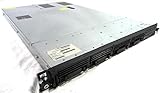
- Up to 2 Six-Core Intel Xeon CPUs 5600 Series
- 18 x slots DDR3 memory
- Up to four SFF Hot-Swappable Hard Drives 2.5" SAS or SATA
- HP Smart Array P410i-512MB FBWC RAID
- 4 x NC382i GigaBit NIC
For Heroku Scheduler, daily run times use UTC. The documentation also warns that direct references to sensitive environment variables in task commands may be expanded into the application log stream in the Common Runtime. Check command construction and secret handling in the actual deployment.
For any scheduler, build idempotency and outcome recording around the platform’s documented behavior. Do not assume another service has Heroku’s limitations—or stronger guarantees—without checking its own official documentation.
Rank #4

- 【Powerful load-bearing】12U Network Rack Open Frame is constructed from durable Cold Rolled Steel; Rack Shelf Back Support enhances stability; load-bearing capacity of 260lbs
- 【Sliding&Considerate】Open-frame layout, including four wheels easy to move, a top panel adding space, anti-slip shelf stops fixing devices and compatible racks for stack and expansion to meet requirements of home server rack
- 【Complete Accessories】A 12U open frame server rack, two ventilated shelves, four shelf stops, four casters, four velcro straps and a set of equipment mounting screws
- 【Versatile Application】Ideal for space-efficient multi-device setups in warehouses, retail, classrooms, offices and more; Excellent choices as AV Rack/IT Rack
- 【Effortless Setup】Server rack with wheels includes hardware, a comprehensive manual, mounting hole drilling template and an online assembly video to simplify setup
When is a job queue a separate decision?
A scheduler answers when to trigger work; a background-job platform may handle durable enqueueing, retries or coordination. Those capabilities can matter when a task needs recovery beyond a scheduled HTTP request, but they do not by themselves provide a complete application audit trail. A July 6, 2026 secondary comparison groups options into Redis-backed BullMQ, managed durable-job systems such as Inngest and Trigger.dev, HTTP-first Upstash QStash, and lower-level AWS SQS. Treat those categories as a starting point for investigation, and verify specific guarantees and prices against each platform’s primary documentation.
Quick Recap
Best Value

- Spacious Chassis: This massive 4U server case has 8 internal 3.5" HDD bays plus room for 3 additional 5.25" devices
- Expandable & ATX/CEB Compatible: 7 PCI expansion slots and ATX and CEB motherboard compatibility give you growth options for all of your needs
- Quiet Cooling: 4 pre-installed cooling fans provide excellent airflow and heat protection at reduced noise. 2 front 120mm PWM fans and 2 rear 80mm fans ensure your drives and chassis avoid overheating
- Desired Features: Front panel LED indicators for power, HDD, and LAN status monitoring allow quick, easy visual assessment. Additional utility with 2 x USB 3.0 port and built-in front panel lock provides extra security for your server case
- Rackmount Design: Standard 4U rackmount form factor allows easy installation in server racks and data center environments with included mounting hardware for professional deployment
A practical selection path
- Define the job evidence first. Choose the business job ID, idempotency key, attempt number, lifecycle transitions and downstream receipt you need to investigate an incident.
- Estimate volume and retention. Project monthly runs, log events and storage, and decide how long records need to stay searchable.
- Use application-owned logging where it is sufficient. A Node.js scheduler such as node-cron can route output through an application logger, but your deployment still determines infrastructure cost and behavior.
- Add a managed scheduler or observability service for a specific gap. Choose it for needs such as HTTP execution history, alerting, centralized search or cron monitoring; do not treat a scheduler response body as the full job history.
- Test recovery behavior before depending on it. Verify how late, duplicate, failed and manually rerun executions affect the business operation, and ensure repeated attempts do not create repeated effects.
- Recheck current limits and price at purchase. Vendor prices, allowances, retention and feature boundaries can change, and the published figures above are vendor-specific rather than market averages.
Product prices and availability are accurate as of the date/time indicated and are subject to change. Any price and availability information displayed on Amazon at the time of purchase will apply.

