
iTechGuides is reader-supported. When you buy through links on our site, we may earn an affiliate commission. As an Amazon Associate I earn from qualifying purchases. Learn more
An AI diet agent can use continuous glucose monitor (CGM) data only when an application obtains that data through an authorized integration and passes a bounded, validated view to the model. OpenAI function calling lets the model request operations such as retrieving a recent glucose summary; the host application—not the model—checks permission, runs the operation, and returns its result. That can support personalized food and lifestyle coaching, but it does not establish that the agent can prevent glucose spikes or replace clinical care.
What “autonomous” means in a CGM-aware diet agent
In this design, “autonomous” means the model can decide when to request a permitted application function during a conversation. It does not mean the model connects to a sensor, receives data without consent, or carries out actions merely by describing them.
OpenAI function calling is a handoff pattern: the developer defines tools, the model can return a structured request to call one, and the application decides whether and how to execute it. The application sends the tool result back—associated with the call—and the model can then answer or request another permitted tool. A function definition grants no access by itself, and a generated call is not proof that its requested operation has already happened. See the Responses API Reference: function tools and tool choice for the API’s tool definitions and selection options.
Recommended Free Tools
That division of responsibility is central for health data. The model can interpret the information the app supplies, but the app must enforce authorization, validate arguments, control data access, handle errors, and prevent disallowed actions.
#1 Best Overall

- HSA/FSA eligible. No prescription needed.
- 24/7 GLUCOSE TRACKING. See your glucose response to food, exercise, sleep, and other lifestyle factors via the Lingo app.
- OPTIMIZE YOUR NUTRITION. Discover which foods work for you and those that don't. The Lingo app shows you how specific meals and other factors impact your glucose, so you can learn from your insights and build healthier habits
- NAVIGATE PREDIABETES WITH A NEW VIEW OF YOU. More time in healthy glucose range is linked to lower diabetes risk. Three out of four users with prediabetes say Lingo was effective in helping to achieve their health goals¹.
- HEALTHY GLUCOSE SUPPORTS HEART HEALTH. What you eat matters to your glucose and your heart. Keeping your glucose in a healthy range (70–140 mg/dL) more often can help protect your heart from heart disease²⁻⁴.
What CGM data can—and cannot—tell the agent
A CGM measures glucose in interstitial fluid and provides readings or trend information. Its sampling cadence depends on the device and model; it should not be treated as a universal stream arriving at a fixed interval. The FDA’s May 2026 guidance, Submitting Continuous Glucose Monitoring Data in Clinical Trials, gives examples of epoch-level intervals of one, five, or fifteen minutes. That document concerns CGM data submitted in clinical trials for drug or biologic marketing applications; it is not a consumer integration specification.
Even when readings are available, the agent needs context to make a useful observation. A glucose trace alone does not establish what a person ate, whether a meal was logged accurately, or why a reading changed. If the app has authorized meal or activity context, it may present that information alongside the readings, while clearly distinguishing recorded facts from estimates or missing data.
The ADA’s Standards of Care in Diabetes—2026 recommends CGM in several diabetes-treatment situations, including for people using insulin or therapies that can cause hypoglycemia. It also says people using CGM should have access to blood glucose monitoring and that device choice should reflect individual circumstances, preferences, and needs. These recommendations do not establish CGM as necessary for every healthy person seeking diet optimization.
PC Slower Than It Used to Be?
A free scan shows the junk files, broken settings and background clutter dragging Windows down - then fixes them in one click.Free scan · Windows 10 & 11Outdated Drivers Are Slowing You Down
One free scan finds every outdated or missing driver and matches the right update for your exact hardware.Free scan · exact hardware matchA safe data path from sensor to coaching
A practical architecture keeps the sensor connection and permission checks outside the model. The following components describe a design pattern, not a claim that any particular device or service supports it.
Rank #2

- HSA/FSA eligible. No prescription needed.
- 24/7 GLUCOSE TRACKING. See your glucose response to food, exercise, sleep, and other lifestyle factors via the Lingo app.
- OPTIMIZE YOUR NUTRITION. Discover which foods work for you and those that don't. The Lingo app shows you how specific meals and other factors impact your glucose, so you can learn from your insights and build healthier habits.
- NAVIGATE PREDIABETES WITH A NEW VIEW OF YOU. More time in healthy glucose range is linked to lower diabetes risk. Three out of four users with prediabetes say Lingo was effective in helping to achieve their health goals¹.
- HEALTHY GLUCOSE SUPPORTS HEART HEALTH. What you eat matters to your glucose and your heart. Keeping your glucose in a healthy range (70–140 mg/dL) more often can help protect your heart from heart disease²⁻⁴.
| Stage | Application responsibility | What the model receives |
|---|---|---|
| Authorization and connection | Verify the integration and obtain the user’s permission for the data being requested. | No direct sensor access; only information the application chooses to provide. |
| Normalization | Preserve units, timestamps, device identity, provenance, and gaps; detect unexpected or stale values. | A clearly labeled, bounded summary or relevant readings with their time context. |
| Tool request and execution | Validate the requested function and its arguments, check permissions, run application code, and record errors or outcomes. | The structured result returned by the application, not an invented replacement for sensor data. |
| Coaching response | Apply the product’s permitted scope and escalation rules; present limitations and uncertainty where relevant. | The user-facing explanation, grounded in the supplied result and context. |
Keep provenance attached to every reading
Represent readings with enough context to interpret them safely: value, unit, timestamp and time zone, source device or integration, and whether the record is actual, missing, delayed, or derived. Do not silently fill a gap, convert an unknown unit, or present a stale reading as current. Because sampling intervals vary by device and model, the application should not infer that the absence of a new sample means glucose stayed unchanged.
Expose narrow, typed functions
Prefer a small set of functions that return only what a coaching task needs. Illustrative names include get_recent_glucose_summary, get_logged_meal_context, and save_user_preference. These are design examples, not documented integrations or built-in capabilities. A glucose-summary function might accept a bounded time window and return a typed summary with timestamps, units, data-source information, and an explicit status when data is unavailable.
Keep tools read-only unless a write is essential. For any write, such as saving a preference, validate the allowed fields and values on the server. Do not expose a broad function that lets the model query arbitrary health records or change treatment.
Define tools and run the function-calling loop
For each tool, provide a clear name, a description of what it does and when it may be used, and a parameter schema. OpenAI’s function-tool reference describes tool-choice modes in which the model can select among available tools, must call a tool, or is limited to a named tool. It also describes strict parameter validation, while noting that strict mode supports only a subset of JSON Schema. Schema validation helps constrain shape; it does not replace permission checks or business rules in application code.
Rank #3
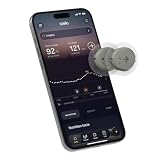
- ✅ For people NOT using insulin, ages 18 years and older
- ❌ Don’t use if: On insulin, on dialysis, if you have problematic hypoglycemia, are modifying medication without HCP consultation, or if you have a history of eating disorders
- YOUR SUCCESS, OUR COMMITMENT: Should you experience an issue with your biosensor before its 15-day wear is up,[2] we’ll replace it for free. [3]
- POWERFUL FEATURES: Get AI-powered coaching, plus discover in-app nutrition & glucose insights, advanced meal and activity logging, trend summaries and deep dives, pattern insights and much more—plus, effortlessly sync your data with Apple Health, Google Health Connect, and Oura.
- PRODUCT SUPPORT: Provided by Stelo through SteloBot, which can be accessed via the Stelo app by going to Settings > Contact. SteloBot virtual support assistant is available 24/7, and live agent support available during regular business hours.
- Decide the allowed scope. Make only the functions relevant to the current task available, and specify whether a call is optional, required, or restricted to a particular function.
- Send the model the user’s request and tool definitions. Include relevant authorized context only when needed, with units and timestamps intact.
- Inspect any function call. Validate its name and arguments against the schema and the user’s permissions. Reject requests outside the allowed scope rather than attempting to reinterpret them.
- Execute in the host application. Retrieve or save data through application code, handle unavailable or stale sources, and apply server-side validation before any permitted write.
- Return the result for that call. Associate the result with the call identifier expected by the API, and label errors or unavailable information explicitly.
- Continue the interaction. Let the model produce a response from the returned data or request another allowed tool; apply the same checks to every call.
If a tool fails, the response should reflect that failure instead of substituting a plausible-sounding value. The user should be able to distinguish “no recent data was available” from “the readings were stable.”
Independent reader supportYour contribution helps us test, update, and keep practical guides available for everyone.Keep coaching separate from treatment decisions
A bounded diet agent can explain patterns in the available data and offer general food or lifestyle ideas appropriate to the product’s intended population. It should not diagnose a condition, change medication, calculate or adjust insulin doses, or promise emergency triage. A model-generated explanation is not a clinical finding, and a generic disclaimer does not make an unsafe feature safe.
The distinction matters for regulation as well as product design. The FDA’s digital health policy navigator gives disease-specific coaching and prompts that encourage behaviors such as optimal nutrition as a potential example of supplemental clinical care for which it intends enforcement discretion under the relevant policy. The FDA’s January 2026 Clinical Decision Support Software Guidance describes criteria for certain non-device clinical decision support functions and notes that device policies remain applicable to software intended for patients or caregivers. Neither policy description determines the classification of a hypothetical product; intended use and actual functionality matter, and the analysis is jurisdiction-specific.
Quick wins for a faster PC:
Clear out junk files and repair common Windows errorsFree Scan →Fix the driver behind crashes, sound loss and screen glitchesFind Drivers →The FDA’s Artificial Intelligence-Enabled Medical Devices listing gives algorithms that automate insulin dosing from CGM readings as an example of an AI-enabled medical device. Automating or recommending treatment is therefore not a minor extension of meal suggestions; it introduces a materially different safety and regulatory profile that calls for specialized clinical, engineering, and regulatory review.
Rank #4

- The information below is per-pack only
- HSA/FSA eligible. No prescription needed.
- 24/7 GLUCOSE TRACKING. See your glucose response to food, exercise, sleep, and other lifestyle factors via the Lingo app.
- OPTIMIZE YOUR NUTRITION. Discover which foods work for you and those that don't. The Lingo app shows you how specific meals and other factors impact your glucose, so you can learn from your insights and build healthier habits
- NAVIGATE PREDIABETES WITH A NEW VIEW OF YOU. More time in healthy glucose range is linked to lower diabetes risk. Three out of four users with prediabetes say Lingo was effective in helping to achieve their health goals¹.
Test failure cases before offering personalized coaching
Evaluation should cover the full application, not just whether the model produces fluent advice. In particular, test whether the data and tool boundaries hold under ordinary failures and adversarial requests.
- Missing or stale readings: confirm the agent identifies the age or absence of data and does not imply it has a current glucose picture.
- Unexpected units or timestamps: verify that the application rejects, flags, or safely normalizes them instead of passing an ambiguous value onward.
- Gaps and irregular cadence: check that the system preserves missing intervals and never represents them as measured stability.
- Contradictory meal context: ensure the response distinguishes a user-entered or estimated meal from verified sensor data and does not invent what was eaten.
- Tool errors and denied access: verify that failed calls, expired authorization, and unavailable integrations produce honest, bounded responses.
- High or low readings and medication requests: test the product’s predefined escalation behavior and confirm that the agent does not offer diagnosis, dosing, or medication-change instructions.
- Attempts to bypass constraints: try prompts that ask the model to reveal data outside the user’s permission or to invoke a disallowed action, then confirm the application blocks the request.
These checks are engineering recommendations for a proposed system, not evidence that a specific agent has been tested. The available material does not establish clinical effectiveness or show that this design prevents glucose excursions.
What this design can responsibly claim
A CGM-aware diet agent is a software architecture for using user-authorized glucose context in a bounded coaching conversation. Function calling gives the model a structured way to request application operations; it does not itself connect the monitor, grant data rights, validate a clinical recommendation, or prove an outcome. Without a named device, verified integration, defined population, clinical evaluation, and jurisdiction-specific review, it should be presented as a design concept—not as a proven way to stop sugar spikes.
Quick Recap
Product prices and availability are accurate as of the date/time indicated and are subject to change. Any price and availability information displayed on Amazon at the time of purchase will apply.

