
iTechGuides is reader-supported. When you buy through links on our site, we may earn an affiliate commission. As an Amazon Associate I earn from qualifying purchases. Learn more
Neither option is universally better. Choose a carry-on when keeping essentials accessible and avoiding baggage reclaim matters more than capacity. Choose a checked bag when your trip requires more volume and your fare and operating airlines provide a suitable allowance. For many international itineraries, the most resilient plan is a carry-on containing documents, medication, electronics, valuables and one change of clothes, plus a checked bag only when the remaining items justify the added handling and transfer step.
The short answer: match the bag to the itinerary
Your practical choice is controlled by five things: the rules of every airline operating your flights, the allowance attached to your fare, the number and length of connections, how much you must pack, and which items must stay with you. A codeshare flight may display one airline’s code while another carrier operates the aircraft; the operating carrier’s cabin and checked-bag rules can determine what is accepted at the airport.
- Carry-on: best for essentials, fragile or irreplaceable items, spare batteries, power banks, and itineraries where waiting for a checked bag would be disruptive.
- Checked bag: best when clothing, equipment or liquids exceed cabin limits and the ticket includes an appropriate allowance or the fee is worthwhile.
- Hybrid: often the safest compromise: keep a compact cabin bag with critical items and check only the extra capacity you genuinely need.
A carry-on does not guarantee that the bag will remain in the cabin. FAA guidance notes that some aircraft have limited overhead-bin space, and IATA says a full flight can lead to a cabin bag being removed at the gate for the hold.
What’s actually slowing this PC down?
Pick the symptom - the matching free tool is one click away.
What the airline rules actually mean
The operating carrier sets the practical allowance
IATA states that baggage rules are set by airlines. Allowances can vary with airline, route, cabin, fare product and frequent-flyer status. On an interline itinerary, different portions of the journey can involve different allowances, so check every operating carrier rather than relying on the marketing airline shown on a booking confirmation.
#1 Best Overall

- CARRY-ON DESIGN: Best for 1-5 day trips without the hassle of checking luggage; measures 14.8 x 10 x 21.7 inches, including wheels
- DURABLE AND RELIABLE: Extra-thick hard shell with scratch-resistant finish guards against impact and rough handling
- EXPANDABLE: Increase packing space up to 25% for added flexibility and organization
- ORGANIZED INTERIOR: Keep essentials organized with an interior divider and three zippered pockets
- EFFORTLESS TRAVEL: Navigate with ease thanks to four multi-directional wheels, telescoping handle, and short lift handle
Before you pack, find the baggage section for each flight and record the following in one place:
- Cabin-bag dimensions and weight, including the definition of a personal item.
- Number of cabin pieces permitted for your fare and cabin.
- Checked-bag pieces, maximum dimensions and maximum weight.
- Whether the first checked piece is included or charged separately.
- Rules for codeshares, interline transfers and separate tickets.
- Restrictions for batteries, smart luggage, liquids, medical supplies and sports or technical equipment.
There is no universal carry-on size
IATA gives 56 × 45 × 25 cm (22 × 18 × 10 in) as a general reference used by many airlines, not as a guarantee. The dimensions include wheels and handles. Some carriers use smaller limits, and some impose a weight limit beginning around 5 kg (11 lb).
FAA guidance describes 45 linear inches (height + width + depth) as the maximum carry-on size for most U.S. airlines while still directing travelers to verify the individual carrier’s rule. Because airlines define and enforce limits differently, measure the bag’s external dimensions, including wheels, handles and protruding pockets, against the strictest carrier on your itinerary.
For perspective, ITA Airways publishes an 8 kg maximum and 55 × 40 × 23 cm dimensions for the stated carry-on allowance. That is one airline’s policy example, not an international standard.
Rank #2

- CARRY-ON DESIGN: Best for 1-5 day trips without the hassle of checking luggage; measures 14.8 x 10 x 21.7 inches, including wheels
- DURABLE AND RELIABLE: Extra-thick hard shell with scratch-resistant finish guards against impact and rough handling
- EXPANDABLE: Increase packing space up to 25% for added flexibility and organization
- ORGANIZED INTERIOR: Keep essentials organized with an interior divider and three zippered pockets
- EFFORTLESS TRAVEL: Navigate with ease thanks to four multi-directional wheels, telescoping handle, and short lift handle
Checked allowance is not the same as a universal weight limit
Your ticket’s free allowance depends on route and fare. Some international routes use a piece concept (a specified number of bags, each under a stated size and weight), while others use a weight concept. A common maximum dimension in piece-based rules is 158 cm (62 in) in total linear dimensions, but the applicable value is the one published for your ticket.
IATA says international occupational-health guidance recommends that an individual checked bag not exceed 23 kg (50 lb), and that a 32 kg (70 lb) maximum applies in many regions. Those figures do not tell you how many bags your fare includes or whether an airline will accept a heavier bag. A bag over the ticketed limit can incur a fee, require repacking or be refused.
Carry-on versus checked bag at a glance
| Decision factor | Carry-on tends to suit | Checked bag tends to suit |
|---|---|---|
| Allowance | Your bag meets every operating carrier’s cabin size and weight rule. | Your ticket includes a suitable checked allowance, or you accept the applicable fee. |
| Capacity | You can fit the trip’s contents within cabin limits. | You need more volume or have items better packed in the hold. |
| Connections | You want essentials immediately and fewer checked-bag transfer steps. | Your connection plan makes a checked bag practical and you can allow time for reclaim and recheck where required. |
| Security-restricted items | Small quantities of liquids and cabin-permitted items fit the airport’s screening rules. | Larger liquids or items prohibited in the cabin may go in checked baggage if the airline and security authority permit them there. |
| Valuables and batteries | Preferred for valuables, medication, spare batteries, power banks and essential electronics. | Do not place valuables or spare lithium batteries here. |
| Airport handling | Usually avoids bag drop and baggage reclaim, although a full cabin can trigger a gate-check. | Requires bag drop, baggage handling and collection at the destination. |
| Physical effort | You carry the bag through the terminal and lift or arrange it for stowage. | You move through the terminal with less luggage in hand but must collect it later. |
When a carry-on is the better choice
Short trips and changing itineraries
A cabin bag is efficient for a short trip, a multi-city itinerary or travel involving tight connections. You can leave the airport without waiting at a carousel and remain prepared if a checked bag is delayed. The advantage is greatest when you can wear bulky clothing, use compact toiletries and avoid equipment that must travel in the hold.
Free tools Windows power users keep installed
One-click scans. No signup required.
Essentials that cannot be replaced quickly
Keep passports, travel documents, payment cards, medication, glasses, essential electronics, keys and irreplaceable items with you. A small set of underwear and a shirt can also make a delay manageable. This is a risk-control decision, not merely a convenience preference.
Rank #3

- CARRY-ON DESIGN: Best for 1-5 day trips without the hassle of checking luggage; measures 14.8 x 10 x 21.7 inches, including wheels
- DURABLE AND RELIABLE: Extra-thick hard shell with scratch-resistant finish guards against impact and rough handling
- EXPANDABLE: Increase packing space up to 25% for added flexibility and organization
- ORGANIZED INTERIOR: Keep essentials organized with an interior divider and three zippered pockets
- EFFORTLESS TRAVEL: Navigate with ease thanks to four multi-directional wheels, telescoping handle, and short lift handle
Cabin-bag trade-offs
- You must meet the strictest size and weight rule on the itinerary.
- Overhead space may be unavailable, particularly on a full flight or smaller aircraft.
- You carry the weight through terminals, security queues and connections.
- Liquid quantities are constrained by the departure and transfer airports’ screening rules.
- A gate agent can require the bag to travel in the hold; prepare it so that batteries and critical items can be removed quickly.
When a checked bag is the better choice
Long stays and bulky equipment
Long trips, cold-weather clothing, formal wear, family supplies and permitted sports or technical equipment can exceed a cabin bag’s volume. A checked bag also lets you separate clothing and noncritical items from the compact kit you need in the cabin.
Liquids and items that cannot travel in the cabin
Airport security rules restrict liquids, aerosols, gels, creams and pastes in cabin baggage. Larger containers may be allowed in checked baggage when they are otherwise permitted for air transport. Check both the security authority and airline for special items; a checked bag is not a way to carry an item that is prohibited altogether.
Checked-bag trade-offs
- You must pay any fee not included in the fare and comply with the ticket’s piece, dimension and weight limits.
- The bag passes through bag-drop, sorting, loading and transfer systems.
- You may need to collect and recheck it during some international connections, especially when crossing a border or traveling on separate tickets.
- Keep valuables, irreplaceable items, medication, spare lithium batteries and power banks out of the checked bag.
Security rules for liquids, batteries and medication
Liquids at U.S. TSA checkpoints
TSA generally limits each container of liquid, aerosol, gel, cream or paste to 3.4 ounces (100 ml), with the containers fitting in one quart-size clear bag per passenger. Medically necessary liquids can exceed 3.4 ounces but should be declared for separate screening. TSA says liquid medication does not need to be placed in the zip-top bag.
International and transfer-airport screening
IATA describes a common international framework of containers no larger than 100 ml in a transparent, resealable bag of up to one liter, while advising travelers to check local airport requirements. Departure, transfer and return airports can apply different procedures. Duty-free liquids may need to remain sealed in a security bag with proof of purchase, and a transfer screening point can still affect whether they continue in the cabin.
Rank #4
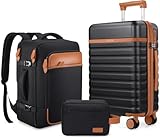
- Luggage Set with Backpack : UKEIN luggage set includes 20 inch carry on luggage, a 18 inch travel backpack and a toiletry bag. The Carry On Suitcase with wheels is sized to fit in overhead bins or underseat. The travel backpack is designed with a back sleeve that attaches to a retractable luggage handle. Large capacity and fully equipped to meet your different travel needs.
- Easy to Maneuver : Silent Dual Spinner wheels rotate 360°, providing superior maneuverability and a smooth glide in every direction. Thanks to the smooth-rolling wheels of suitcase, even when fully loaded, it's a breeze to maneuver through crowded airports and busy streets without feeling fatigued or strained.
- TSA Lock and Alloy Zipper :The Built-in TSA lock does not have to be forced open and damaged during inspection. It ensures the safety of your valuables and facilitates your passage through security. The alloy zippers allow travelers to effortlessly open and close their luggage, which adds a safety and convenience to the entire trip.
- Magic Large Space : Interior zippered divider panels keep contents separated and secure. One compartment of this carry on luggage with cross straps to keep your things in place and one fully enclosed with a zippered panel, mesh bags and dry&wet separation bag for easy organization,and the travel bag has multiple functional pockets to meet different travel needs.
- Hardshell Suitcase : This Carry on luggage set is crafted from Polycarbonate (PC) exterior offers extreme durability with a texture that reduces the visibility of scratches. Details such as the ergonomic 3-level retractable easy-grip top handle, and the double soft rubber carry handles bring maximum comfort and an easy carrying experience.
Lithium batteries and smart luggage
Spare lithium batteries, power banks and e-cigarettes belong in cabin baggage. Protect spare batteries from short circuits, for example by keeping them in their original packaging or individual protective cases. If staff take your cabin bag at the gate for the hold, remove lithium devices and batteries as instructed. Smart luggage with an integrated battery requires an airline-specific check; some carriers require the battery to be removable, and a bag whose battery cannot be removed may be refused.
Medication and critical supplies
Carry medication, prescriptions and medically necessary supplies in your cabin bag whenever possible. Keep them accessible for screening and for use during a delay. Bring documentation appropriate to the medicine and destination, because airport security rules and destination-country import rules are separate questions.
How to decide before buying baggage or packing
- List non-negotiables. Separate documents, medication, valuables, batteries, electronics and one emergency outfit from everything else.
- Measure the packed cabin bag. Include wheels, handles and bulging pockets; weigh it after packing rather than relying on the empty-bag specification.
- Check every operating flight. Record cabin and checked allowances for each carrier, fare and cabin, including personal-item rules.
- Check the airports. Review liquid and transfer-screening requirements at the departure and connection airports, not just the first security checkpoint.
- Price the complete trip. Compare the fare’s included allowance with the fee for adding a bag and any possible overweight or oversize charge.
- Map the connections. Determine whether you must reclaim and recheck baggage, pass immigration, change terminals or travel on separate tickets.
- Choose a fallback. Pack the cabin bag so that a gate-check leaves you able to remove batteries, medication, documents and valuables in seconds.
A practical hybrid-packing plan
Put in the cabin bag
- Passport, visas, boarding information and other travel documents.
- Wallet, keys, essential medication and medical documentation.
- Phone, computer, camera and their required accessories.
- Power banks, spare batteries and e-cigarettes, protected against short circuits.
- Valuables and irreplaceable objects.
- A change of clothes and basic toiletries that comply with the airport’s liquid rules.
Put in the checked bag, when permitted
- Bulkier clothing and shoes that are not needed during the journey.
- Toiletries in containers larger than the cabin liquid limit, if otherwise permitted.
- Noncritical equipment that the airline and security authority allow in the hold.
- Copies or backups of information that you do not need to access in transit.
Attach an external identification tag and place additional identification inside the checked bag. Use a distinct strap or visual marker if it helps you identify the bag quickly, but do not rely on a marker instead of accurate contact details.
Quick wins for a faster PC:
Clear out junk files and repair common Windows errorsFree Scan →Fix the driver behind crashes, sound loss and screen glitchesFind Drivers →Repair Windows errors before they cause bigger problemsFix Now →Connections, gate-checks and baggage handling
Why transfers matter
IATA identifies transfer points, short connection times and disruptions as common circumstances in baggage mishandling. A checked bag can be correctly tagged and still miss a connection when the itinerary is disrupted. Build a buffer when choosing a connection and confirm whether the bag is tagged to the final destination or must be collected at an intermediate airport.
Best Value

- Effortless Mobility with Dual-Wheel Design: Travel with ease using Sweetcrispy carry-on luggage, featuring a dual-wheel system for smooth and seamless movement. Glide through airports, train stations, and busy streets with minimal effort, ensuring a stress-free travel experience from start to finish
- Spacious & Organized Storage: Designed with travel convenience in mind, this suitcase offers ample storage with dedicated wet and dry mesh compartments, X securing straps, and expandable capacity. The premium zipper closure ensures your belongings stay secure, while the thoughtful layout keeps your items organized and accessible
- Lightweight Yet Durable Construction: Made with a sturdy ABS exterior, this luggage is lightweight for easy handling while offering exceptional durability to withstand the demands of travel. Enjoy peace of mind knowing your belongings are well-protected on your journey
- Built-in TSA Lock for Enhanced Security: Travel confidently with the integrated TSA-approved lock, providing an added layer of security for both domestic and international trips. Keep your valuables safe and avoid the hassle of unauthorized access while traveling
- Adjustable & Resilient Telescopic Handle: Customize your travel experience with the durable, flexible telescopic handle, which adjusts smoothly to your preferred height. Whether you’re navigating through crowded spaces or taking a quick turn, the handle ensures comfort and stability
What to do if a carry-on is gate-checked
- Before handing over the bag, remove your passport, medication, valuables, electronics needed in transit, power banks, spare batteries and e-cigarettes.
- Ask whether the bag is tagged to the final destination and where it will be collected.
- Keep the claim receipt or tag number.
- At arrival, follow the airline’s instructions for the gate-delivery point or baggage carousel.
Never assume that a bag handed over at the gate will be available immediately after landing; the procedure varies by airport and aircraft.
If a checked bag does not arrive
Report the missing bag at the airline’s baggage service desk before leaving the airport, retain the report reference and keep receipts for essential purchases. The airline’s process and applicable passenger-rights rules depend on the route and jurisdiction. Because most mishandled bags are eventually returned, accurate contact details inside and outside the bag are useful, but they do not replace a prompt report.
What the baggage statistics do—and do not—tell you
IATA’s historical comparison reports baggage mishandling falling from 18.88 bags per 1,000 passengers in 2007 to 5.57 per 1,000 passengers in 2017. Those are industry-wide historical figures, not a prediction for a particular airline, route or trip.
The Tool Desk
Outbyte PC Repair FREERepair Windows errors before they cause bigger problemsFix Now →Outbyte Driver Updater FREEScan for outdated or missing drivers - takes under a minuteDriver Scan →IATA also presents a figure of 99.57% of bags arriving on time, without stating a publication year on the page. Its passenger baggage rules page gives a separate figure of 99.5% of baggage arriving with the passenger, also without a publication year, and says most mishandled bags are returned within 48 hours. Treat these as broad IATA information points rather than a service guarantee for your itinerary.
Common scenarios and the better default
| Scenario | Usually the better starting point | Reason to switch |
|---|---|---|
| Two- or three-day city trip | Carry-on only | Use a checked bag if the fare makes it inexpensive and you need formal or cold-weather clothing. |
| Several weeks with varied climates | Hybrid | Choose checked-only capacity when the cabin allowance cannot accommodate essential gear. |
| Multiple tight connections | Carry-on, if it meets every rule | Check a bag when the connection is long and the itinerary provides reliable through-checking. |
| Separate tickets or a self-transfer | Carry-on where practical | Check only after confirming reclaim, customs and recheck time at the transfer airport. |
| Medical equipment or temperature-sensitive medicine | Cabin bag | Follow the airline’s special-assistance process for equipment that cannot fit under cabin rules. |
| Family traveling with young children | Hybrid | Check bulky, nonurgent items while keeping diapers, medication, food permitted by security and a change of clothes accessible. |
| Fragile or irreplaceable item | Carry-on if permitted and physically manageable | Do not check it merely to create space; ask the carrier about any special handling requirement. |
Pitfalls that cause avoidable problems
- Buying a bag before checking the fare: the allowance can differ between outbound and return flights or between fare families.
- Measuring only the suitcase shell: wheels, handles and pockets count toward the published dimensions.
- Assuming an airline’s general page applies to every flight: route, cabin, status and operating carrier can change the rule.
- Putting power banks in checked baggage: spare lithium batteries and power banks belong in the cabin.
- Ignoring the transfer airport: a liquid allowed at departure may face another screening decision during a connection.
- Overpacking to the stated weight: a scale reading at home can differ from an airport scale, and a bag at the limit leaves no margin for souvenirs or a repack request.
- Leaving no gate-check plan: a cabin bag may be accepted at boarding and still be taken at the gate when bins fill.
- Checking critical items: medication, documents, valuables and irreplaceable objects should remain with you.
Bottom-line decision rule
Use a carry-on when you can meet every operating carrier’s cabin limits and the trip rewards speed, flexibility and access to essentials. Use a checked bag when capacity, permitted liquids or bulky items outweigh the extra fee and handling risk. If the answer is close, pack a compliant carry-on with all trip-critical items and add one checked bag only after confirming the exact allowance, connection procedure and total cost for every flight.
Quick Recap
Product prices and availability are accurate as of the date/time indicated and are subject to change. Any price and availability information displayed on Amazon at the time of purchase will apply.

